Italy - Rome
Italy - Rome
Beyond Words in Rome
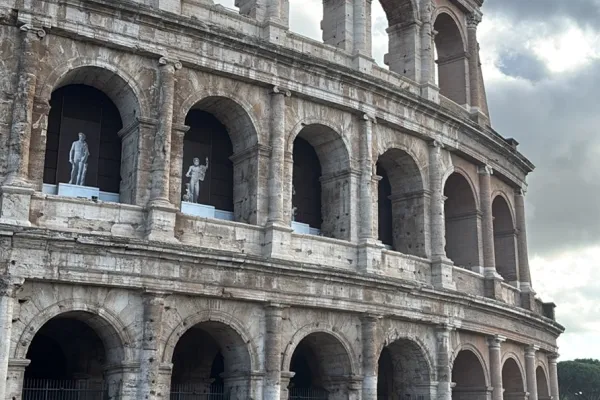
When I first arrived in Italy for my semester abroad, I knew that language would be one of my biggest challenges. Since I don’t speak Italian, I expected daily communication to be quite difficult. In reality, it has turned out to be a mix of struggles, surprises, and small victories that have taught me a lot about myself and what communication truly means.
In everyday life I mainly use English. All of my classes at Roma Tre are taught in English, and it’s also the common language among the international students. Still, English isn’t as widely spoken here as I had imagined. There are moments in shops, restaurants, or on the street when people don’t understand me at all. At first this was stressful. I wasn’t used to not being able to express myself clearly. Over time, though, I started picking up some Italian basics. I now know how to order food, ask for prices, or say simple things like “vorrei un caffè” or “il conto, per favore.” People appreciate it when you make an effort, even if it’s just a few words.
What remains difficult is understanding Italians when they speak. They talk incredibly fast, and although I studied Spanish for five years at school, which helps because some words are similar. I usually catch only parts of what they say. Reading Italian is easier. I can often guess the meaning from context or from my Spanish background. But spoken Italian still feels like a completely different world. Sometimes I simply smile and nod, hoping I understood the gist.
What has surprised me most is how much can be communicated without sharing a language. Italians are naturally expressive they talk with their hands, their faces, and their tone of voice. Gestures seem to form a language of their own. Even when I don’t understand the words, I often get the meaning. I’ve even started using my hands more when I speak. Here, it just feels natural.
Another thing that makes communication easier is people’s friendliness. Most Italians I’ve met are patient and genuinely helpful. They try their best to communicate, even if their English isn’t strong. Once, at a restaurant, an Italian couple sitting next to me began teaching me a few phrases and correcting my pronunciation. We ended up laughing together, and I realized that communication is less about perfect words and more about connection and goodwill.
Of course, I also rely on some tools. Google Translate has become a good friend. Especially for menus or when I need to ask something specific. I’ve learned to keep my English simple, to use short sentences, clear words, and plenty of smiles. When words fail, patience and kindness often do the job.
Through these experiences I’ve learned a lot about myself. I discovered that I’m more patient than I thought. At the beginning I often felt frustrated when I couldn’t make myself understood, but now I take it calmly. Communication doesn’t have to be perfect, it just has to be sincere. Every time I say something in Italian and people understand me, it feels like a small victory.
Even though I can’t hold a full conversation in Italian yet, I’ve learned a surprising amount simply by living here. Language learning doesn’t only happen in classrooms. It happens when you buy a bus ticket, order a coffee, or ask for directions. These small, everyday moments have taught me to listen better, to observe, and to stay open-minded.
Looking back to my frist days, learning to communicate in a foreign language has changed how I see myself. I no longer equate communication with fluency or perfect grammar. It’s more about openness, curiosity, and empathy. Living in Italy has shown me that even without perfect language skills, it’s possible to build connections through gestures, smiles, and effort. And that lesson will stay with me long after this semester ends.