Sustainability Aspects in the Decision-Making of a Public Limited Company’s Management Board
Sustainability Aspects in the Decision-Making of a Public Limited Company’s Management Board
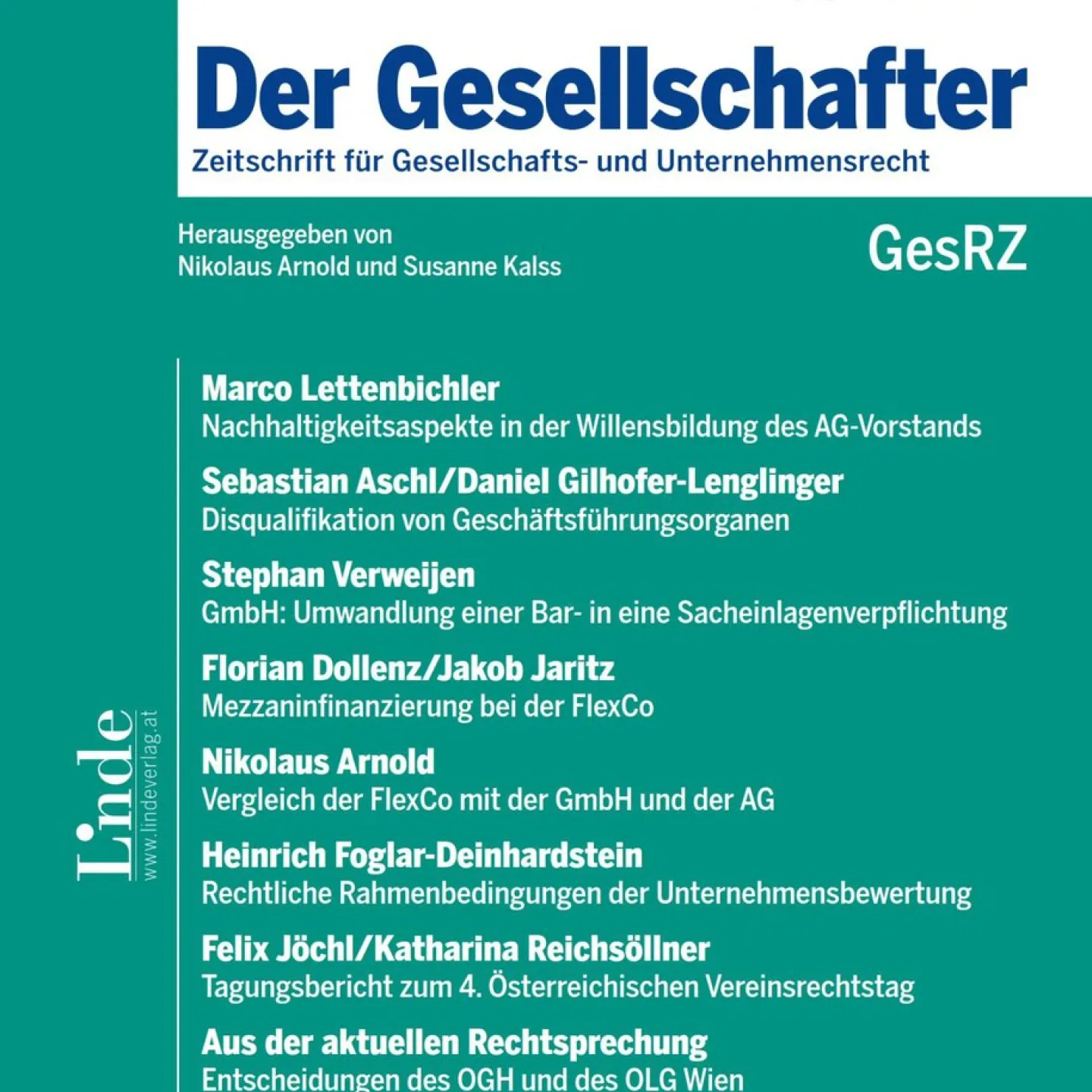
In the current issue (1/2024) of the Journal of Corporate Law (GesRZ), the article “The Influence of Sustainability Aspects on the Decision-Making of the Management Body of a Public Limited Company” by Marco Lettenbichler was published. The article examines whether the management board of a public limited company is required to take sustainability aspects (in particular the 17 United Nations Sustainable Development Goals) into account when making decisions.
After an introduction to the topic, the paper first examines the normative guidelines for managing a public limited company. Special attention is given to the related conflicts of objectives between integrating sustainability aspects and maximizing profits. In addition to the existing corporate governance models of the shareholder value approach and the stakeholder value approach, the new concept of “New Corporate Governance” is also discussed. The paper then investigates whether it is feasible under corporate law to autonomously incorporate the consideration of sustainability aspects. In particular, it highlights the possibilities and limitations of making sustainability considerations mandatory within the company’s corporate purpose. On the other hand, provisions in the articles of association, the implementation of a “Say on Climate,” and any approval requirements from the supervisory board are excluded due to conflicts with mandatory corporate law provisions.
Finally, the article analyzes the indirect factors influencing the management board’s decisions. These are mechanisms that do not directly affect governance structures but exert influence through indirect channels such as executive compensation, reporting obligations, or public opinion. The indirect influences of modern remuneration policies, ESG reporting obligations, and customer interest in a better world are likely to be the greatest factors affecting management board actions in the future. Mandatory legal requirements and autonomous incorporation are only available or feasible to a limited extent.