A Cool School: The Bahuarwa Primary School
A Cool School: The Bahuarwa Primary School
Shortly after completing their architecture degrees, Isha and Daniel Haselsberger founded the non-profit organisation Arch Aid to bridge their cultural backgrounds – Switzerland and India – and apply their knowledge to the creation of sustainable buildings for disadvantaged communities in India.
The Bahuarwa Primary School is located in the village of the same name in the Indian state of Bihar. In India’s poorest state, many children lack access to a functioning school system, as public schools are often non-operational. Private schools, on the other hand, remain unaffordable for underprivileged families. In collaboration with the local NGO Bahuarwa Foundation, the two architects initiated and oversaw the construction of a school for disadvantaged children and young people in the area. The school is now operated by the Bahuarwa Foundation, based in the village.
Building through Dialogue
Following the project’s launch in spring 2022, Isha and Daniel Haselsberger studied the local building culture, visited numerous households, conducted interviews and examined local workshops to better understand the factors influencing changing construction practices. Whereas traditional methods in Bahuarwa still made occasional use of regenerative materials, they are increasingly being replaced by cement, steel and fired bricks. Early on, the architects and the NGO agreed that the school’s development should not be about choosing between extremes, but about finding a meaningful combination of regenerative and more emission-intensive materials, as well as traditional and modern techniques. Their goal was to use natural materials in a way that would be accepted by the local community.
This required a building that is durable, low-maintenance, thermally comfortable and affordable, while also aligning with local ideas of contemporary architectural expression.
In contrast to conventional practice, the architects did not design every detail before construction began. Only the foundations, the supporting structure, the roof, and a rough layout of openings were pre-defined. This flexible approach allowed them to develop construction details and material choices directly on site and in collaboration with the target groups, rather than relying on abstract plans alone. The building process thus became a key tool for communication and mutual learning.
Material selection with added value
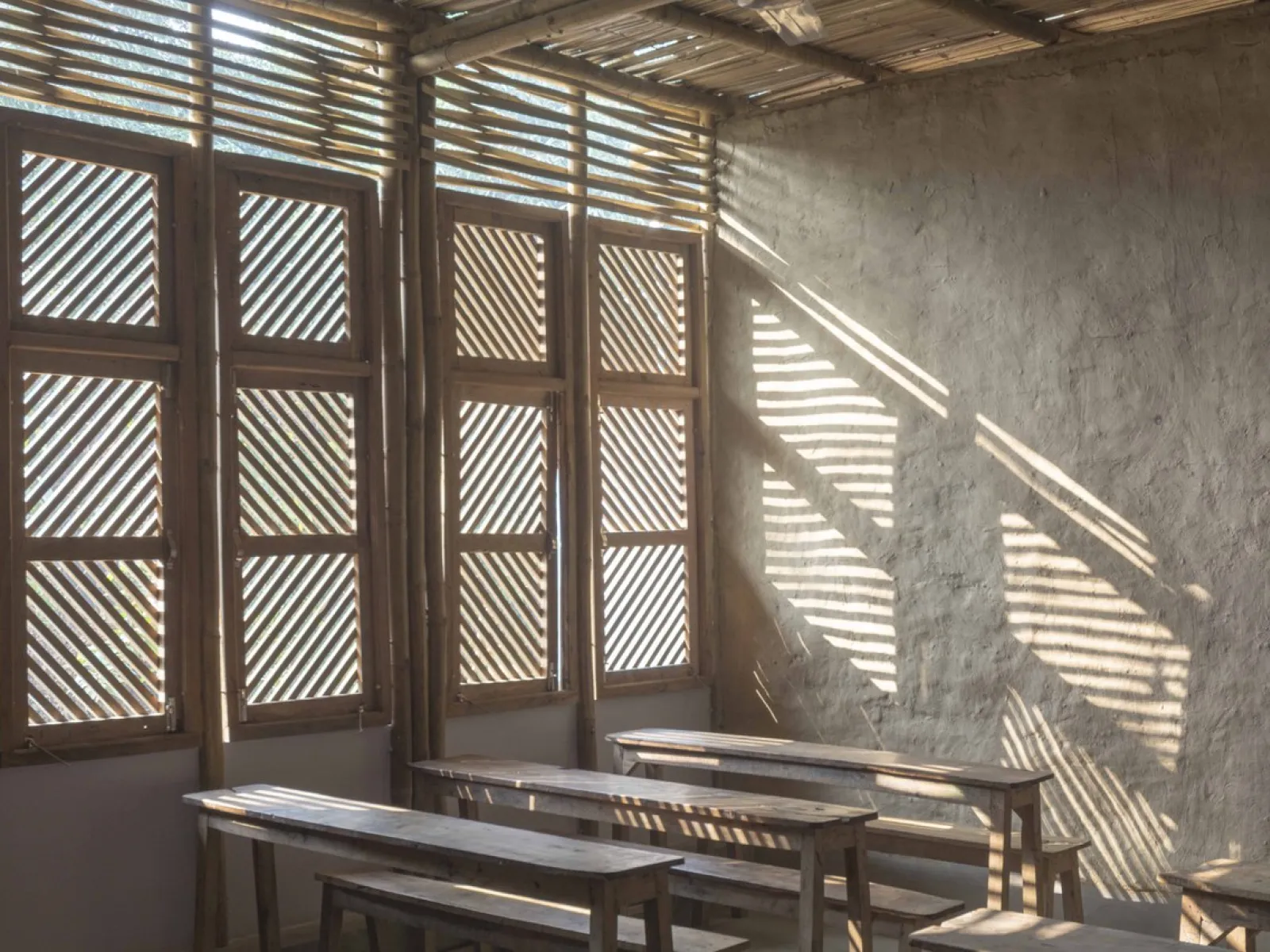
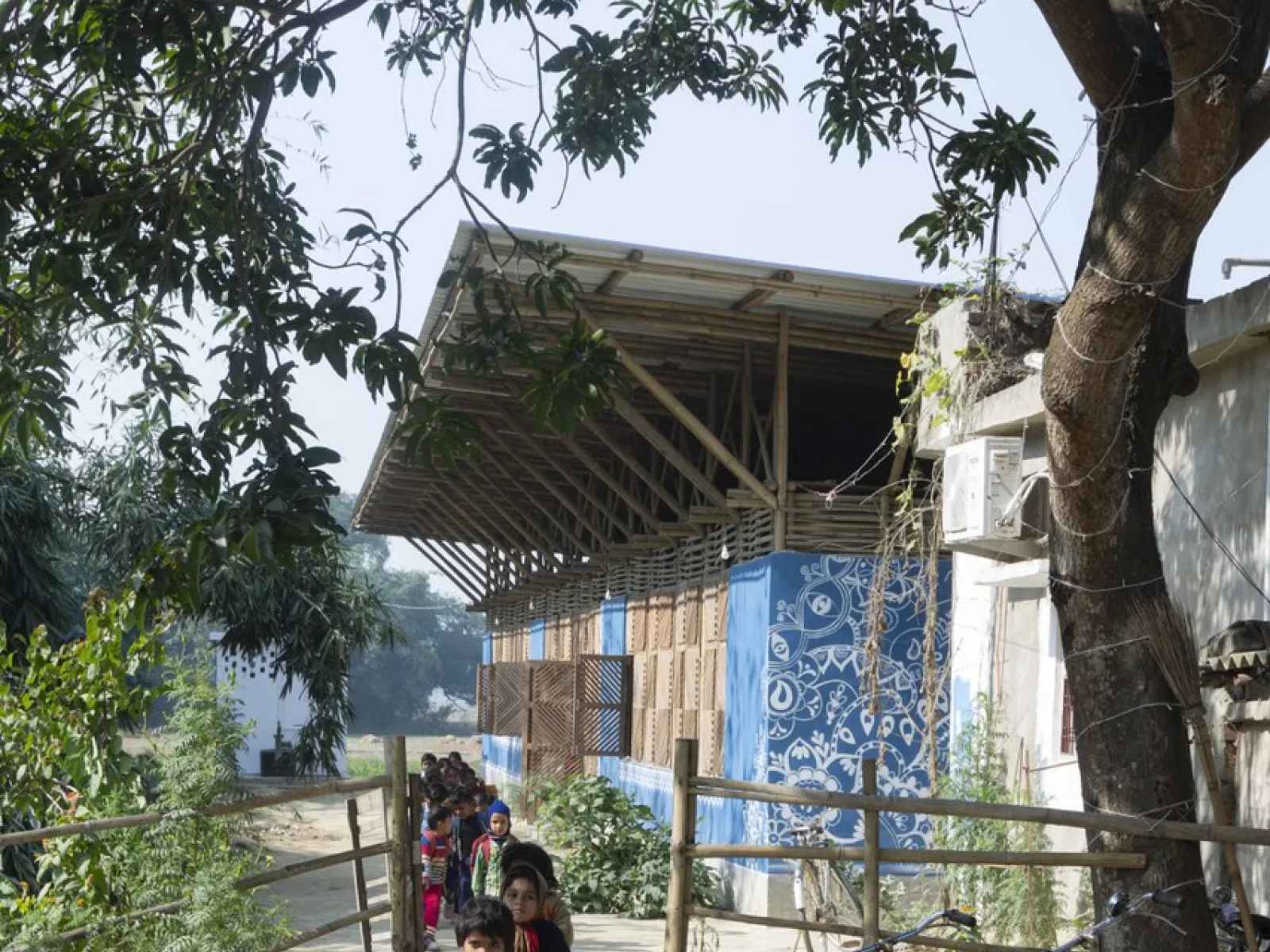
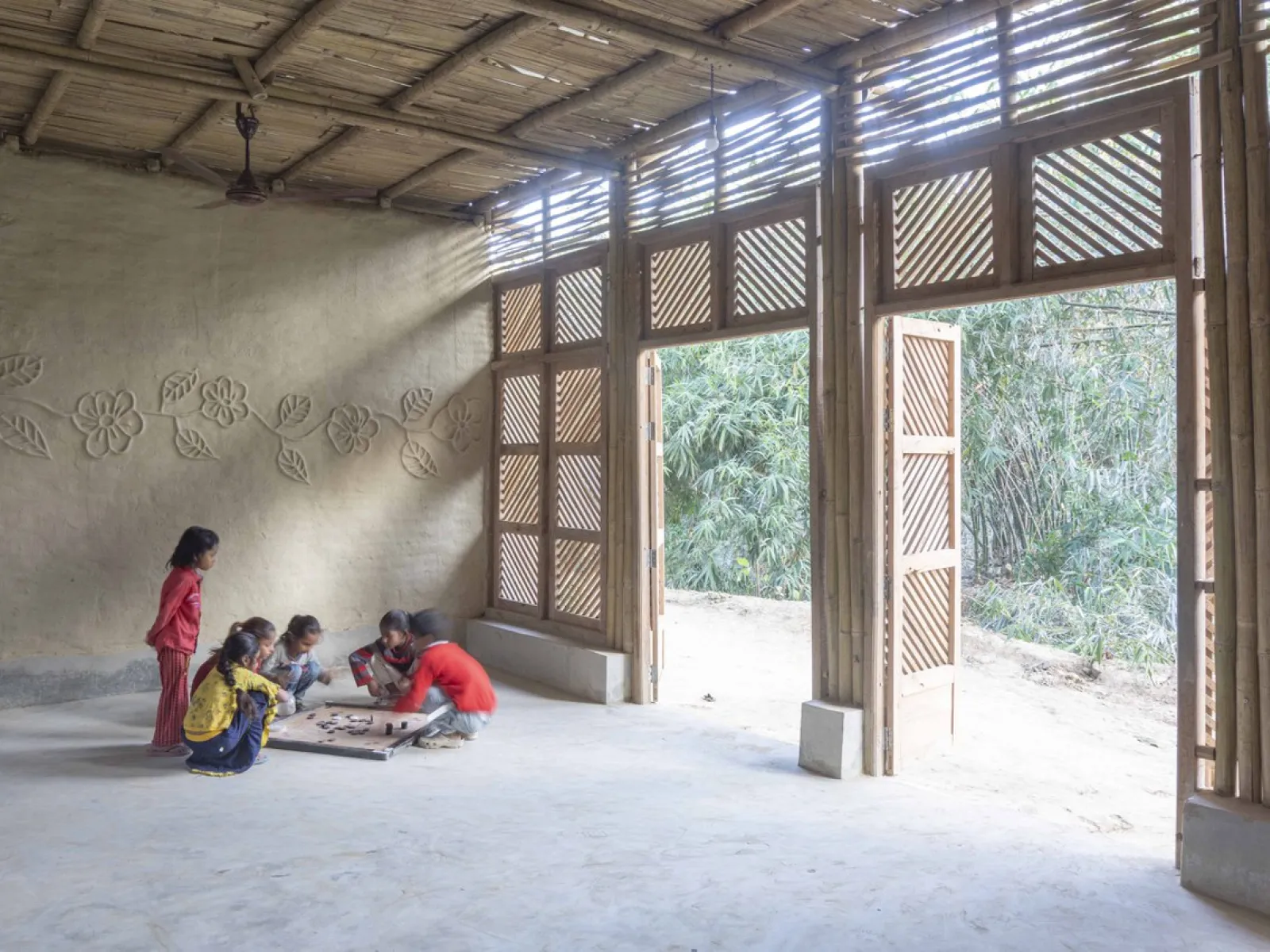
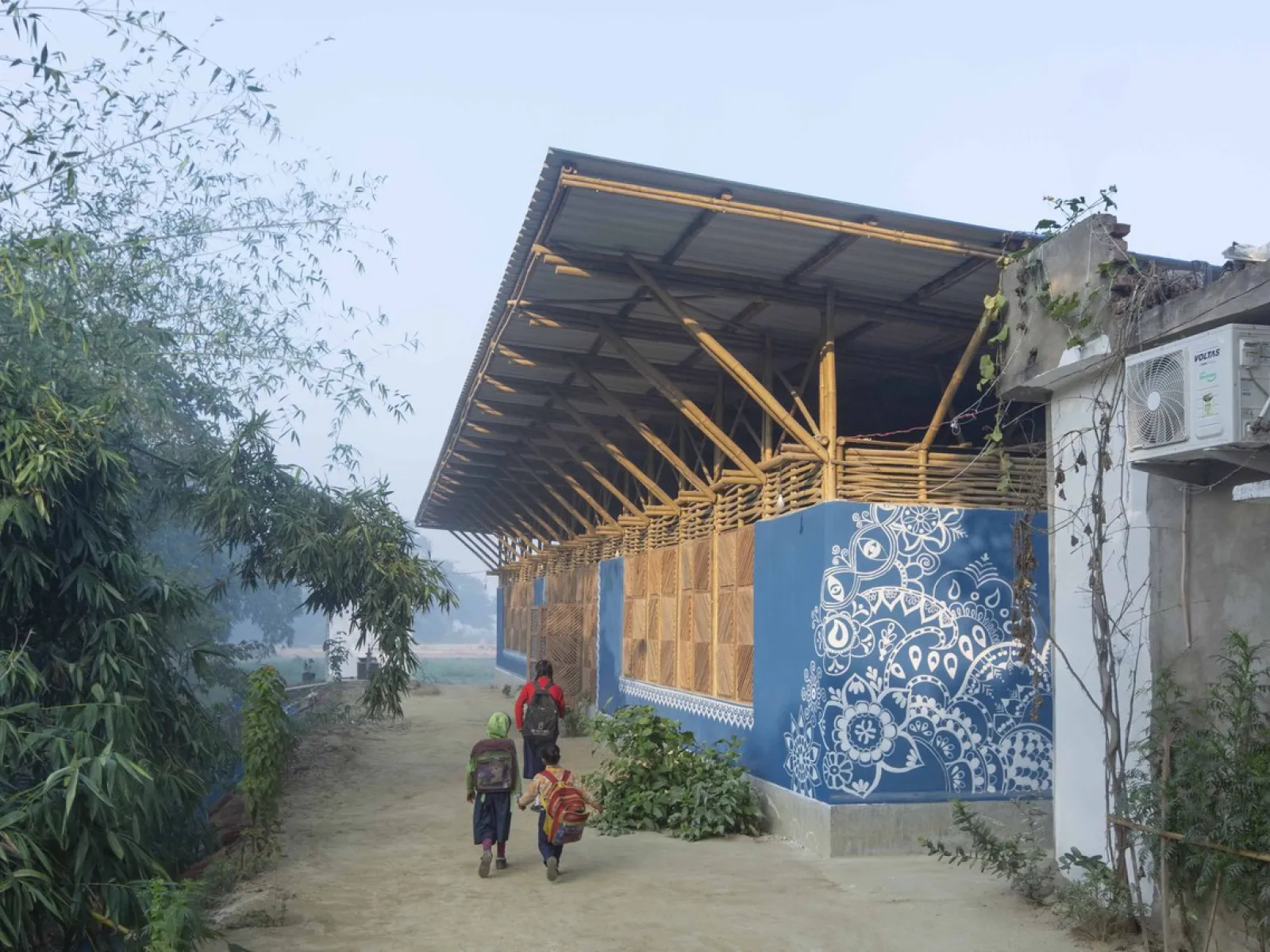
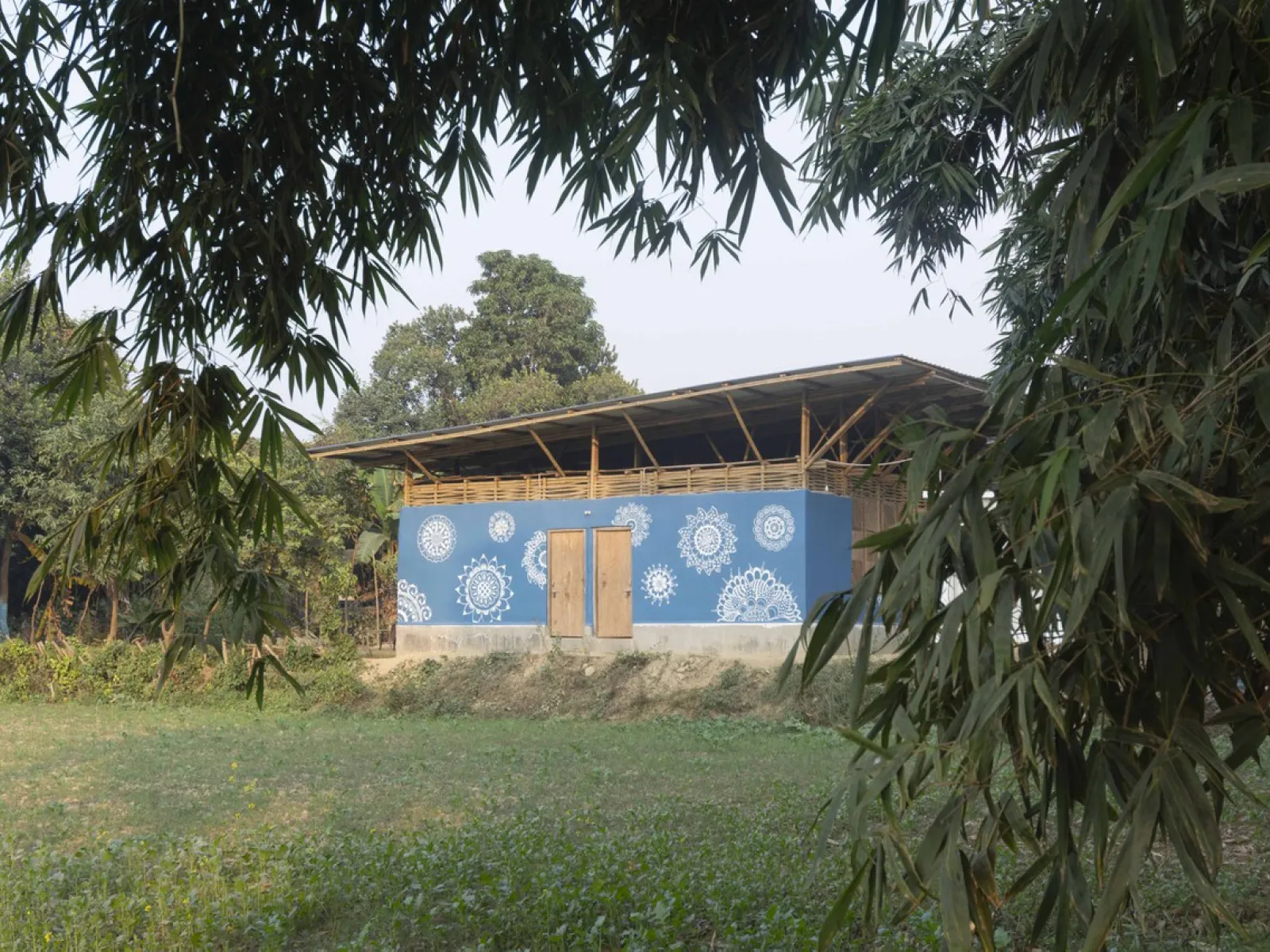
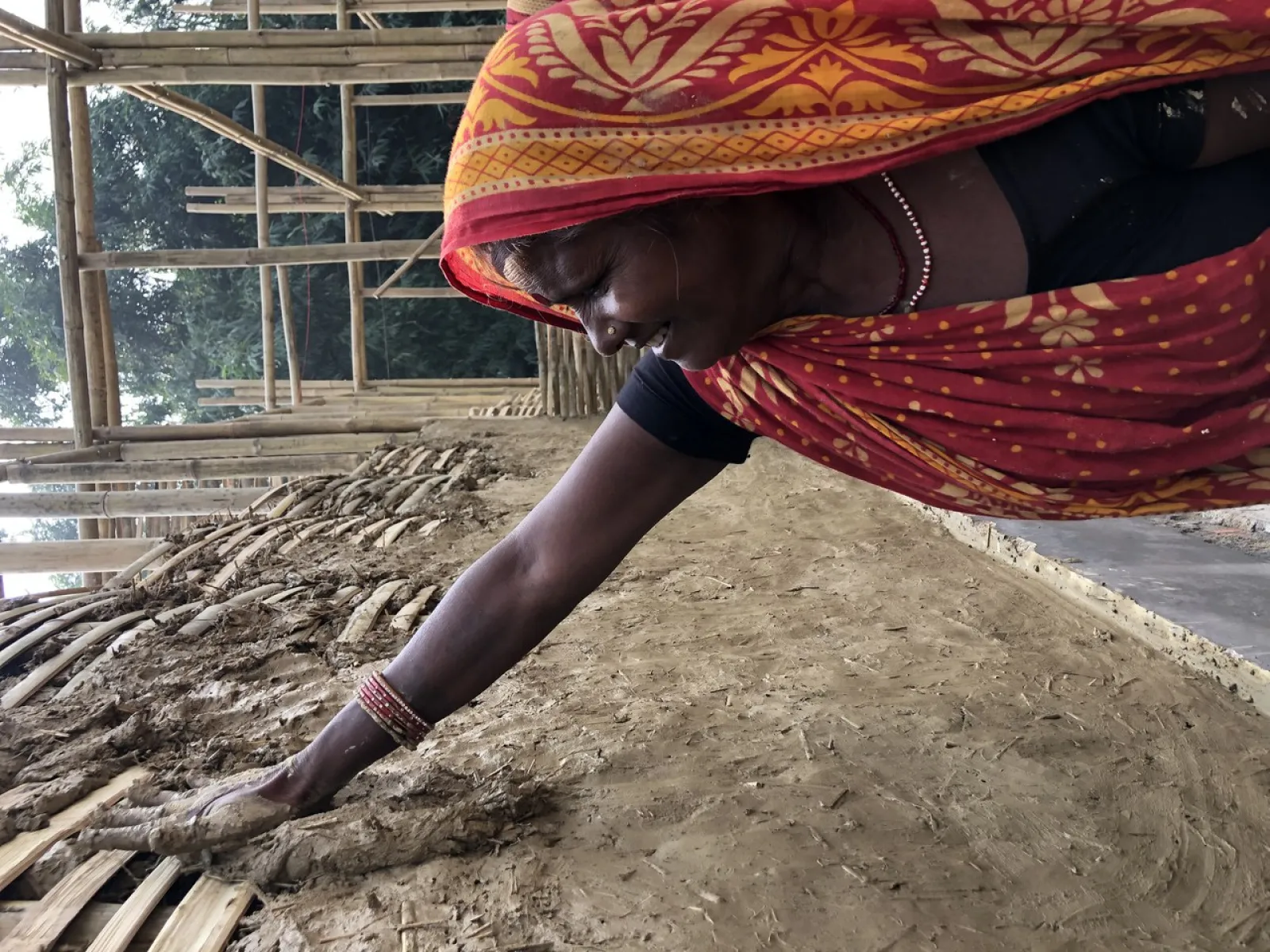
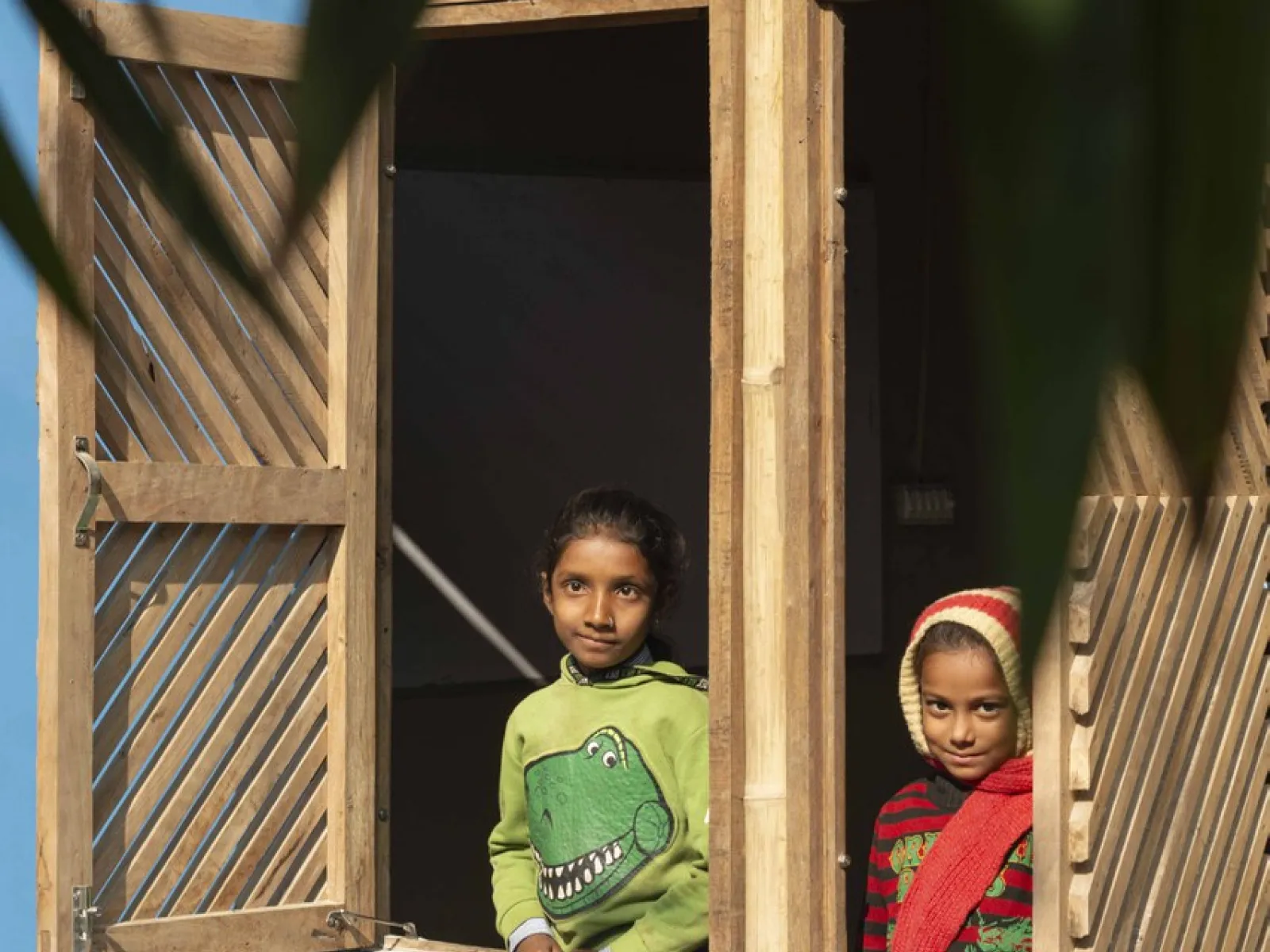
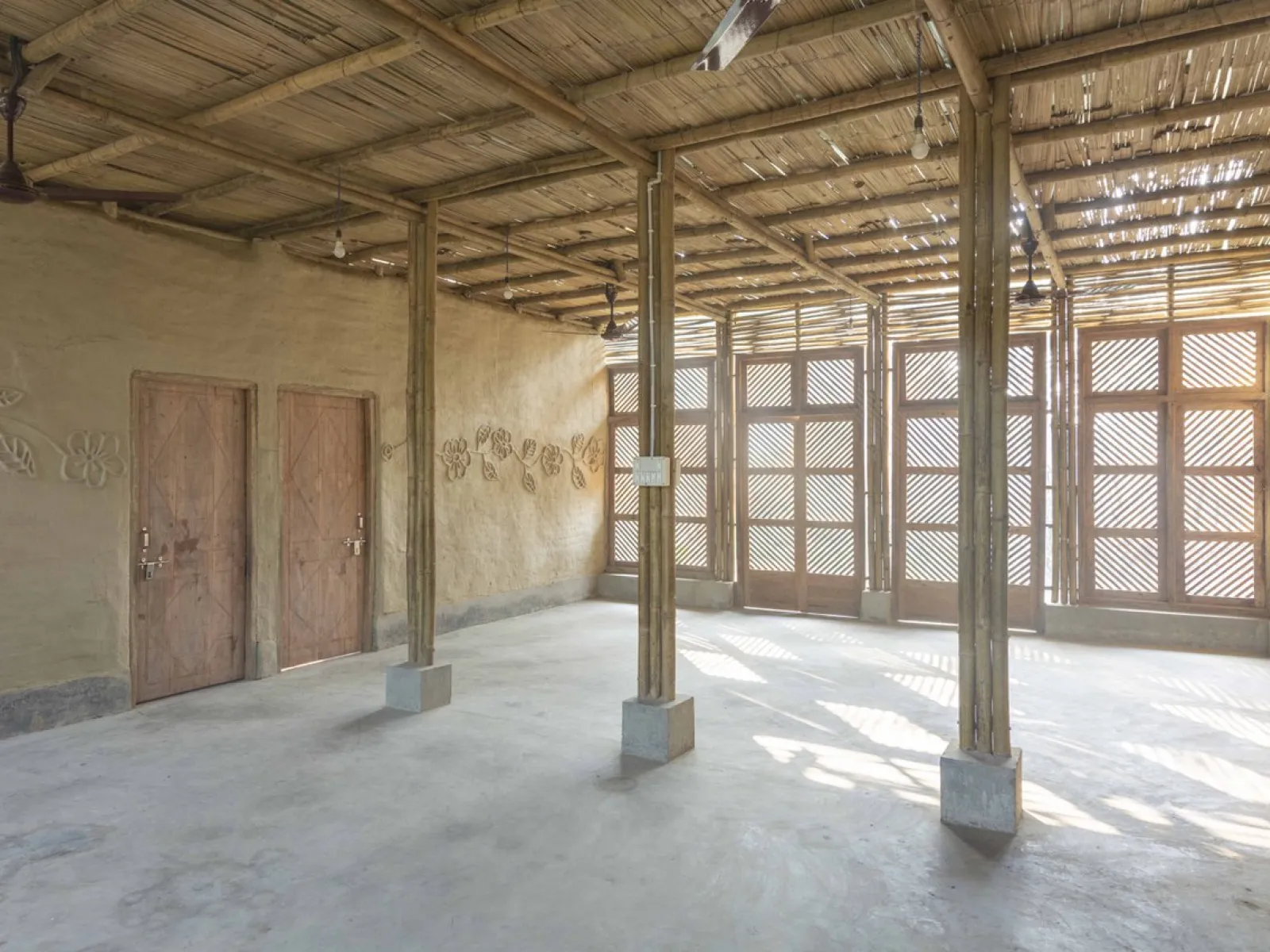
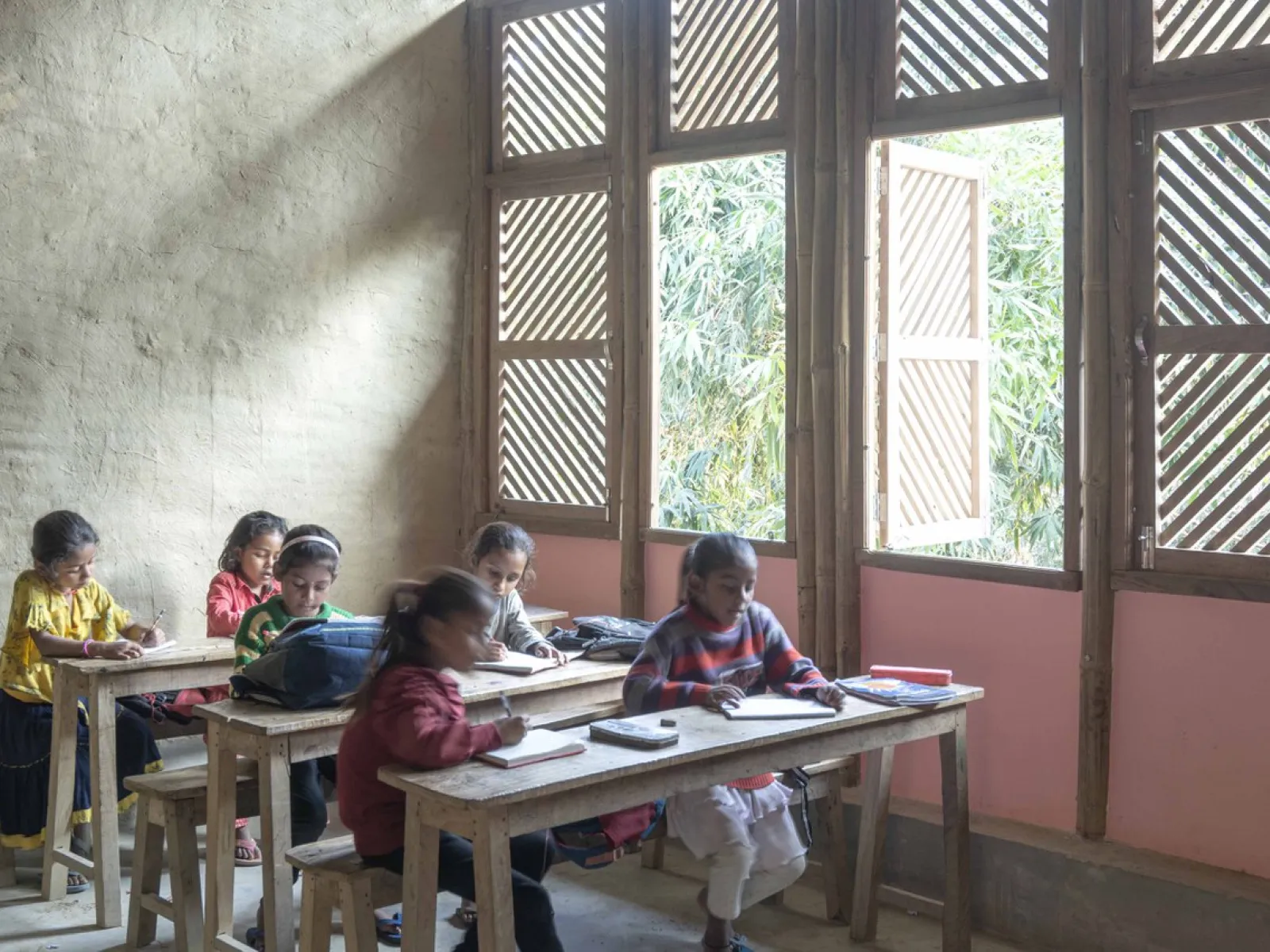
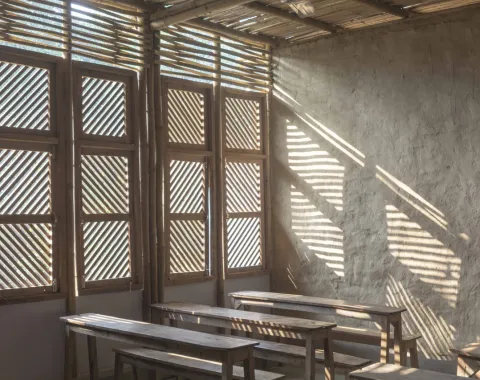
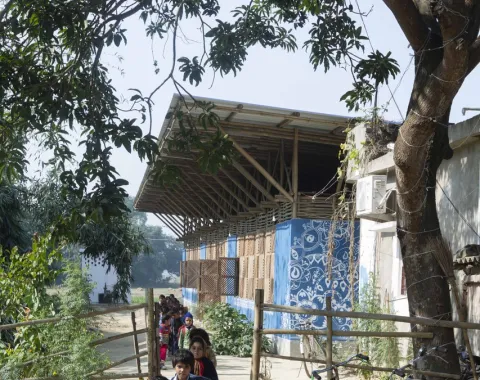
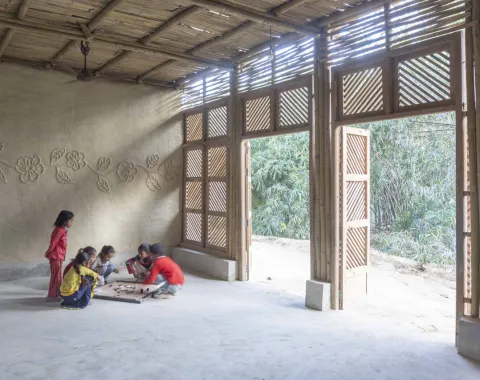
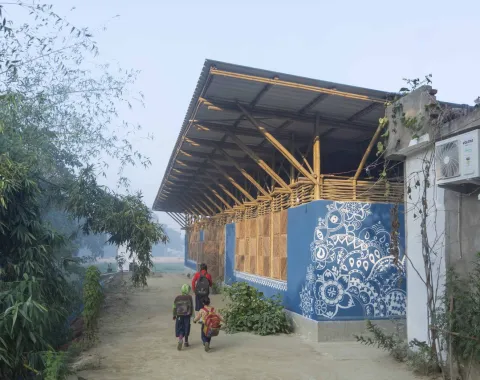
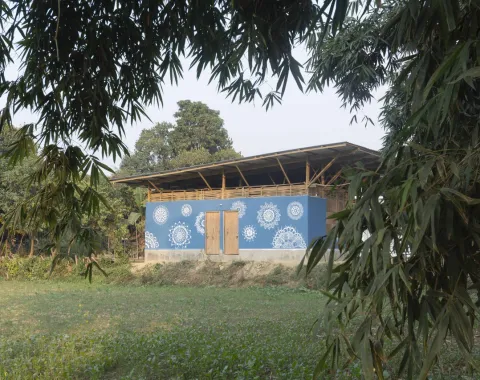
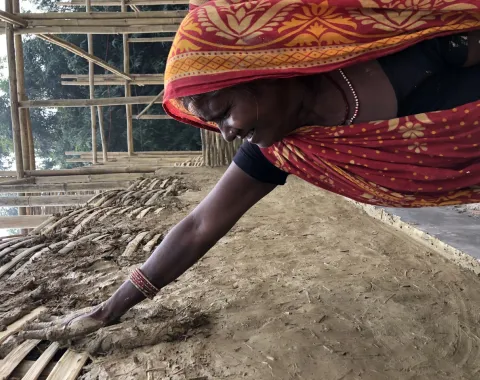
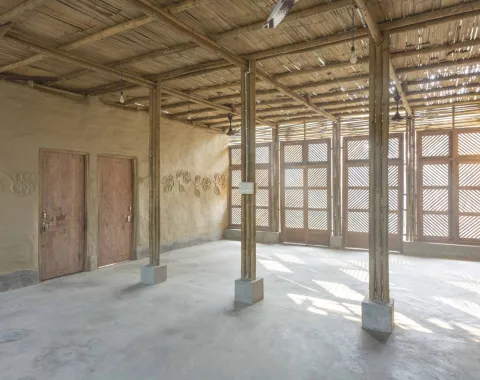
The building rests on an elevated base made from locally produced bricks and reinforced concrete to protect the interiors from regular flooding. The structural elements of walls, ceiling and roof are built from bamboo, and both ceilings and wall panels are crafted from bamboo strips. The sheltered interior walls are filled with a clay and straw mixture, while the exterior walls are rendered with cement and painted. This creates cool interior surfaces, and durable, visually contemporary exterior walls.
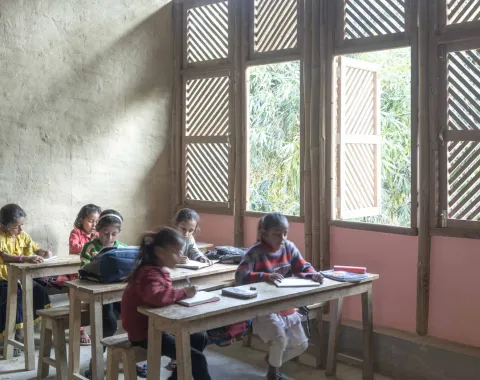
A large overhanging corrugated metal roof protects the walls from the intense monsoon rains. A ventilated cavity between the bamboo ceiling and the metal roof reduces heat radiation and, in combination with the clay walls, ensures a naturally pleasant indoor climate. As a result, the building requires no air conditioning, and ceiling fans are only needed on particularly hot days.
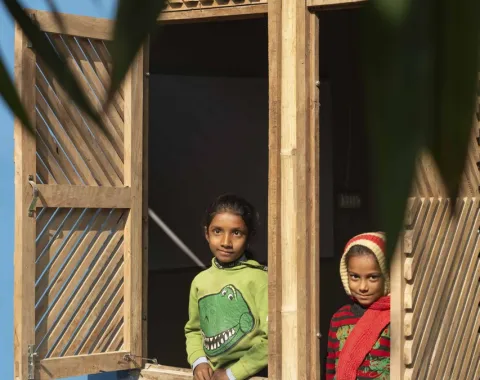
“We have a cool school!” the children proudly exclaim as they pass overheated peers returning from expensive private schools built of concrete and brick.
The lightweight roof and bamboo structure also provide earthquake safety – a critical factor in this high-risk seismic zone.
Designing together
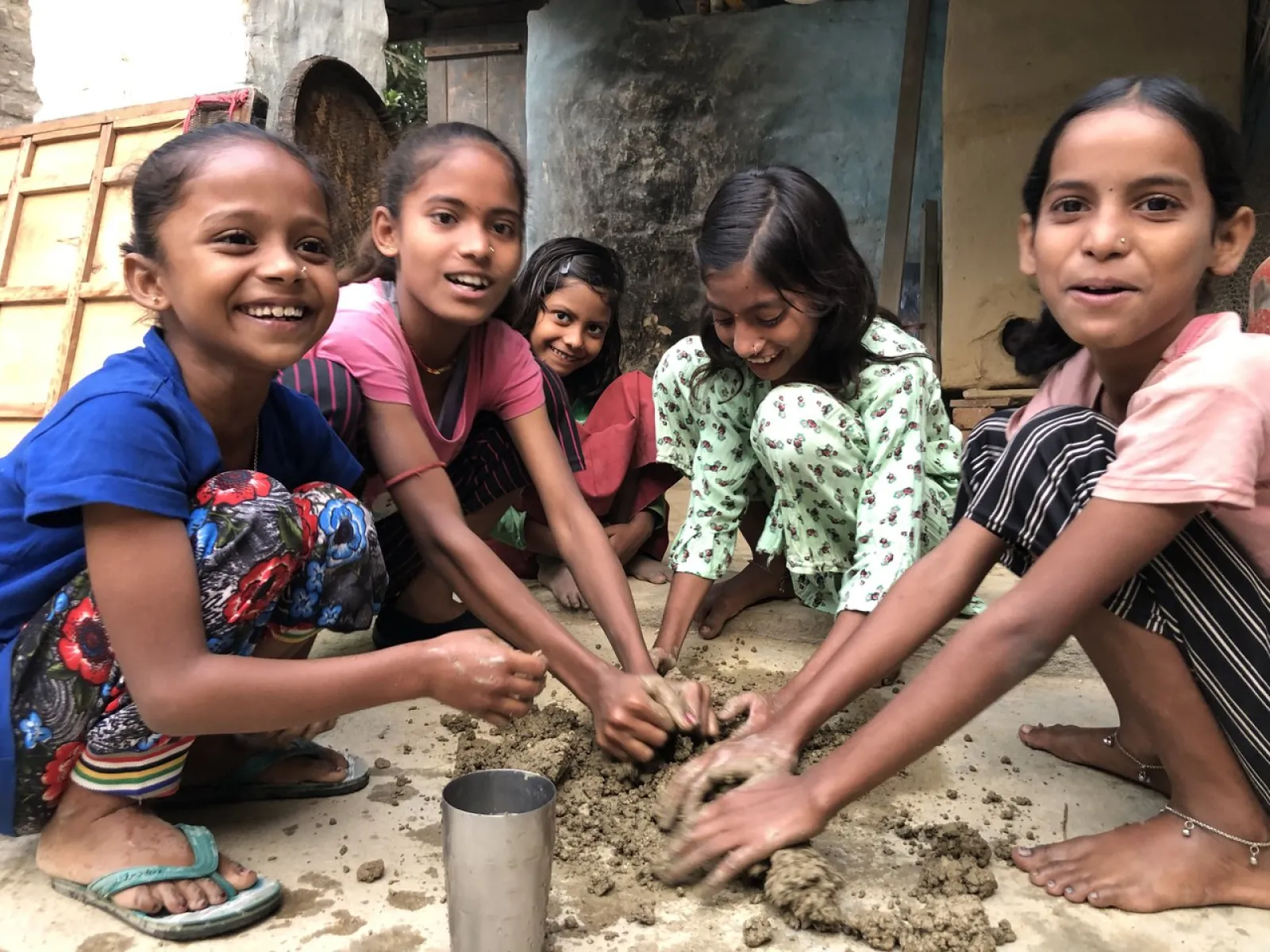
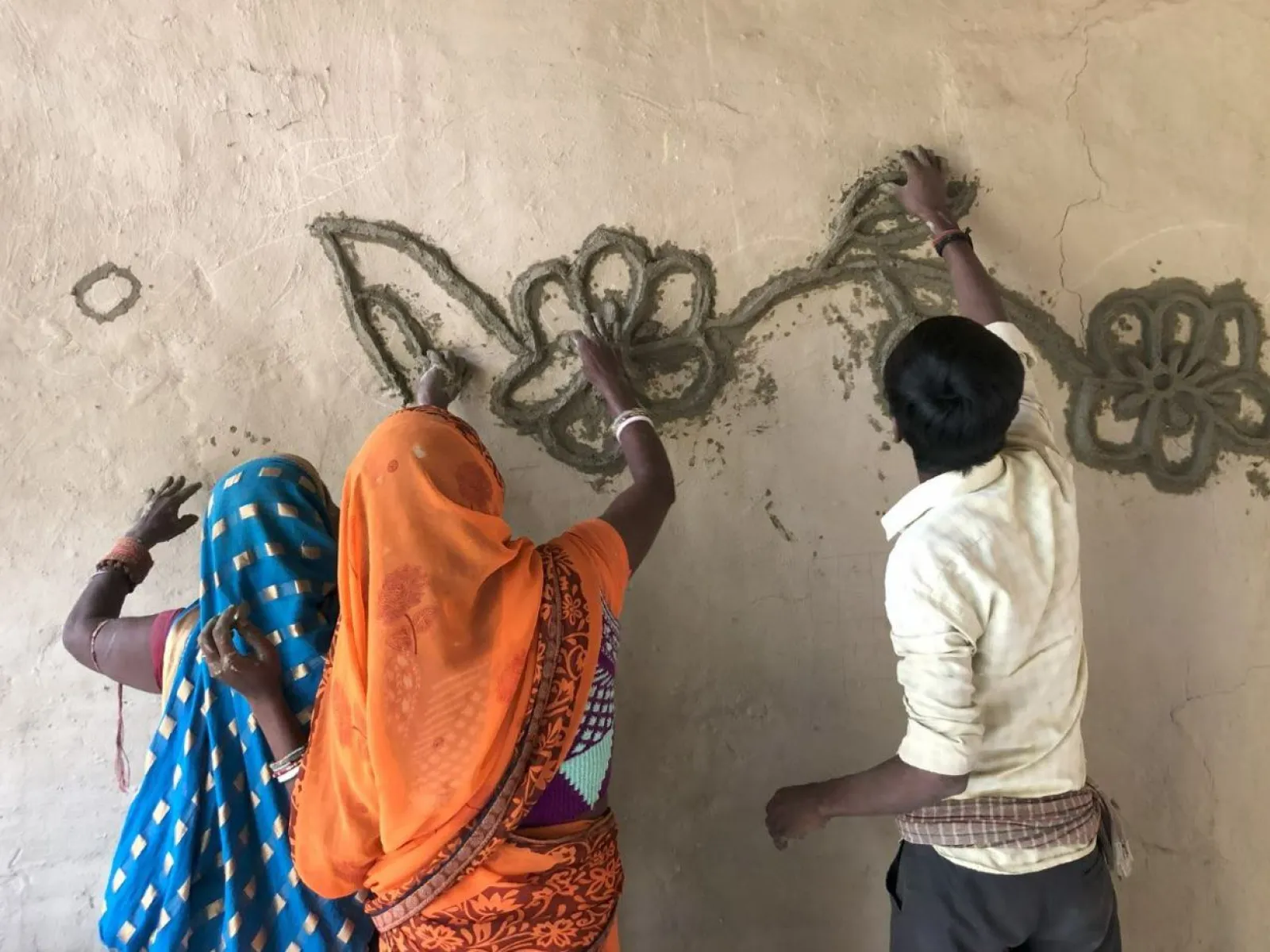
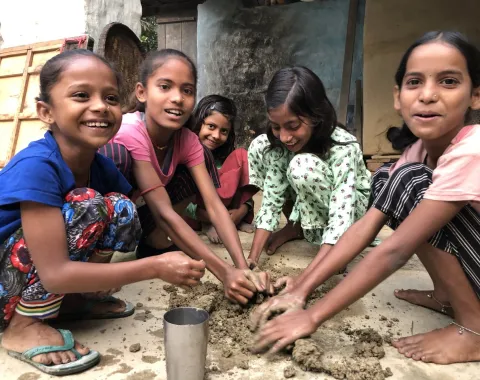
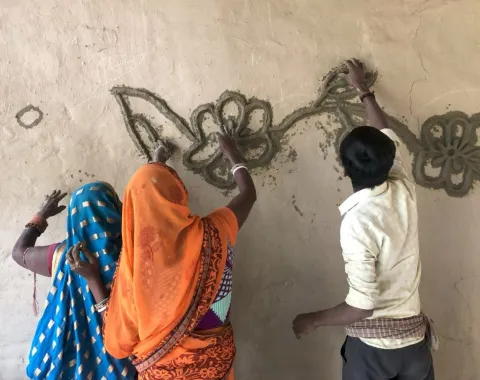
Using bamboo and clay not only reduced costs and environmental impact, but also enhanced regional value creation and enabled an inclusive construction process involving women and men, young and old. Except for three bamboo experts, all workers came from Bahuarwa and surrounding villages – many of them parents or grandparents of the pupils now attending the school.
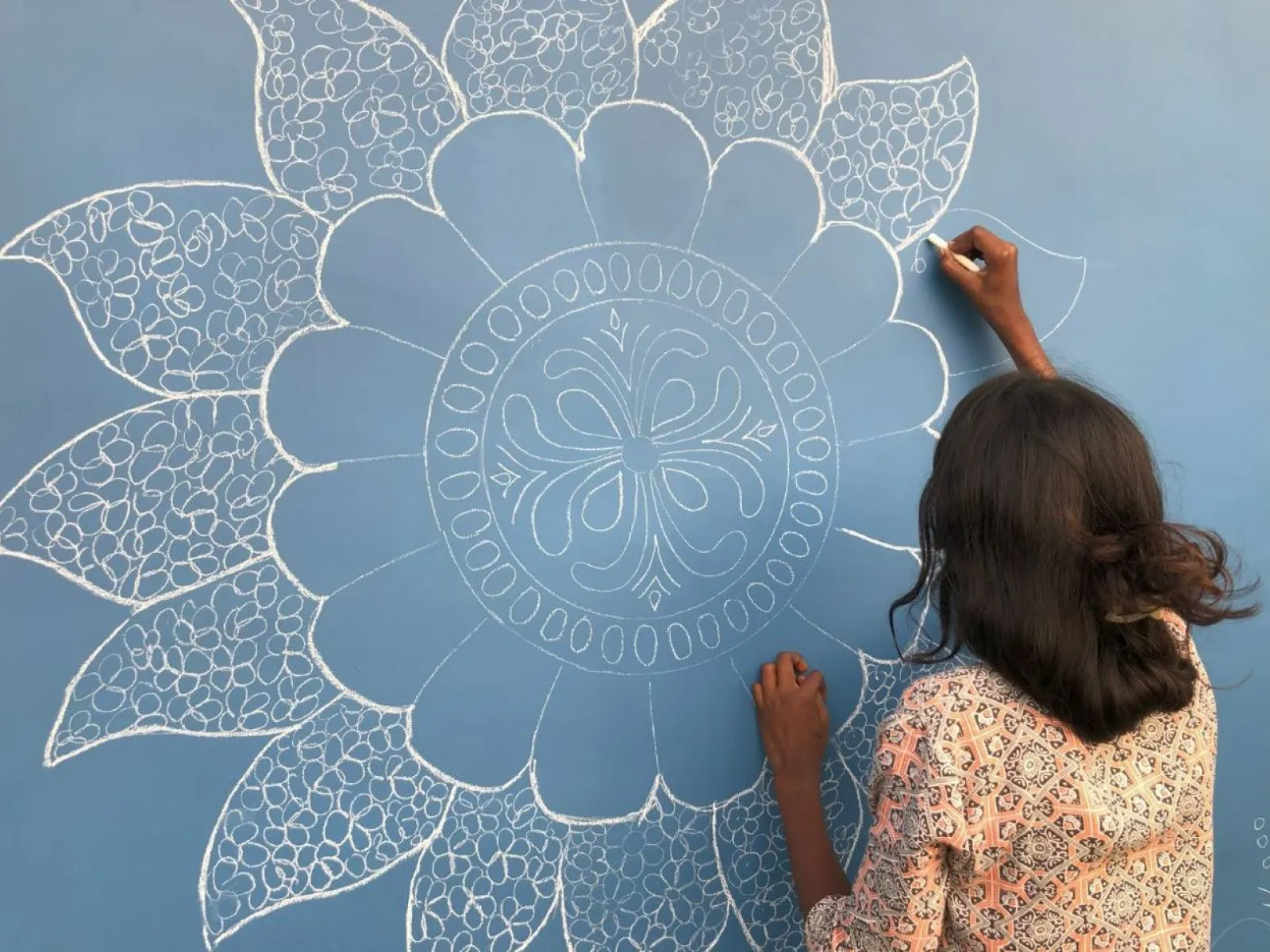
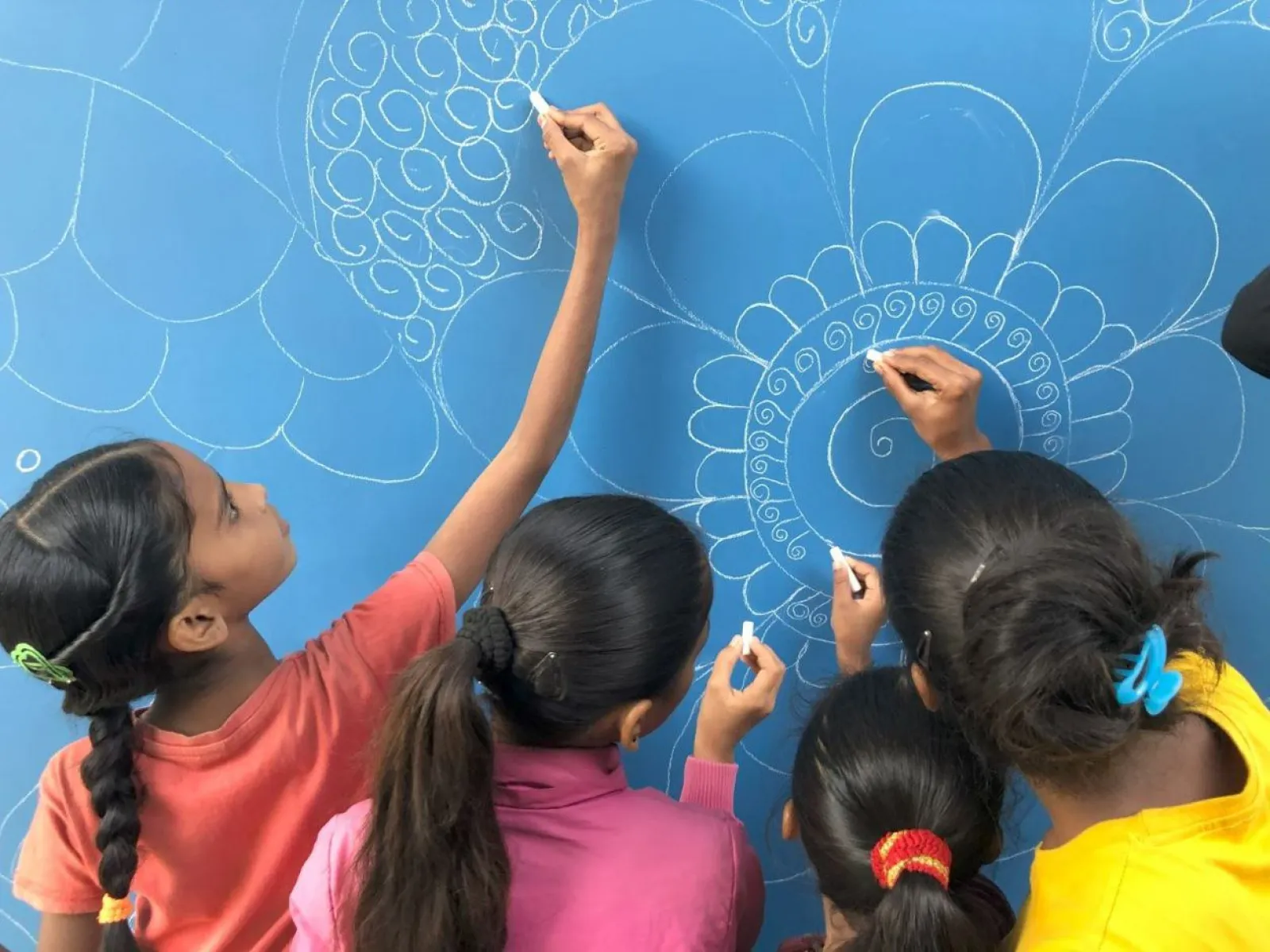
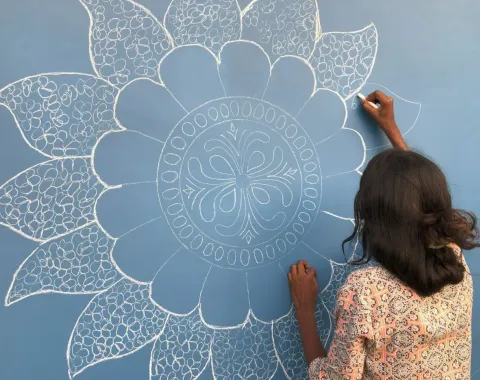
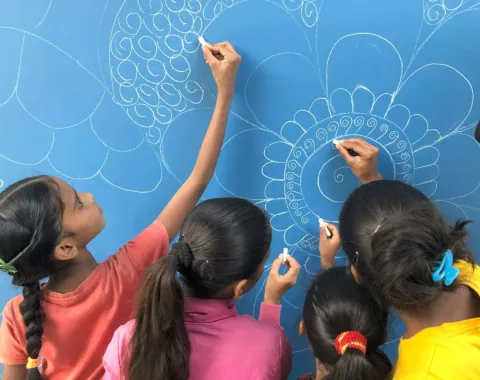
Children and young people also contributed to the design by creating ornamentation for the façades and classrooms. In the case of the classrooms, these were later translated into reliefs by local clay experts; for the façades, the designs were painted in white on bright blue walls. The colour scheme also reflects the wishes of the future users: while the unplastered clay walls help keep the school cool inside, the blue-painted exterior ensures it looks “cool” on the outside too.
Photo Credits: Daniel Haselsberger, Isha Haselsberger