Exchange on the Latest Practice-Relevant Developments in the Field of Compliance
Exchange on the Latest Practice-Relevant Developments in the Field of Compliance
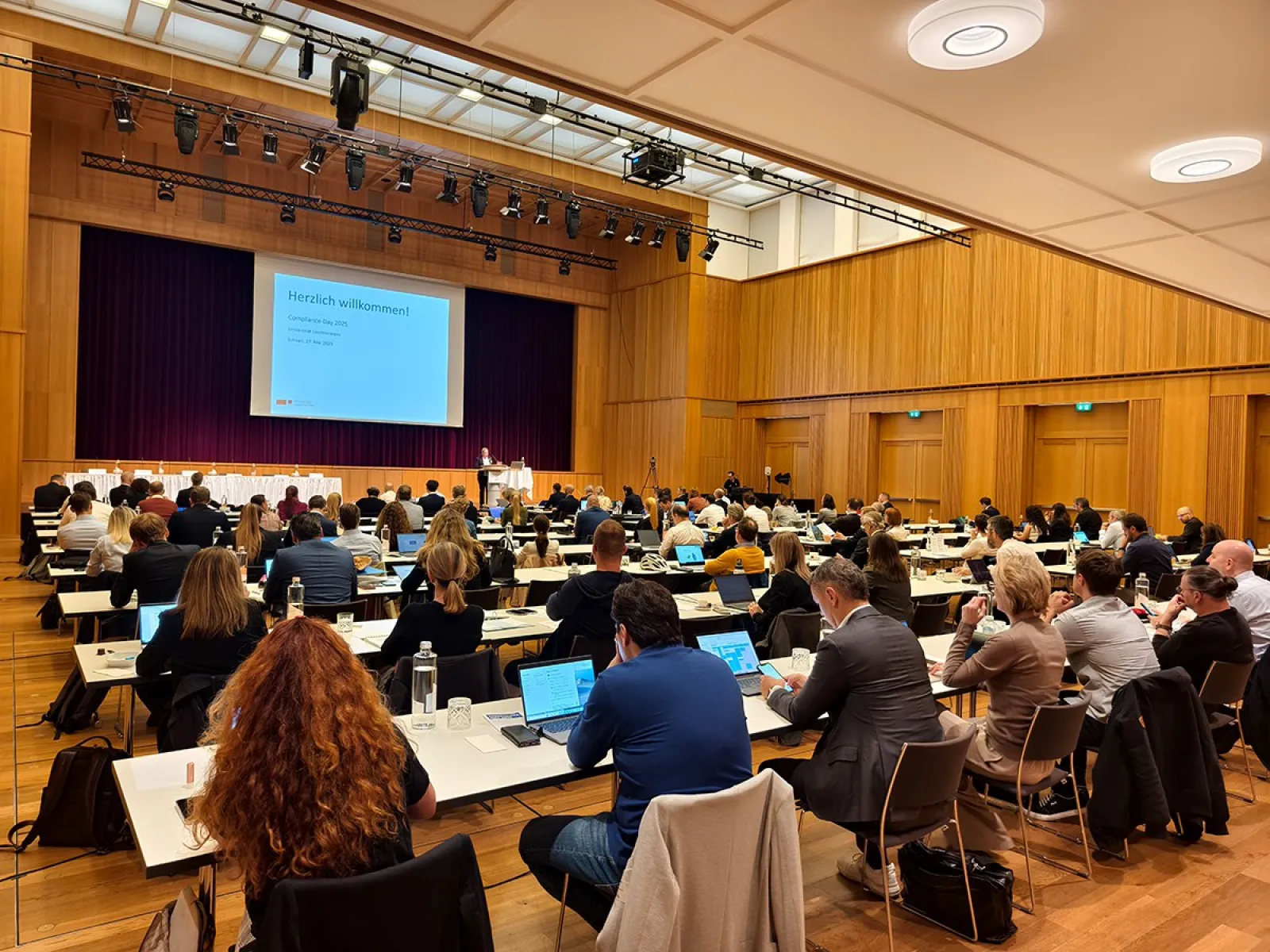
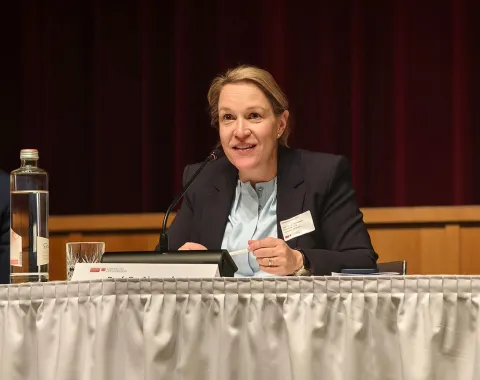
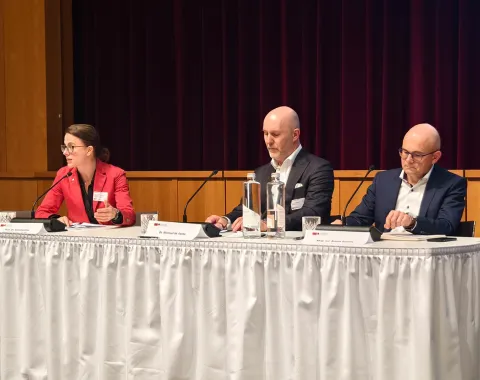
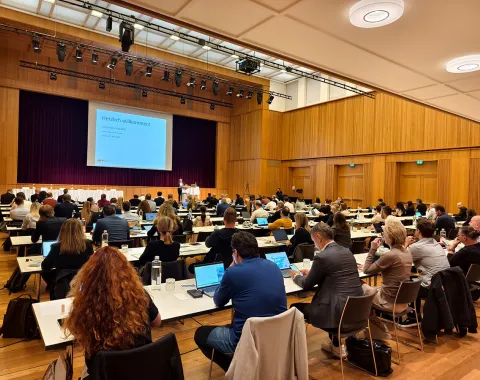
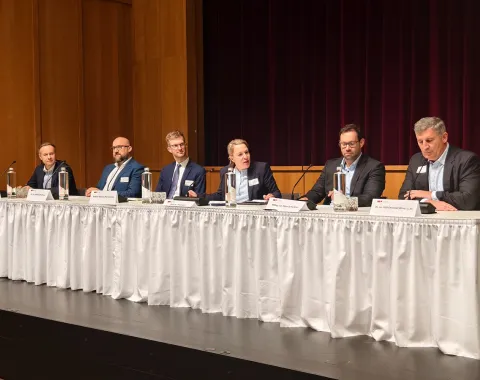
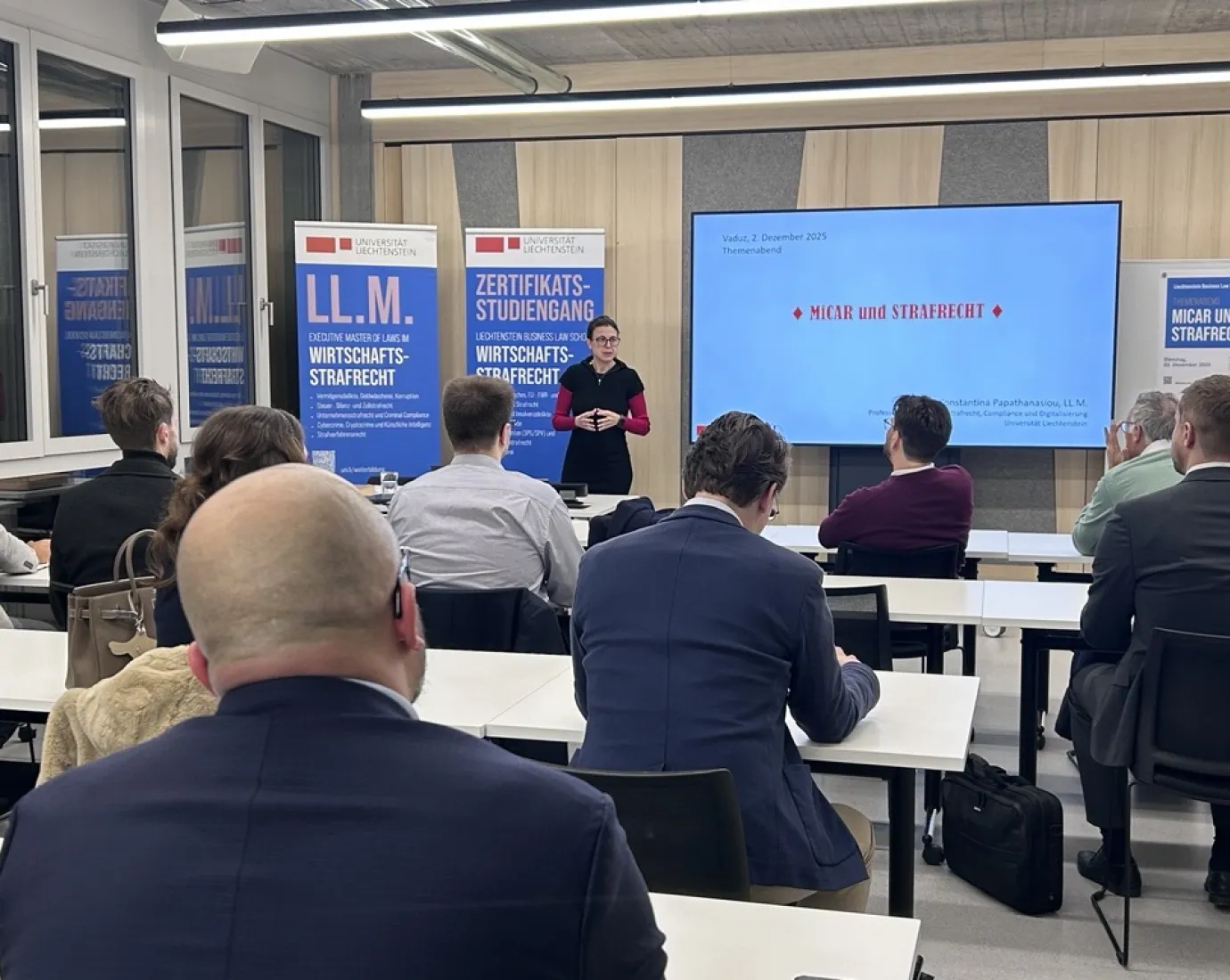
On 27 May 2025, the Professorships for Company, Foundation and Trust Law; Banking and Financial Market Law; and Economic Criminal Law, Compliance and Digitalisation hosted the Compliance Day 2025. Around one hundred professionals from the legal, business, and industrial sectors filled the SAL (Saal am Lindaplatz) to exchange insights on the latest practice-relevant developments in compliance.
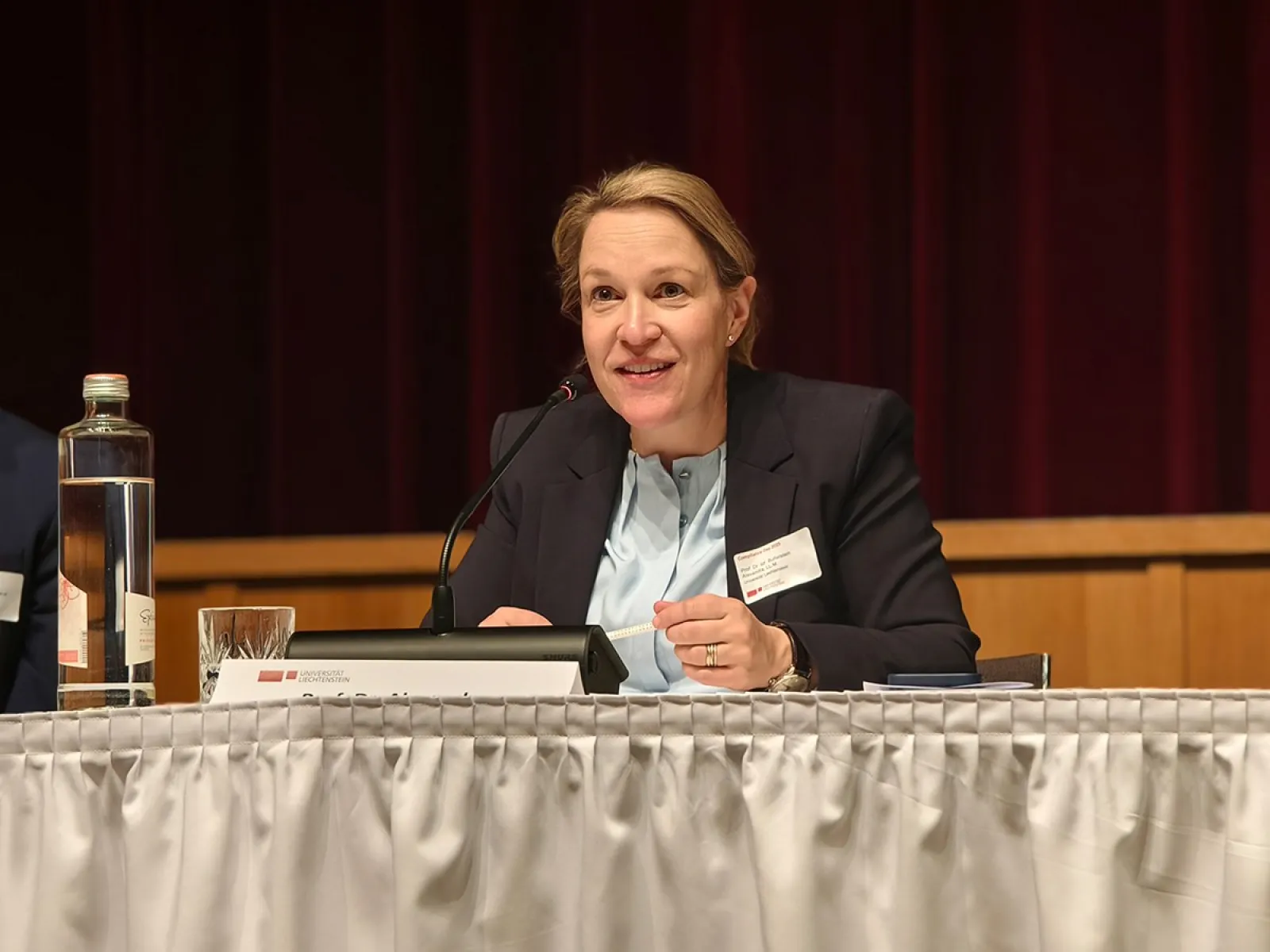
In her welcome address, Prof. Dr. Alexandra Butterstein, LL.M., Dean of the Liechtenstein Business Law School and Chair of the Professorship for Company, Foundation and Trust Law, emphasised the growing demands placed on compliance officers. With ever-increasing regulatory requirements, continuing education formats such as Compliance Day, the Certificate Programme for Compliance Officers, and the Intensive Course on Criminal Law and Corporations are becoming ever more relevant. She expressed her gratitude to the speakers, as well as the Liechtenstein Institute of Professional Trustees and the Financial Market Authority (FMA) Liechtenstein for their contributions to specific thematic blocks.
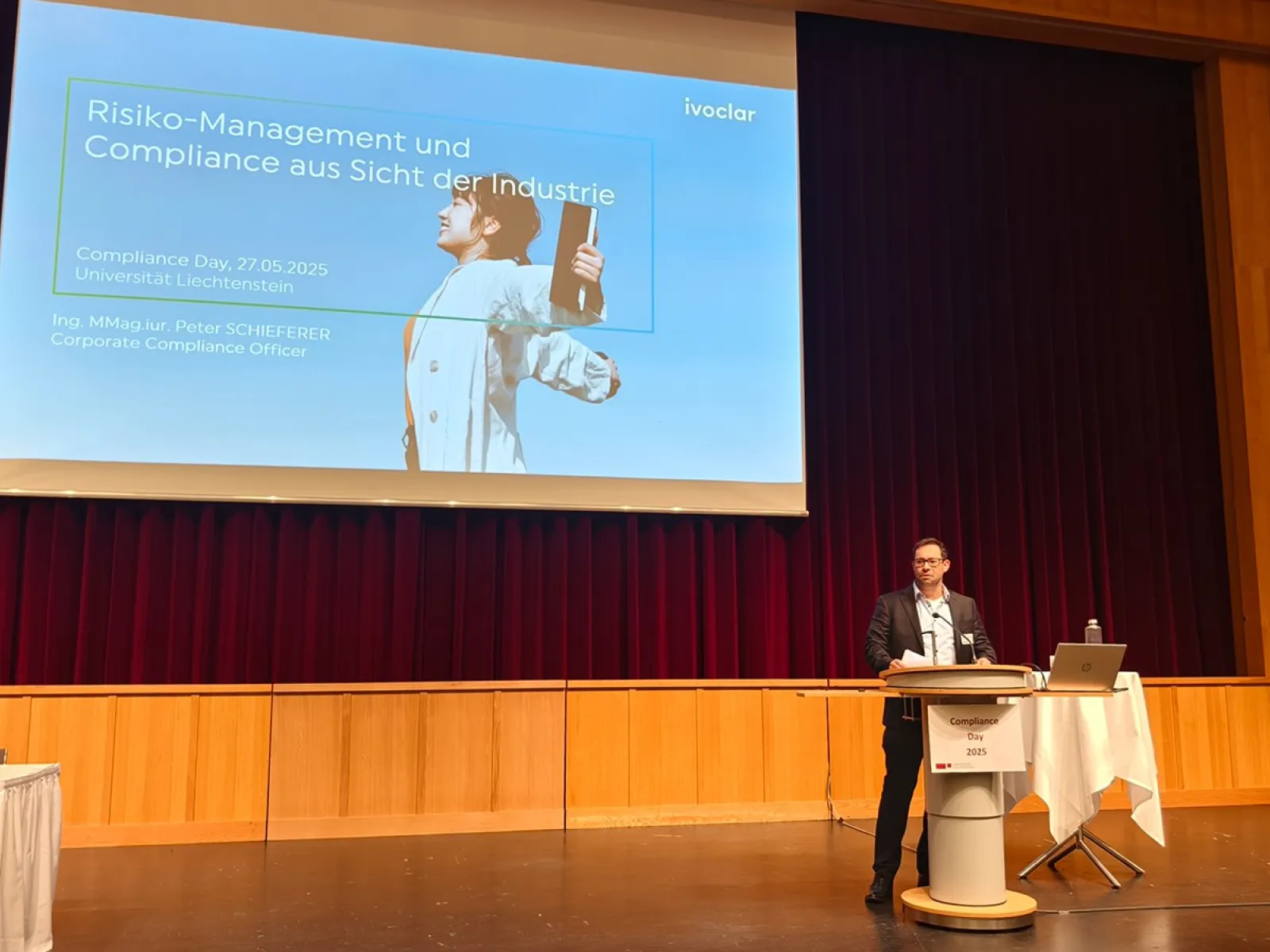
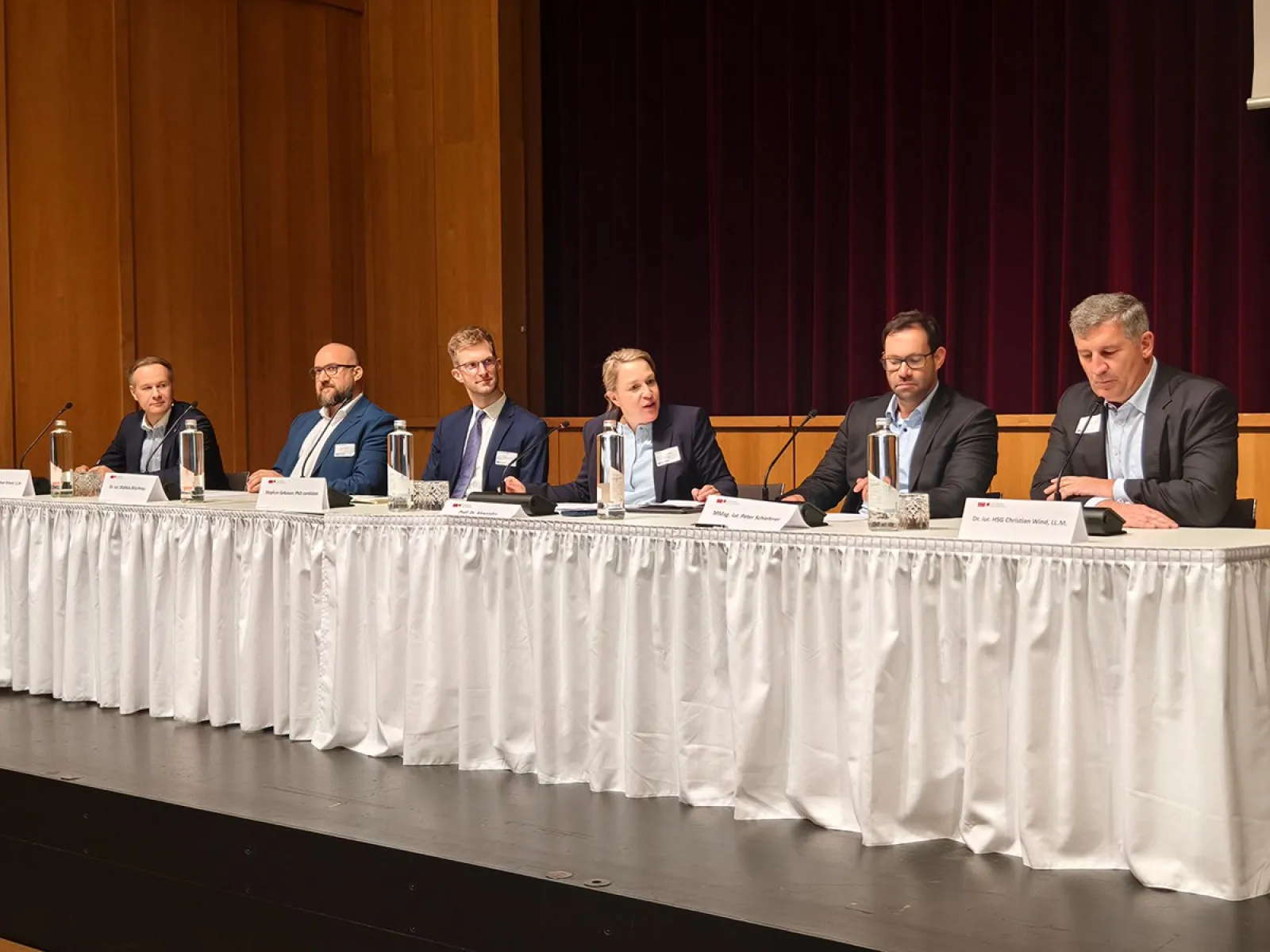
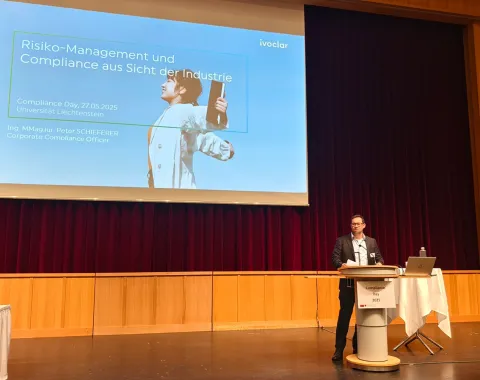
The morning session, moderated by Prof. Butterstein, focused on embedding compliance into operational processes. Dr. Christian Wind illustrated how risk controls can be integrated into value creation without sacrificing efficiency. MMag. Peter Schieferer followed with practical case studies on how industrial companies deal with classic compliance risks, such as inadequate IT security. Stephan Gebauer argued that rules alone are insufficient to ensure ethical behaviour—personal commitment and acceptance of constraints are equally essential.
The session concluded with a focus on compliance and risk prevention: Dr. Mathias Bitschnau explained reporting requirements under Article 17 of the Liechtenstein Due Diligence Act (SPG), and Dr. Stephan Ochsner addressed the growing complexity of international sanctions and their legal implementation. A panel discussion offered space to revisit and deepen the key topics addressed in the morning.
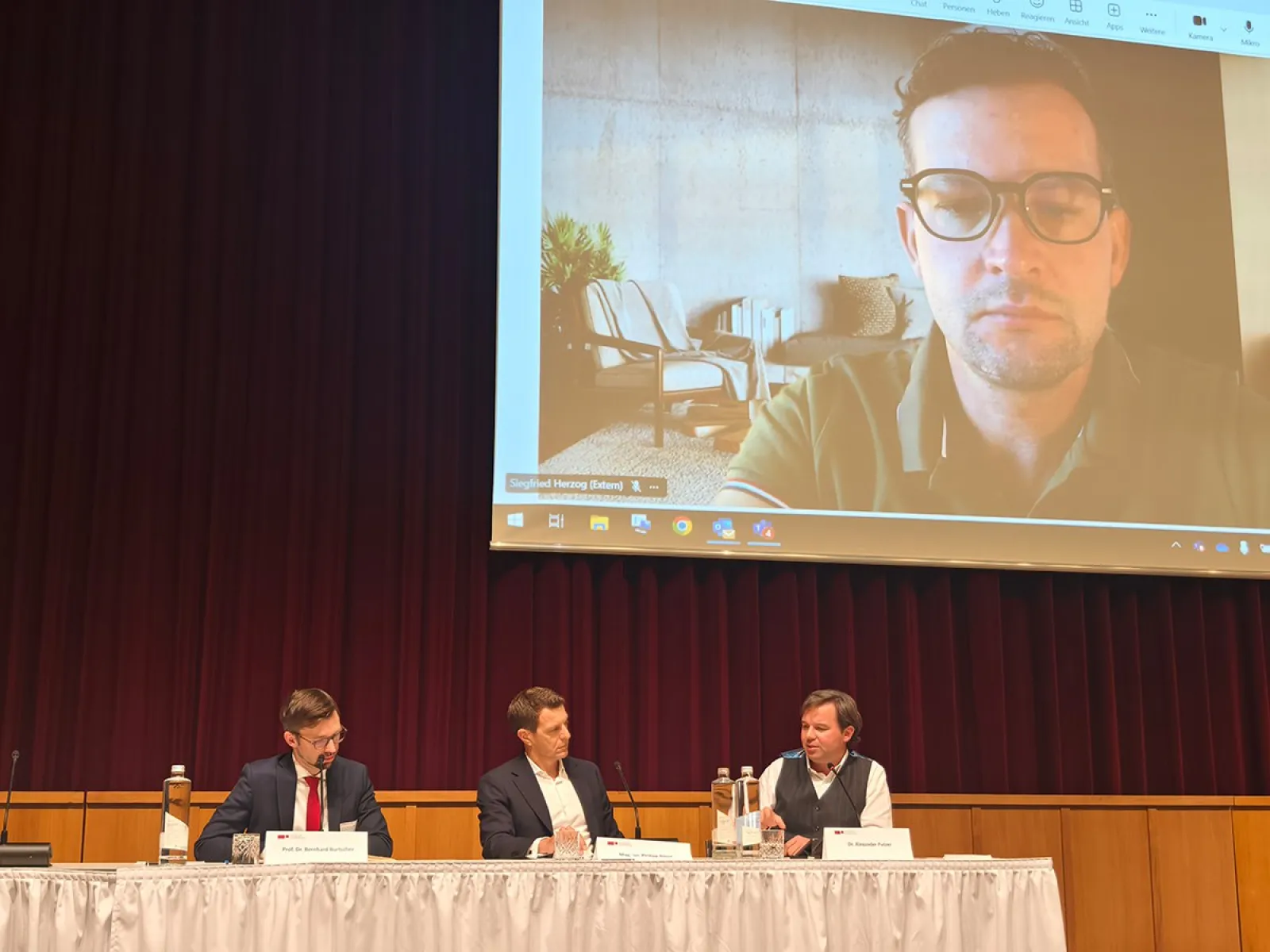
After the networking lunch, Prof. Dr. Bernhard Burtscher, Chair of the Professorship for Banking and Financial Market Law, moderated the afternoon block on financial markets. Under his lead, Dr. Alexander Putzer outlined the reform of Liechtenstein’s Banking Act, focusing on the role of compliance, the compatibility of advisory and supervisory duties, and challenges of adopting foreign regulations.
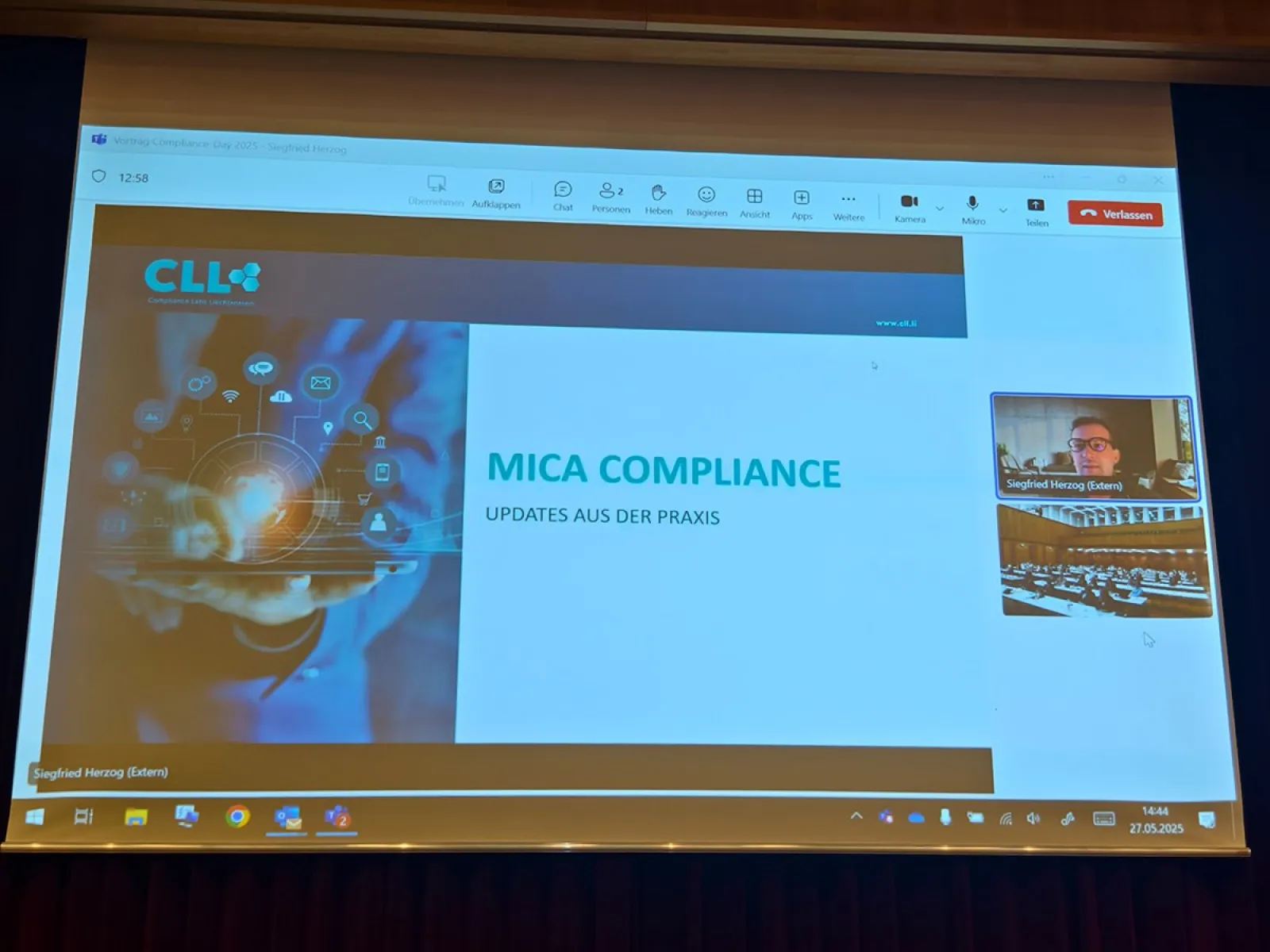
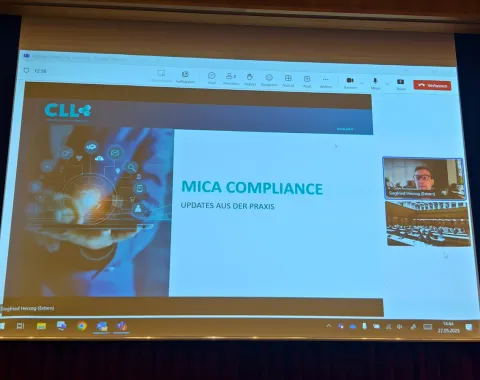
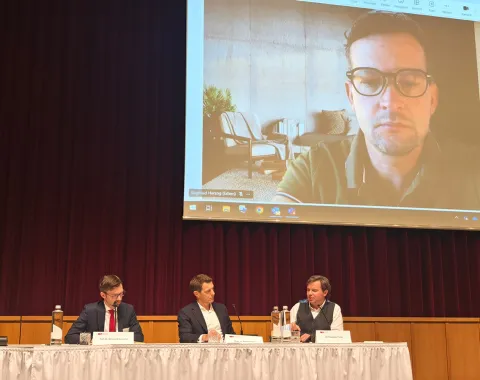
Mag. Philipp Röser presented the upcoming AML Regulation, including new reporting obligations, the protection of money laundering officers, and difficulties in identifying beneficial owners. Dr. Siegfried Herzog provided insights into the implementation of MiCAR, the relevance of the Transfer of Funds Regulation (TFR), transparency requirements, and handling of stablecoins. The subsequent discussion centred on one key question: How can institutions manage regulatory complexity?
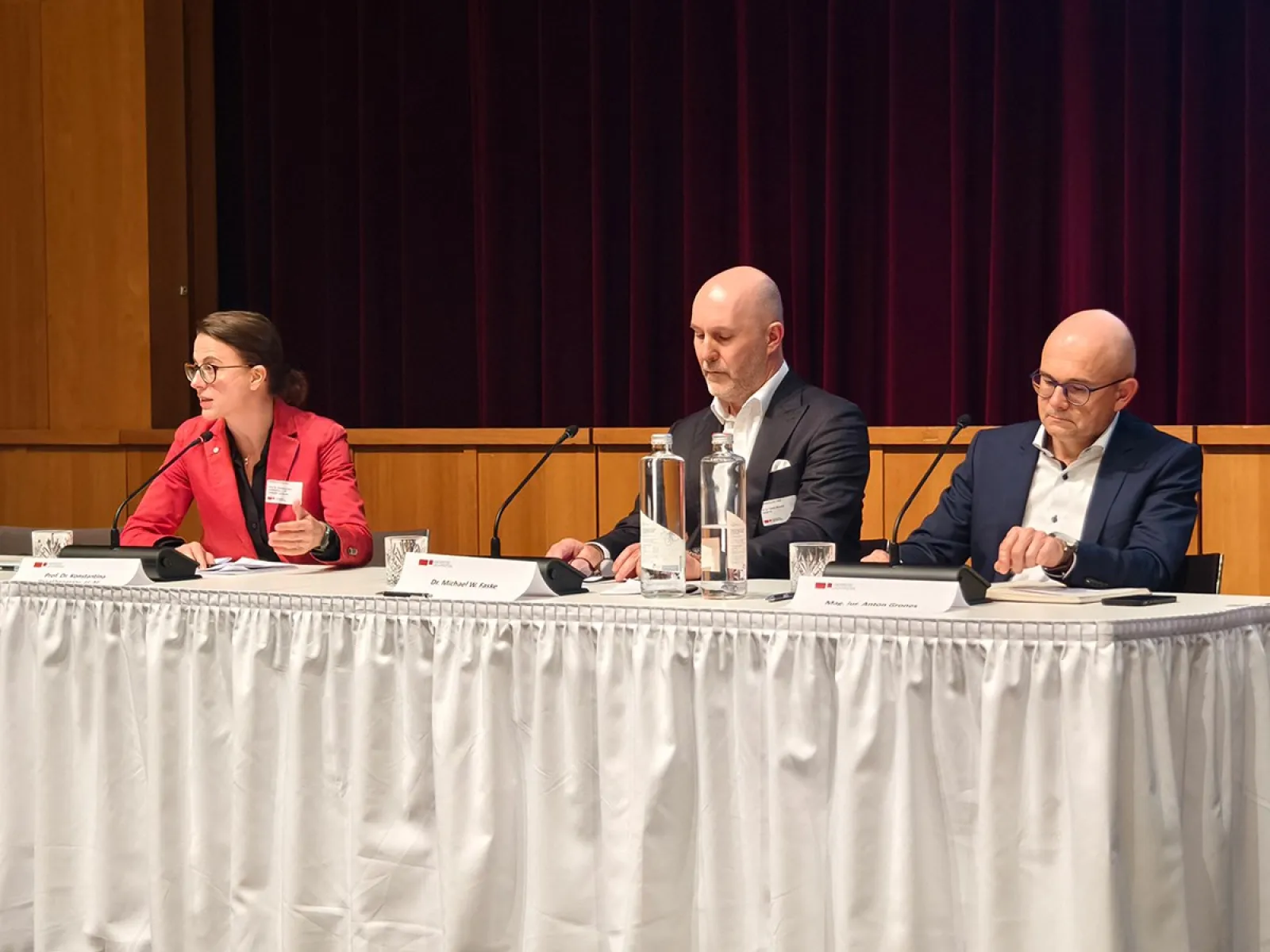
The final thematic block, moderated by Prof. Dr. Konstantina Papathanasiou, Chair of the Professorship for Economic Criminal Law, Compliance and Digitalisation and Chair of the Senate at the University of Liechtenstein, addressed the digitalisation of compliance frameworks. She highlighted recent legislative developments in the EU and Liechtenstein, including DORA, NIS II, and the Cybersecurity Act.
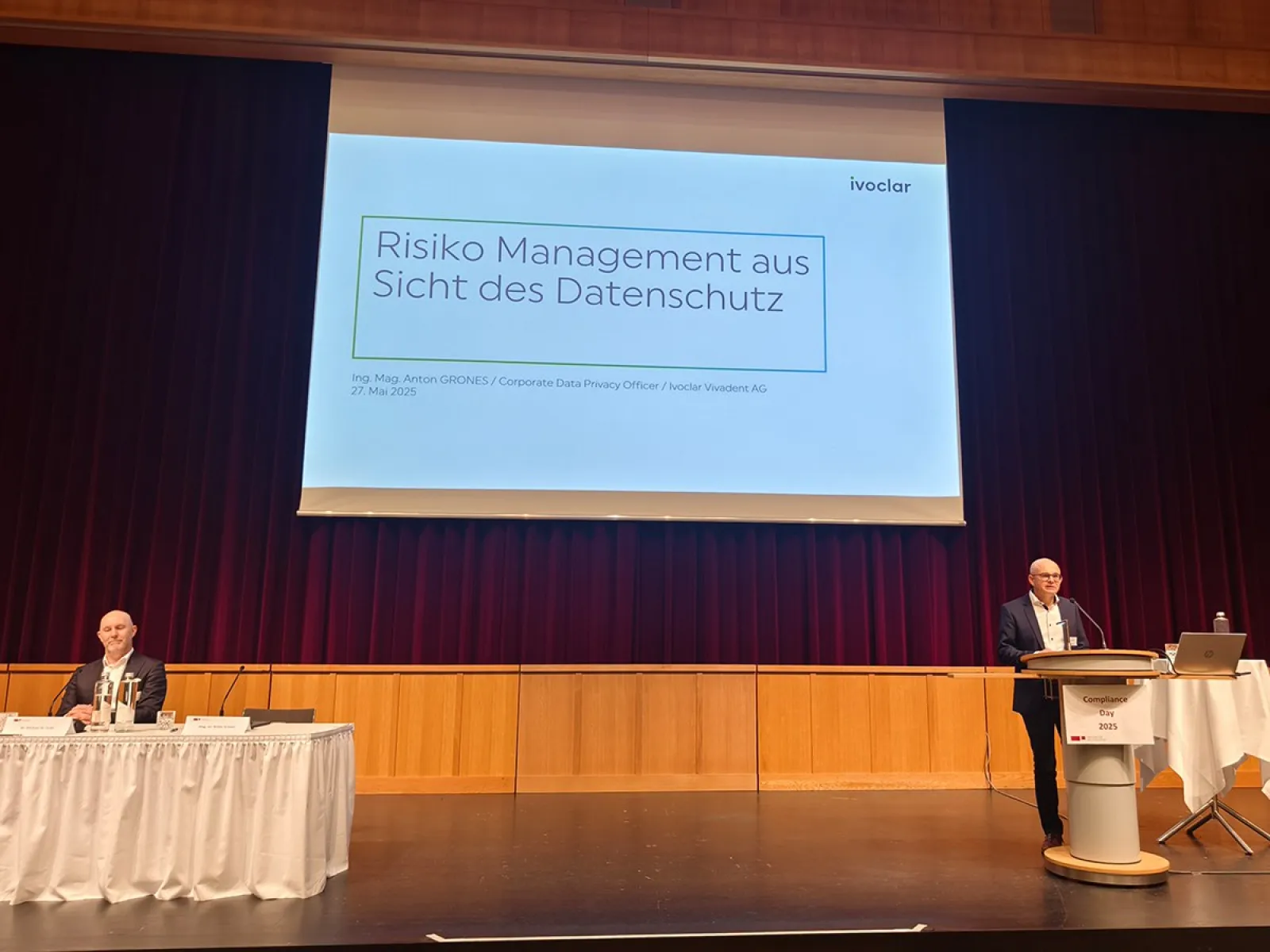
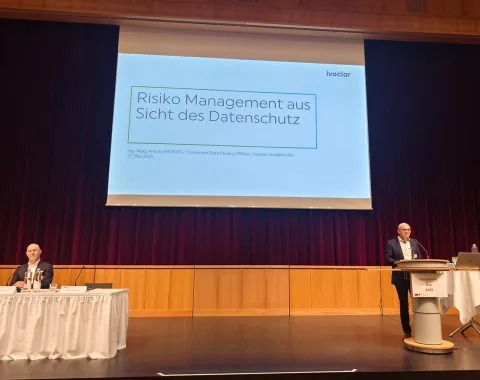
Mag. Anton Grones, a lawyer and technology expert, explored the role of data protection within globally integrated risk management systems, including references to the AI Act. In the final presentation, Dr. Michael Faske addressed the specific challenges of internal investigations in the digital era, with a focus on generative AI tools such as ChatGPT. Participants engaged actively in the final Q&A session to explore the afternoon’s topics in greater depth.
In her closing remarks, Prof. Papathanasiou thanked all speakers and attendees on behalf of the organising chairs. She warmly invited participants to future events at the University of Liechtenstein. The day ended with an informal networking reception, where discussions continued in a relaxed setting, new contacts were made, and future collaborations were initiated.
The unanimous conclusion: Compliance Day once again confirmed its role as a key dialogue platform in the DACHLI region. The next edition is scheduled for spring 2026 and will once more offer hands-on insights for sustainable compliance management.