Executive Master of Laws (LL.M.) in Banking and Financial Market Law

Banking and Financial Market Law is a key area for a stable and innovative financial sector. Our professional education offerings are aimed at professionals who want to navigate the complex regulatory environment more effectively, expand their legal expertise and address current challenges in Liechtenstein’s financial centre. The focus is on practice-relevant topics in banking and financial market law, always with an eye on national and European frameworks. Whether banking law, capital markets law, anti-money laundering compliance or related areas, our programmes offer solid legal guidance for specialists and executives.
10% Early-Bird Discount
until 31 March 2026


The financial industry is a highly complex and extensively regulated economic sector. Those who want to succeed within it must know the rules of the game. Expert knowledge in regulation is in demand!"
Module Overview
The LL.M. in Banking and Financial Market Law covers the essential legal frameworks concerning banks, insurance companies, funds, asset management and new business models in nine modules.
Topics include European and international financial market law, banking law, capital markets law, as well as the specific legal systems of Liechtenstein and Switzerland. Additionally, subjects such as anti-money laundering, corporate governance, digital innovation and sustainability, as well as practice-oriented case studies, are addressed..
Module 1 – Fundamentals of Financial Market Law
Module 1 of the Executive Master of Laws (LL.M.) in Banking and Financial Market Law covers the fundamentals of Liechtenstein and European banking and financial market law. It includes legal and economic aspects such as supervisory law, civil law basics, and the interplay of national and European supervisory authorities like the EBA and ESMA. Students learn the basics of banking operations as well as economic theories and risk management. Special attention is given to EEA financial market law and the principles of corporate finance and accounting.
Module 2 – Banking Law
The module "Banking Law" covers the fundamentals of Liechtenstein and European banking supervisory law within the context of the banking union. The focus is on the CRD, CRR and the Banking Act, including licensing requirements, corporate governance and bank resolution. A key emphasis is placed on capital requirements under the Basel framework as well as the activities of the Financial Market Authority (FMA). Other topics include banks’ conduct obligations, business models, the Capital Requirements Regulation (CRR) and macroprudential supervisory mechanisms in the banking sector.
Module 3 – Payment Transactions and Anti-Money Laundering Prevention
Module 3 covers Liechtenstein and European payment transactions law, ranging from the PSD through regulation of payment accounts to e-money institutions. It addresses key payment services directives and framework agreements such as credit card and online banking contracts. Another focus is on anti-money laundering prevention, with an emphasis on the Liechtenstein Due Diligence Act and the European Anti-Money Laundering Directive. Topics such as terrorist financing, FATCA and the automatic exchange of information (AEOI) are also covered.
Module 4 – Capital Markets Law
Module 4 covers Liechtenstein and European capital markets law, including primary and secondary market law as well as market infrastructure regulations. Key topics include the Prospectus Regulation, MiFID requirements and the Market Abuse Regulation (MAR). Other focuses are transparency obligations in derivatives trading (MiFIR), the EU regulation on OTC derivatives (EMIR) and clearing requirements. Additionally, custody, settlement and conduct obligations in securities services are addressed, including current developments such as sustainability in capital markets.
Module 5 – Fund Law
Module 5 deepens knowledge of Liechtenstein and European investment fund law, with a focus on UCITS and AIFM regulations. It covers fund structuring, taxation and the regulation of hedge funds, prime brokers and custodians. Students become familiar with key fund law regulations such as the UCITSG and AIFMG. Emphases include the licensing of fund managers, conduct obligations in capital investments, as well as specific European fund regimes like EuVECA and ELTIF. Pension funds and tax aspects of fund structuring are also addressed.
Module 6 – Insurance Law
Module 6 provides fundamental knowledge in insurance law, including insurance supervisory law (Solvency II), insurance mediation (IDD, PRIIP Regulation), as well as Liechtenstein, Swiss and Austrian insurance contract law. It covers insurance contracts (VersVG, ABGB) and cross-border insurance services, particularly within the EEA. Key focuses are the regulation of insurance companies, pension funds and occupational pension schemes (BPVG). Additionally, the obligations of insurance mediation and product regulation under the PRIIP Regulation are addressed.
Module 7 – Study Trip
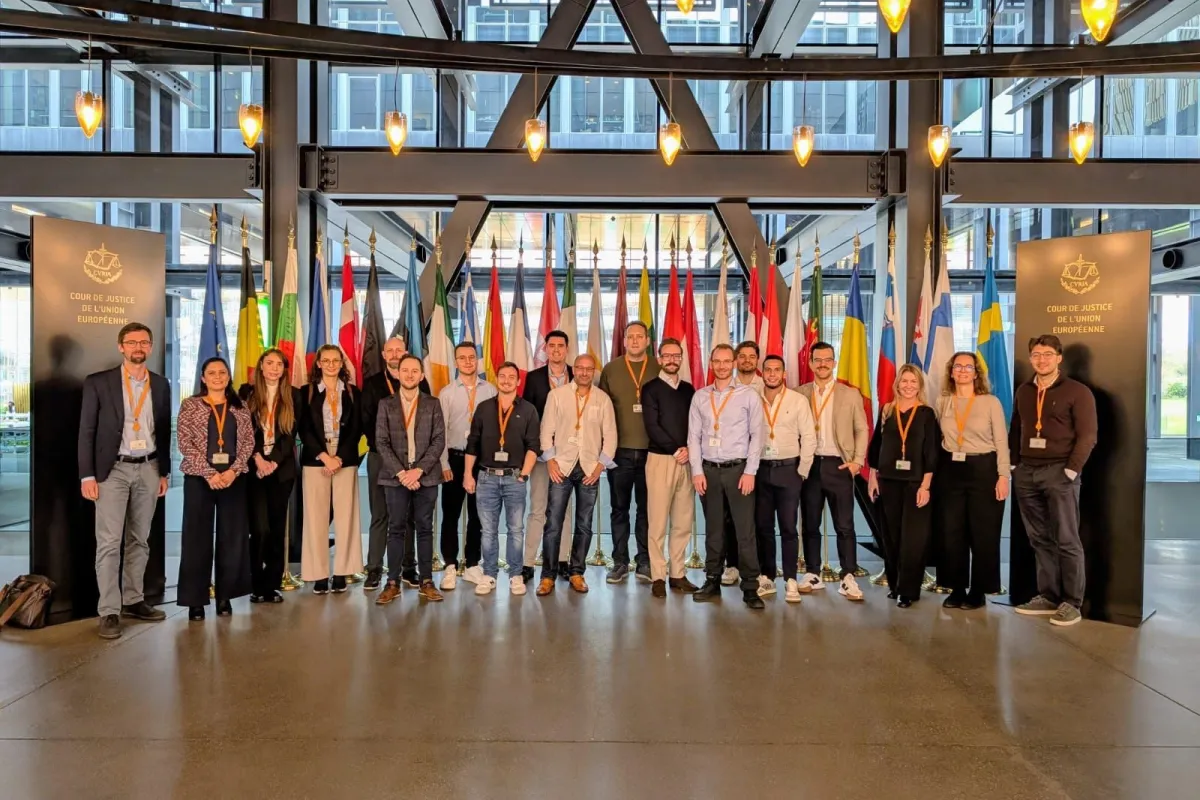
Module 7 comprises a six-day study trip tailored to the programme’s topics. The trip includes visits to supervisory authorities, international organisations, universities and law firms, as well as workshops. Students have the opportunity to engage with the course content, gain an international perspective on the subjects and network with professionals as well as fellow students. The study trip fosters both professional and personal networks.
Module 8 – Digitalisation and Sustainability
Module 8 offers an in-depth insight into current regulatory developments in the areas of digitalisation and sustainability. The focus lies on the regulation of crypto assets (TVTG, MiCAR, DLT Pilot Regime), data protection law and European sustainability regulation. FinTech trends such as digital asset management, algorithmic trading and crowdfunding platforms are covered. The module also examines European platform regulations (DMA, DSA) as well as the legal framework for sustainable finance (Taxonomy Regulation, CSRD). Additional topics include sustainable lending and investment advice under MiFID II.
Module 9 – International Private Wealth Management
Module 9 consists of an interdisciplinary workshop in which students from various executive master’s programmes collaborate. In teams, they work on a case study covering a cross-cutting topic in international private wealth management. The case study includes banking and financial market law as well as company and tax law. Students simulate a real advisory situation, solve complex legal issues and present their results in an interdisciplinary discussion with participants from other programmes. This fosters practice-oriented problem solving and teamwork.
Alumni Porträt – Stefano Frick
Programme Overview: Information, Structure and FAQ
Information Sessions for Prospective Students
Currently, no information events can be booked online. In the meantime, we will be happy to advise you personally.
New: 10% Early-Bird Discount until 31 March 2026

Apply now for the Executive Master of Laws (LL.M.) in Banking and Financial Market Law and prepare yourself specifically for responsible roles in the financial sector! Become an expert in one of the most dynamic areas of law and expand your network with leading figures in the financial industry.

Downloads and Links
Legal Foundations and Regulations
The general terms and conditions (GTC), regulations and other guidelines for the professional education programmes are available for download on the Guide and Downloads Guide and Downloads page.