"Making Urban Africa"
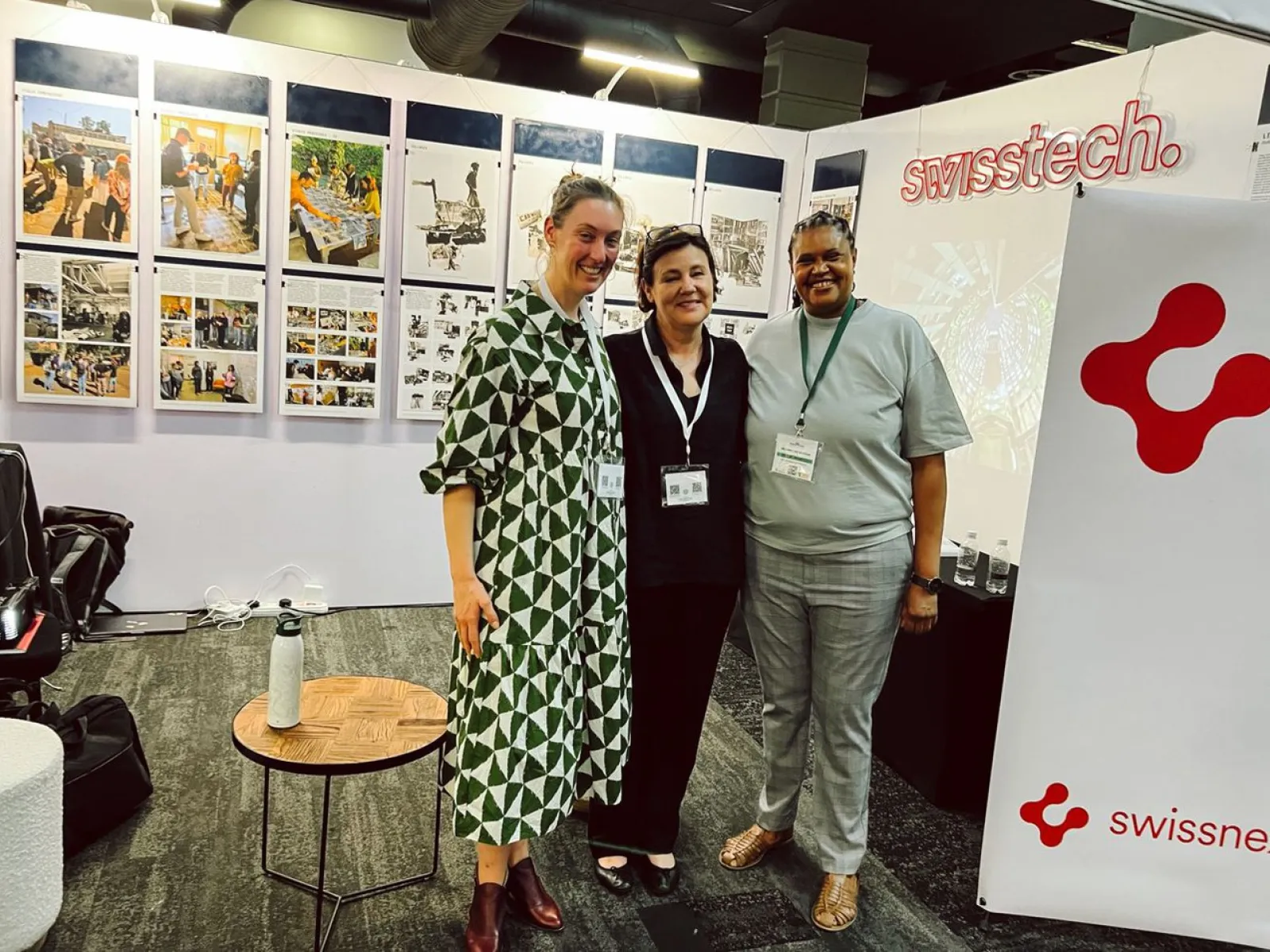
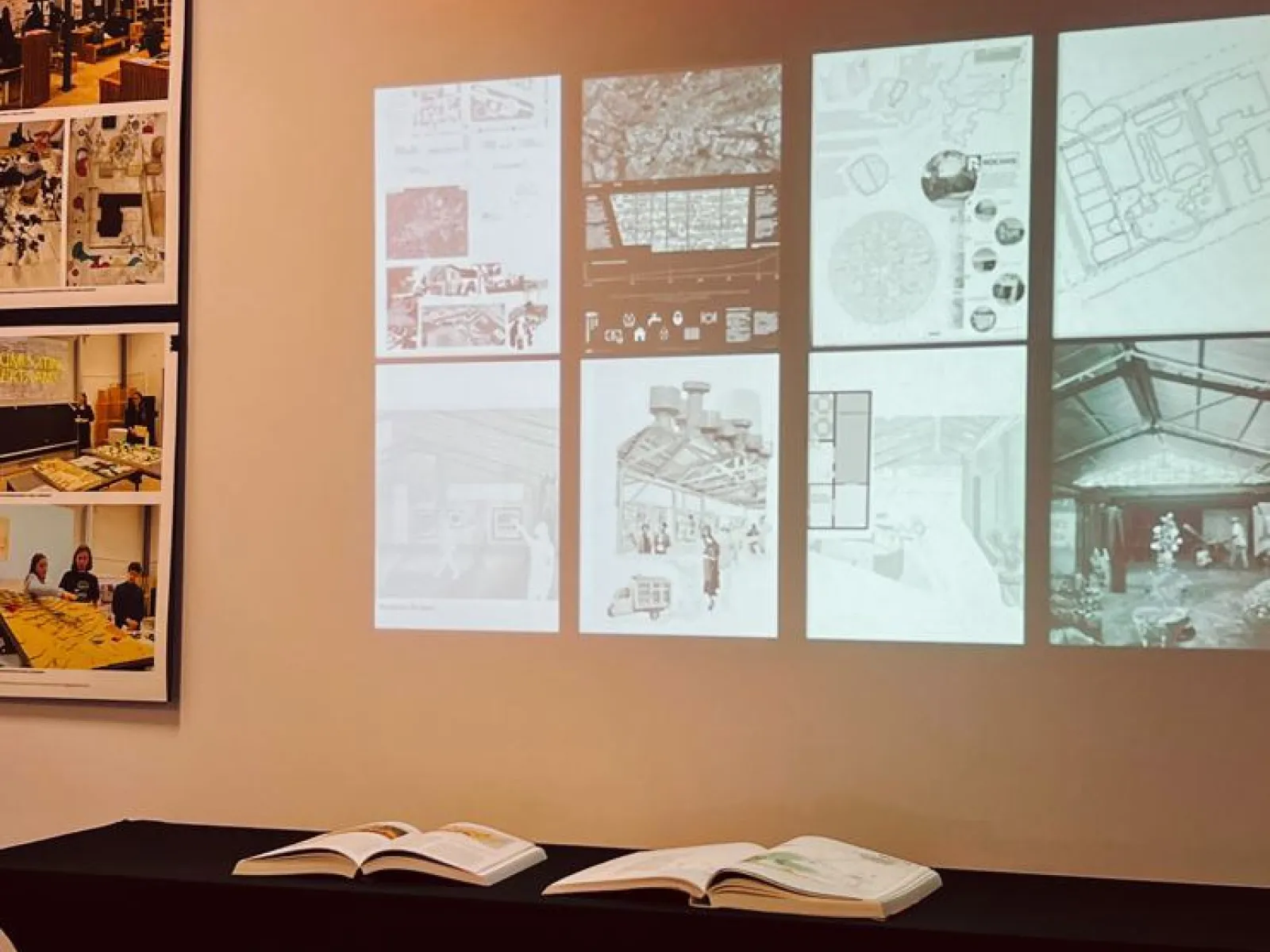
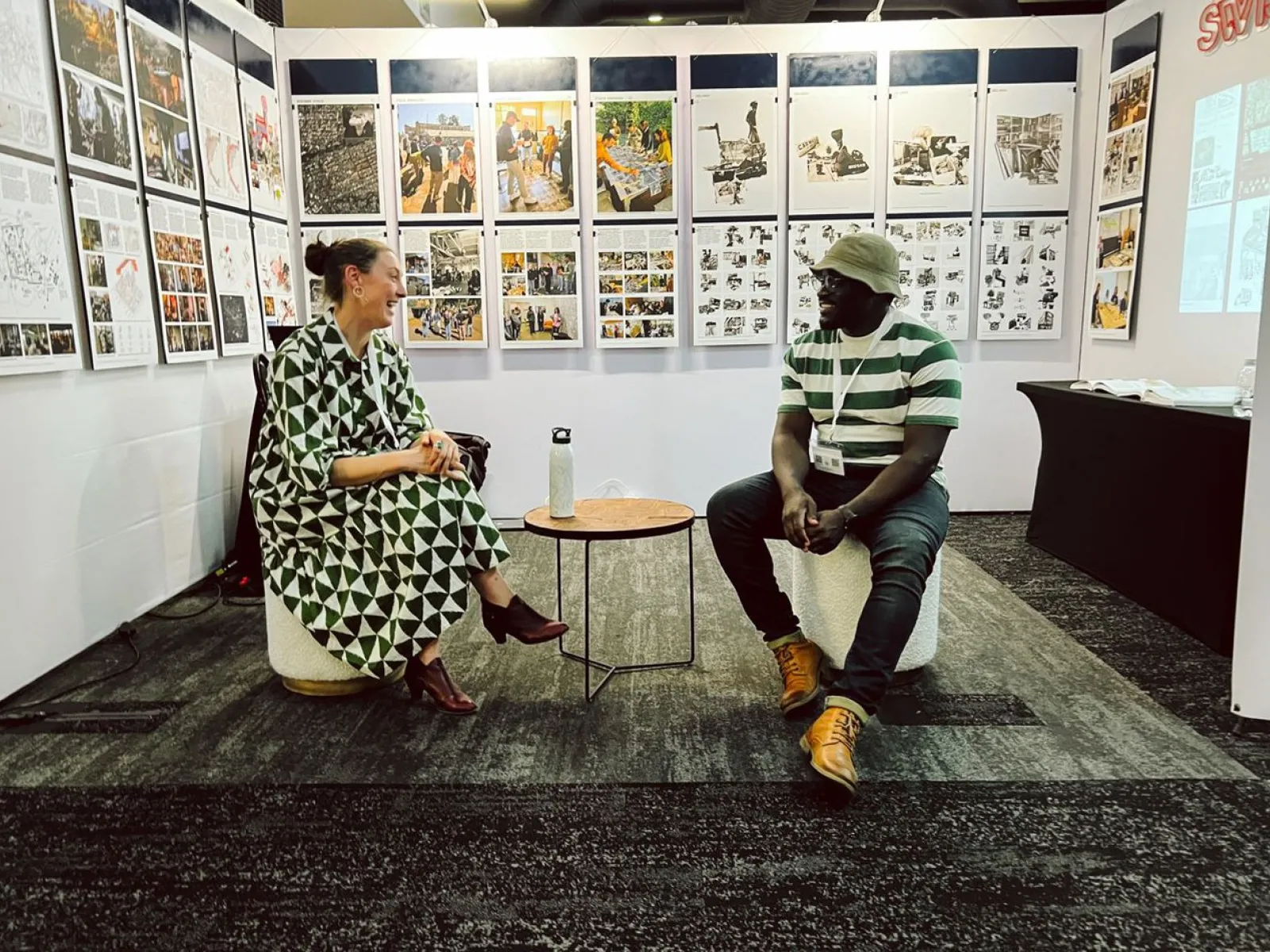
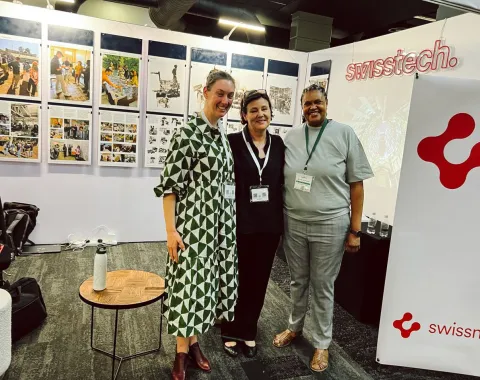
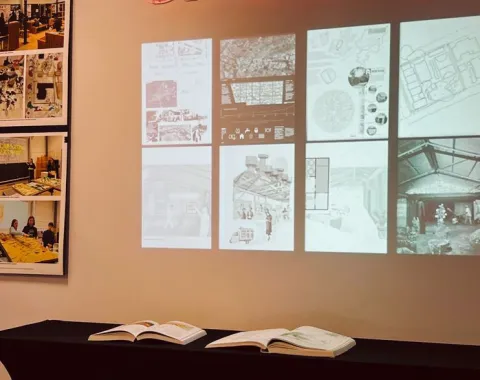
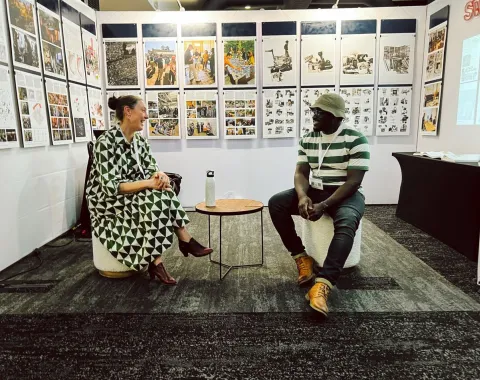
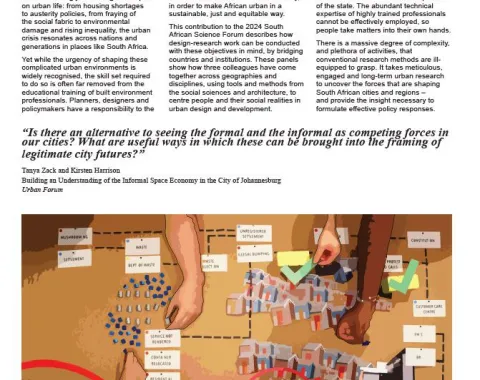
Our exhibition contribution to the 2024 South African Science Forum, entitled “Making an Urban Africa,” describes how design-research work can be conducted with the objectives outlined above in mind, by bridging countries and institutions. The exhibition panels detail how three colleagues have come together across geographies and disciplines, using tools and methods from the social sciences and architecture, to center people and their social realities in urban design and development through studio teaching work. This provided us a chance to present our shared pursuits with a very broad scientific audience, and was visited by the federal minister of the Department of Education, along with many other public-sector representatives across all tiers of government. The Embassy of Switzerland and Liechtenstein financed our exhibition and a corresponding panel discussion, including the original empirical research that contributed to this work and allowed our students to deeply engage with these important topics.
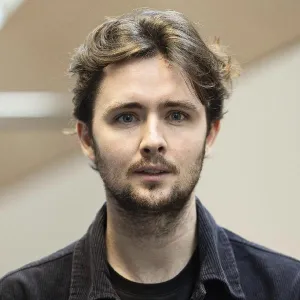
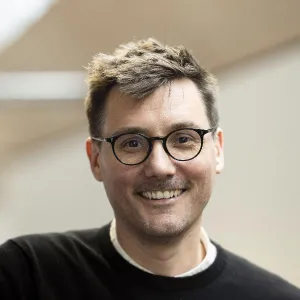
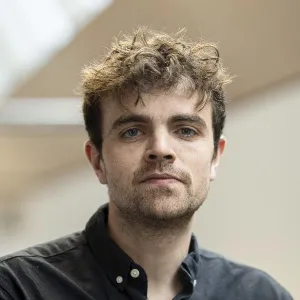
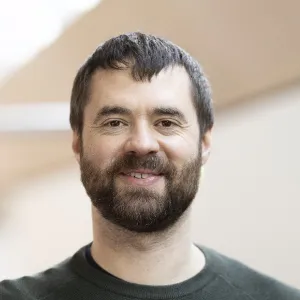
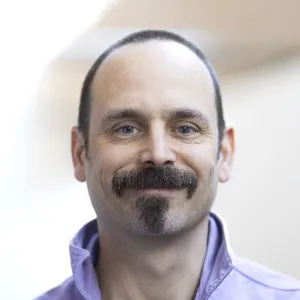
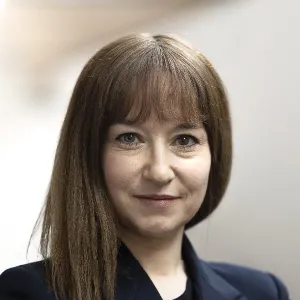
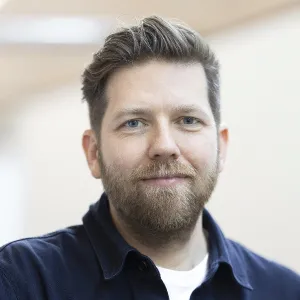
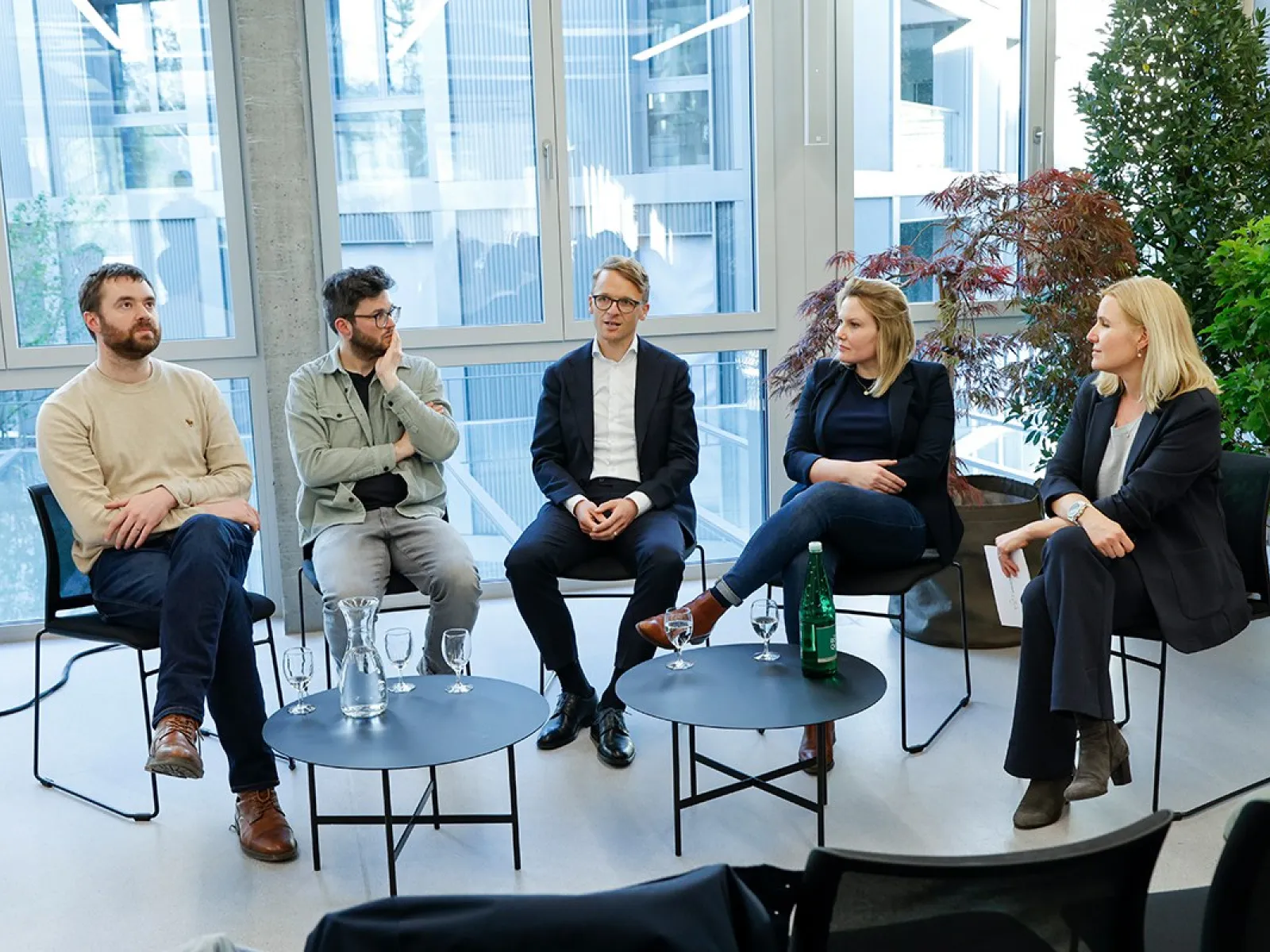
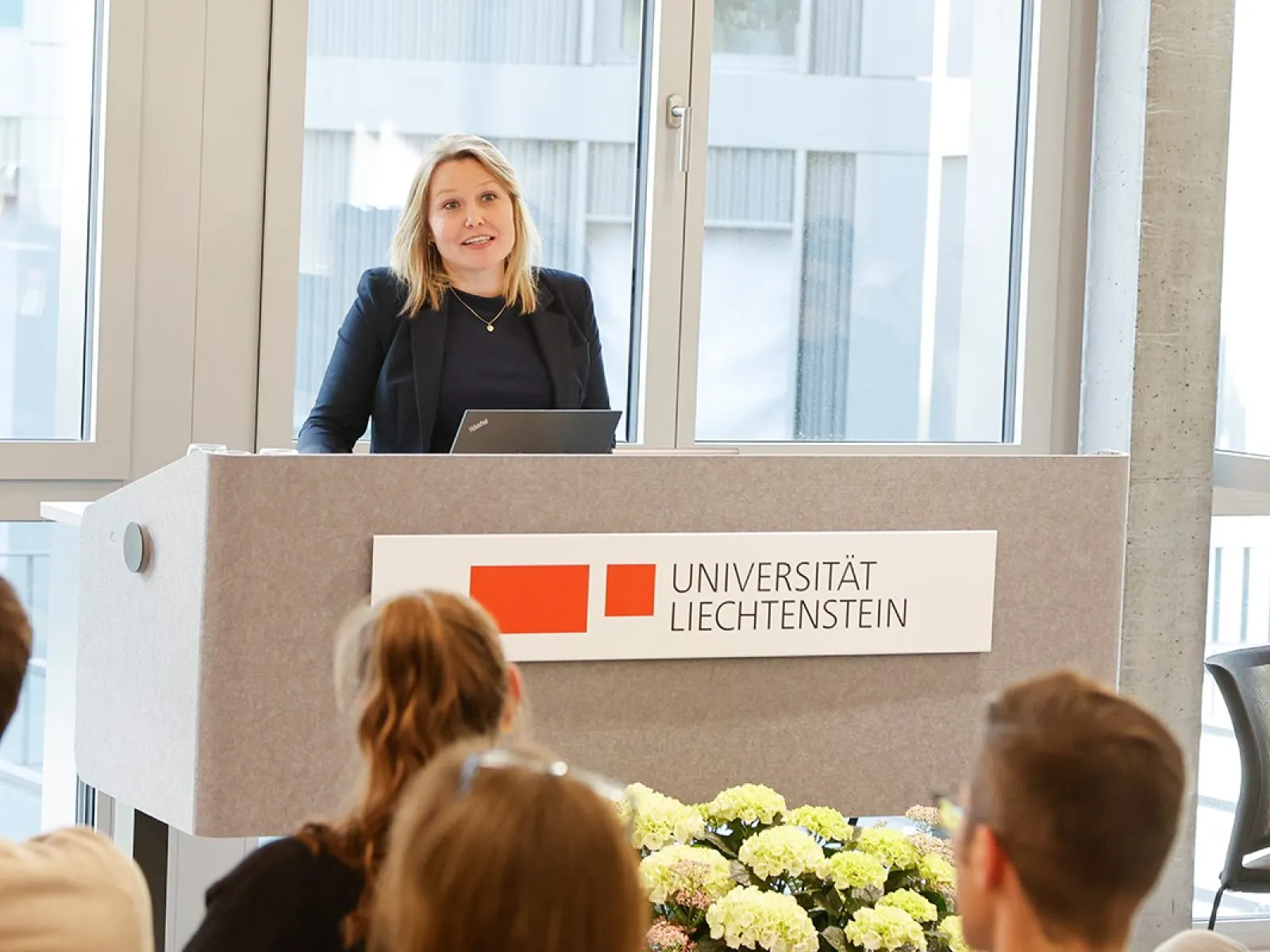
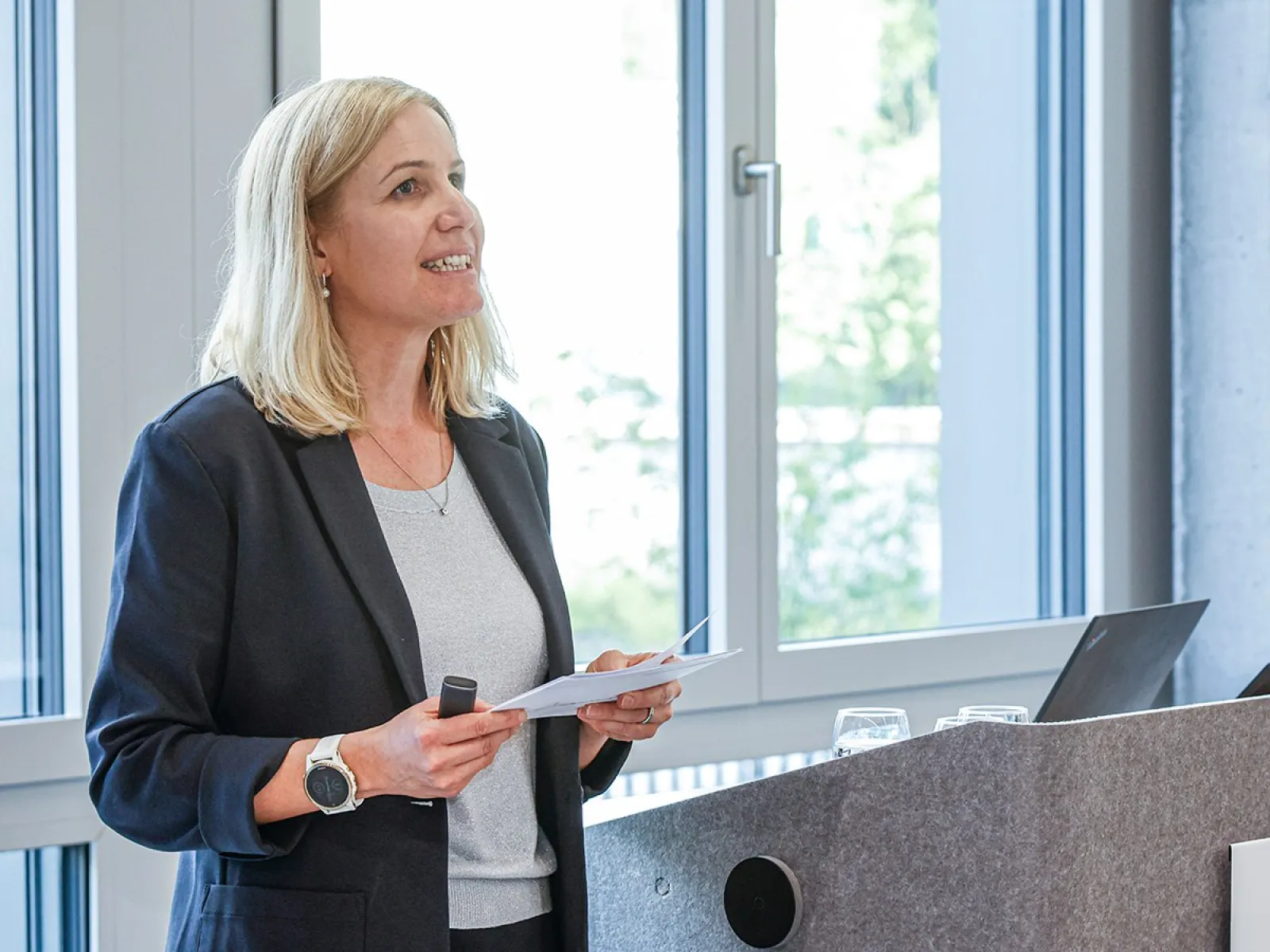
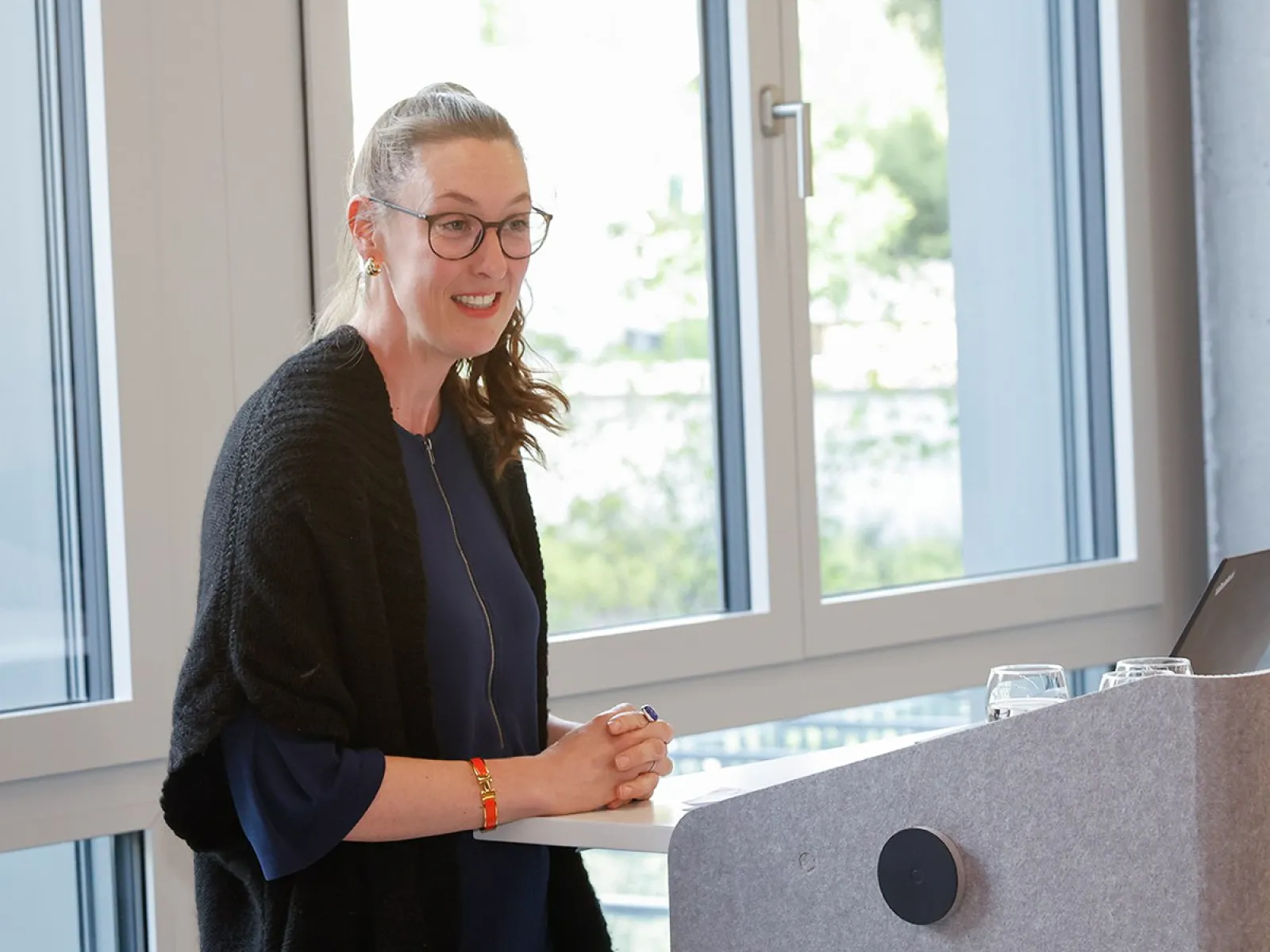
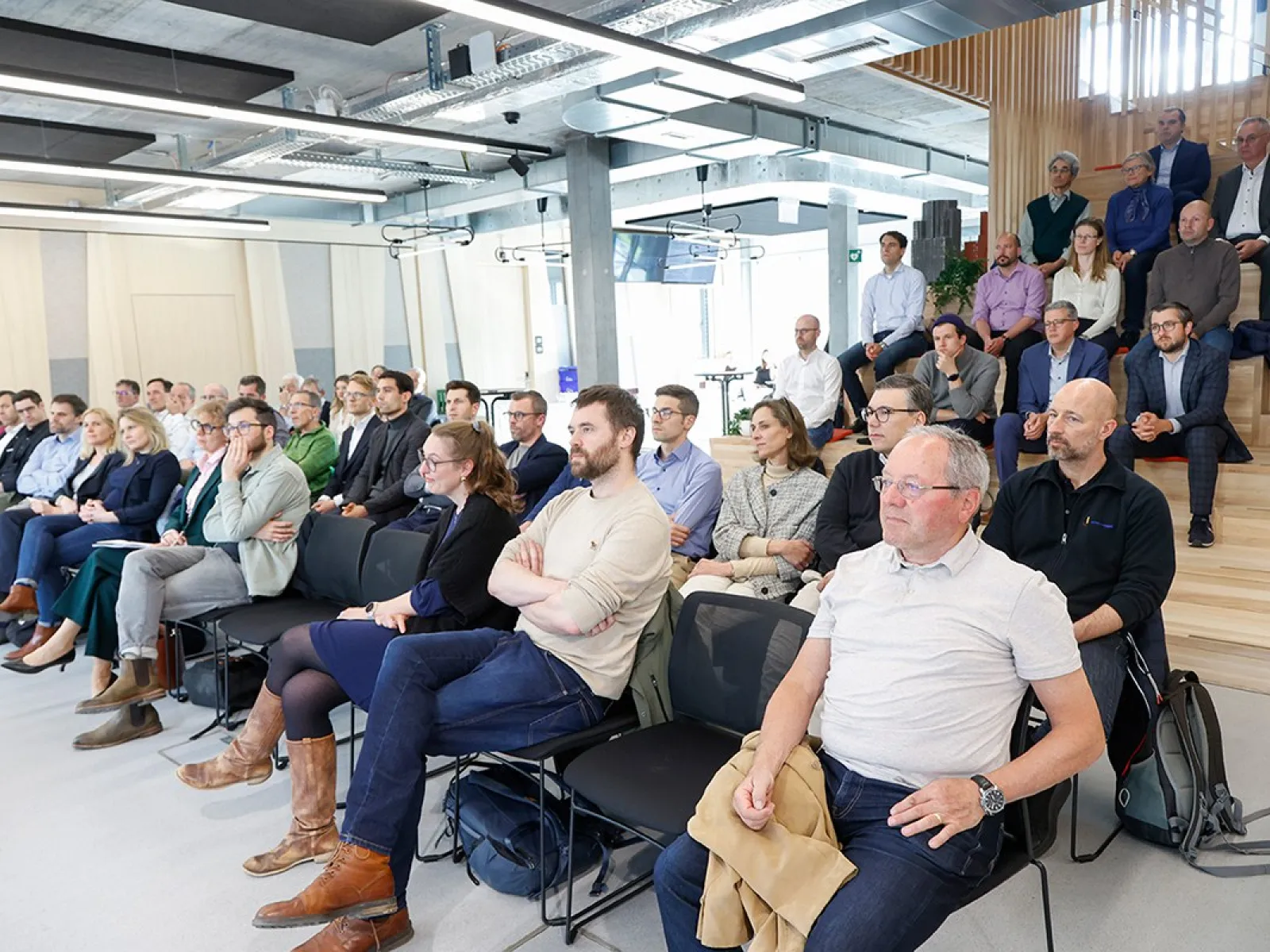
The panel discussion conducted by Prof. Howe, Dr. Zack, and Mr. Govender on 5 December 2024 was entitled: “Urban Research as a Policy Tool? Interrogating Infrastructural and Economic Development through Design-Science Approaches.” The brief for the panel was as follows:
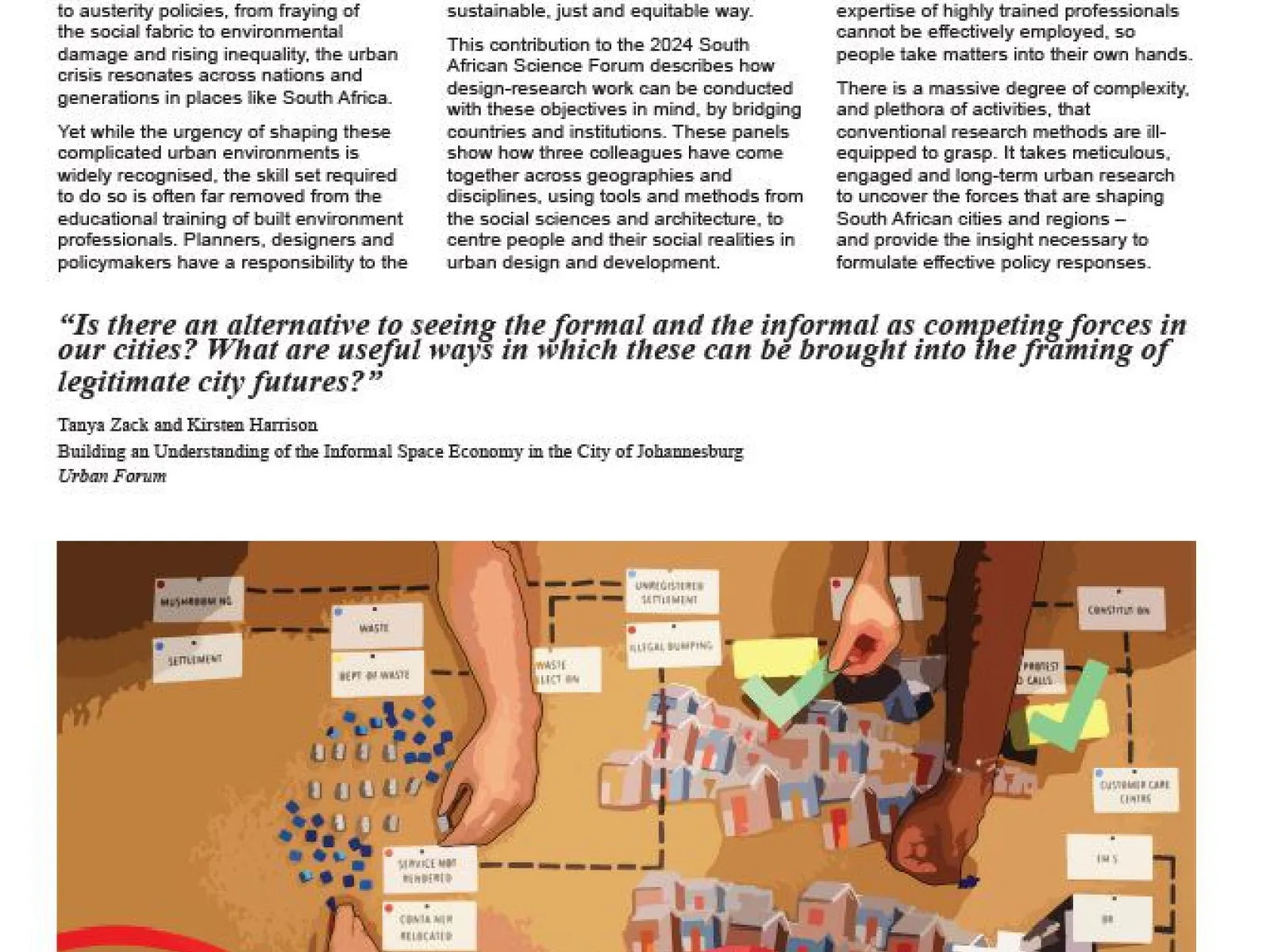
“The African City of today is one of pronounced individuality and agency, marked by constant negotiation and the volatility of people’s social realities. And in South Africa, the challenges faced far outnumber the resources and capacities of the state. The abundant technical expertise of highly trained professionals cannot be effectively employed, so people take matters into their own hands. There is a massive degree of complexity, and plethora of activities, that conventional research methods are ill-equipped to grasp. It takes meticulous, engaged and long-term urban research to uncover the forces that are shaping South African cities and regions – and provide the insight necessary to formulate effective policy responses.”
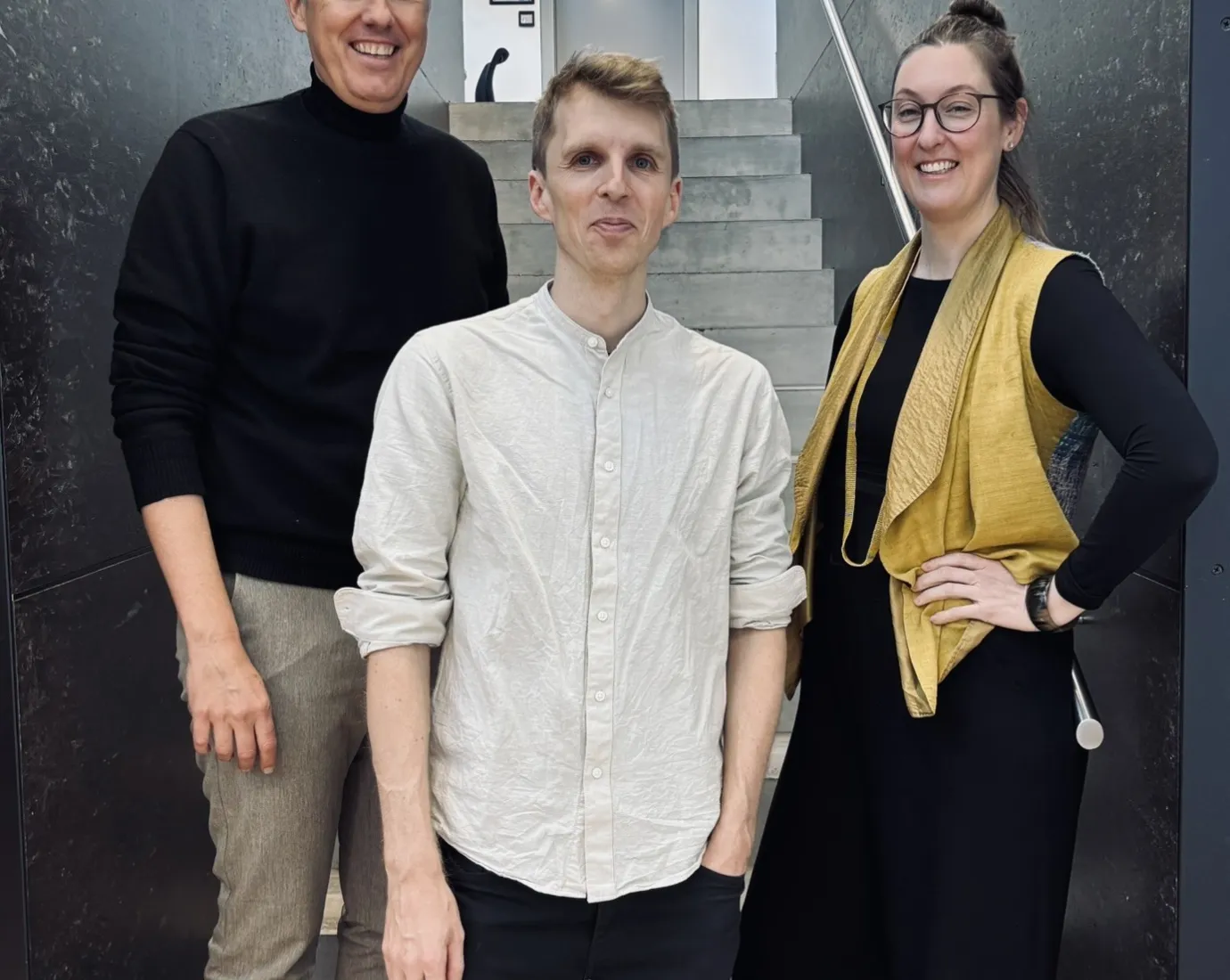
Each panelist connected to the five tools used in their common work to reflect upon this prompt. Prof. Howe was the first speaker, elaborating upon the theory of extended urbanization and showing why ethnographic findings from South Africa, and more specifically the “urban region” including Johannesburg and Pretoria, can have relevance for science and society and policy. Dr. Zack explained how skills like empathetic listening and storytelling are also key to understanding people and achieving better design outcomes. Finally, Mr. Govender discussed spatializing people and practices, including how implements the tools we have identified to formulate a basis for design work, as well as how to work in contexts of extreme volatility and where insurgent practices prevail. After a Q&A and public discussion, we presented our conclusions about how design work connects to policy recommendations, and new approaches to understanding how we ought to be imagining and making an urban Africa.
Public Events and Staff Exchanges
In addition to the Science Forum, the research and teaching pursuits of Studio Jozi were also presented to a scientific audience and broader public in the series of events run by urban publics Zurich (upZ). Prof. Howe co-founded this collective, along with three other professors in Zurich, in order to engage with questions of urban space, people, and activism (Prof. Hanna Hilbrandt (UZH), Prof. David Kaumann (ETHZ), and Prof. Philippe Koch (ZHAW)). Prof. Howe moderated a panel discussion between Mr. Govender, Dr. Katrin Hofer (ETHZ), and Prof. Dr. Catalina Ortiz (UCL Urban Lab) on 11 December 2024 at the ETH Zürich Hönggerberg Campus. This conversation is serving as a basis for a podcast forthcoming with the Urban Political Podcast (UPP) in May 2025. The podcast will engage with questions including public participation in urban development, state-citizen relationships, and the role of social infrastructure in contexts like the Global South, where the “urban polycrisis” we are experiencing globally is often particularly pronounced.
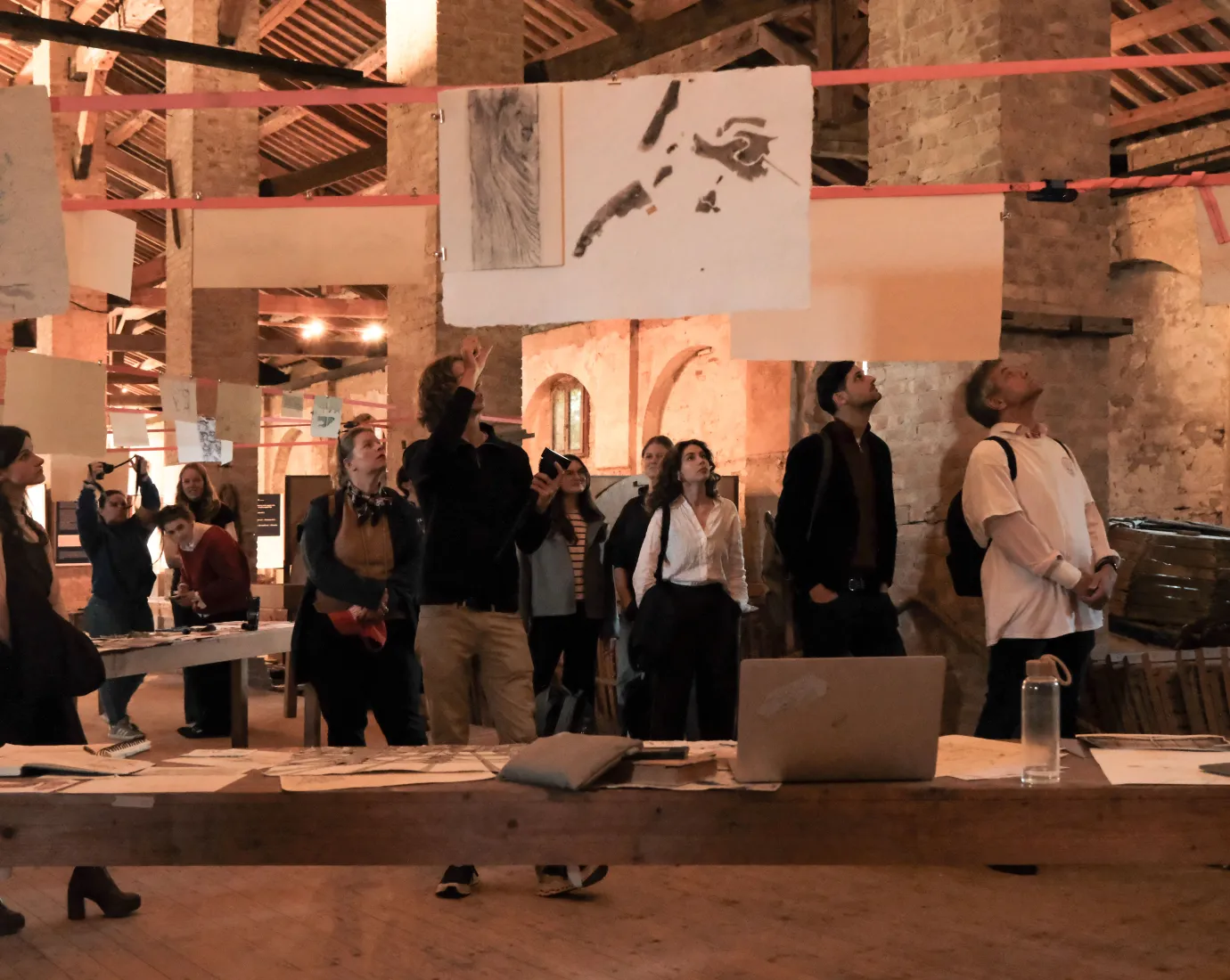
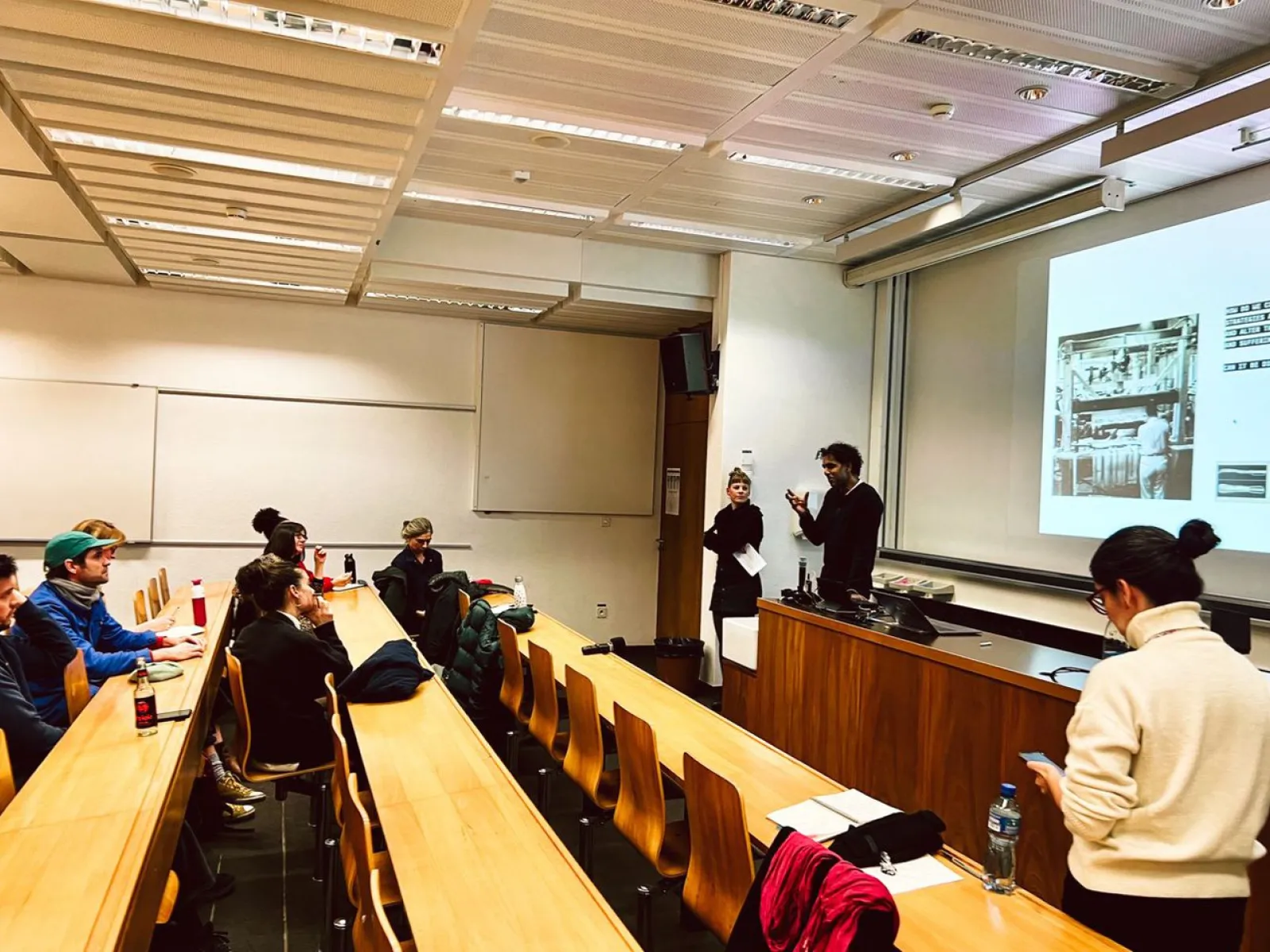
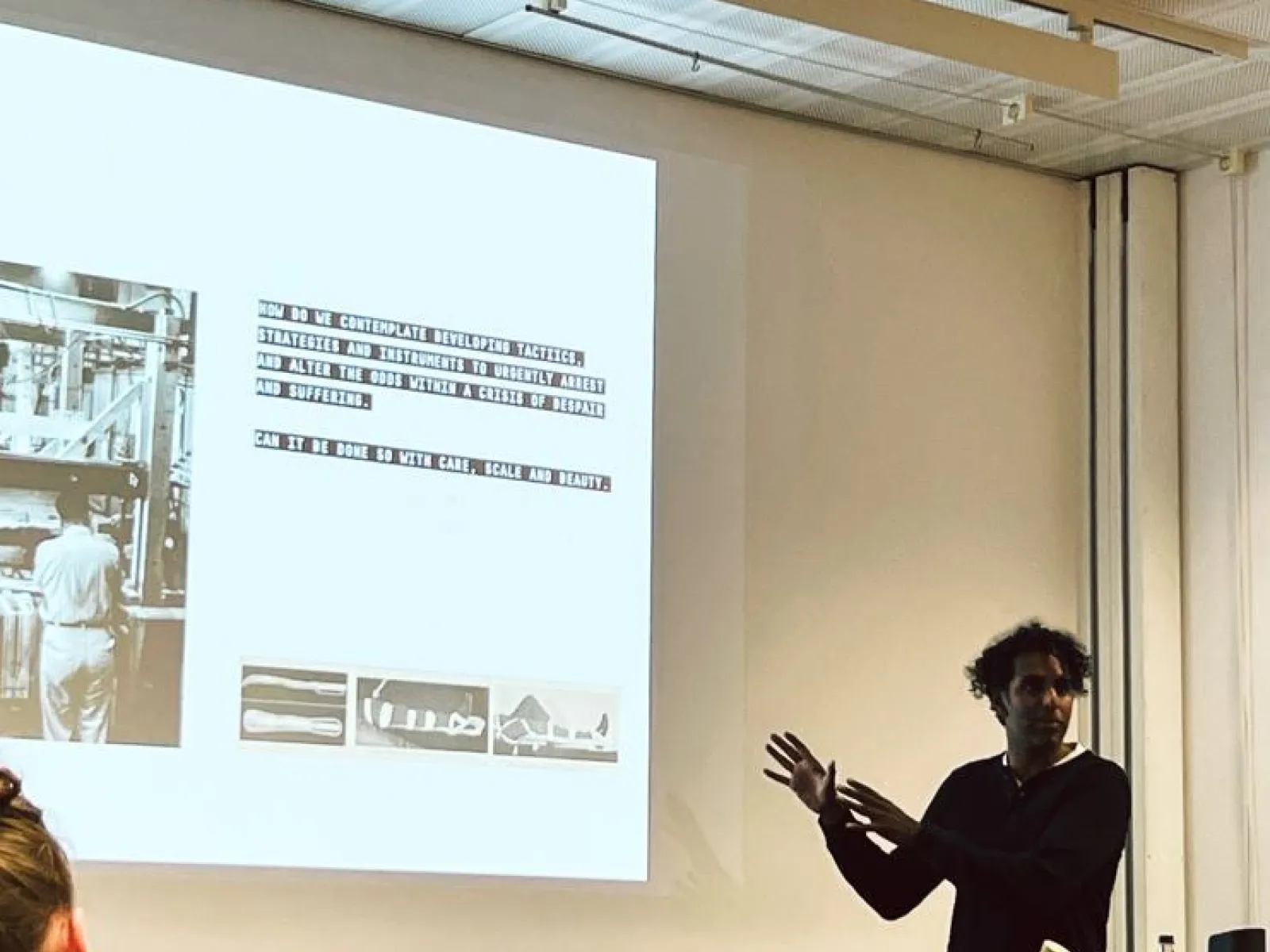
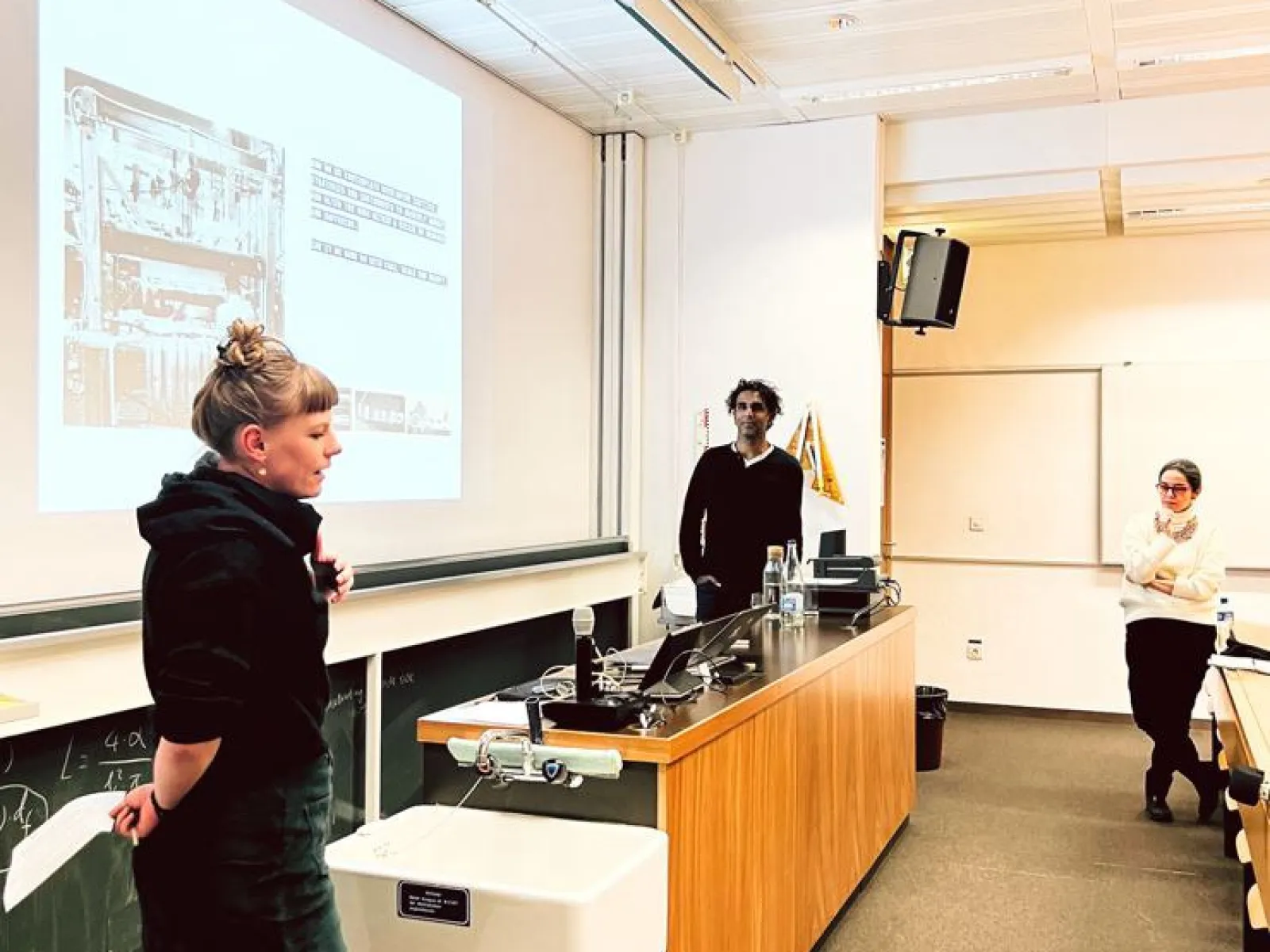
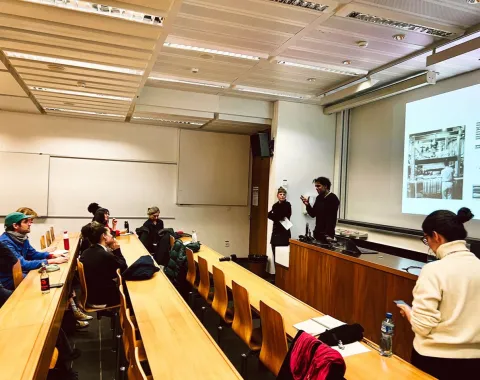
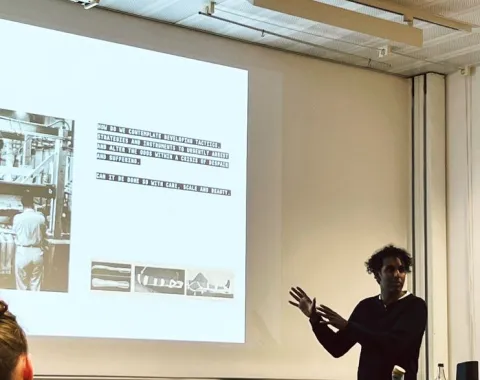
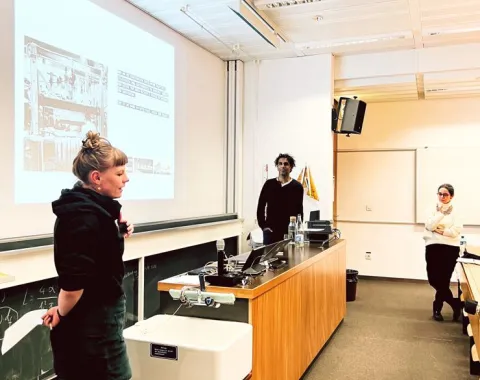
Finally, Dr. Zack, Mr. Govender, and Prof. Dr. Ortiz were invited to participate in the final reviews for Studio Jozi at the University of Liechtenstein on 12 December 2024. We would like to profoundly thank Mirjana Schädler and the International Office at the University of Liechtenstein who so generously gave their time to arrange visits through the ERASMUS+ Staff Exchange Program of which Uni Li is a part.