Liechtenstein - Vaduz
Liechtenstein - Vaduz
Between Silence and Warmth
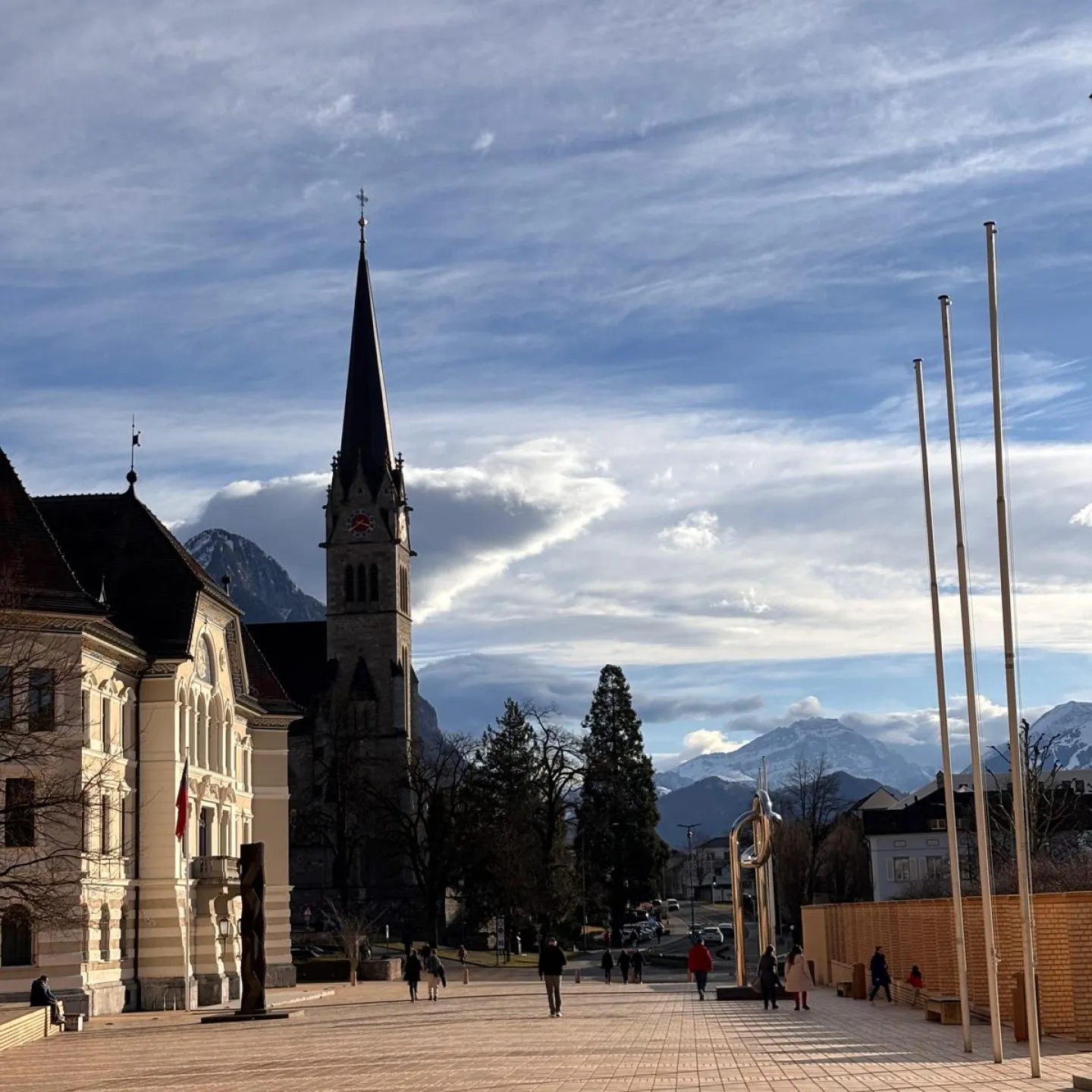
Upon arriving in Liechtenstein for the first time as an Erasmus student from Georgia, I was struck by the beauty of the mountains, the tidy streets and alleys, and the peaceful rhythm of life. Vaduz appeared quiet, organized, and stationary, maybe too stationary. The most surprising thing to me was how quickly the city becomes calm in the evenings. Shops are closed, coffeehouses are empty, and the capital almost falls silent. For a Georgian, this was completely unprecedented. I remember walking about and wondering where everyone had vanished to.
In Georgia, the evening is the hub of everyday life when we are at home. Streets in Tbilisi stay lively till late at night, people go out for coffee, families take evening walks, and friends have dinner around long tables. Music will be playing somewhere around you, and you can just sit down with strangers and become part of a conversation. Togetherness, food, and talk are core aspects of life in my culture. There is always activity, heat, and laughter. A day is not said to be complete until one has spent time with other people. So, coming to Vaduz and observing how everything gets so still in the evenings was a severe cultural shock.
I did feel something was missing at first. I liked hearing voices and the hum of people being out late. But then, as time went on, I started to understand that what had felt like "emptiness" was a different richness. People in Liechtenstein value private time, silence, and room. They seem to take refuge in quiet evenings, a way to wind down, renew themselves, and exist in simpler terms. I began to realize how lovely that silence was. The empty streets, the soft lights in people's homes, slow-moving silhouettes, and the reverberation of footsteps on the ground all sang to a peaceful setting I grew to appreciate fondly.
But I realized that my Georgian ways didn't disappear, they changed. When I socialize here, I instinctively bring that friendliness and openness with me. I like to ask questions, tell stories, and invite guests in for coffee or dinner. At first, some people seemed perplexed at how easily Georgians approach people or show feelings, but then they typically respond with curiosity and commensurate warmth. My bubbling encounter with their reclusiveness has yielded some of my most fulfilling exchanges, usually ending in fortuitous friendships. It is like two cultures gently counterbalancing one another.
It led me to contemplate and deliberate on what my own culture places value on. We Georgians hold the belief that sharing our stories with each other strengthens our bonds. Hospitality is in our very being. We welcome guests not just to our houses, but into our hearts with warmth. I was reminded of how great that was when I experienced life in Liechtenstein. It also enlightened me on the relevance of stillness and boundaries, something I sometimes lose sight of in my home. Here, people show by example that peace and privacy are not isolation; they are forms of respect, for yourself and others.
Strolling through Vaduz in the evening does not feel like wandering in a ghost town. People live differently, eating with family, reading, or relaxing, all in perpetual silence. I also became accustomed to enjoying this tranquility: taking a walk in the evening, feeling the tendrils of the cold breeze, reviewing the day under a moonlit sky, or phoning my family back home in Georgia. It's another feeling of being connected, less noisy, more thought-based.
Juggling these two almost polar realities, Georgia's bubbling warmth and the chilly quietness of Liechtenstein, taught me to appreciate life with a broader scope and love more deeply. I don't have to choose one over the other. I can carry my Georgian hospitality with me wherever I go and revel in the quiet I have attained here whenever I need to. This harmony has become one of the most valuable lessons of my Erasmus journey so far.
In the end, existing between two worlds has taught me to understand myself. I've discovered that authentic intercultural learning is not comparing and deciding what lifestyle is better, it's listening, adapting, and balancing. Vaduz taught me that silence can be loud, and Georgia taught me to recall that connection brings warmth to life. They both shape me into the person I'm developing into, a tad quieter, but no less full of heart.