Intensive Course on Corruption
Intensive Course on Corruption
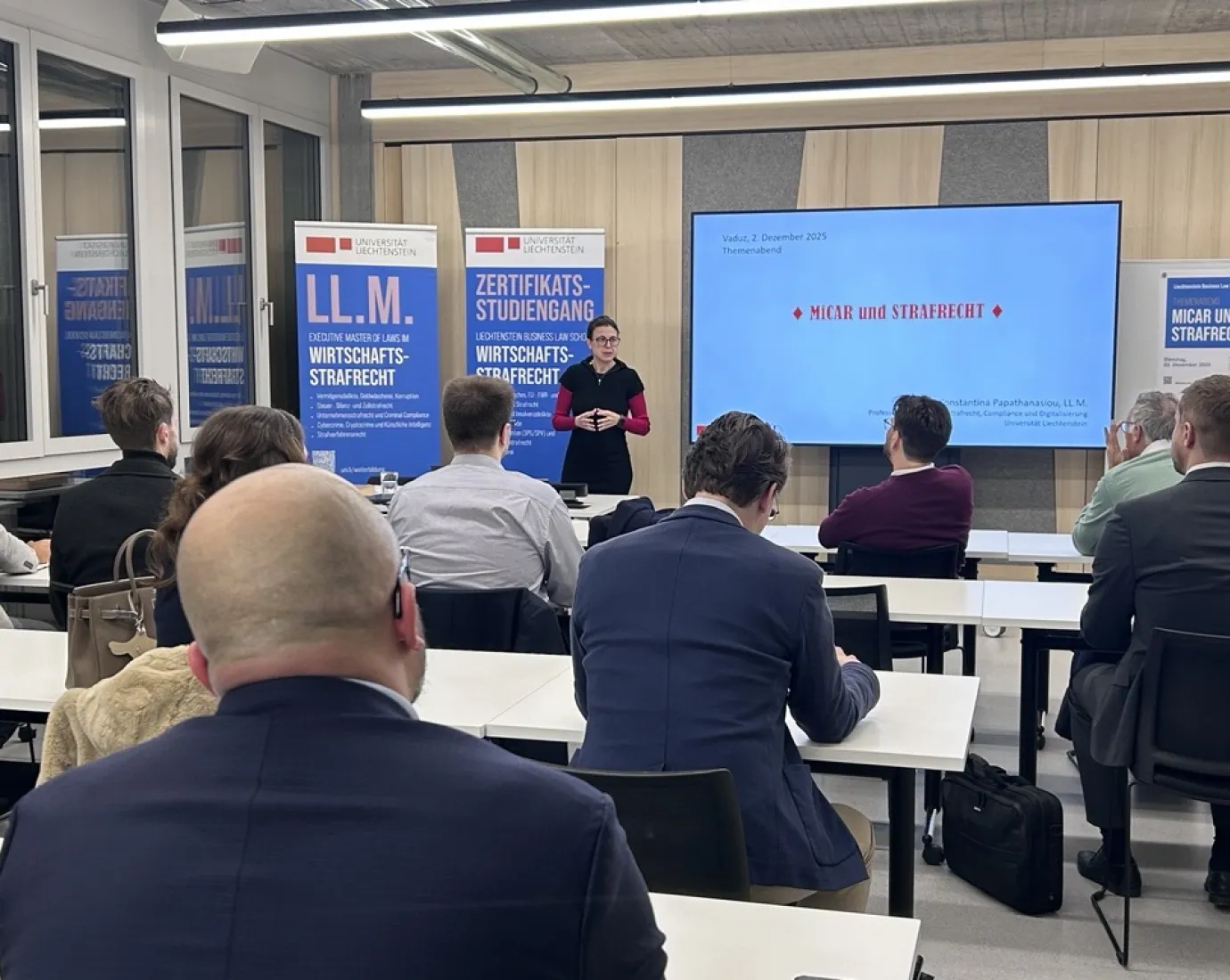
The Professorship for Economic Criminal Law, Compliance and Digitalisation conducted the Intensive Course on Corruption on 12 and 13 June 2025.
Corruption is a global issue that can cause severe economic damage in both the public and private sectors, undermine trust in institutions, and threaten the rule of law. At the international level, the main monitoring mechanisms include the Council of Europe’s Group of States against Corruption (GRECO), the OECD Working Group on Bribery, and the Implementation Review Mechanism of the United Nations Convention against Corruption (UNCAC).
The focus of the course was on identifying corruption and the structure of corruption-related offences as defined in the Criminal Code. Prof. Dr. Konstantina Papathanasiou, LL.M., opened the course with an overview of the legal framework concerning acceptance of advantages (§ 305 of the Criminal Code), granting of advantages (§ 307a), bribery (§ 304), and corruption (§ 307).
Dr. Markus Höcher, postdoctoral assistant at the Professorship for Economic Criminal Law, Compliance and Digitalisation, then explained the legal system governing anti-corruption offences and presented the corresponding offences in both the public and private sectors. He first gave an in-depth explanation of the terms “public official” and “holder of a public office”, which served as the basis for understanding the abuse of official authority (§ 302), bribery and corruption (§§ 304/307), acceptance and granting of advantages (§§ 305/307a), acceptance or granting of advantages to influence decisions (§§ 306/307b), as well as the offence of prohibited intervention (§ 308).
The session continued with a discussion of corruption-related offences relevant to the private sector, namely breach of trust (§ 153) and bribery and corruption in commercial transactions (§ 309). All topics were illustrated with examples from theory and practice.