Architecture in Motion: How the Base Camp Continues to Create Spaces
Architecture in Motion: How the Base Camp Continues to Create Spaces
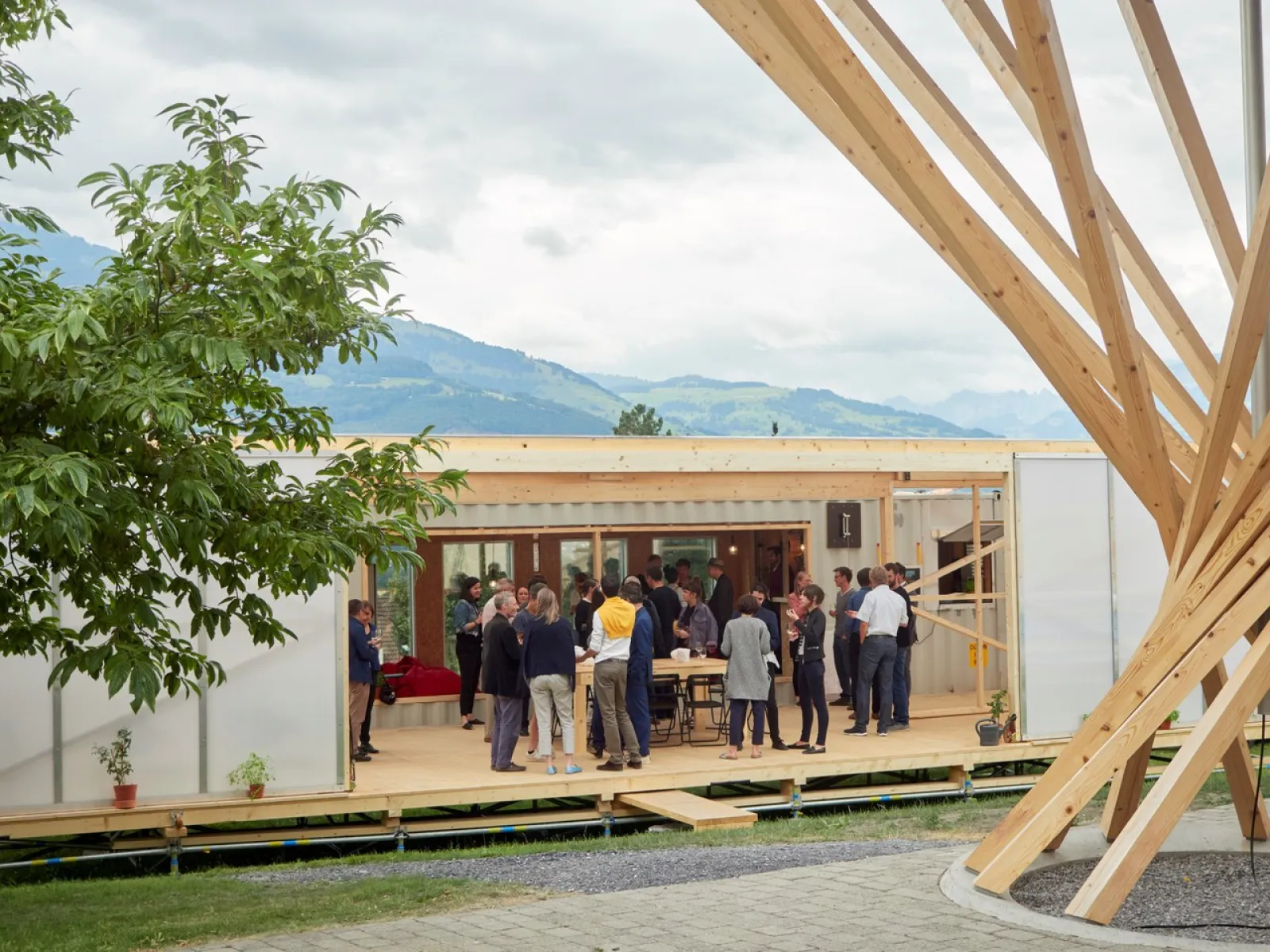
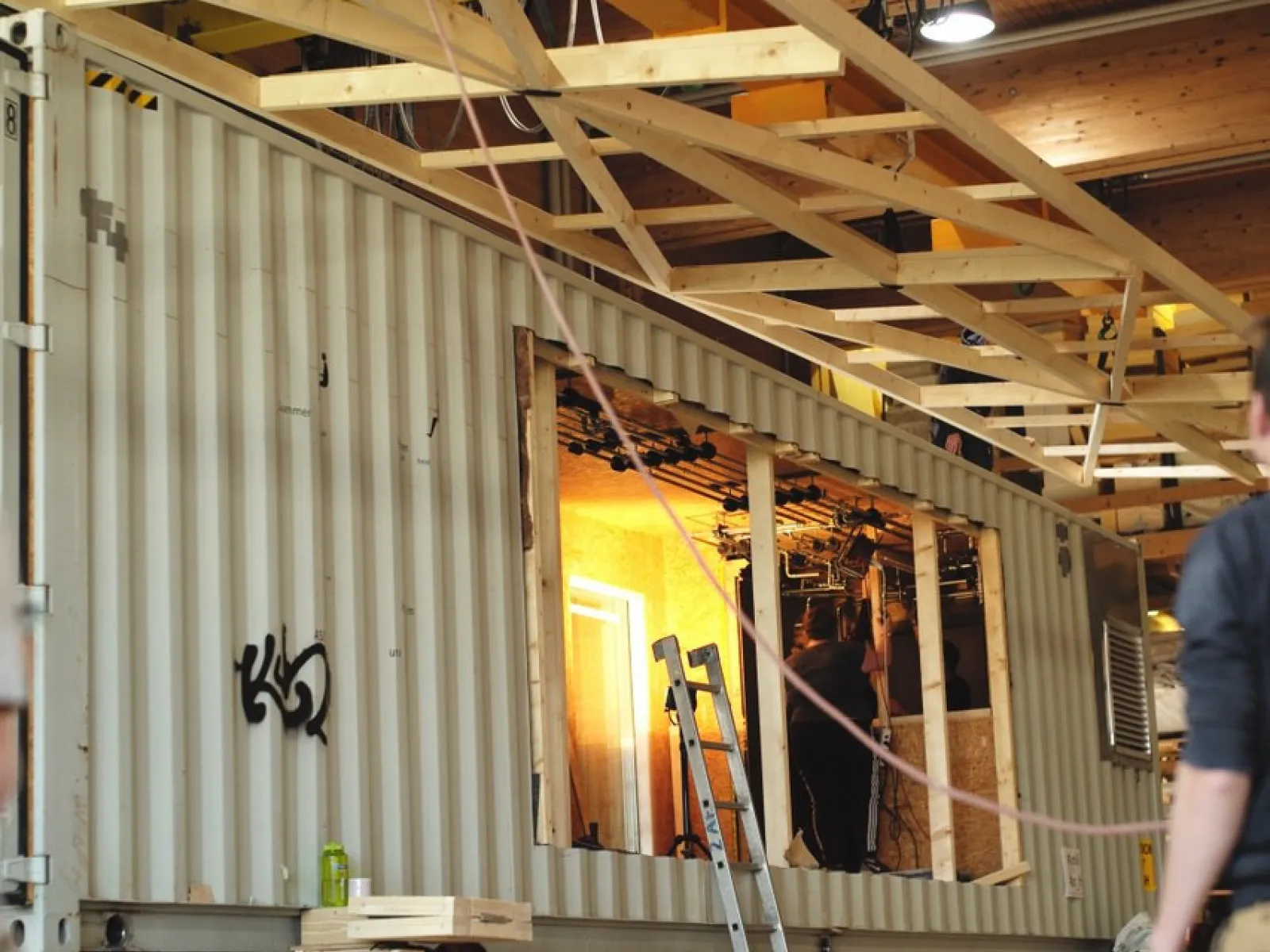
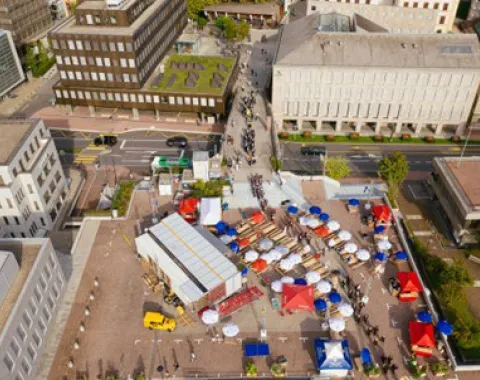
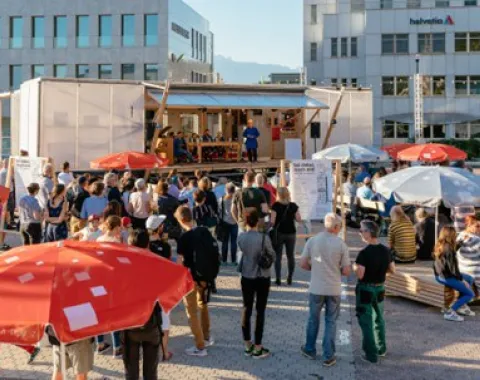
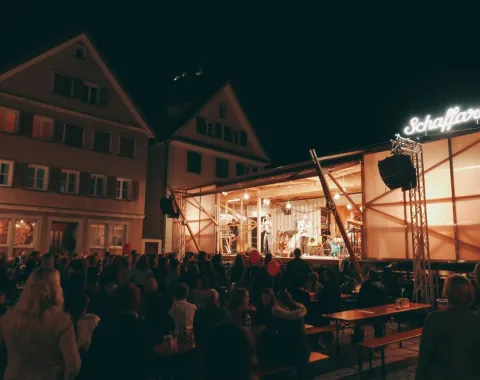
The Base Camp of the University of Liechtenstein looks back on an impressive journey – from a former research container in the FLUIDGLASS project to a mobile, modular platform for exchange, participation, and temporary urban development.
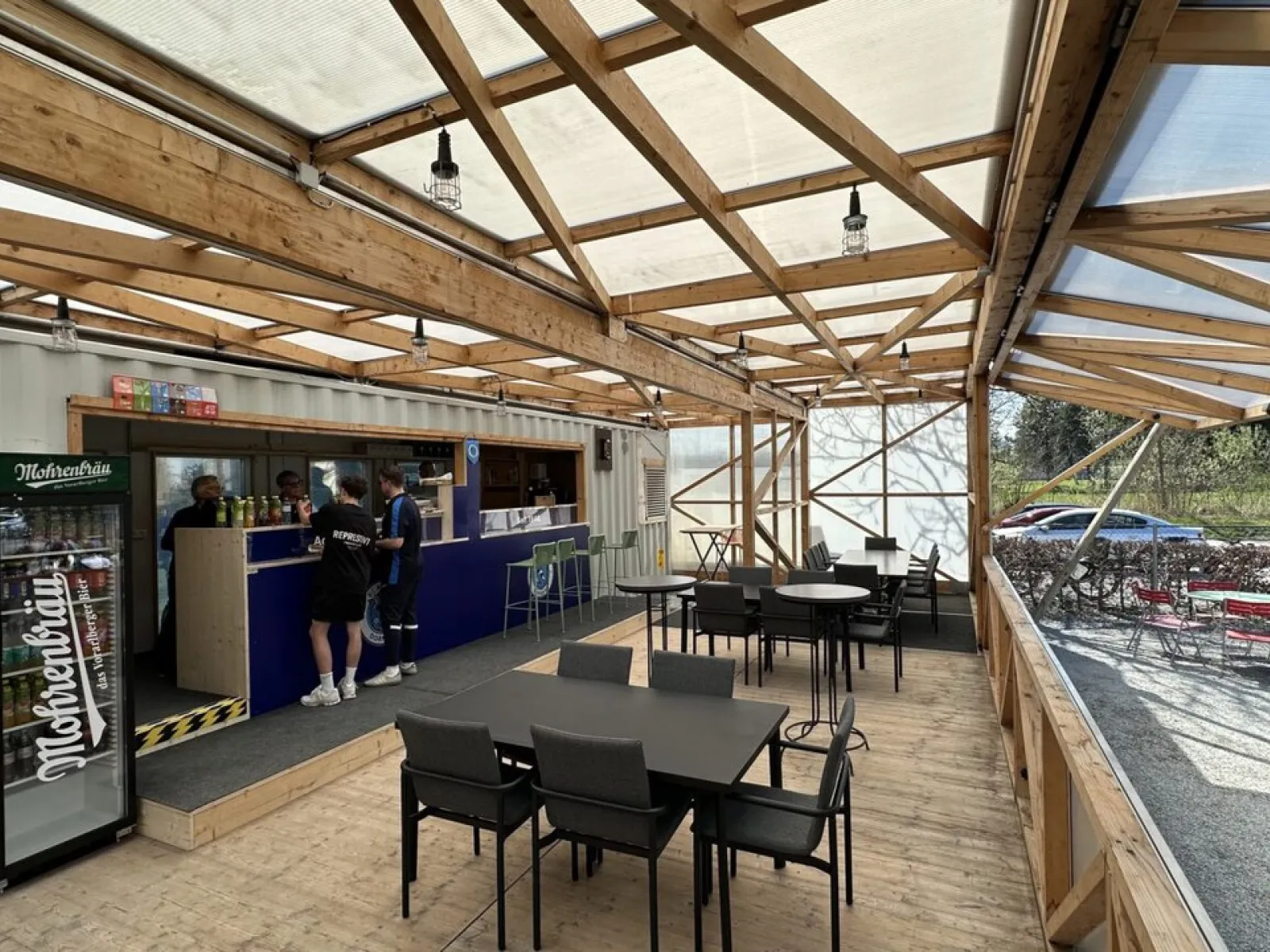
At present, the Base Camp is being used by the city of Dornbirn as a temporary home for the FC Admira Dornbirn, after the club’s building was destroyed by fire. The sale to the city of Dornbirn was accompanied by Wolfgang Schwarzmann.
But this is just the beginning: the city of Dornbirn also plans to use the Base Camp for various participatory urban development projects in the future – such as citizen participation processes, temporary dialogue spaces, or mobile project offices in public spaces.
From research to a real-world laboratory platform
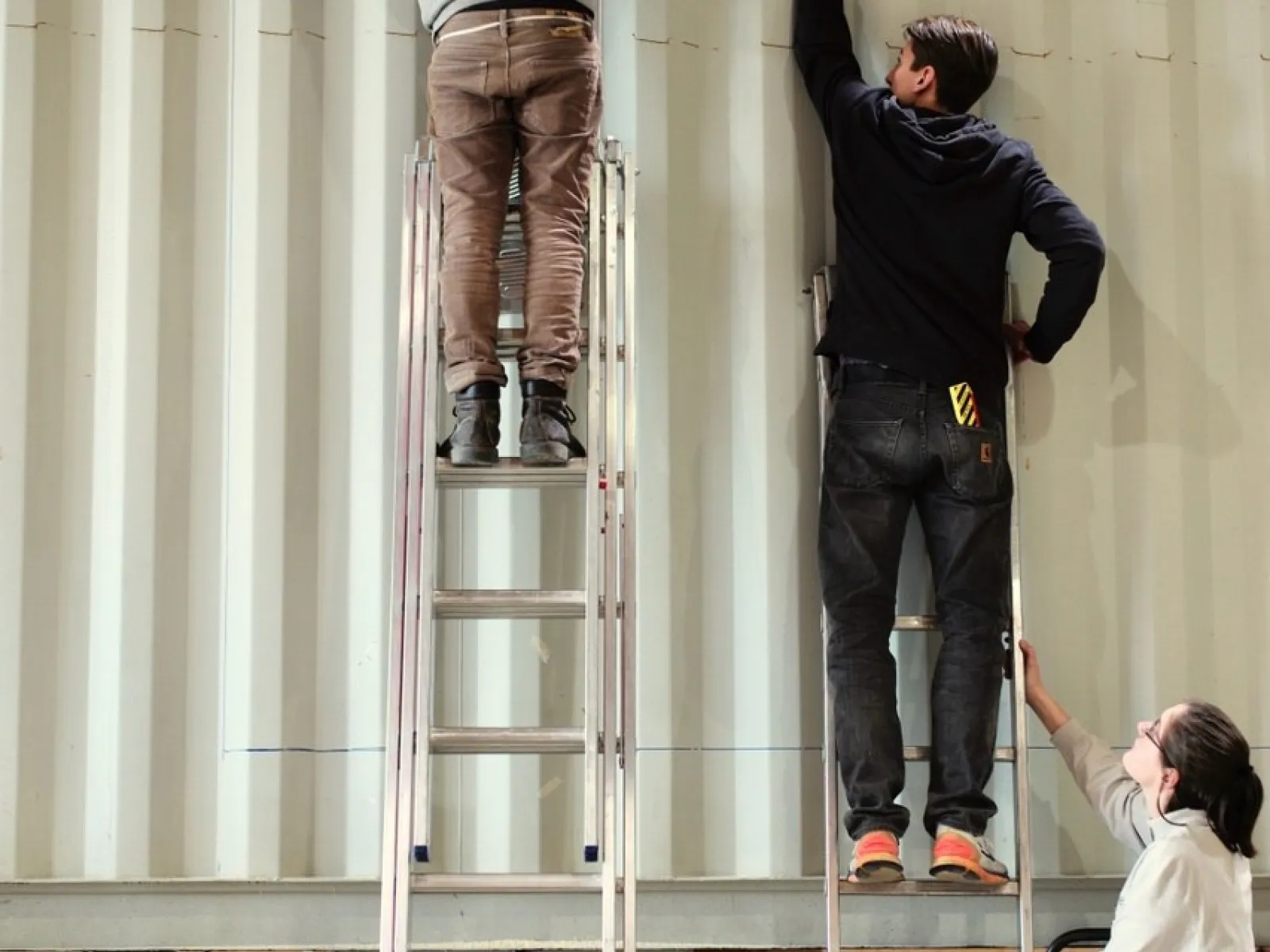
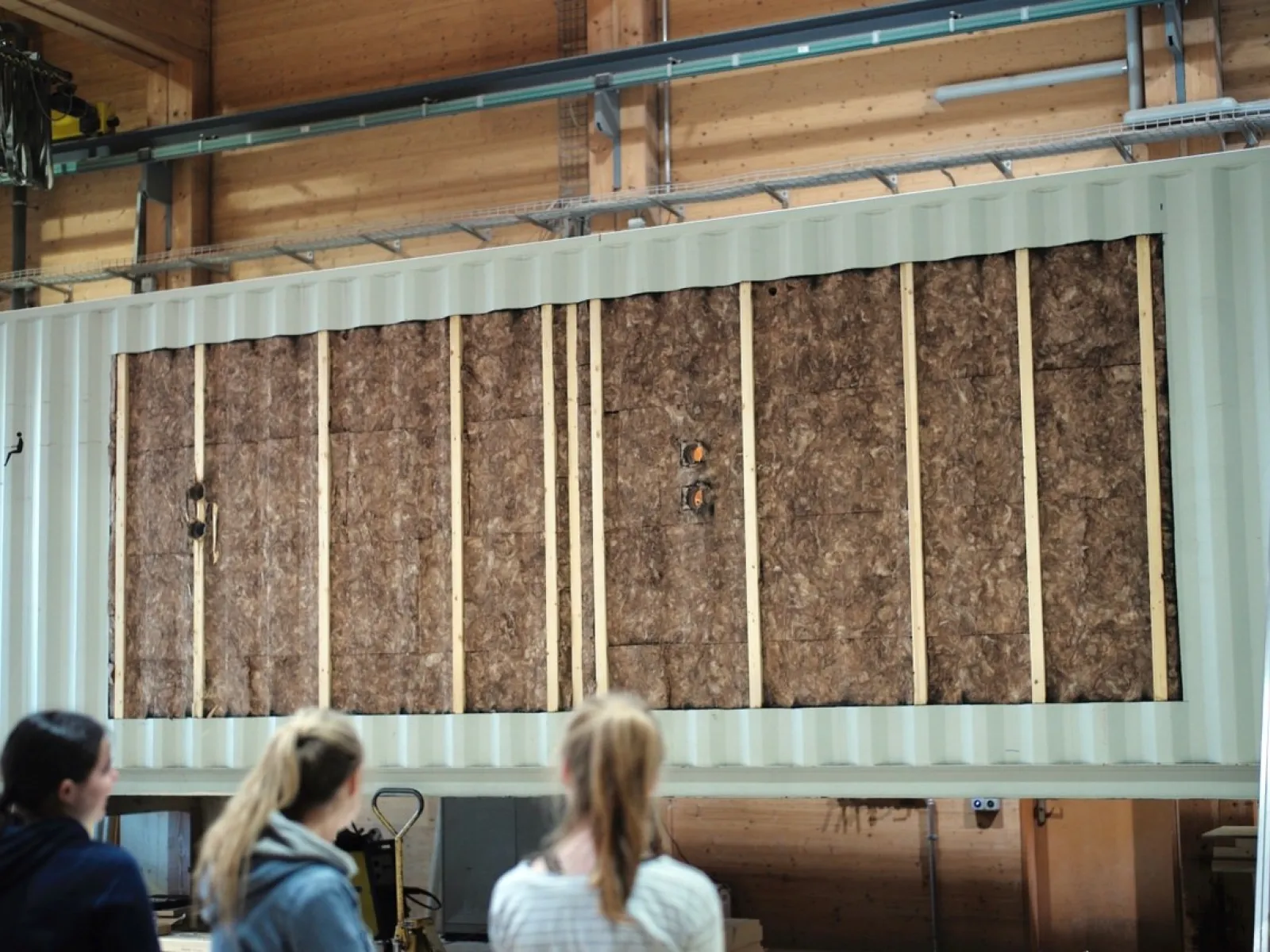
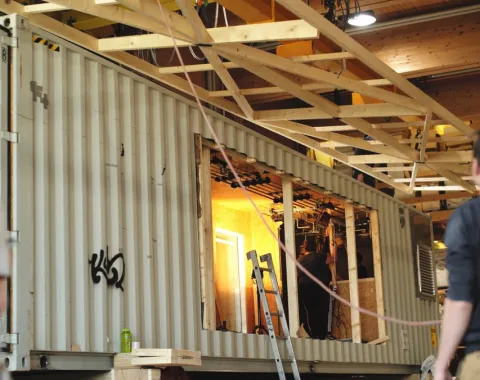
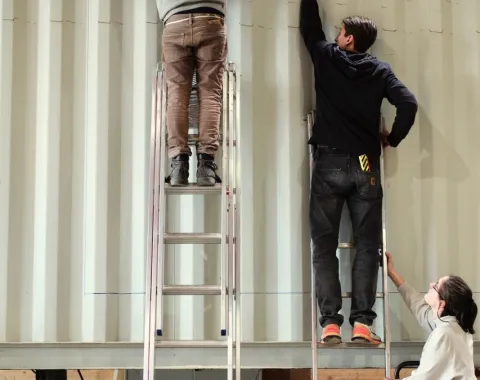
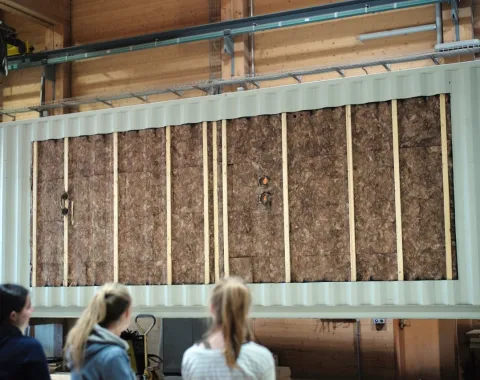
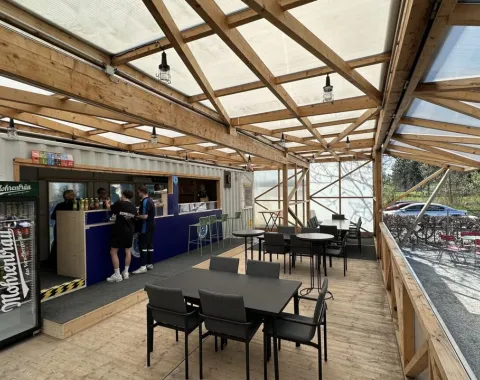
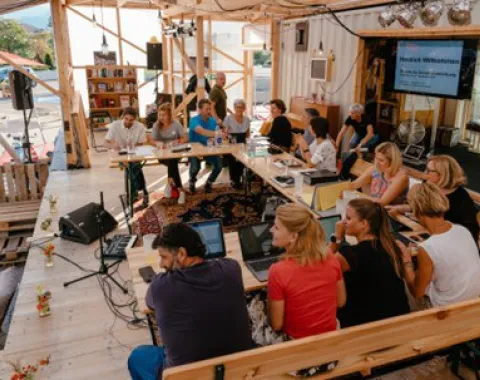
The Base Camp has its origins in the EU research project FLUIDGLASS and was fundamentally rebuilt as an upcycling project by students at the University of Liechtenstein in close collaboration with the carpentry firm Frommelt. As part of a seminar week led by Martin Mackowitz, Robert Mair, and Wolfgang Schwarzmann, the students transformed the original shipping container into a modular, adaptable space suitable for a wide range of social formats – from workshops to concerts to public discussion forums.
Implementation began with student prototypes. In the workshops of the Frommelt carpentry firm, the majority of the construction was developed, cut, screwed together, and assembled by the students. In this way, parts of a research station were skillfully repurposed into a place for design, participation, and communication.
Locations and milestones
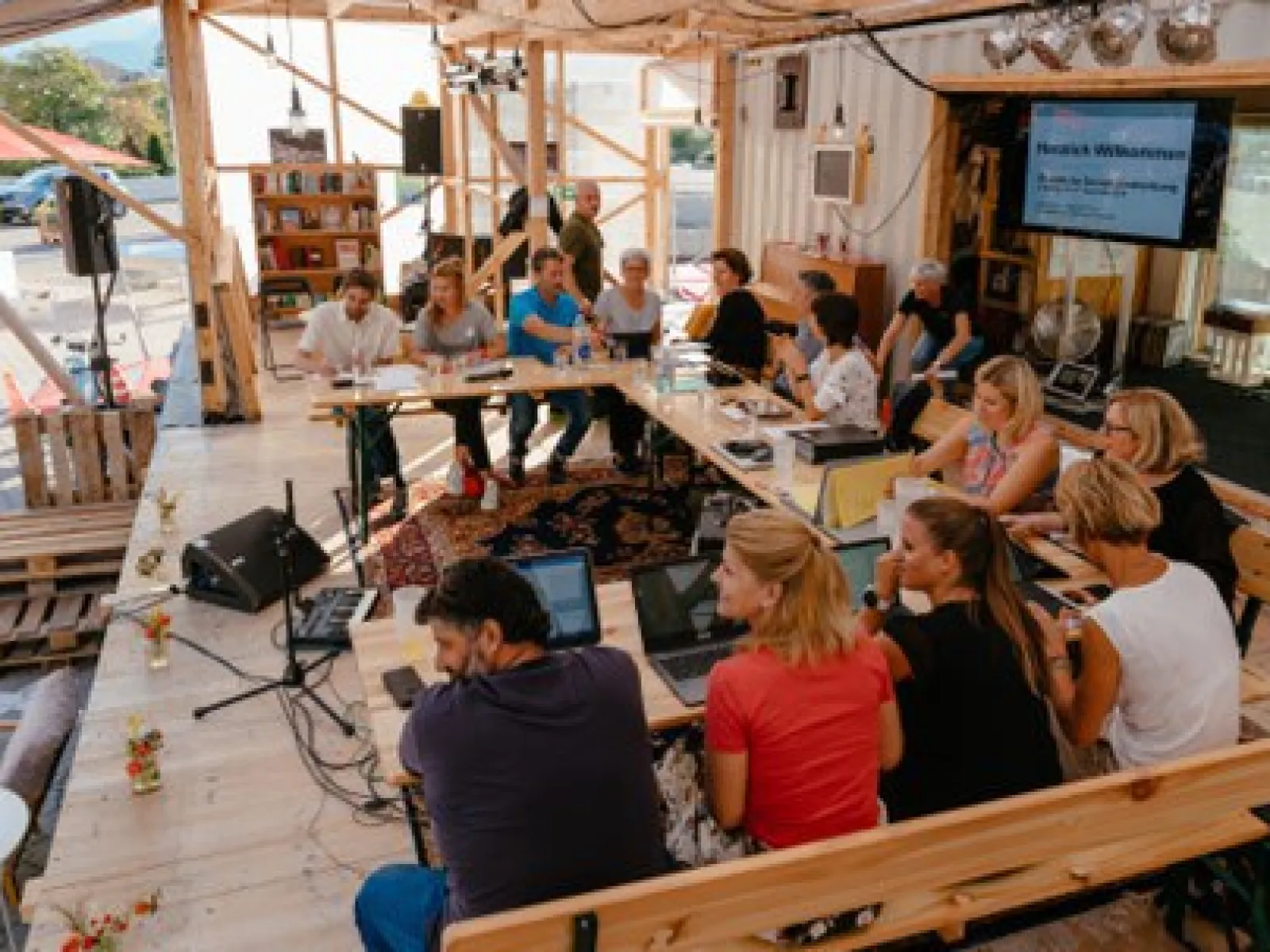
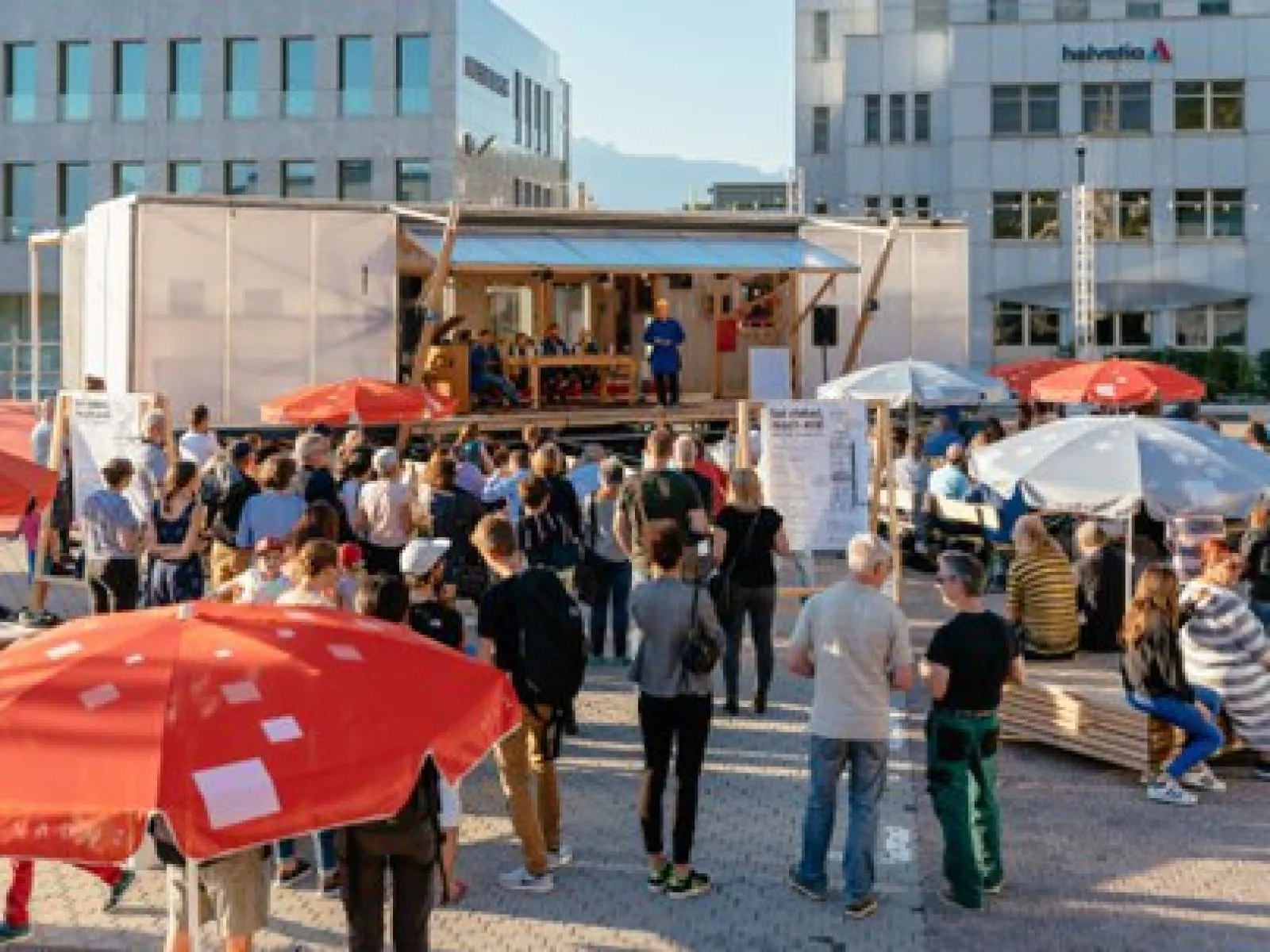
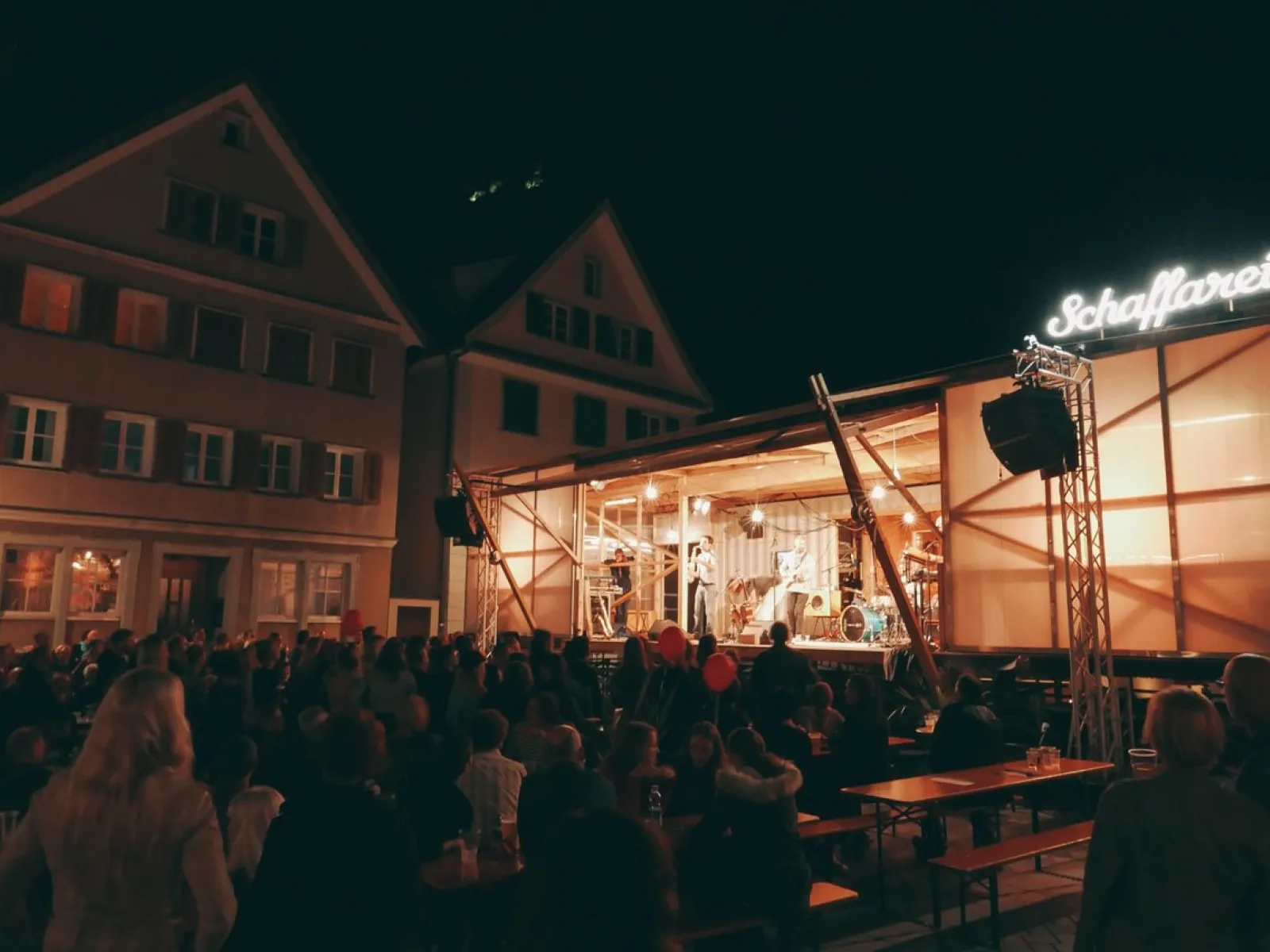
2018–2019: The Base Camp served as a mobile living room as part of the “Schaffarei” festival organized by the Chamber of Labor Vorarlberg. In five municipalities in Vorarlberg, it addressed the future of work – as a space for dialogue, exchange, and cultural interventions.
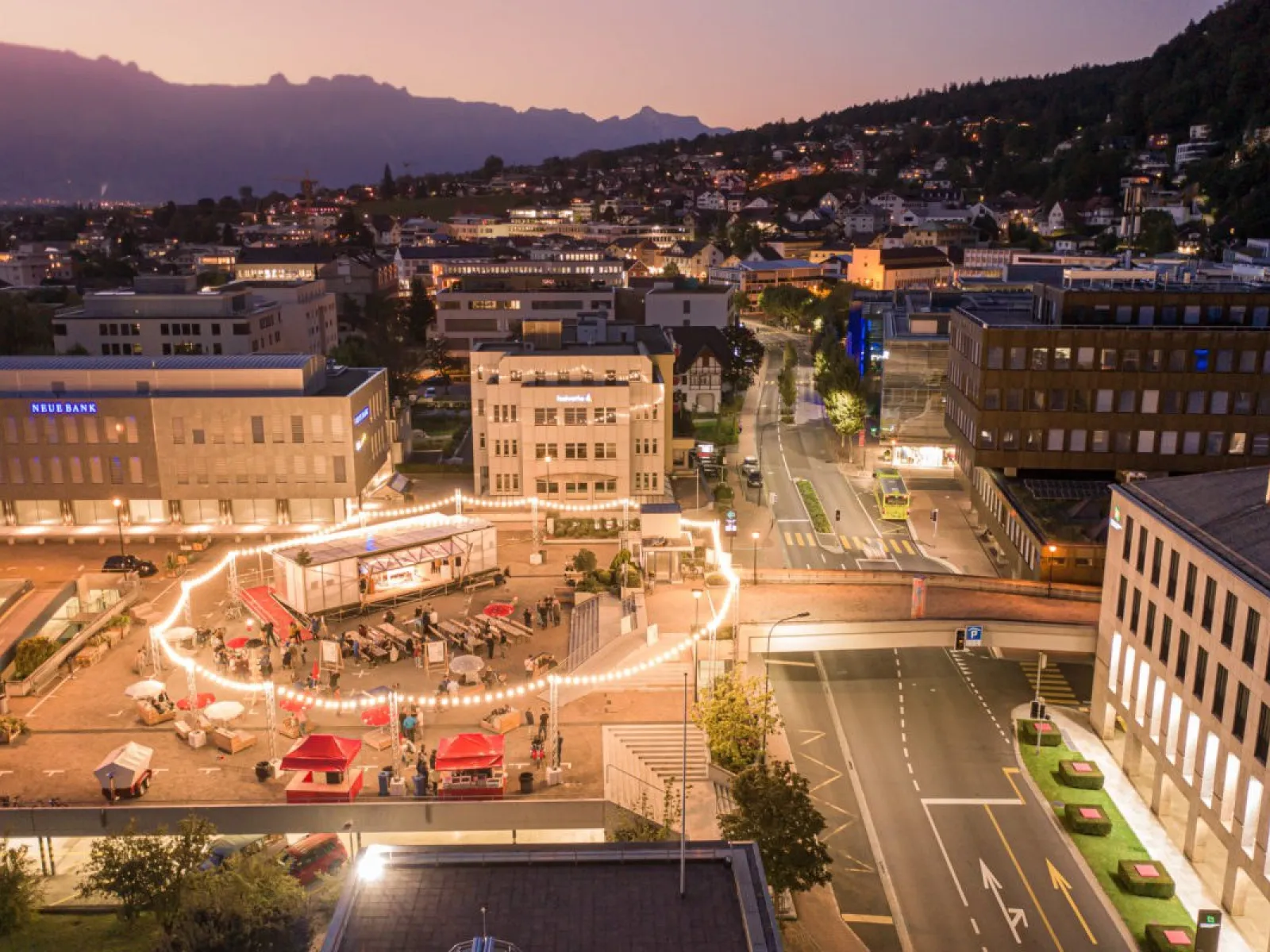
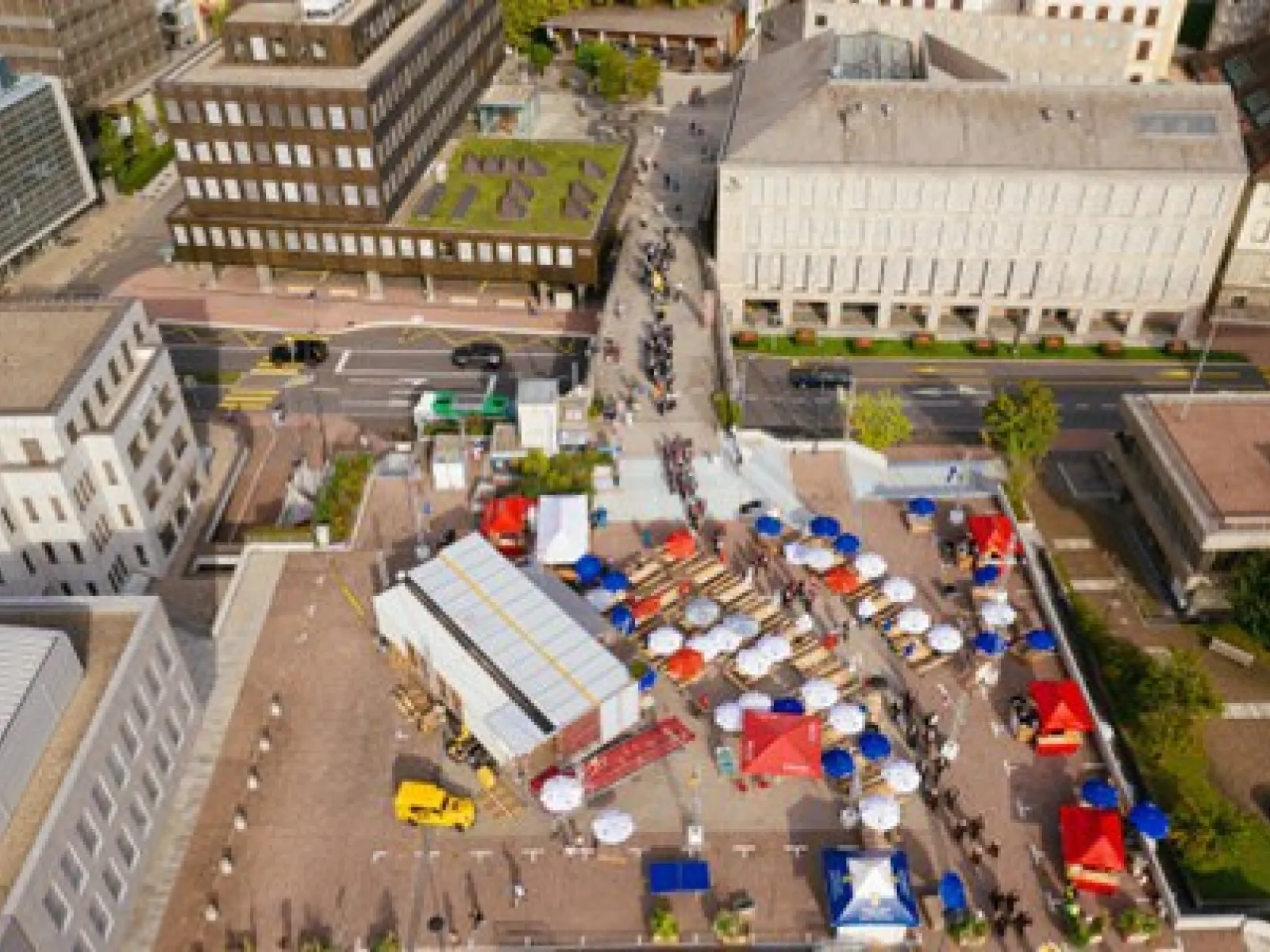
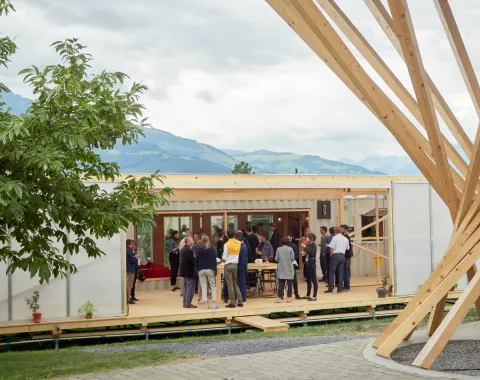
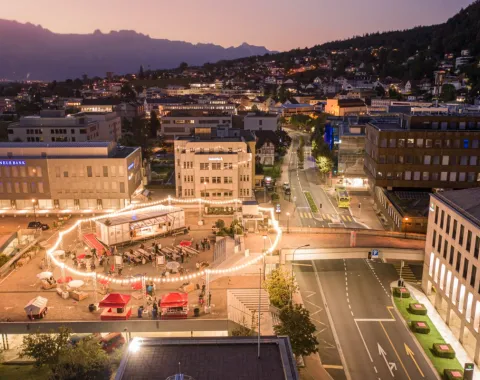
Autumn 2019: Under the direction of Prof. Anne Brandl, the Base Camp appeared as the “Vadozner Huus” on the deck of the Marktplatzgarage in Vaduz (September 11–28). In cooperation with the municipality of Vaduz, the Base Camp was used as an open platform for perception walks, discussions, and social encounters – a temporary place to linger, experience, and co-create.
2020–2024: The Base Camp was used for university workshops and design projects at the University of Liechtenstein – as a mobile real-world laboratory and a constructive vessel for architectural and social experimentation.
Since 2025: After the fire at the FC Admira Dornbirn clubhouse, the city of Dornbirn has provided the Base Camp as a temporary clubhouse. In the future, it will also be used in Dornbirn for participation formats, mobile city offices, or experimental urban projects.
A versatile spatial experiment with a future
The Base Camp is a vibrant example of circular construction, participatory urban design, and interdisciplinary learning. What began as a container has, through student initiative, creative vision, and social engagement, become a platform for change – demonstrating how architectural ideas can be mobilized, made effective, and carried forward sustainably.
"We plan, we puzzle, and we discuss a lot … but the chronology of this project has exceeded our expectations on several levels. In addition to the initial reuse – from ‘FluidGlass’ to ‘BaseCamp’ – we also managed to give it another life as the ‘Vadozner Huus’ and as a workshop space at the university.
The fact that we are now, once again, creating added value in Dornbirn with this ‘tool for the development of urban spaces’ far exceeds our expectations. At the same time, it shows that the long-term multiple use of objects, things, and spaces must be repeatedly realigned and directed toward current needs.
It is only through a fundamentally flexible infrastructure and a bit of energy in adapting a structure that one can see how long a concept or project can be kept in use. We are curious to see where the BaseCamp can be spotted in future applications by the city of Dornbirn."
Wolfgang Schwarzmann