Skip to Main Content

Führung in jungen Unternehmen

Project Description

Das Projekt soll das Führungsverhalten im Kontext junger Unternehmen untersuchen und analysieren. Als junge Unternehmen
werden Unternehmen definiert, die zwischen 5 und 12 Jahre alt sind. Konkret hat das Forschungsprojekt zum Ziel, das Fuhrungsverhalten von CEOs und dessen Einfluss auf den Unternehmenserfolg junger Unternehmen zu erfassen und statistisch auszuwerten. Dies wäre die erste Studie, die das vollständige FRL-Modell in jungen Unternehmen untersucht. Zur Datenerfassung ist eine breit angelegte empirische Studie vorgesehen, in der 100 CEOs und 300 Mitarbeiter befragt werden sollen. Für die statistische Auswertung soll ein Multilevel Modell berechnet werden, damit die Fremdwahrnehmung und Selbstwahrnehmung des Führungsverhaltens angemessen berücksichtigt werden können.
Zudem zeichnet sich das geplante Forschungsvorhaben durch den konkreten und unmittelbaren Nutzen für die Umfrageteilnehmer und damit fur die Unternehmen der Region aus.

Keywords

Entrepreneurship Leadership

Project Participants

Employee
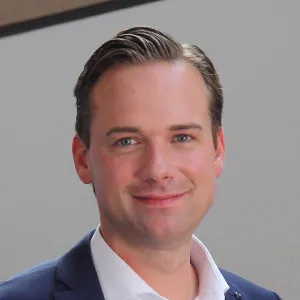
Dr. rer. oec. Simon Zäch MBA Entrepreneurship
- Principal Investigator
Principal Investigator
Employee
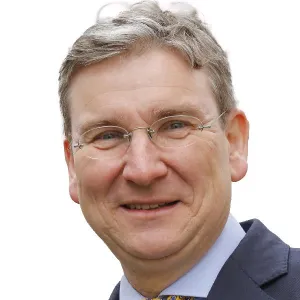
Prof. em. Dr. Urs Baldegger
- Project Collaborator
Project Collaborator
Employee
Manuel Alexander Beck MSc
- Project Collaborator
Project Collaborator

Distance Leadership - Exploring Distance in the Leader-Follower Relationship

Project Description

Due to a rapidly spreading global access to the internet and newly evolving collaboration technologies, companies can now benefit from saving time and costs by having web-based conferences and meetings. Online document sharing, telephone conferences, instant messaging and mobile work arrangements are some factors, why companies might be more likely to assemble teams rather by competencies, than solely by availability. Despite evident advantages, these innovations hold severe challenges for international organizations.

This research project focuses on the question how geographically distributed employees can be lead effectively. The dissertation focuses on the influence of distance dimensions (physical distance, leader-member exchange, and interaction frequency) on the leader-follower relationship in organizations. The central question aims at quantitatively examining the method of how distance might impact the relationship between leader behavior and follower self-leadership and performance. Findings may assist distant leaders and leaders of physically distant employees on how to lead followers more effectively.

Keywords

Leadership Distance Leadership E-leadership team performance Self-leadership

Project Participants

Führung auf Distanz

Project Description

Due to a rapidly spreading global access to the internet and newly evolving collaboration technologies, companies can now benefit from saving time and costs by having web-based conferences and meetings. Online document sharing, telephone conferences, instant messaging and mobile work arrangements are some factors, why companies might be more likely to assemble teams rather by competencies, than solely by availability. Despite evident advantages, these innovations hold severe challenges for international organizations.

This research project focuses on the question how geographically distributed employees can be lead effectively. The dissertation focuses on the influence of distance dimensions (physical distance, leader-member exchange, and interaction frequency) on the leader-follower relationship in organizations. The central question aims at quantitatively examining the method of how distance might impact the relationship between leader behavior and follower self-leadership and performance. Findings may assist distant leaders and leaders of physically distant employees on how to lead followers more effectively.

Relevance to Liechtenstein

Das Projekt untersucht die Wirkungszusammenhänge von Führung und Mitarbeiterperformance über physische Distanzen hinweg, wobei Technologiekonzerne aus Liechtenstein und dem Rheintal den Untersuchungsgegenstand bilden. Aufgrund der Internationalität der hier ansässigen Unternehmen, werden Mitarbeiter in zunehmendem Masse aus der Ferne geführt.
Ergebnisse sollen Unternehmen im Raum Liechtenstein/Schweiz dabei unterstützen, geografische Distanzen zu überbrücken und Mitarbeiter aus der Ferne effektiv zu führen.

Keywords

Leadership Distance Leadership E-leadership team performance Self-leadership

Project Participants

Employee
Dr. rer. oec. Nadine Poser
- Project Manager
Project Manager
Employee
Dr. rer. oec. Steffen Harald Schröder MSc
- Project Collaborator
Project Collaborator
Employee
Prof. Dr. Martin Wenz
- Koreferent
Professor - Business Management Taxation and Tax Law Academic Director - Liechtenstein Executive School
Koreferent
icon

Distance Leadership

Project Description

Due to a rapidly spreading global access to the internet and newly evolving collaboration technologies, companies can now benefit from saving time and costs by having web-based conferences and meetings. Online document sharing, telephone conferences, instant messaging and mobile work arrangements are some factors, why companies today are more likely to assemble teams rather by competencies, than solely by availability. Despite from evident advantages, these innovations hold severe challenges for global corporations.

This research project focuses on the question how geographically distributed teams can be lead effectively. In an exploratory study key success factors will be identified which can have an impact on the leadership of virtual teams. Findings will help leaders of international organizations to detect influences that improve team performance.

Keywords

Leadership Virtual team Distance Leadership E-leadership team performance

Project Participants

Employee
Prof. em. Dr. Urs Baldegger
- Supervisor
Supervisor
Employee
Dr. rer. oec. Nadine Poser
- PhD-Student
PhD-Student

Leading and Managing Through Paradoxical Tensions in Organizations

Project Description

As our world becomes increasingly “VUCA” – i.e., volatile, uncertain, complex, and ambiguous (Lewis & Smith, 2022: 530), organizations increasingly feature structures, systems or practices which may be perceived as contradictory (e.g., Schad et al., 2016; Smith & Lewis, 2011). Managing and leading through the resulting paradoxical tensions, has been described as the “ultimate advantage and challenge for organizations” (Andriopoulos & Lewis, 2009: 709; Lüscher & Lewis, 2008).
Prior research offers numerous management approaches in order for managers to navigate paradoxes within and across organizations successfully (Lewis & Smith, 2022; Schad et al., 2016), and recently emphasized paradoxical leadership (PL) – the integration of seemingly contradictory yet interrelated leadership behaviors (e.g., maintaining both distance and closeness) – as an important prerequisite to successfully lead individuals, teams, or even whole organizations through paradoxical tensions (Zhang et al., 2022).
Despite these advancements, the emerging research on PL is still relatively fragmented and fails to explain the full complexity of managing paradoxes, particularly in multinational organizations. Accordingly, this project strives to first review the literature on PL to integrate and consolidate the different research streams. Subsequently, it aims at empirically investigating a large multinational organization to understand how paradoxical tensions emerge and are managed across national borders and distinct national cultures.

Relevance to Liechtenstein

The research project is mainly addressing three of the six core research foci of the University of Liechtenstein, namely innovation, responsibility, and sustainability.
Innovation in organizations often requires a balance between optimization and renewal. The adoption of paradoxical leadership (PL) by leaders can serve as an important mechanism for overcoming the perceived conflicts between these two. The findings and results of this project should therefore help organizations to successfully implement innovative projects across boundaries.
Sustainability and responsibility are another source of potential paradoxical tensions in organizations, as organizations often try to reconcile the contradictions between sustainability and profitability and/or between performance and care to remain competitive in the marketplace while still having a positive impact on their own organizational members and on society in general. To successfully manage such tensions, adapting PL is therefore an important mechanism, especially in change processes, which make paradoxical tensions become more salient.
Our findings will be highly insightful for organizations from Liechtenstein and the Rhine Valley region as many local companies already position themselves as particularly sustainable and responsible innovation leaders with a strong business sense. It is precisely these companies that are thus increasingly confronted with paradoxical tensions, and which could therefore benefit from the findings of this research project as well.

Scientific, Economic and Societal Impact

Subproject 1: Given a fragmented picture of the literature on paradoxical leadership (PL), the proposed review has three main objectives. First, we consider the multilevel nature of PL and describe paradoxical tensions rooted in the leader and in the organization as two distinct but interrelated types of PL. Furthermore, we provide an overview of findings on the effects of PL on individual- and organizational-level outcomes and the boundary conditions for these relationships. Finally, based on our approach, we derive opportunities for future research and propose to consider the interplay of PL at the individual and organizational levels, as well as their separate and integrative drivers and outcomes.
Subproject 2: This project aims to study management's approach to paradoxical tensions at the subsidiary level in a multinational company, examining the implementation process of a cultural change initiative in a leading global company headquartered in the DACHLI region. By examining how the management of the organization's subsidiary perceived and managed such tensions during a cultural change initiative, this research project aims to identify similarities and differences, understand where they originated, and identify more and less effective management approaches for similar group-wide initiatives in the future.


Keywords

Paradoxical Leadership Paradox Management Organizational Identity

Participating Institutions

From ESG to Impact Investing (ERASMUS+)

Project Description

Finanzierungsunterstützung ERASMUS 2019-1-LI01-KA203-000168_ESGImpactInvesting_605146

Project Participants

Employee
Prof. em. Dr. Marco J. Menichetti
- Principal Investigator
Professor Emeritus - Liechtenstein Business School
Principal Investigator

From ESG Integration to Impact Investing

Project Description

The overall objective of this project is to depict the differences in impact across sustainable Investment strategies. Participants will learn, that - although sustainable investment strategies are used - resulting impact levels can be very different.

Our IOs in form of online courses will put participants in
a position to make their own responsible decision in investing and to look out for higher impact levels.

The long term benefit of this project is the support for investors to become mature and responsible, as well as for issuers of financial products and for advisers to retail and institutional investors. The overall target group for this project are millions of people holding responsible positions in financial markets.

All created courses are uploaded to freely available platforms and offered to interested universities, thus people have free access after having finished the project. Partner universities will use research findings for their own programs in the field of consecutive (BSc, MSc) or continuiung education.

Participating Institutions

Chair in Business Administration, Banking and Financial Management / Project Lead
Universidad Nacional de Education a Distancia / Partner
Università Degli di Roma La Sapienza / Partner
Università Degli Studi di Roma Unitelma Sapienza / Partner

Project Participants

Employee
Prof. em. Dr. Marco J. Menichetti
- Principal Investigator
Professor Emeritus - Liechtenstein Business School
Principal Investigator
Employee
Dr. rer. oec. Tian Luan MSc
- Project Collaborator
Project Collaborator

Fostering learner-centered education in the field of taxation

Project Description

The project analyses the impact of the Base Erosion and Profit Shifting (BEPS) Initiative and the Anti-Tax Avoidance Package (ATAP) against the background of the partner countries' respective national tax systems. These initiatives aim to ensure that profits are taxed where economic activities generating the profits are performed and where value is created. As three of the four partner countries represent EU member states, while the other one (FL) is part of the European Economic Area (EEA), the questions of the transposition of BEPS and/or Anti-Tax Avoidance Directive (ATAD) into the domestic tax laws are emerging in each partner country and give rise to a comparative legal approach with regard to the national tax provisions which are influenced by BEPS and ATAD. Furthermore, international case studies will be generated in the course of the project which deal with cross-border activities and focus on the effects of BEPS and ATAD on the taxation of these activities. In these case studies the interaction between national tax laws, tax treaties and the new supranational tax regulations can be demonstrated.
Additionally to the legal aspects, the project will analyse the economic impact of BEPS and ATAD. As policy makers are concerned with how tax policies can foster innovation and growth, which is also a new tax policy pillar with the G20, the project team will analyse the impact of taxes, with a special focus on the Allowance for Corporate Equity (ACE), on entrepreneurial risk taking.

Relevance to Liechtenstein

Das Projekt analysiert die Auswirkungen der Base Erosion and Profit Shifting (BEPS) Initiative und des Anti-Tax Avoidance Package (ATAP) auf die Liechtensteinische Steuerpolitik. In einem Rechtsvergleich wird hierbei untersucht, wie in Liechtenstein, welches Teil des Europäischen Wirtschaftsraums (EWR) ist, sowie in weiteren EU-Ländern die Umsetzung von BEPS und/oder der Anti-Tax Avoidance Directive (ATAD) in die nationalen Steuergesetze gestaltet wurde. Darüber hinaus werden im Rahmen des Projekts internationale Fallstudien erstellt, die sich mit grenzüberschreitenden Aktivitäten beschäftigen und die Auswirkungen von BEPS und ATAD auf die Besteuerung dieser Aktivitäten analysiert. In diesen Fallstudien kann das Zusammenspiel zwischen nationalen Steuergesetzen, Steuerabkommen und den neuen supranationalen Steuervorschriften aufgezeigt werden.
Darüber hinaus werden die wirtschaftlichen Auswirkungen der BEPS-Initiative und der ATAD auf Innovation und Wachstum empirisch untersucht und quantifiziert. Der Fokus liegt hierbei auf den Ländern Liechtenstein, Italien und Belgien, welche einen Eigenkapital-Zinsabzug, d.h. einen abzugsfähigen Freibetrag für unternehmerisches Eigenkapital, eingeführt haben. Dies wird mit der deutschen Steuerpolitik kontrastiert, welche eine Zinsschranke eingeführt hat, d.h. die Abzugsfähigkeit von Zinsaufwendungen für die Fremdfinanzierung begrenzt. Da davon ausgegangen wird, dass die beiden Regelungen gegenläufige Auswirkungen auf die unternehmerische Risikobereitschaft haben, bietet diese Ländergruppe ein interessantes Umfeld, um die Auswirkungen der Besteuerung auf die unternehmerische Innovations- und Risikobereitschaft zu erforschen. Dies ist besonders interessant, da die Zinsobergrenzenregel ein Element der ATAD ist und somit ein verpflichtender Standard innerhalb der EU.

Forgetting and Unlearning in Organizations

Project Description

The field of organizational studies offers plenty of research and scholarly debate on organizational learning. However, research efforts examining questions as to how and why organizations lose knowledge are still scarce. The doctoral thesis aims at clarifying, understanding, and empirically testing the construct of organizational forgetting and unlearning. More precisely, the project seeks to get a better understanding and discover why and how organizations forget and unlearn. It is important to differentiate between existing knowledge stocks and newly acquired knowledge (e.g. innovations) as well as deliberate unlearning and unintentional modes of forgetting. Clarifying these differences and understanding why and how organizations forget and unlearn are main research questions within the boundaries of this project. Furthermore, the dissertation project investigates the effect of organizational forgetting and unlearning on organizational performance. Empirical results should provide insight into the nature of organizational forgetting and unlearning as well as its effect on organizational performance.

Keywords

Organizational forgetting Organizational unlearning

Project Participants

Employee
Dr. Adrian Klammer
- PhD-Student
PhD-Student
Employee
PD Dr. habil. Stefan Güldenberg
- Supervisor
Supervisor
Subscribe to