








Skip to Main Content

University of Liechtenstein Hosts Successful Symposium on the Future of Lifelong Learning

University of Liechtenstein Hosts Successful Symposium on the Future of Lifelong Learning

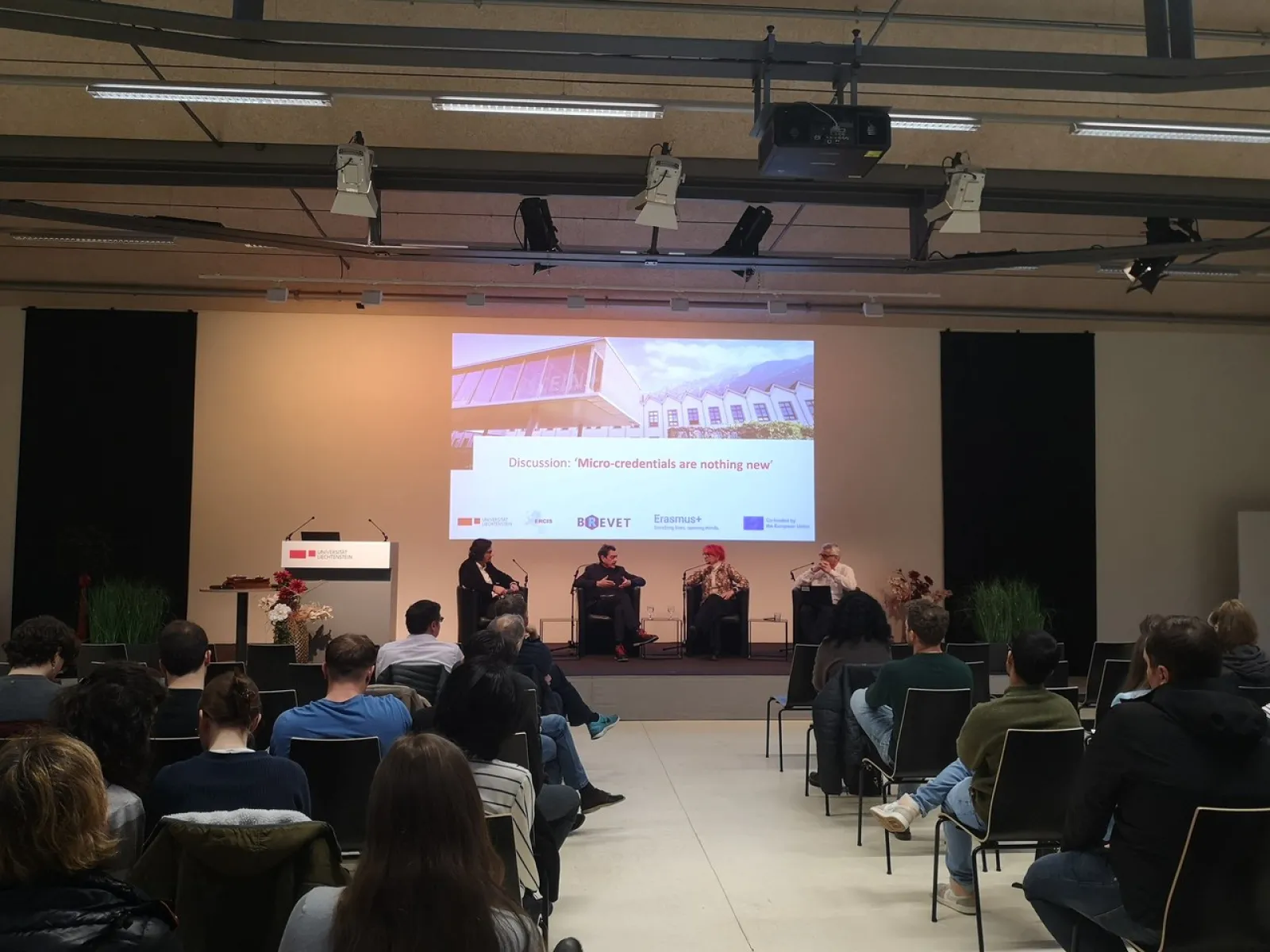
The University of Liechtenstein's symposium on "The Future of Lifelong Learning" held Monday evening, has been perceived as a success by attendees and organizers alike. The event brought together educational experts and community members to explore recent approaches to lifelong learning and recognition of prior learning (RPL).


The symposium featured a lineup of internationally renowned speakers who shared their insights with an audience of over 50 participants. Serge Ravet, President of Reconnaître—Open Recognition Alliance, shed light on how digital technologies are revolutionizing open recognition practices and learning across traditional boundaries.


Deb Carr, an expert in Technical Vocational Education and Training policy, provided compelling case studies from around the world, demonstrating how RPL frameworks are transforming educational systems globally. Her presentation resonated particularly with industry professionals seeking to bridge education-employment gaps.


Professor Patrick Werquin from CNAM Paris rounded out the expert panel with a thought-provoking analysis of how micro-credentials and national qualifications frameworks are responding to continuously changing workforce demands.


"The turnout exceeded our expectations," said Dr. Michael Gau and Gregor Kipping, scientists at the Department of Information Systems and Computer Science and organizer of the event. "The diverse audience—from university students to corporate leaders to educators in the VET sector—demonstrates the widespread interest in rethinking how we approach learning throughout our lives."


The symposium's interactive discussion session sparked conversations about implementing these innovative approaches within Liechtenstein's educational landscape. This symposium represents an important step toward embracing new paradigms in lifelong learning and recognition of skills that will benefit both individuals and the broader economy.

Congratulations to Jonas Bokstaller on Defending his Doctoral Thesis with Distinction

Congratulations to Jonas Bokstaller on Defending his Doctoral Thesis with Distinction

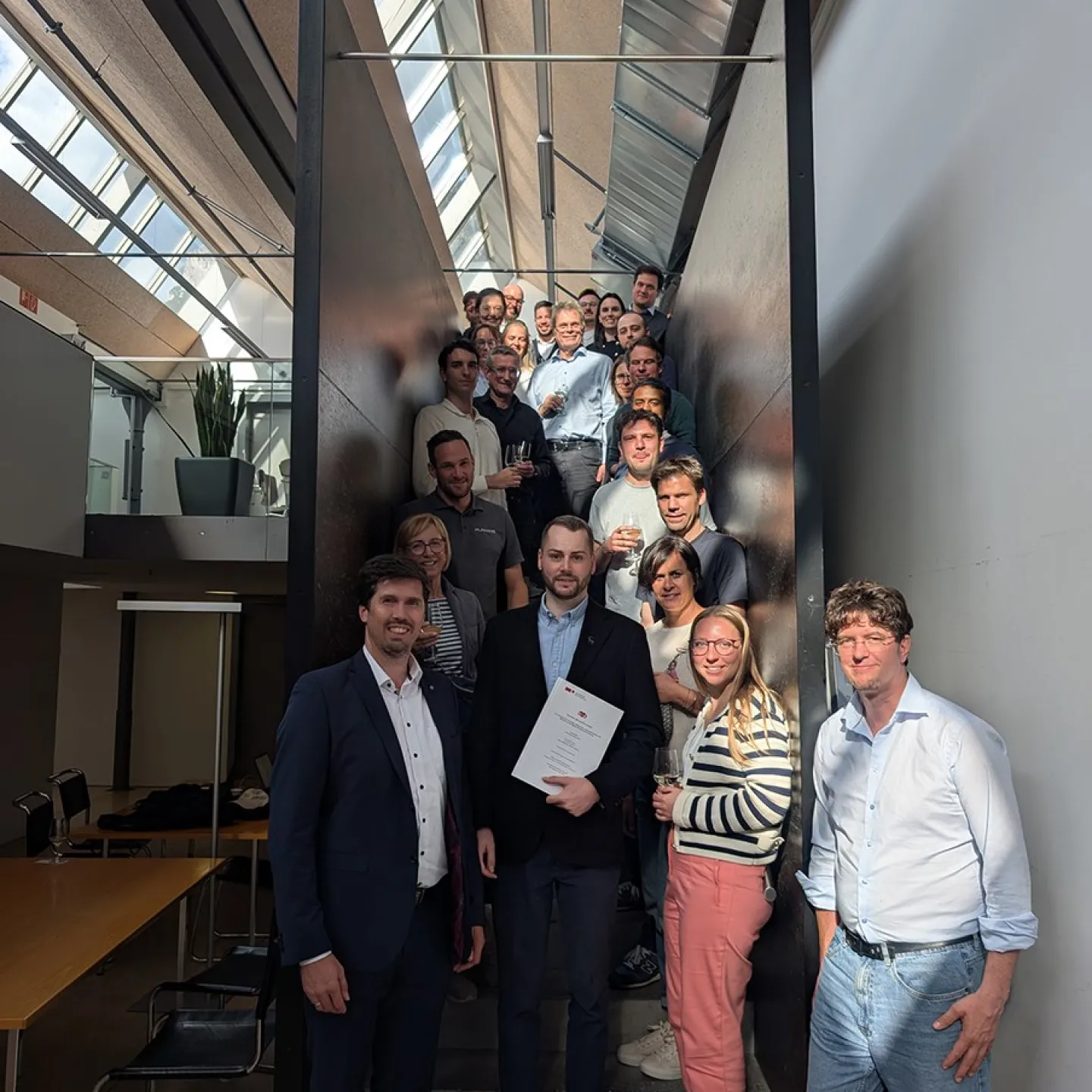
Eine Gruppe von Menschen steht auf einer Treppe in einem modernen Gebäude. Im Vordergrund hält eine Person ein Dokument in der Hand, umgeben von lächelnden Kollegen. Die Szene ist gut beleuchtet durch ein Oberlicht.

The University of Liechtenstein warmly congratulates Jonas Bokstaller on successfully defending his doctoral thesis with the highest distinction. Jonas, a native of Liechtenstein, was supervised by Assoc. Prof. Dr. Johannes Schneider and co-mentored by Prof. Dr. Jan vom Brocke and Prof. Dr. Simon Lux. His dissertation was developed in close collaboration with Hilti, once again highlighting the excellent partnership between the University of Liechtenstein and regional industry.


The research focuses on the development of a platform to monitor, predict, and maintain the health of batteries powering Internet of Things (IoT) devices. The work emphasises the importance of long-term maintenance for battery-powered IoT systems and demonstrates how IoT functionality can be used to transmit battery health data to the cloud.


The study centres on small, energy-efficient IoT devices, where usage and battery data are primarily collected using counters. It explores the feasibility of using only low-frequency usage data to track, predict, and maintain battery health. Furthermore, the dissertation discusses the integration of capacity-based State of Health (SoH) with data-driven SoH models. The ultimate goal is to ensure up-to-date and reliable information on battery health at all times.


We sincerely congratulate Jonas Bokstaller on this outstanding achievement and wish him continued success in his future endeavours!

Eine Gruppe von Menschen steht auf einer Treppe in einem modernen Gebäude. Im Vordergrund hält eine Person ein Dokument in der Hand, umgeben von lächelnden Kollegen. Die Szene ist gut beleuchtet durch ein Oberlicht.

Four Contributions from the University Presented at ECIS 2025

Four Contributions from the University Presented at ECIS 2025

Bild der Universität Liechtenstein, von welcher vier wissenschaftliche Arbeiten zur Verbesserung der Interpretierbarkeit von Machine Learning Modellen durch LLM-Chatbots an der European Conference on Information Systems präsentiert wurden.

At this year’s European Conference on Information Systems (ECIS) – the most prominent European academic conference in the field of Information Systems – the University of Liechtenstein was represented with four scientific contributions. Two of these were developed within Erasmus+-funded projects.


The presented papers address current challenges in the areas of artificial intelligence (AI), micro-credentials, and design science research.


Making Machine Learning Models More Understandable Through LLM-Based Chatbots


The paper “Enhancing ML Model Interpretability: Leveraging Fine-Tuned Large Language Models for Better Understanding of AI” introduces a novel explainable AI (XAI) reference architecture. By integrating a fine-tuned chatbot based on large language models (LLMs), it improves the accessibility of machine learning (ML) predictions for end users. The architecture was validated in the context of battery State of Health (SoH) prediction and demonstrated improved interpretability—especially for less experienced users.


Bokstaller, Jonas; Altheimer, Julia; Dormehl, Julian Armin; Buss, Alina; Wiltfang, Jasper I.; Schneider, Johannes; and Röglinger, Maximilian, "Enhancing ML Model Interpretability: Leveraging Fine-Tuned Large Language Models for Better Understanding of AI" (2025). ECIS 2025 Proceedings. 3. https://aisel.aisnet.org/ecis2025/human_ai/human_ai/3


AI-Powered Access to Design Knowledge


The paper “Facilitating Design Knowledge Access with a Generative AI-Based Conversational Assistant” addresses challenges in systematically retrieving knowledge in design science research (DSR). A generative AI-based chatbot was developed to assist researchers in identifying and reusing existing design knowledge. The contribution is part of the Erasmus+ project Design Science Research Academy and is based on an initial design cycle, outlining specific requirements, design principles, and a prototype implementation.


Gau, Michael and Gnewuch, Ulrich, "Facilitating Design Knowledge Access With a Generative AI-Based Conversational Assistant" (2025). ECIS 2025 Proceedings. 2. https://aisel.aisnet.org/ecis2025/des_research/des_research/2


Micro-Credentials for Standardized Skills Recognition


In the Erasmus+ project “Broadening the Recognition Ecosystem in VET with Micro Credentials”, a European-wide concept was developed for recognising vocational competencies. The paper “Design of a Micro-Credentialing System for Skills Recognition in Education and Training” presents an innovative system for awarding micro-credentials, enabling standardized terminology and categorization of skills across national borders. The results include the first design cycle, with defined principles, a prototype, and its evaluation.


Kipping, Gregor; Gau, Michael; Terzis, Joseph; and Zourou, Katerina, "Design of a Micro-Credentialing System for Skills Recognition in Education and Training" (2025). ECIS 2025 Proceedings. 6. https://aisel.aisnet.org/ecis2025/education/education/6


Strategic Management of AI Initiatives


The paper “How Organizations Design Portfolio Management to Govern AI: A Taxonomy Approach” examines how organizations strategically govern AI initiatives. Based on five case studies, the authors developed a multi-layered taxonomy of key design decisions in AI portfolio management. The taxonomy was validated through expert interviews and practical interventions. The study offers valuable insights for both academia and practice on the governance of AI projects.


Sturm, Simon and van Giffen, Benjamin, "How Organizations Design Portfolio Management to Govern AI: A Taxonomy Approach" (2025). ECIS 2025 Proceedings. 9. https://aisel.aisnet.org/ecis2025/ai_org/ai_org/9


Academic Visibility on the European Stage


The acceptance and presentation of four contributions at ECIS 2025 highlight the relevance and quality of the University’s research in the field of Information Systems. The University of Liechtenstein warmly congratulates all participating researchers on this achievement.

Bild der Universität Liechtenstein, von welcher vier wissenschaftliche Arbeiten zur Verbesserung der Interpretierbarkeit von Machine Learning Modellen durch LLM-Chatbots an der European Conference on Information Systems präsentiert wurden.
Subscribe to Department Information Systems and Computer Science