Skip to Main Content

A Year Full of Highlights: A Look Back at the Spring Party and Halloween Party 2025 16 December 2025
A Year Full of Highlights: A Look Back at the Spring Party and Halloween Party 2025 16 December 2025

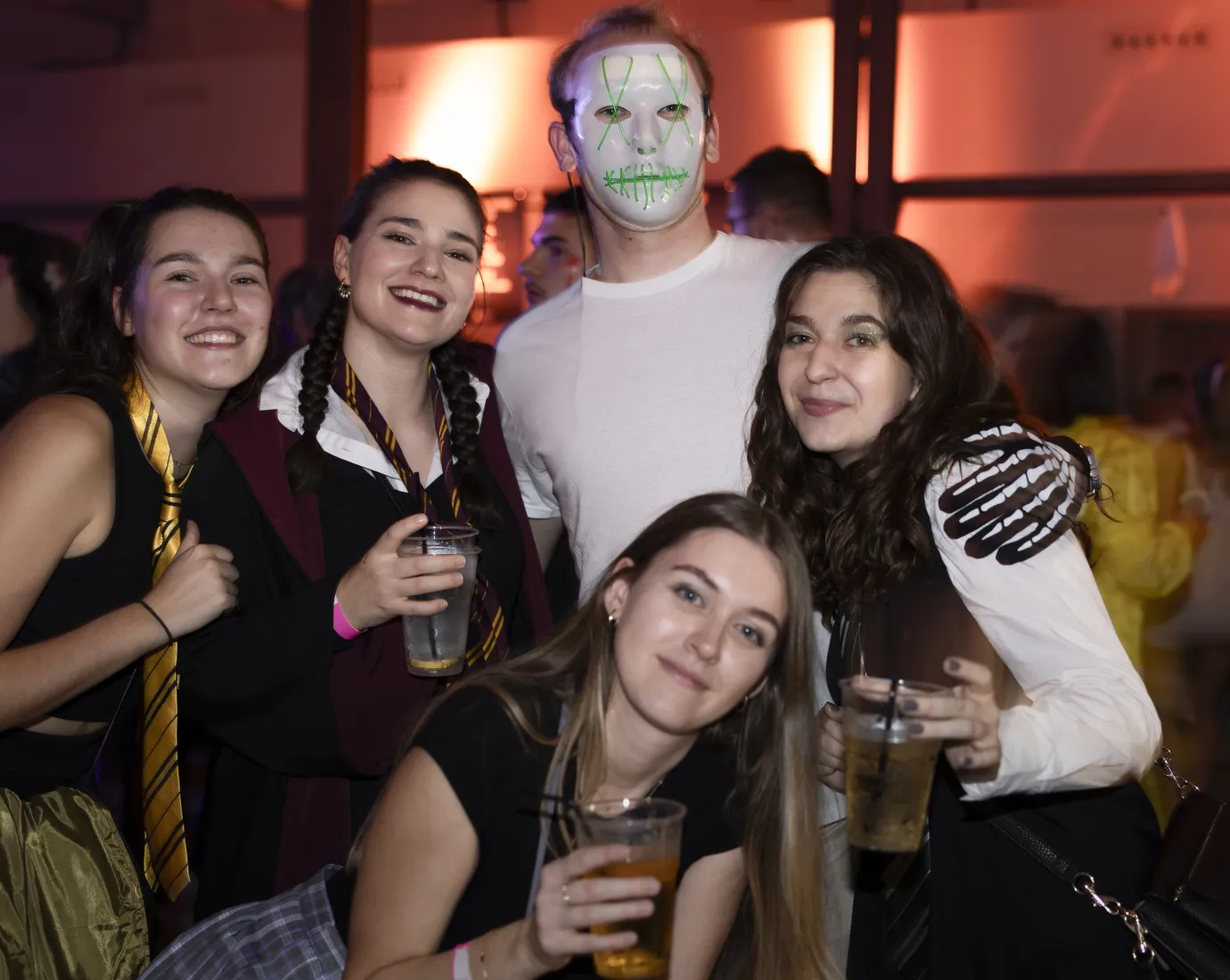
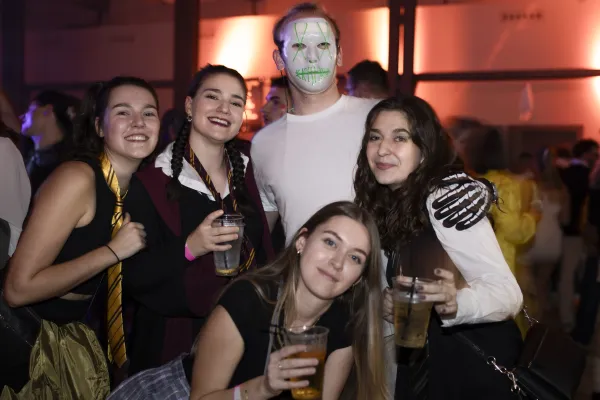
Mehrere Personen posieren für ein Foto an einer Halloween Party

The 2025 event year at the University of Liechtenstein had two absolute highlights: the Spring Party in February and the legendary Halloween Party in October. The two events could hardly have been more different, and yet they shared one thing in common: they brought students together in an unforgettable way and showed just how vibrant and energetic campus life can be.


Spring Party 2025: A Start to the Year That Set New Standard


Weeks before the event, excitement was already in the air, and with good reason. Fabian Farell, one of the biggest names on the European EDM scene, was announced on the line up. The DJ, who has already thrilled crowds on festival stages such as Parookaville and World Club Dome, transformed the university auditorium into a sea of light, energy and euphoria.

From the very first minute, it was clear that this Spring Party would surpass everything students had experienced before. As soon as the bass dropped, the spark was instantly ignited. The dance floor remained packed throughout the night, and every drop triggered a wave of collective euphoria.

The atmosphere? Pure magic.
The people? Beaming with joy.
The evening? Unforgettable.

The photos taken over the course of the night speak for themselves. From spontaneous dance battles and exuberant group moments to iconic party shots, every image tells the story of an evening that no one will forget anytime soon.

It was clear shortly after the party that this event would set new standards, and it significantly raised anticipation for future parties.
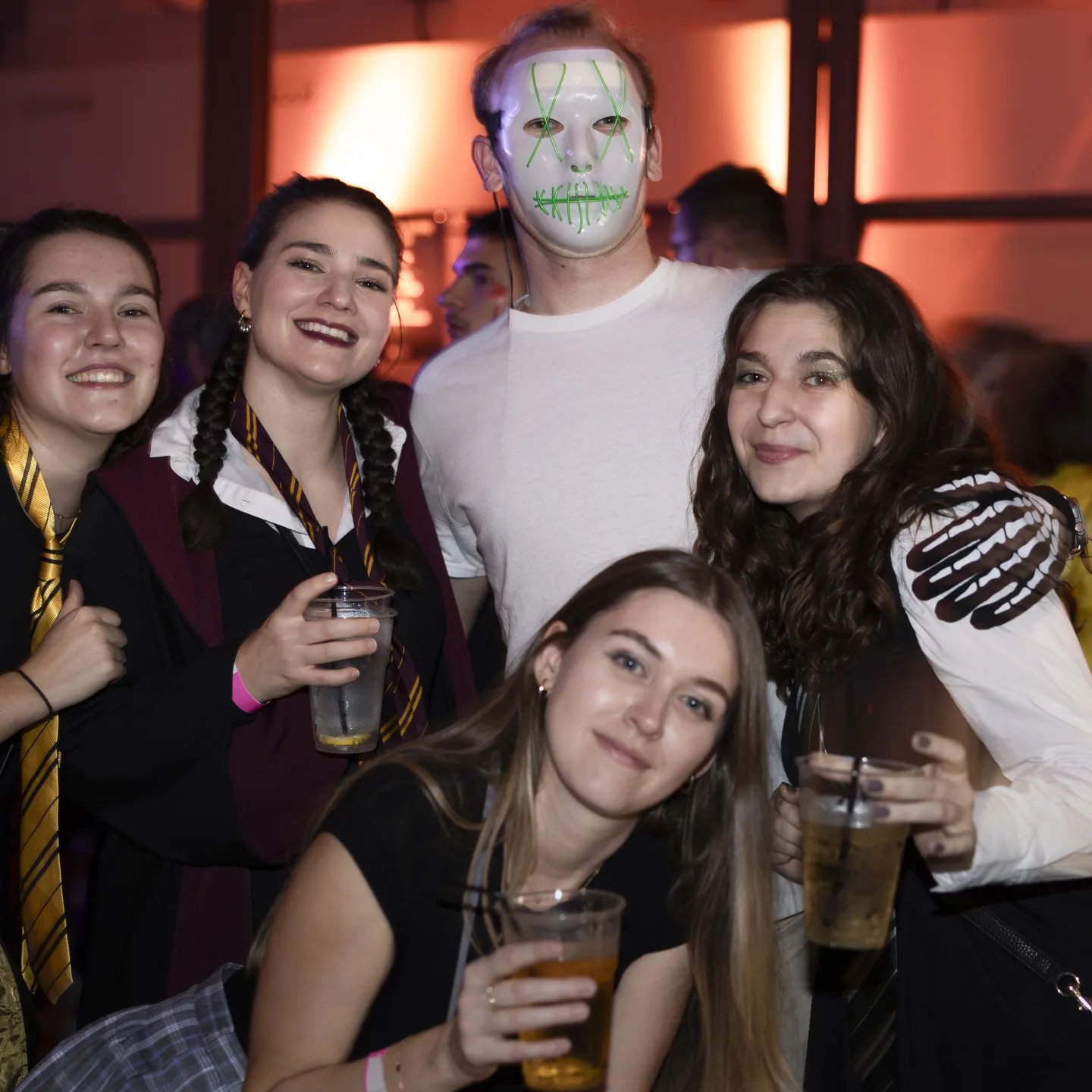
Mehrere Personen posieren für ein Foto an einer Halloween Party

Spring Party 2025

We need your consent
To view this YouTube video, you must accept data processing under the category “Third-party marketing”. Further details on data processing can be found here.
Display Cookie Settings

Halloween Party 2025: A Night of Spookiness, Glamour and Goosebumps

While the Spring Party was defined by light and lightness, the Halloween Party in October brought a completely different yet equally captivating atmosphere. Under the Halloween theme, the university auditorium was transformed into a world of shadows, fog and eerie characters.

Even in advance, it was clear that this party would be something special, and it certainly delivered. Before the doors even opened, all 400 tickets were sold out. Anticipation was huge, and the students did not disappoint. The costumes were creative, spooky, glamorous and in some cases impressively detailed. Thanks to the promotion Costume equals drink for free, almost everyone came dressed up.

Musically, the evening featured a mix of hits from the 2000s and 2010s, house and hip hop, creating an energetic and varied set. The dance floor stayed full all night, while guests immersed themselves in spooky decorations, light installations and drifting fog.

The atmosphere was electrifying, a blend of joy, shock moments, laughter and goosebumps. The photos capture moments that can truly be described as iconic: elaborate costumes, glowing masks, epic dance scenes and spontaneous group moments that perfectly reflect the spirit of the night.

The Halloween Party 2025 exceeded all expectations and more than earned its place as one of the biggest events of the year.

Halloween Party 2025

We need your consent
To view this YouTube video, you must accept data processing under the category “Third-party marketing”. Further details on data processing can be found here.
Display Cookie Settings

Conclusion: Two Nights That Defined the University Year

Both the Spring Party and the Halloween Party showed what makes student life at the University of Liechtenstein so special: community, creativity, joy of life and the ability to turn every moment into something extraordinary. A heartfelt thank you goes to our student organisation START Vaduz for organising these parties.

Whether pulsating EDM beats in February or dark and glamorous party vibes in October, these events will remain in our memories for a long time.

And one thing is certain:
anticipation for the next event is already huge.
Review: Our Mini Events in the Winter Semester 2025

Review: Our Mini Events in the Winter Semester 2025

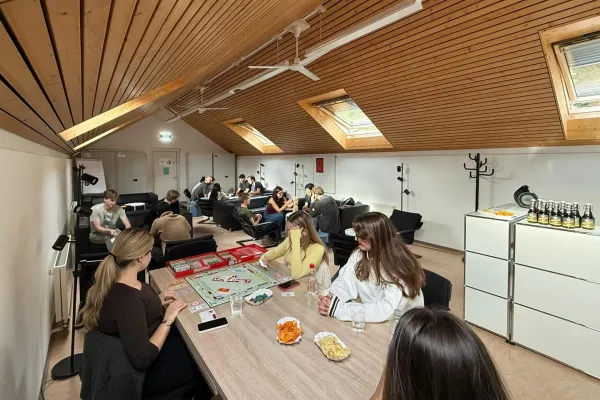
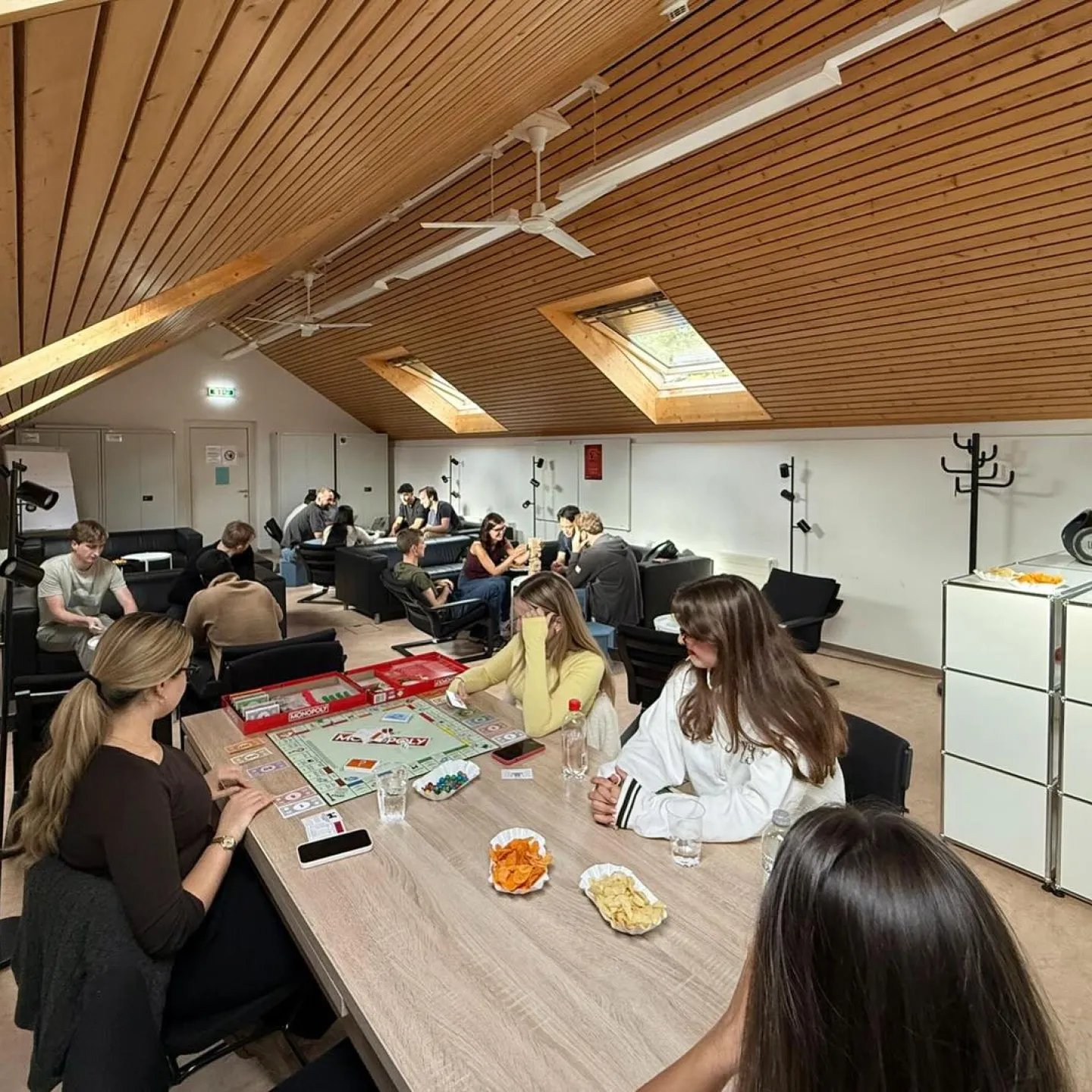
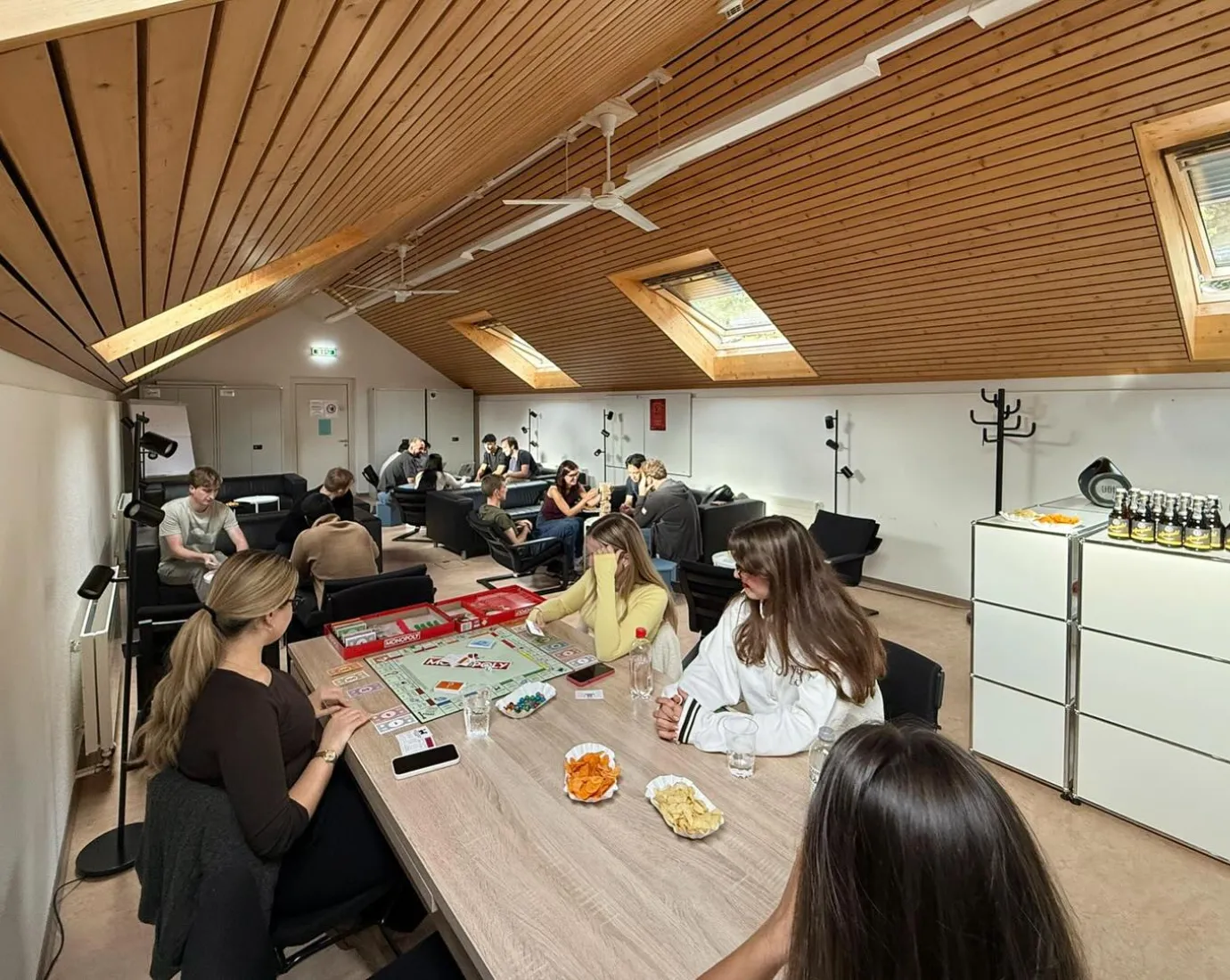
Mehrere Studierende sitzen in einem Raum und spielen

This winter semester, the mini events organised by the Spinnerei once again showed how valuable small breaks from everyday university life can be. Each event had its own distinct character and brought together students from different degree programmes, sometimes lively and full of energy, sometimes cosy and relaxed. Below is a detailed look back.


16 September: Games Evening

The games evening at the start of the semester was a great success and attracted around 40 students. From classic board games to fast paced party games, there was something for everyone. The groups quickly mixed, new friendships emerged and even spontaneous mini tournaments were created. Many took the opportunity to reconnect after the summer break or to get to know new faces. The atmosphere was cheerful, with laughter coming from every corner, an ideal start to an active semester.


14 October: Beerpong Tournament

The beerpong evening in October brought significantly more movement and competitive spirit into the mix. Around 30 participants competed against each other in teams and it quickly became clear that ambition had been sparked. There was cheering, debating and celebrating, always with a good dose of humour. Some participants demonstrated impressive throwing techniques, while others focused on creative team names and provided additional entertainment. The evening offered a successful combination of sporting competition and social togetherness.


28 October: Halloween Watch Party

The Halloween watch party at the end of October provided a pleasant contrast to the previous louder events. With a small and cosy group of eight people, the room almost felt like a living room. Blankets, snacks and comfortable cushions created a particularly homely atmosphere. The group chose the film together, which helped to establish a sense of familiarity from the very beginning. The watch party showed that smaller events can also have a big impact, especially when the aim is to switch off together and enjoy a relaxed evening.


18 November: Waffles and Punch

With the event Waffles and Punch, the pre Christmas atmosphere finally arrived in mid November. The 24 participants were immediately greeted by the warm smell of freshly baked waffles. While the punch steamed and created the perfect winter mood, small groups formed where people chatted and laughed animatedly. Some even helped with baking the waffles, giving the evening an almost family like atmosphere. For many, this was the most enjoyable and cosiest date in the series, a perfect transition into the cold season.

The mini events of the winter semester 2025 once again proved how important such encounters are for cohesion within the student body. Whether loud or quiet, large or small, each event made its own contribution to a vibrant campus life. At this point, a heartfelt thank you also goes to Hanna, who organised all the mini events so wonderfully. We are already looking forward to spending many more great evenings together next semester.

Mehrere Studierende sitzen in einem Raum und spielen

USA – Raleigh, North Carolina

USA – Raleigh, North Carolina

Magdalena Bereuter

Reflection on Language: Growing Through Communication

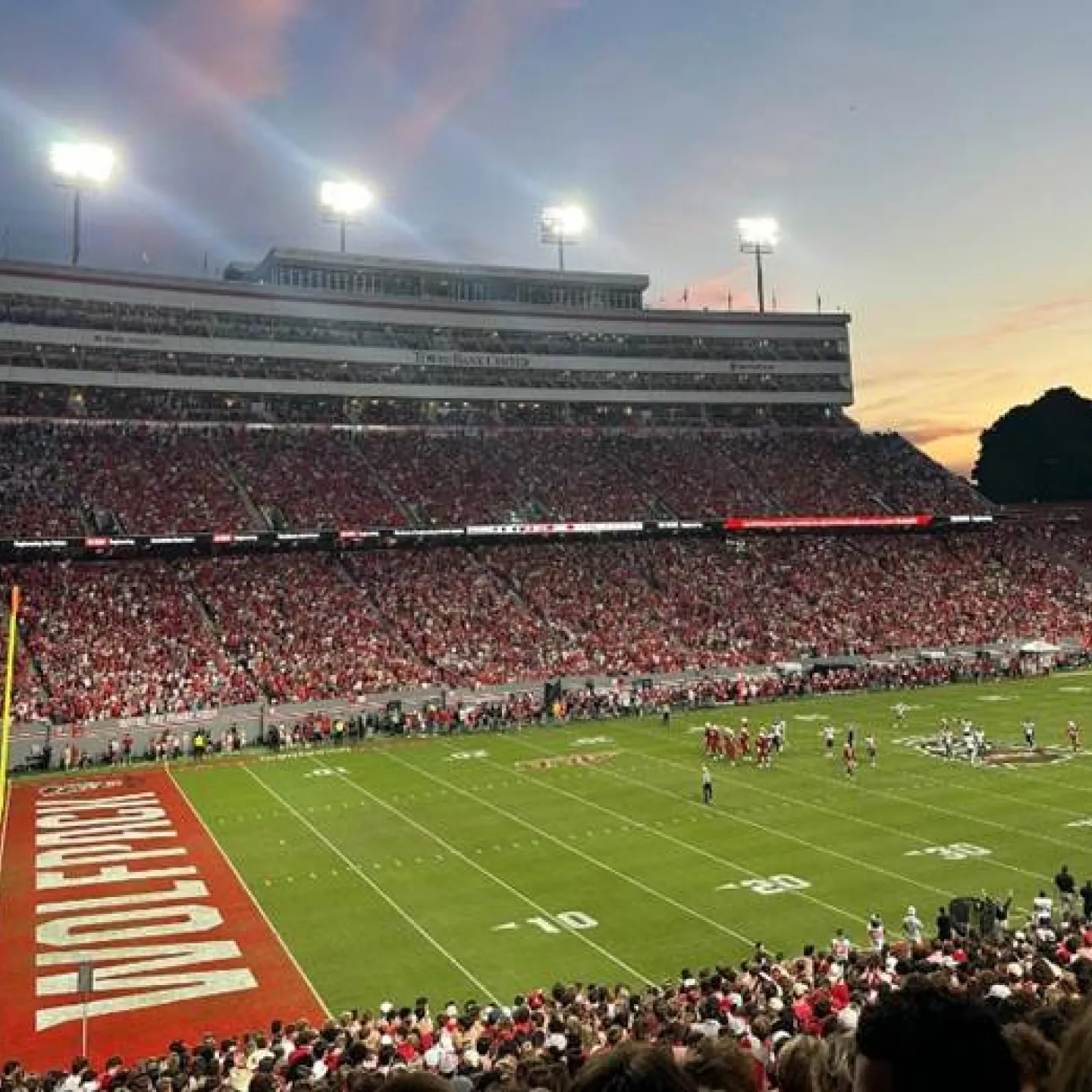
Ein Footballstadion von innen

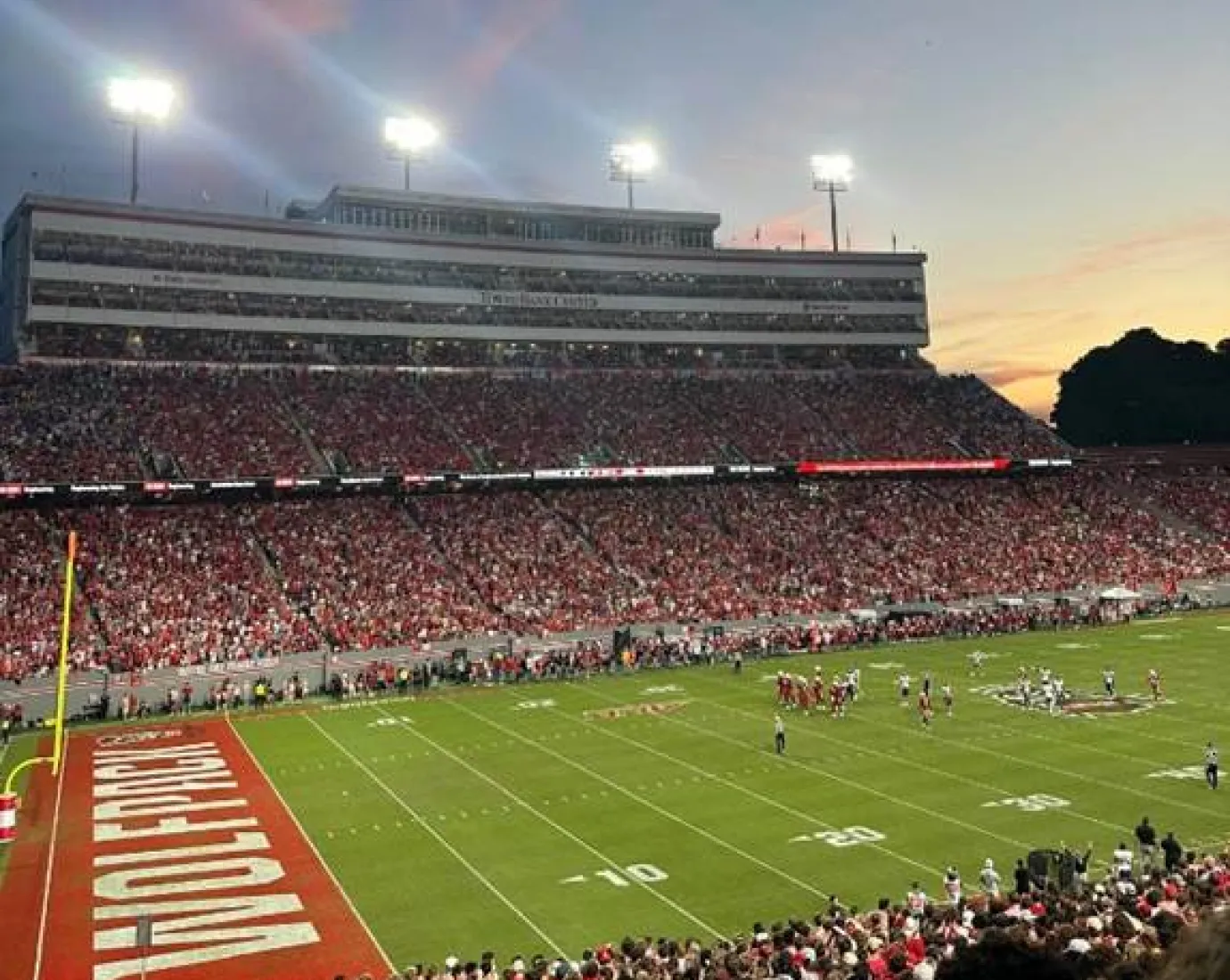
Living in America has been exciting and fulfilling, especially about language. I was never very good at English at school, and to be honest, I never really liked speaking it. However, since I came here, I have improved a lot. Nowadays, I appreciate the language even more because I use it every day. Mostly, communication feels easy and natural. I can connect with people from any part of the world, follow conversations, and participate in class discussions. Still, sometimes it is hard to catch every detail. Different accents may make understanding difficult. These little challenges have helped me grow. They have taught me patience, curiosity, and confidence.


I have realized that using English in daily life is very different from studying it at school. Then, I concentrated on grammar, vocabulary, and pronunciation, and I learned British English. Here, I'm learning how to speak American in reality. I can easily understand most conversations, but when people talk quickly or with strong accents, sometimes I need a moment to get what they say. For example, when I went to New York, people spoke so fast, with such strong accents that it was hardly possible to understand what they said. At first, I felt nervous asking people to repeat; now, I see that it is absolutely normal. Everyone has an accent, and communication is about understanding, not perfection. What I love most about living in an English-speaking environment is the variety. People speak a little differently, and every new interaction feels like the discovery of another version of the same language. It keeps things interesting and reminds me that communication is just as much about listening as about speaking.


Before coming to America, I thought speaking English all the time would be difficult and exhausting. Surprisingly, it has not been as hard as I imagined. Because I use it every day it has become more natural. I often think in English now, and sometimes, when I talk to my family, I forget the German word for something and only remember the English one. What makes communication easier is how friendly and open people are. When I make mistakes or search for the right word, they are patient and understanding. That kindness has helped me relax and speak more confidently. These experiences have taught me more than just language skills. They have made me a better communicator overall. I have learned to listen carefully, stay patient, and adjust how I speak depending on who I’m talking to.


Understanding and speaking a foreign language has helped me appreciate my own native language (german) even more. You realize how much words shape our thoughts and how closely cultures are linked to language. Living and learning in English has helped me understand myself better. I am now more confident and expressive than I would have thought possible. Even when I make mistakes, I can still clearly express what I think and feel. I am no longer ashamed of my English skills. I have learned that good communication does not depend on perfection, but on openness, friendliness, and interest in the people around me.


Speaking English every day in America is an enriching experience. I learned that language is more than just words; it is a living connection between people. Even though I sometimes struggle with different accents or cultural humor, I find these challenges entertaining. Every conversation is another opportunity to learn, both linguistically and as a person. And I know that these communication skills will continue to help me in the future.

Ein Footballstadion von innen

Italy - Rome

Italy - Rome

Sydney Pauger

Beyond Words in Rome

Das Koloseum in Rom

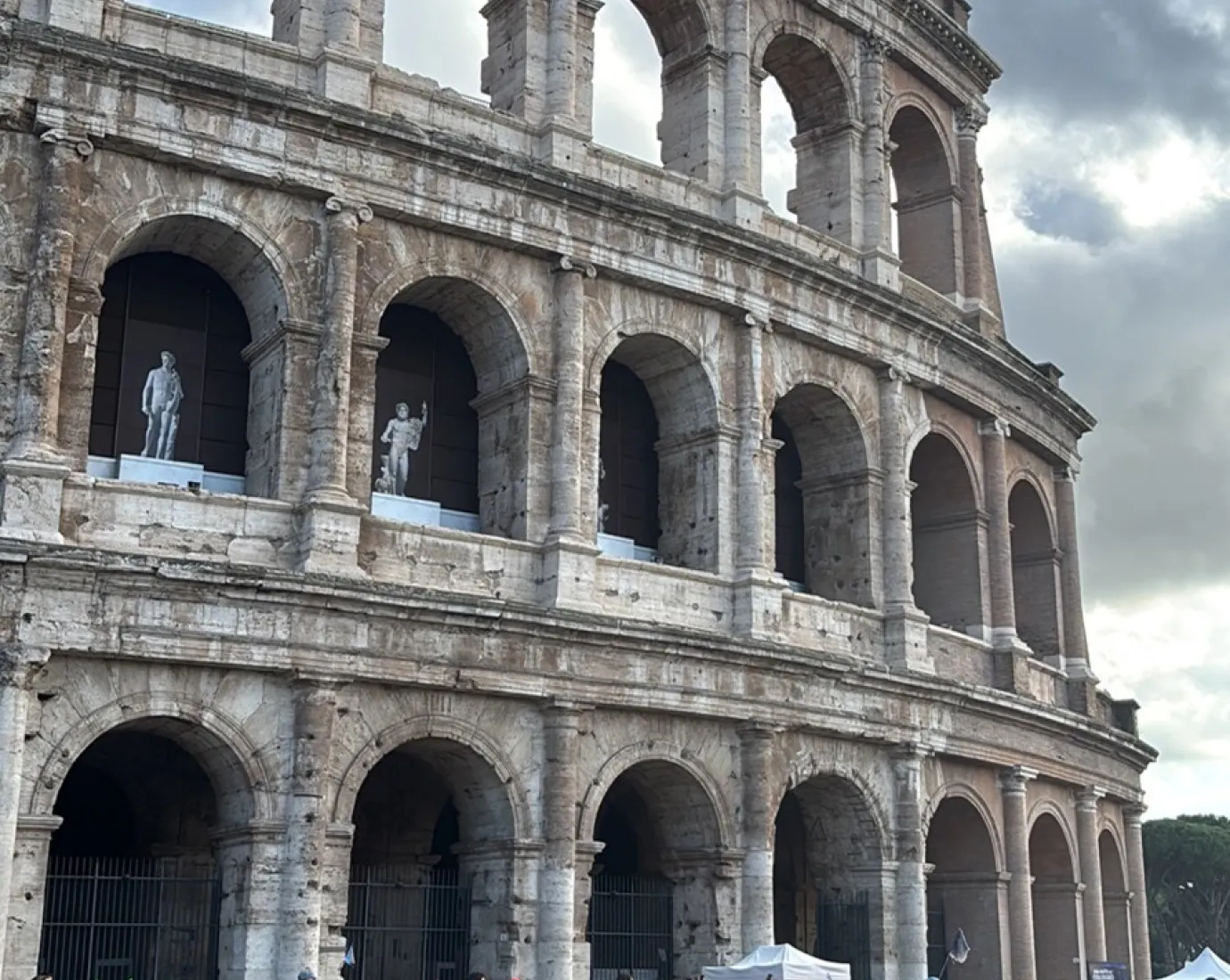
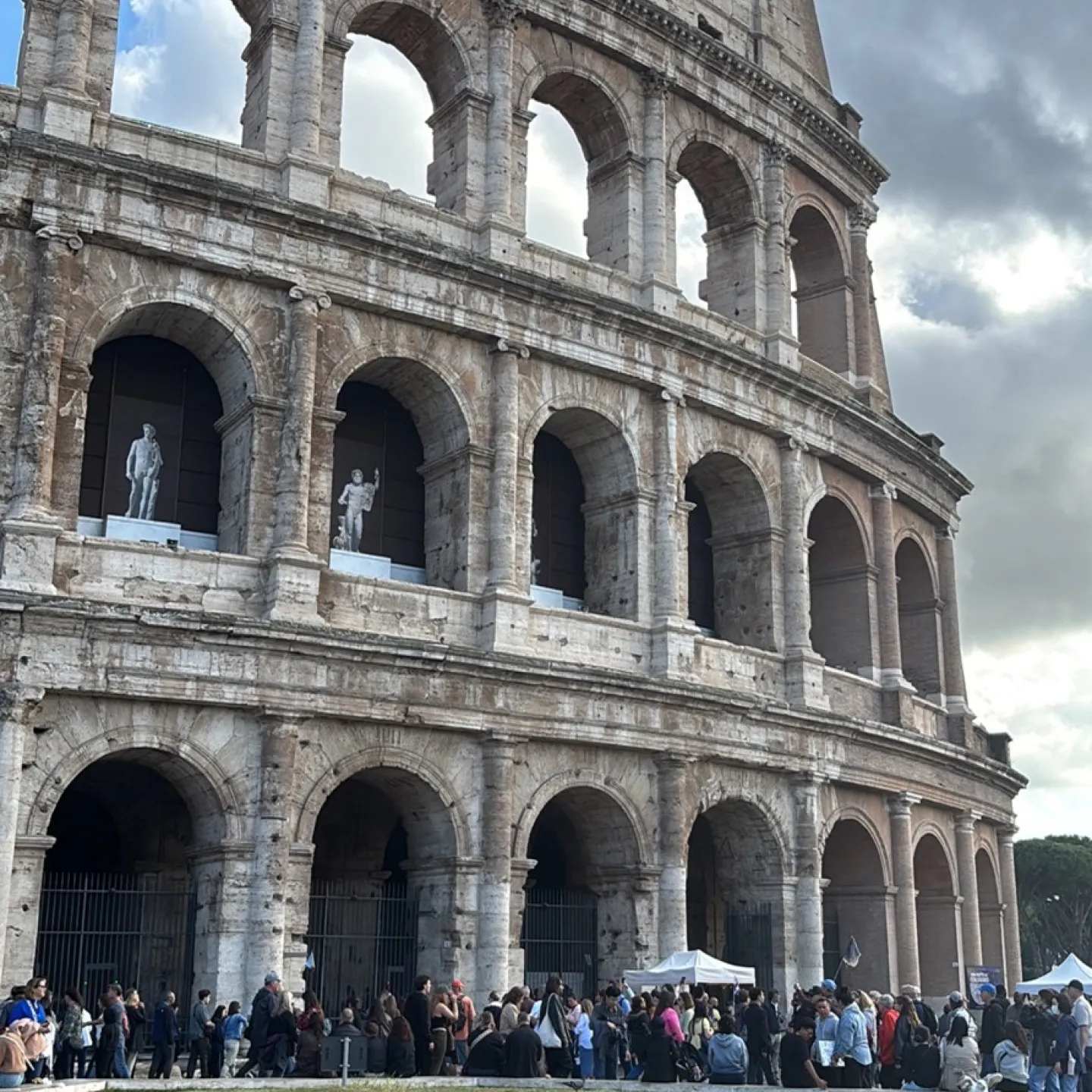
When I first arrived in Italy for my semester abroad, I knew that language would be one of my biggest challenges. Since I don’t speak Italian, I expected daily communication to be quite difficult. In reality, it has turned out to be a mix of struggles, surprises, and small victories that have taught me a lot about myself and what communication truly means.


In everyday life I mainly use English. All of my classes at Roma Tre are taught in English, and it’s also the common language among the international students. Still, English isn’t as widely spoken here as I had imagined. There are moments in shops, restaurants, or on the street when people don’t understand me at all. At first this was stressful. I wasn’t used to not being able to express myself clearly. Over time, though, I started picking up some Italian basics. I now know how to order food, ask for prices, or say simple things like “vorrei un caffè” or “il conto, per favore.” People appreciate it when you make an effort, even if it’s just a few words.


What remains difficult is understanding Italians when they speak. They talk incredibly fast, and although I studied Spanish for five years at school, which helps because some words are similar. I usually catch only parts of what they say. Reading Italian is easier. I can often guess the meaning from context or from my Spanish background. But spoken Italian still feels like a completely different world. Sometimes I simply smile and nod, hoping I understood the gist.


What has surprised me most is how much can be communicated without sharing a language. Italians are naturally expressive they talk with their hands, their faces, and their tone of voice. Gestures seem to form a language of their own. Even when I don’t understand the words, I often get the meaning. I’ve even started using my hands more when I speak. Here, it just feels natural.


Another thing that makes communication easier is people’s friendliness. Most Italians I’ve met are patient and genuinely helpful. They try their best to communicate, even if their English isn’t strong. Once, at a restaurant, an Italian couple sitting next to me began teaching me a few phrases and correcting my pronunciation. We ended up laughing together, and I realized that communication is less about perfect words and more about connection and goodwill.


Of course, I also rely on some tools. Google Translate has become a good friend. Especially for menus or when I need to ask something specific. I’ve learned to keep my English simple, to use short sentences, clear words, and plenty of smiles. When words fail, patience and kindness often do the job.


Through these experiences I’ve learned a lot about myself. I discovered that I’m more patient than I thought. At the beginning I often felt frustrated when I couldn’t make myself understood, but now I take it calmly. Communication doesn’t have to be perfect, it just has to be sincere. Every time I say something in Italian and people understand me, it feels like a small victory.


Even though I can’t hold a full conversation in Italian yet, I’ve learned a surprising amount simply by living here. Language learning doesn’t only happen in classrooms. It happens when you buy a bus ticket, order a coffee, or ask for directions. These small, everyday moments have taught me to listen better, to observe, and to stay open-minded.


Looking back to my frist days, learning to communicate in a foreign language has changed how I see myself. I no longer equate communication with fluency or perfect grammar. It’s more about openness, curiosity, and empathy. Living in Italy has shown me that even without perfect language skills, it’s possible to build connections through gestures, smiles, and effort. And that lesson will stay with me long after this semester ends.

Das Koloseum in Rom

Frankreich - Lyon

Frankreich - Lyon

Luna Reischl Garcia

Mixing Languages, Understanding People

Notre-Dame de Fourvière in Lyon von innen

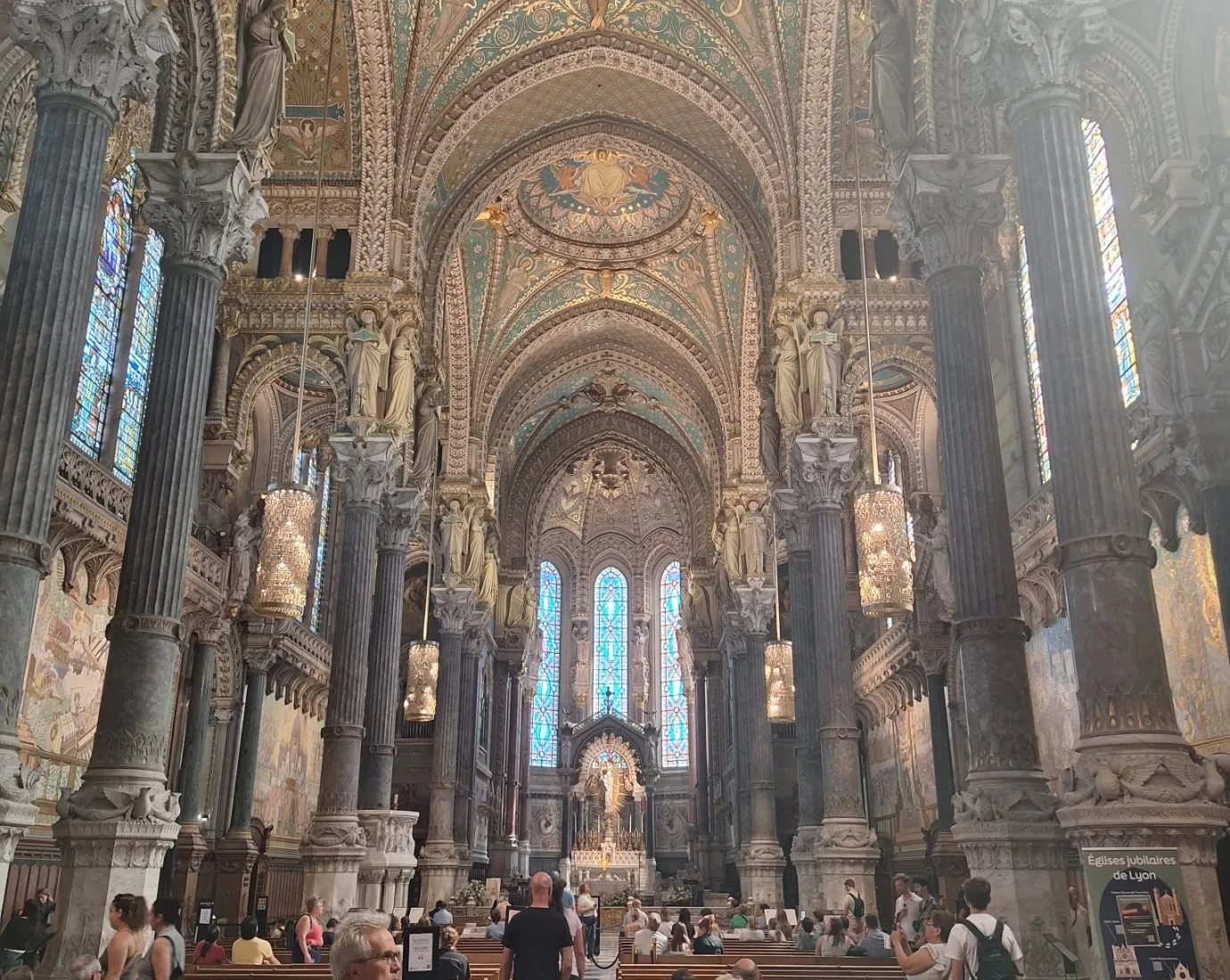
While in France, coping with the language was pretty hard at the beginning because I do not speak French. I felt rather insecure whenever I tried to speak it. Now that I have been here for two months and have been learning the language, it’s been getting a little easier. When talking to French people, for example in restaurants, I now try to order in French. At the beginning, I always ordered in English, but now I at least try to do it in French.


Even when I get into a situation with someone who doesn’t know English or whose English is very bad, we still manage to get our message across with my very broken French and their mostly broken English. Honestly, it hasn’t been a big problem here in Lyon, because a lot of people know English. Still, I feel much more secure in the language now. I can make sentences, which I couldn’t when I first got here. I always had a bit of understanding for French because I speak Spanish as my second mother tongue. My French has definitely gotten better I understand more, get the context better, and people don’t immediately realize I’m a foreigner. They only notice after the second sentence, which feels like an upgrade to me.


At the beginning, speaking English all day with other international students was also exhausting. It wasn’t hard, but it was tiring not to speak German at all. I talked about this with the other Germans, and they really related it’s something we all felt. Speaking English all day was tiring at first because we weren’t used to it, but now it’s not that bad anymore. I’ve gotten super used to it.


So, to the question “How are you coping with the foreign language?” I would say I’m coping with it pretty well now. I’m happy to be learning a new language, and that’s something I really appreciate. Was it difficult or surprisingly easy? It was definitely difficult, but I’m surprised by how much I’ve learned in such a short time especially how much I can understand now compared to when I arrived. Back then, it was impossible to have a conversation. Now, I feel much more confident.


The strategies I’ve developed to overcome communication differences are basically speaking with hands and feet, sometimes even acting things out. I often throw around words in a few languages or describe things very simply so that understanding is easier.


Thinking about how these skills will be useful later in life, I believe this experience has taught me to get out of my comfort zone. Even if I’m not perfect in the language, I can still try to speak and learn. The best way to learn a language is to speak it that’s something I’ve really realized. It also took away my fear of being in a country where I don’t speak the language perfectly, because even with just a few words, you can get around quite well. You really start learning a language once you’re in the country, and that’s something I’ll always remember.


Reflecting on all this, I think it has affected how I see myself as a communicator and speaker of a foreign language. I’ve been the weaker speaker, so it gave me more understanding for people learning my language and the struggles they face. I also understand the frustration now when you try to speak someone’s language and they immediately switch to English. It happens to me sometimes I try to speak French, and people just answer in English. That can be frustrating.


Overall, I’ve learned to appreciate the comfort of speaking my own language, but I don’t see it as a bad thing to speak English or French here. I’d like to be better than I am, but I’ve come to accept that progress is slow and that I won’t just wake up fluent one day.

Notre-Dame de Fourvière in Lyon von innen

Vietnam - Ho-Chi-Minh-City

Vietnam - Ho-Chi-Minh-City

Timo Volenter

Communicating with smiles and gestures

Der Autor zusammen mit einem Vietnamesen am Strassenrand sitzend

As preparation for my stay in Vietnam I switched my Duolingo to Vietnamese and was eager to learn. I practiced quite a bit everyday and felt like I made some reasonable progress over time. As soon as I arrived though, I realized that the locals could not even understand me saying basic words. I pronounced them so harsh with my German speaking background that for them it sounded like I would speak a different language.


Once I understood how important pronunciation is in Vietnamese and especially South Vietnamese pronunciation I decided to switch my strategy. I still did my daily Duolingo lessons but focused more on listening to locals, especially on how they pronounce the words I want to use on a daily basis. I realized that once the locals understand that you are trying to speak Vietnamese, they are helpful and even willing to repeat a word ten times until you can pronounce it correctly. If you smile when trying your best with your Vietnamese, you will get as much help as needed.


Every new word I pronounced correctly after a few tries I add to my phone’s notes and include the phonetic spelling based on how I just heard it. This proved to be the most effective way as now all the basic words I use are instantly understood by the person I’m talking to.


Besides the difficulties with pronunciation, it is surprisingly easy to order food no matter where you are. In such a setting the person you are talking to is kind of already expecting you to say certain things, therefore you can mostly even order in English, and it works like a charm. There I realized what kind of difference the setting you are in makes when trying to communicate.


Though it is not only the setting that makes a big difference but also the expectation people have of you. Mostly in Vietnam people expect you as a foreigner to speak only English as most people don’t bother learning basic Vietnamese for a vacation especially as it’s such a difficult tonal language. I therefore discovered that you must start the conversation with some basic Vietnamese and stick to it if you really want to learn something from the conversations. Once the locals realize that you know more than just one word, they are happy to teach you more, and even to challenge you with some tricky pronunciation.


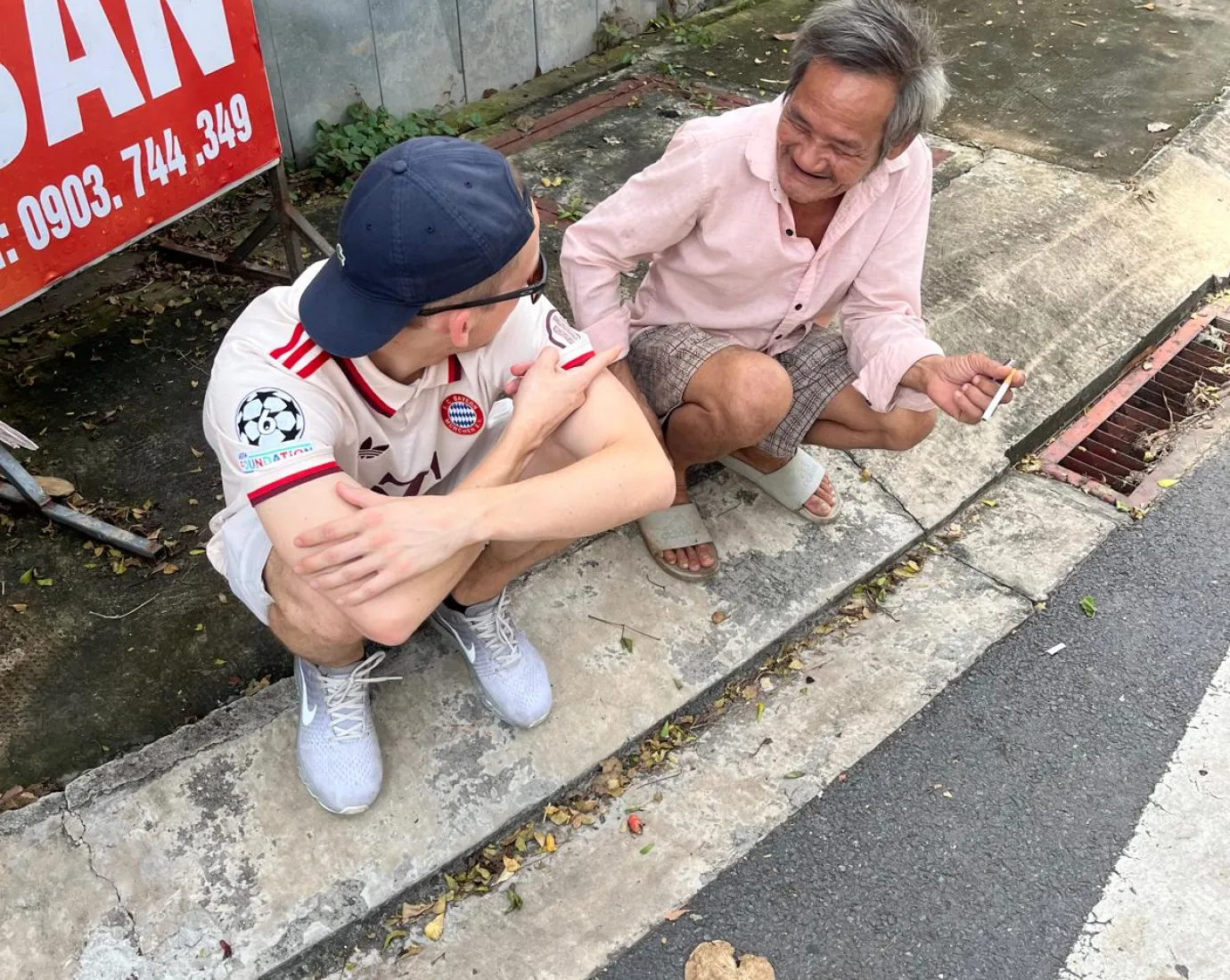
Concerning overcoming communication differences, the easiest way is to just use google translate. If you download the language needed, you can even use it while you are offline, and it works good enough for everything. Though I have up to now not really used it often during my stay here as I love the challenge of finding a way to understand each other even if it is not through verbal communication. Nonverbal communication is such a powerful tool as you find a way to communicate what you want, without even saying one word to the other person almost every time. The picture I added here is a perfect illustration of it, I had a great and funny time communicating with this local man, even if it was not verbally.

Der Autor zusammen mit einem Vietnamesen am Strassenrand sitzend

Spain - Madrid

Spain - Madrid

Simone Müller

From Classroom to Real Life: Learning Spanish in Madrid

Die Autorin mit einer Freundin

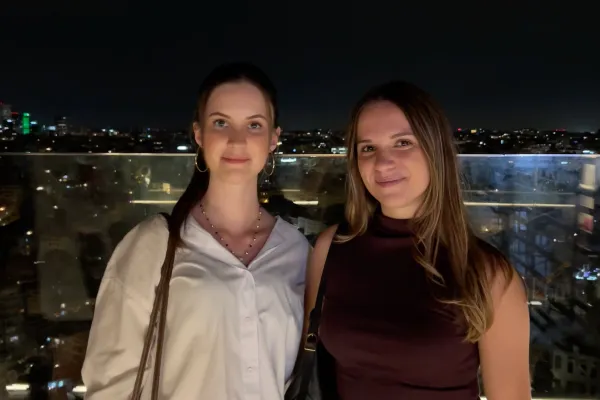
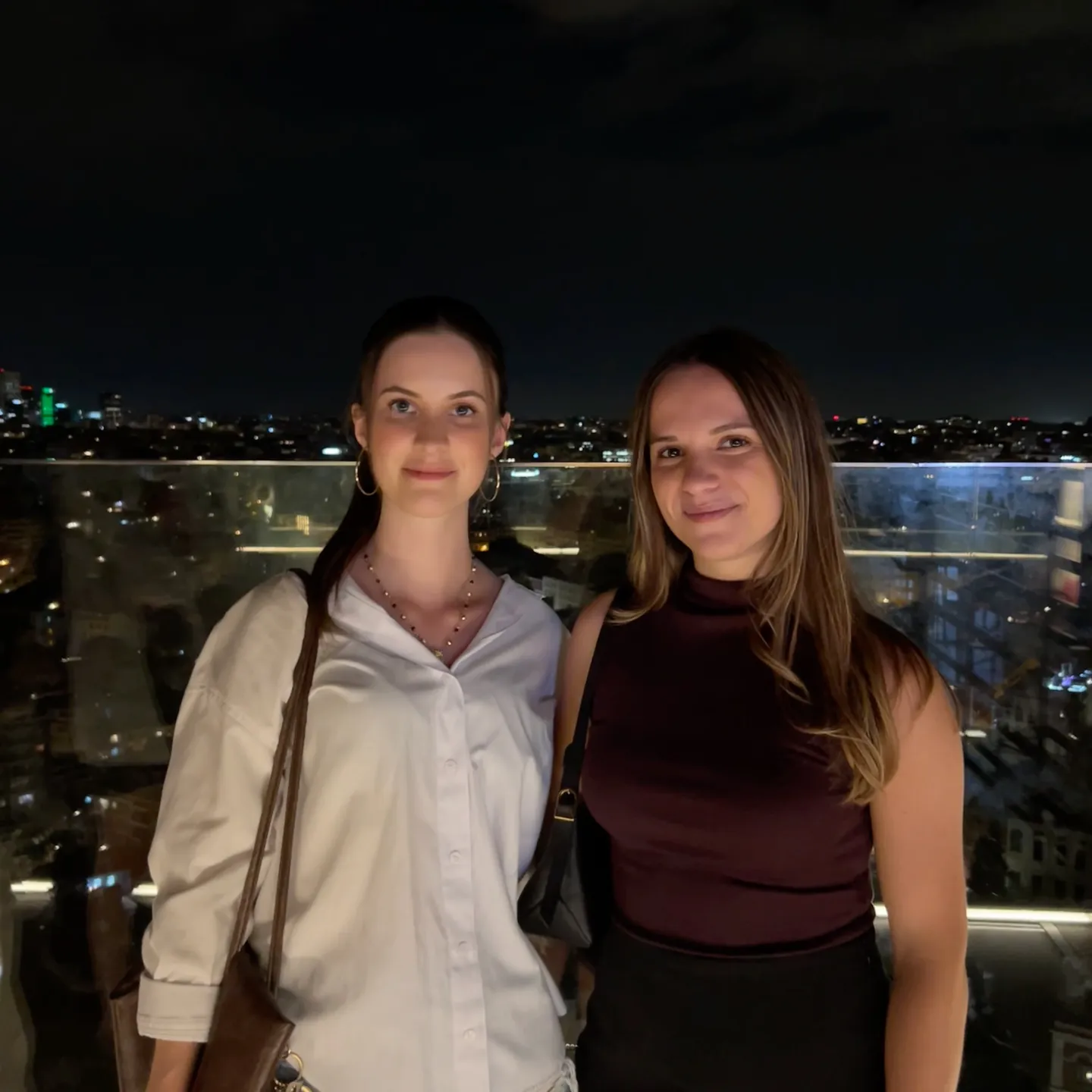
I have been living in Madrid for almost two months now and it has been an amazing experience so far. At the beginning everything felt overwhelming, not only because I was living alone for the first time and meeting so many new people but also because of the language. Spanish felt fast, confusing and sometimes intimidating and I was nervous about making mistakes or not understanding what was being said. Even though I studied Spanish for three years at school unfortunately a one-year break made me forget a lot of what I had learned. But I have noticed that even small gestures of support like a smile, a patient explanation, or a nod of understanding have made a huge difference, boosting my confidence to keep trying. So slowly I have started breaking down some of these language barriers. Now in this blog entry I want to share more about my experiences, the challenges I’ve faced, and the small successes that have helped me improve my Spanish so far.


When I first arrived I honestly thought speaking Spanish would be manageable. After all I had already studied it at school so I expected to understand most things and assumed that communicating with locals wouldn’t be too difficult. I knew that people spoke quickly but I didn’t think it would be a major problem. That changed on the first day at university during the welcome session. Everything was in Spanish and I couldn’t follow a single word. It was overwhelming and a bit demotivating but it also made me realize that this is the perfect opportunity to immerse myself fully in the language. Living in Madrid means Spanish is everywhere and even simple daily interactions like ordering food, asking for directions, or buying something at a store become chances to practice. After two weeks surprisingly these small tasks often feel easier than expected, especially when locals respond positively and encourage my attempts, which makes me feel more motivated to keep improving.


Of course there are still challenges. Sometimes I don’t know how to answer questions and have to ask people to repeat themselves, which can be a little embarrassing. I don’t have a study partner here and Spanish lessons are expensive. To deal with this I try to speak as much as possible, ask when I don’t understand and take advantage of the fact that many people here also speak English. It’s reassuring to know that if I get stuck I can switch languages temporarily without any pressure.


One of the things I really enjoy about Madrid is how international the city feels. Many restaurants have English menus and staff often speak English fluently. I meet people from all over the world and enjoy practicing English with them while improving my Spanish. It’s fascinating to see that children here start learning English at an early age often with the help of au pairs from other countries. The city is full of different languages cultures and perspectives and I’ve learned that even when I don’t understand every word I can often grasp the meaning through people’s expressions and gestures.


So far this experience has taught me that learning a language is not just about grammar or vocabulary; it’s about putting yourself out there. Every interaction, no matter how small, helps build confidence and improves fluency. I know that the skills I am developing now will be valuable in the future. Spanish is spoken in so many countries so being able to communicate opens doors for travel, work, and meeting new people. At the same time, interacting with international friends helps me continue improving my English. In the future I might aim for a Spanish certificate at B1 or B2 level and a C1 certificate in English. Being multilingual will make it easier to connect with people from different cultures and create opportunities around the world and in my career.


Living here really motivates me to keep learning and push myself to speak more confidently. Being surrounded by Spanish every day not just studying it theoretically back home  is the perfect way to improve. Every new conversation, challenge, and small success makes me feel more capable and excited about my language improvement ahead.

Die Autorin mit einer Freundin

Italy - Rome

Italy - Rome

Konstantin Kudra

Between Pasta and Lectures: Daily Life in Rome

Rom bei Sonnenuntergang

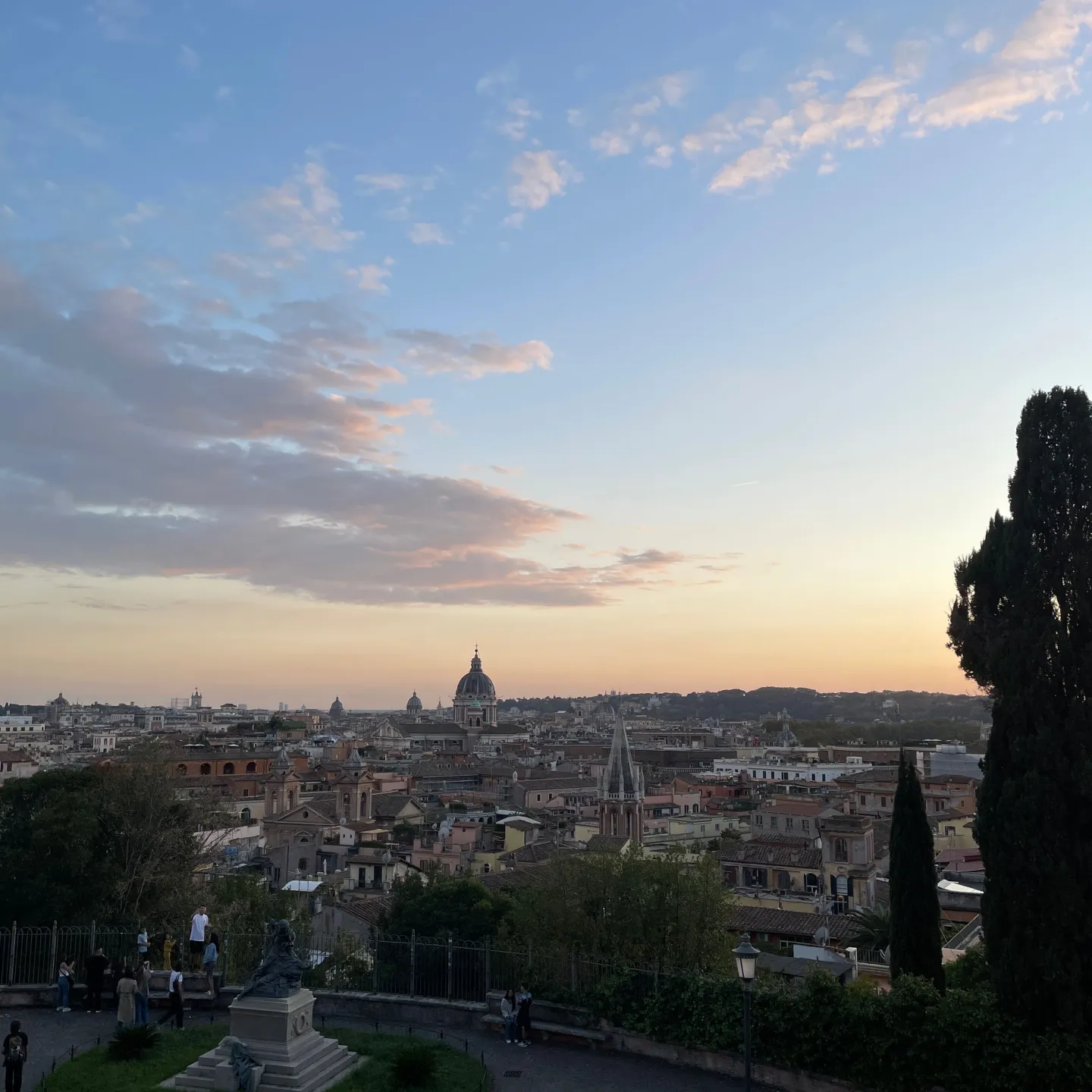
We arrived on the 20th of September in the Eternal City. I don’t know how to describe it, but this might be the best decision I’ve ever made in my life: moving to a different country, immersing myself in another culture in my twenties. Yes, I’ve been to Rome before—two years ago, to be exact. I fell in love with this city, its people, its culture, and of course, the food.


Let’s start with a typical day. I usually wake up at 7 a.m. because on Monday, Tuesday, and Wednesday I have lessons at 8:30 a.m. I walk to university every morning since it’s only 15 minutes away from our flat. Italians like to have a coffee (espresso or cappuccino) and something sweet for breakfast at their local bar. I usually have some muesli at home, or sometimes I enjoy a croissant and a cappuccino at a bar. There are several close to both our home and the university. Most Italians eat and drink at the bar while standing rather than sitting. I find that interesting, because sitting feels more comfortable to me—but that’s just their way.


Service here is also different compared to Austria. For example, at the bar I mentioned, it’s often self-service rather than table service. You go inside, order at the register, and then hand the receipt to the barista, who prepares your drink or coffee.


Now, about the Italians: they are not punctual. The only thing that runs on time here is the train. For meetings or classes, being ten minutes late is perfectly acceptable. Nobody minds. Life here is very relaxed. If you want to blend in, you’ll end up being a few minutes late yourself. There’s simply no need to rush—it’s in their blood. I adapted to this pretty quickly.


Back in Austria, I cooked once or twice a week because I often ate at the university, and most of the time my mother cooked. Here, I’m completely on my own, and I have to say it’s rewarding work. I’ve really started to enjoy cooking because it’s satisfying to prepare, eat, and taste the result. Most of the time I cook something that I can reheat the next day, which is the most efficient option. Sometimes I grab a bite near the university, and about twice a week we go out to a restaurant, bar, or bakery. The food in Rome is fantastic—you really can’t complain. The prices, the quality, the portions—it’s always enough. Most of the time when we eat out, it’s pizza or pasta, but supplì are also a great choice!


Communication with other people has been wonderful. With Italian students, I like to speak Italian because I studied it for a few years and want to deepen my knowledge again. Sometimes it’s difficult because they speak very fast, which isn’t always easy to follow. With other international students, I speak English—or German, if they can. One thing I’ve noticed is that French students often struggle with English, so they usually stick together in groups.


I really like it in Rome, and there’s no place I’d rather be right now!

Rom bei Sonnenuntergang

Spain - Madrid

Spain - Madrid

Laurin Stocker

Language Barriers and Opportunities

Stadion Bernabeu an einem Real Madrid Spiel

Before coming to Spain, I couldn’t speak any Spanish at all. I had never learned it at school, so before my semester abroad I started using Duolingo to get some basic knowledge. In the beginning, it was quite fun because I could slowly see progress and learn simple words or how to order food and drinks. However, after some weeks, the advertisements on Duolingo annoyed me a lot, and that made me stop learning. When I finally arrived in Madrid, I still only knew a few basic phrases.


At the start, it was very difficult for me to understand Spanish people. The biggest problem is the speed. They talk incredibly fast. When I listen to people speaking in bars, shops, or on the street, it often feels like one long word without any pauses. So it’s nearly impossible to unterstand or communicate with them.


Eating out was another challenge. In small local restaurants, the menu is usually only in Spanish, while in bigger or more touristic restaurants, the menu is also available in English. When I can’t understand a menu, I usually take a picture and upload it to DeepL to translate it into German. That helps me a lot to know what to order. Sometimes, when I try to say something in Spanish but pronounce it wrong, people immediately switch to English.


I also wanted to take a Spanish course at my university in Madrid, but unfortunately they only offer lessons when I already have classes, so I couldn’t participate. Since all my university courses are in English, and because Madrid is such an international city, I can easily live here without speaking any Spanish. Many people in cafes, shops, and public places understand English, so I can manage daily life quite well. Because of that, I haven’t improved my Spanish much, and honestly, I’m not very interested to learn more. I feel comfortable using English, and I think that’s enough for my personal and professional future.


I don’t really have a strategy but I try to speak Spanish when I think I can, and if I don’t feel confident, I switch to English.

Even though learning Spanish has been difficult, there are also some positive sides. Some words are easy to understand because they sound similar to English or other European languages.

Through this experience, I learned a lot about myself as a communicator. I realized that I am much more confident in English than I thought. Living abroad showed me how useful and powerful English is as a global language. It allows me to connect with people from many countries and helps me in almost every situation, at university, when traveling, or online. I believe that being fluent in English will be extremely helpful in my future career and everyday life, especially since most international business communication happens in English. So, I think the semester abroad here in Madrid thaught me a lot regarding to the language.


To sum up, learning and living with a new language has been both challenging and interesting. I learned that communication is not only about speaking perfectly but also about being open, patient, and willing to try. Even if my Spanish stays basic, I improved my ability to adapt, to use body language. And at the end I still can do the daily challenges and for me thats totally enough.

Stadion Bernabeu an einem Real Madrid Spiel

Monaco

Monaco

Clarissa Rixmann

The Courage to Speak: Leaving My Comfort Zone Abroad

Die Innenstadt Monacos

In this blog entry, I would like to reflect on how I deal with the languages I use here in my everyday life and in my studies. My university is international, which means that all courses are taught in English. At the beginning, I honestly had a lot of respect for the idea of studying completely in English. I asked myself whether I would understand everything in lectures and whether I would be able to keep up in presentations. By now I can say that it works very well. The content is explained in a clear way, there are no unnecessarily complicated technical terms, and I notice that I can follow the courses without any problems. 


What also helps me a lot is my environment. Many of my friends here are native English speakers. Through normal everyday conversations I constantly learn new expressions and phrases that you would never really get from normal language classes. In group work I especially notice how quickly you improve when you discuss tasks together, try to find solutions, and give each other feedback. Because of that, I’ve become much more confident when speaking, and I now feel very comfortable using English even in academic situations. 


It’s different with French. I studied French in school for four years, but in the end mostly the basics stayed. Surprisingly, those basics are often enough for everyday situations. When someone stops me on the street and asks for directions or wants me to take a photo, I can usually answer in French. I can also manage in cafés and in shops most of the time.


It becomes more difficult when someone talks very fast or uses a lot of informal language. In those moments I ask politely if the person also speaks English. Most of the time that works, but especially older people or people in less touristy areas often only speak French. In that case, I just try to stay calm, use very simple sentences, and, if needed, explain things with my hands. And honestly, that works surprisingly well. In the end, you usually understand each other, even if the grammar isn’t perfect. I’ve already learned a lot from these situations. First of all, it’s important to admit when you didn’t understand something. That doesn’t make you look weak; it shows that you’re trying. I’ve also realized how valuable it is to leave your comfort zone. Of course, the easiest thing for me would be to just speak German. But that’s simply not an option here and that’s exactly why I grow from it. I try, even when I’m not 100% sure. I make mistakes, but those mistakes help me. Every successful interaction, no matter how imperfect, gives me more confidence. 


Because I’m constantly communicating in English and French, I’ve started to think much more about how I come across when I speak. I pay attention to being clear, and I really listen to the other person. If something isn’t clear, I ask, or I ask them to explain it in different words. I’ve learned that with patience, respect, and simple sentences, you can get very far. These skills go beyond language, they are generally important for dealing with other people. 


I’m convinced that this experience will be useful for me later in my professional life. In international teams, it’s important to communicate clearly, ask follow-up questions, and find solutions together. That’s exactly what I’m practicing every day here. I take responsibility for understanding what others say and for making sure they understand me. Because of that, I feel more capable, even if things are not always perfect. 


When I look back at the beginning, I realize how unnecessary my fear actually was. Today I’m proud of myself for having the courage to do this and for staying with it. Studying in English works really well now, and in French I’m improving step by step. Many small moments show me that it’s worth it. A short conversation in the supermarket, a friendly exchange on the bus, or an explanation that somehow works with just two words and a smile. 


In the end, I’ve learned this: courage and kindness get you further than perfection. You have to be willing to make mistakes, that’s the only way to get better. I really want to keep that mindset, because it helps me not just with languages, but in life in general.

Die Innenstadt Monacos
Subscribe to