Skip to Main Content

Equal Opportunities and Diversity

Equal Opportunities at the University of Liechtenstein

The University of Liechtenstein is committed to promoting equal opportunities, gender equality, diversity, and inclusion at all institutional levels. We actively foster an open and inclusive university culture that is free from stereotypes, role expectations, and discrimination.

Gender equality is not only a legal obligation, but also a strategic priority. It enhances quality, innovation, and sustainability in teaching, research, and administration. Through targeted measures across five core areas – culture, representation, work-life balance, integration, and awareness – we lay the foundation for a diverse, inclusive, and equitable future.

Work–Life Balance

The University of Liechtenstein is committed to creating structures that support the reconciliation of paid and unpaid work, particularly caregiving responsibilities, for all members of the university community. Measures include flexible working arrangements such as home office options, the recognition of family-related career interruptions, and structured re-entry programmes following parental leave.

To further support compatibility between professional and private responsibilities, meetings are primarily scheduled during core working hours. In case of emergencies, a parent–child room is available on campus to provide short-term childcare. A dedicated nursing room is also available.

Gender-Inclusive Language

Language shapes how we think and interact with one another. This is why gender-inclusive and inclusive language matters to us. It makes diversity visible and fosters a culture of open, respectful communication.


Inclusive Language Guide (only German)
Any Questions?

I am here to help

Martina Haas
HR Specialist - Human Resources
Employee

Services und Unterstützung - Caféteria

Caféteria der Universität Liechtenstein

Lebendige Szene in der Universitätscafeteria mit mehreren Gruppen Studierender beim gemeinsamen Mittagessen und Gesprächen.

The cafeteria of the University of Liechtenstein is run by the Mutzner AG team. It provides meals for students, staff and guests and is also a place to meet and spend time on campus.

Enjoy your meal!


Cafeteria Opening Hours

Monday – Friday: 8.45 a.m. – 2.00 p.m.
Lunch is served from 11.30 a.m.
Please note that the cafeteria is closed on public holidays.

Lebendige Szene in der Universitätscafeteria mit mehreren Gruppen Studierender beim gemeinsamen Mittagessen und Gesprächen.
For all questions regarding orders, catering or other events, please contact

Erika Jaquier

Employee

Room Rental

Your Event on Campus

Out Room Rental

The premises of the University of Liechtenstein can be rented for seminars, meetings, lectures, conferences, etc.


Premises

  • Auditorium (up to 280 persons) / simultaneous translation system
  • Foyer (exhibitions, receptions)
  • Lecture Hall 1, tiered (up to 120 persons)
  • Lecture Halls 2–6 (up to 60 persons)
  • Seminar rooms (up to 30 persons)
  • IT laboratory (up to 15 persons)


Room reservations can only be accepted in writing using the “External Room Rental” application form and only for the current semester.

The fees for room rental and other services can be found in the fee schedule.


Cancellation

In the event of cancellation of a room reservation, a processing fee of at least CHF 50 will be charged.

Are You Interested?

Contact Us

Katharina Büchel
Assistant Rectorate - Rectorate
Employee

Welcome Desk

First Point of Contact

Welcome Desk of the University of Liechtenstein

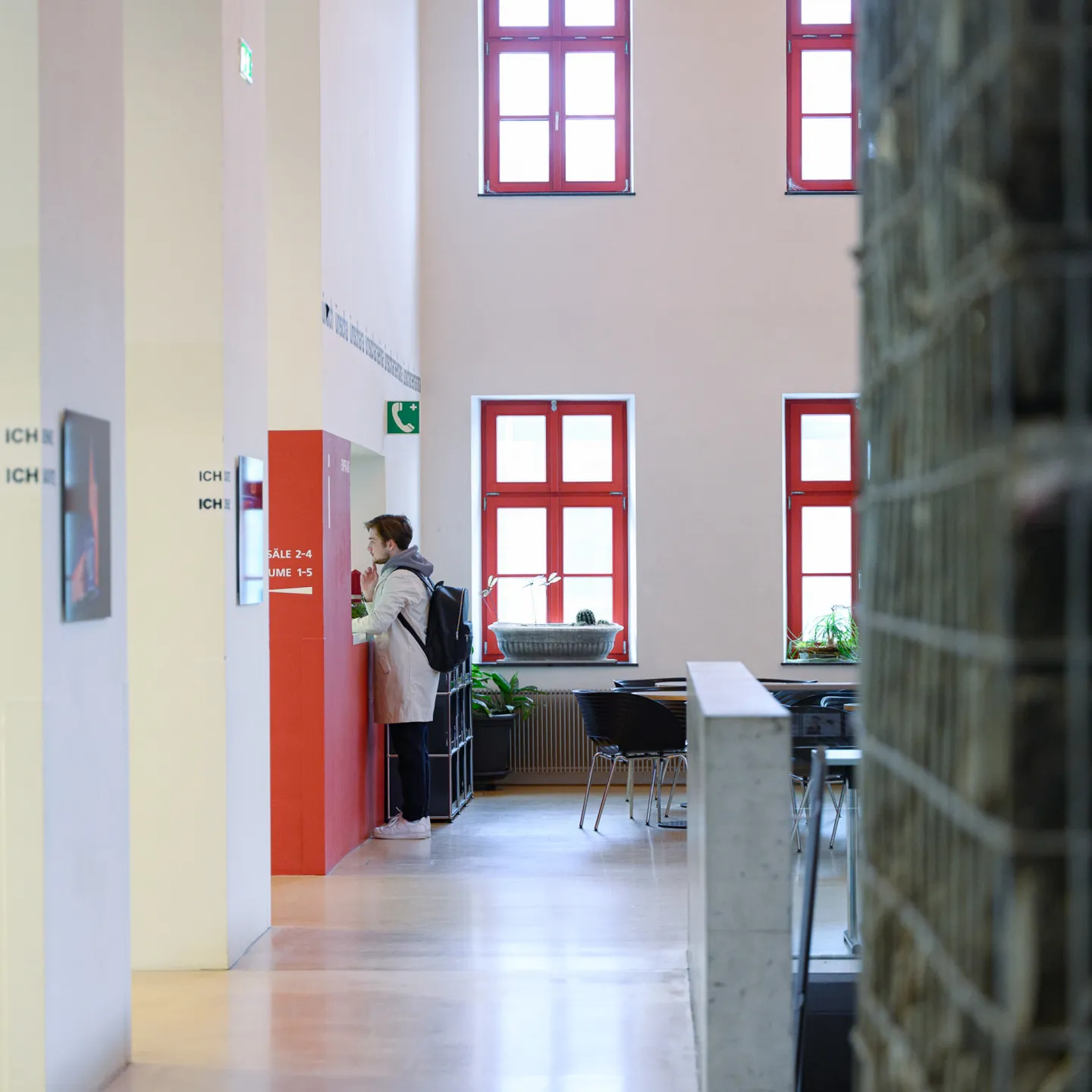
Studierende stehen im Eingangsbereich des historischen Campusgebäudes der Universität Liechtenstein mit auffälligen roten Fenstern.

The reception is your first point of contact for general information and for initial enquiries about studying at the university.

We will be happy to deal with your request directly or connect you with the relevant staff and departments.


Opening Hours

  • Monday to Thursday: 8.30 a.m. – 11.30 a.m. and 1.30 p.m. – 4.00 p.m.
  • Friday: 8.30 a.m. – 12.30 p.m.

Deviating opening hours (public holidays/non-teaching days)

Studierende stehen im Eingangsbereich des historischen Campusgebäudes der Universität Liechtenstein mit auffälligen roten Fenstern.

Our Services

You will find your digital student ID card on my.uni.li as soon as your tuition fees have been processed.

Study certificates can be printed out via the intranet once the semester fee has been processed.

Special study certificates can be obtained free of charge at the reception. Architecture students are kindly asked to contact the Architecture Team directly regarding this matter.

Books and other learning materials are not ordered through the reception.

These must be ordered or organised by the students themselves or through the lecturers.

Any necessary equipment (projector, notebook, etc.) and/or additional rooms must be reserved in advance and in writing with the responsible person in Student Services.

Always Available

The Welcome Desk Team

Katrin Schmuck
Head - Welcome Desk
Employee

Quality Management

Quality Management at the University of Liechtenstein

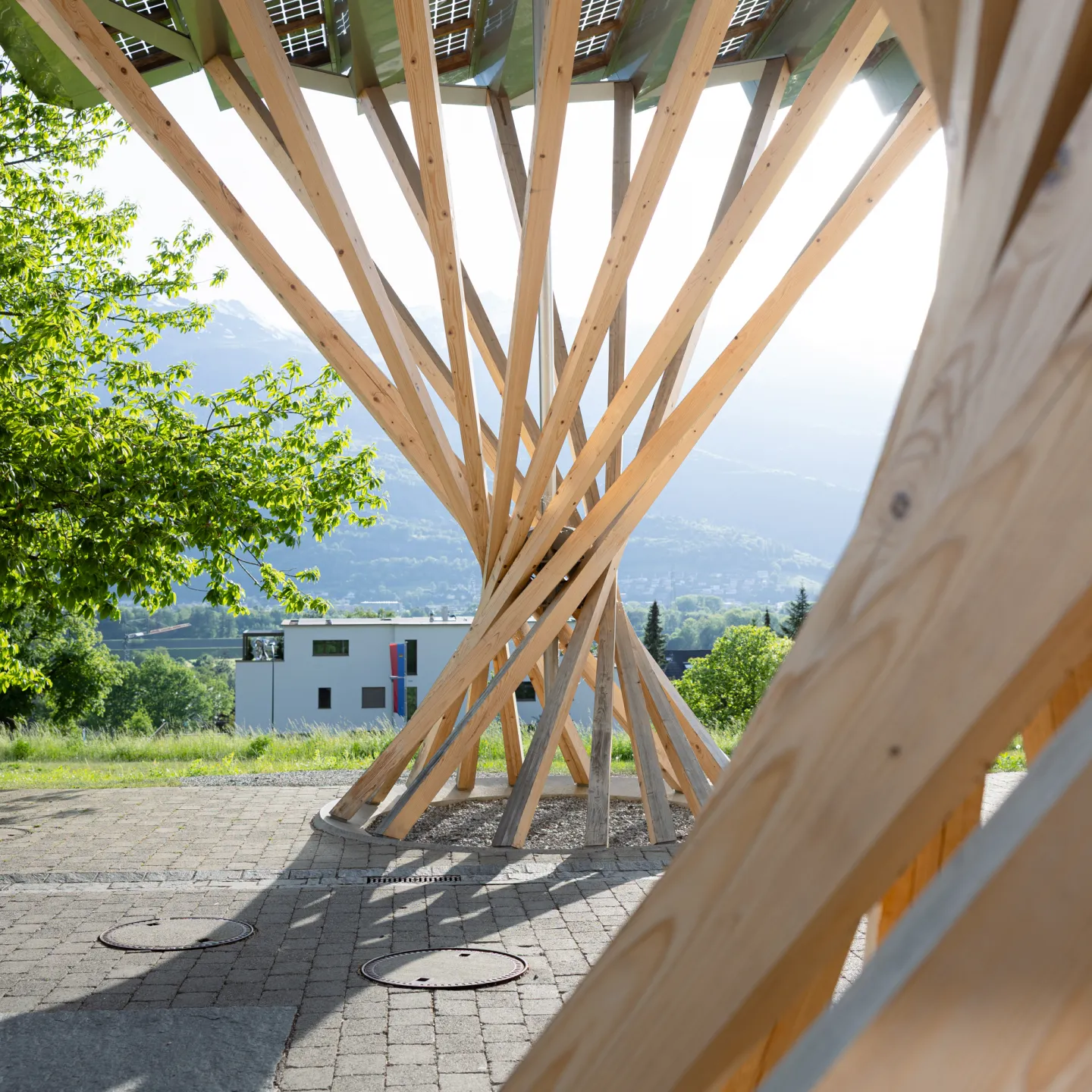
Architektonischer Holzpavillon mit Blick ins Rheintal auf dem Campus der Universitaet Liechtenstein.

Quality management is an integral part of the University of Liechtenstein’s overall strategy and supports the university’s continuous development. The University of Liechtenstein is committed to upholding internationally recognised and nationally anchored quality standards.

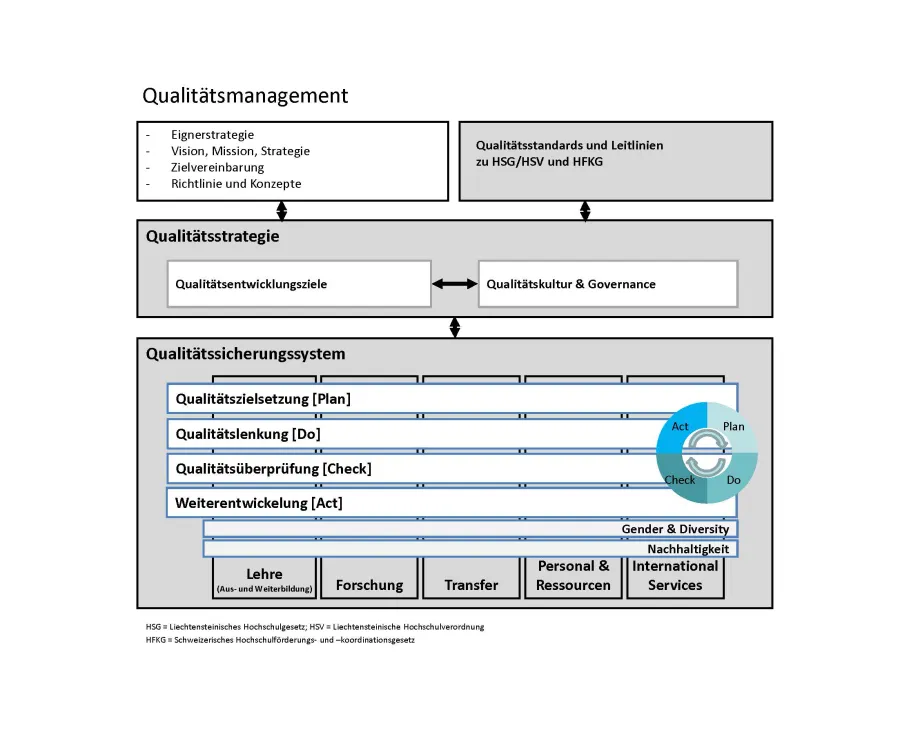
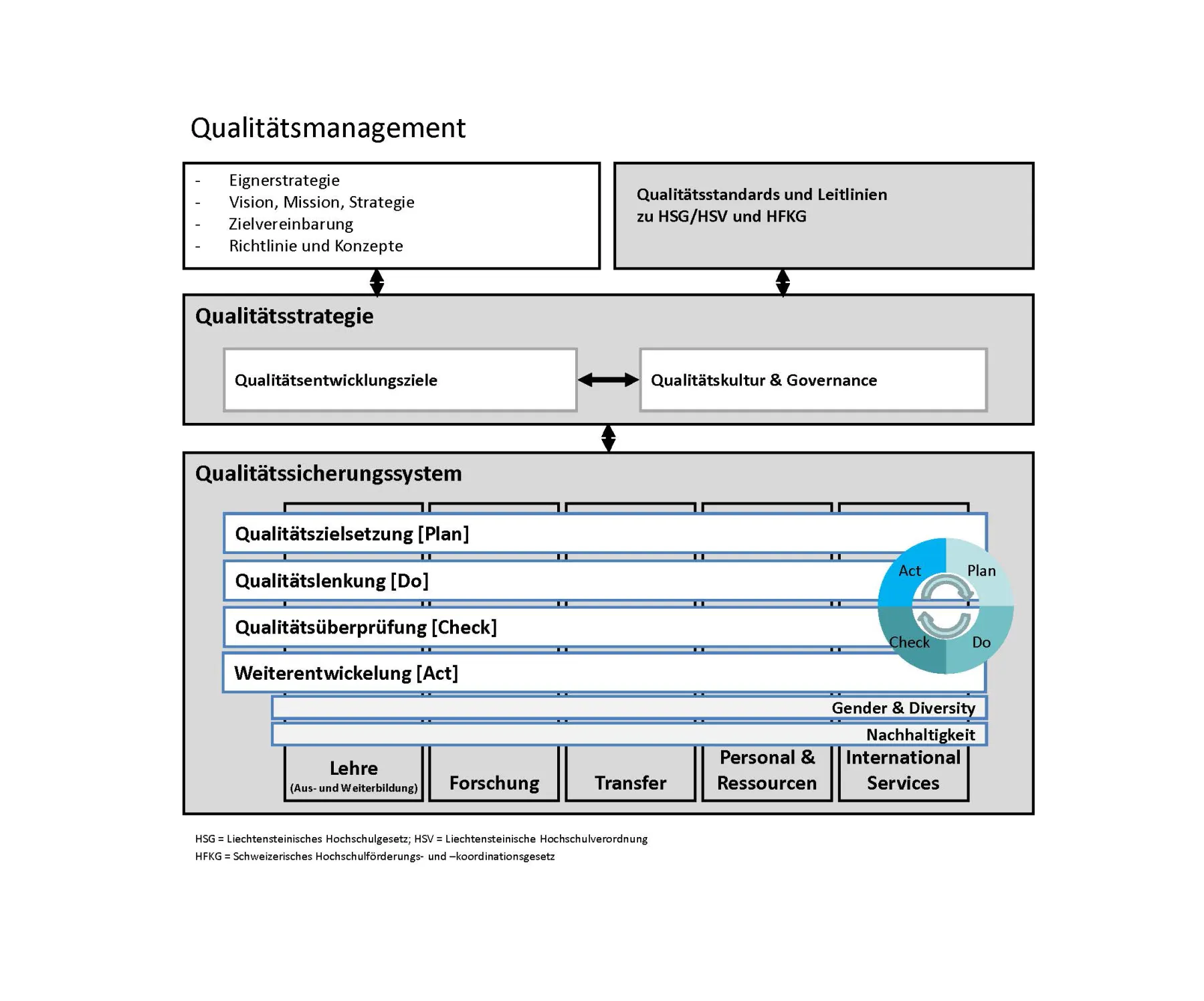
The university implements a quality strategy, quality standards and guidelines, and a quality assurance system. Together, these elements constitute the university’s quality management framework.

Architektonischer Holzpavillon mit Blick ins Rheintal auf dem Campus der Universitaet Liechtenstein.

Quality Strategy, Guidelines and Structures

The University of Liechtenstein’s quality management is based on internationally established practices in higher education quality assurance while taking into account the specific institutional context of the university.

It is embedded in the The University of Liechtenstein Act (LUG), the Ownershipstrategy, the university’s Vision and Mission, the performance agreement between the Government and the University, as well as in the target agreements of the Rectorate and the academic institutes.

The University of Liechtenstein complies with the quality standards set forth in the Liechtenstein Higher Education Ordinance and adheres to the standards defined by the Swiss Higher Education Funding and Coordination Act (HFKG). As a university located in Liechtenstein, compliance with the Liechtenstein Higher Education Ordinance is legally binding. For eligibility under the Swiss Intercantonal University Agreement (IUV, 2019), the university also demonstrates conformity with the quality standards of the HFKG.

The University of Liechtenstein’s quality strategy outlines the objectives for quality development, the principles of quality culture, and the university’s governance structures.

The quality assurance system is based on a continuous improvement process structured according to the Plan–Do–Check–Act (PDCA) cycle. It comprises the following elements across all core areas of the university – teaching (degree and professional education), research, knowledge and technology transfer (services), international services, and resources (including staff, infrastructure, and finances):

  • Plan – definition of quality objectives
  • Do – implementation and steering of quality measures
  • Check – monitoring via instruments and indicators
  • Act – development and adaptation of quality assurance measures

The quality assurance system is integrated with the university’s process management and is linked to its risk management framework as well as the Internal Control System (ICS) of the University of Liechtenstein.

Portrait-Qualitaetsmanagement_Universitaet-Liechtenstein

Quality management at the University of Liechtenstein is an integral part of the university’s overall strategy and contributes actively to its development. The University of Liechtenstein is committed to complying with nationally mandated and internationally recognised quality standards.

This quality strategy defines six overarching quality development objectives for the University of Liechtenstein:

Objective 1: The university meets all applicable national quality standards. In addition, quality development at the University of Liechtenstein is aligned with international benchmarks in the fields of Architecture, Business, and Business Law.

Objective 2: Quality management is an integral component of the university’s overall strategy and supports its ongoing development.

Objective 3: The quality assurance system supports the university and all stakeholders in achieving the overarching objectives derived from the university’s Mission, Vision, and Ownership Strategy.

Objective 4: Closed quality assurance loops are defined and implemented for all core operational areas: teaching, research, knowledge and technology transfer, and resource management.

Objective 5: Continuous improvement is a central aim. Governance structures ensure that representative stakeholder groups at all levels are actively involved in the quality development process.

The university’s quality management is based on a shared understanding of quality, as articulated in the Ownership Strategy, the university’s Vision and Mission, its overarching strategy, the performance agreements, and various policies and strategic frameworks.

At the core of this quality understanding is the following definition of university culture:

University culture encompasses the shared values, traditions, and attitudes of all members of the university community. It is reflected in our actions and communication, as well as in the design and use of our buildings and spaces. University culture shapes how we speak, act, organise, teach, conduct research, and engage in shared experiences within the university environment.

The following principles underpin and secure the quality of university culture:

  • Clear responsibilities: Roles and responsibilities are clearly defined and communicated.
  • Participation: Strategic goals, overarching frameworks, and regulations are developed and refined through dialogue with relevant stakeholder groups.
  • Transparency: Decisions are communicated openly and implemented in a way that is understandable and traceable for all involved.
  • Communication: Mutual respect forms the basis of all interactions and actions.
  • Integrity and commitment: The values and attitudes expressed in strategies, frameworks, and guidelines are consistent, coherent, and sustainable. They are not merely formalised documents, but are actively embraced and exemplified through personal engagement and conviction.

The governance and organisational structure of the University of Liechtenstein is designed to operate across multiple levels. A robust and transparent governance framework is essential for achieving the university’s strategic goals and fulfilling its institutional mission. The structure reflects the interests and needs of a diverse range of stakeholders.

The The University of Liechtenstein Act (LUG), together with the university’s wie auch die Statuten and additional regulations, defines the governance structure, including its bodies, responsibilities, and decision-making powers. Quality management is embedded at various levels of the organisation ranging from the University Council, the Senate, and the Rectorate to the Quality Management and Accreditation Departement, as well as a number of working groups, committees, and advisory bodies.

Overview of the Organisational Structure

The quality of teaching and learning at the University of Liechtenstein is guided by the following objectives:

  • Objective 1: All degree programmes comply with the national qualifications framework and the international Bologna standards (including the awarding of academic degrees). Programmes are based on a clear programme concept, admission guidelines, curricula, a module handbook, and examination regulations that define performance assessment. Their academic positioning within the international higher education landscape is clearly articulated. New programmes are accredited by an external agency; existing programmes are subject to regular internal evaluation.
     
  • Objective 2: Each degree programme is based on defined learning outcomes derived from the university’s mission, aligned with international standards. The achievement of these intended learning outcomes is continuously assessed.
     
  • Objective 3: Courses and overarching modules are based on learning objectives specified in the module descriptions, and each course contributes meaningfully to the programme as a whole. Subject requirements, actual workload, and prior knowledge are well balanced and appropriately aligned.
     
  • Objective 4: Assessment criteria are defined early on for each course, clearly communicated to students, and applied consistently, transparently, and systematically.
     
  • Objective 5: The qualifications imparted in the study programmes prepare students effectively for their professional careers. Teaching at the University of Liechtenstein makes a sustainable contribution to the long-term success of its graduates.
     
  • Objective 6: Teaching staff possess strong subject-specific qualifications (academic or practice-based) and demonstrate excellent didactic competencies.


Quality Assurance Instruments in Teaching and Learning

  • Programme evaluations
  • Admission procedures
  • Learning outcomes monitoring at programme level
  • Course evaluations (Degree Programmes)
  • Graduate surveys
  • Academic staff development and review
  • Analysis of grade distributions
  • Plagiarism checks for bachelor’s theses, master’s theses, and dissertations.

The quality of research at the University of Liechtenstein is guided by the following objectives:
 

Objective 1: Good Scientific Practice, a Respectful Research Culture, and Societal Responsibility

  • Research is conducted in accordance with the university’s principles and regulations for safeguarding good scientific practice.
  • The University of Liechtenstein fosters a transparent, respectful, and integrity-based research culture that is developed and lived collectively.
  • Research makes a substantial contribution to a socially, economically, and ecologically sustainable society.
     

Objective 2: Excellent, Relevant, and Competitive Research

  • Research at the University of Liechtenstein is driven by excellence within clearly defined topics in focus.
  • Its competitiveness in these areas is reflected through high-impact scientific publications, benchmarked against the standards of the respective research discipline.
  • Researchers at the university enjoy strong international recognition and collaborate with globally renowned experts and research networks.
  • Research aims to provide answers to key challenges of our time and actively contributes to forward-looking regional development.
  • The university positions itself as a hub for the excellent development of early-career researchers.
     

Objective 3: Compliance and Professionalism in Research Projects

  • Research projects comply with the rules, guidelines, and legal frameworks of the respective funding institutions and sponsors.
  • Project management in research is conducted with a high degree of professionalism, focusing on the effective planning and control of performance, time, and costs.
Any Questions?

We’re here to help

Eva Frommelt MBA, MSc
Head - Quality and Accreditation Head - Research Management
Employee

University of Liechtenstein

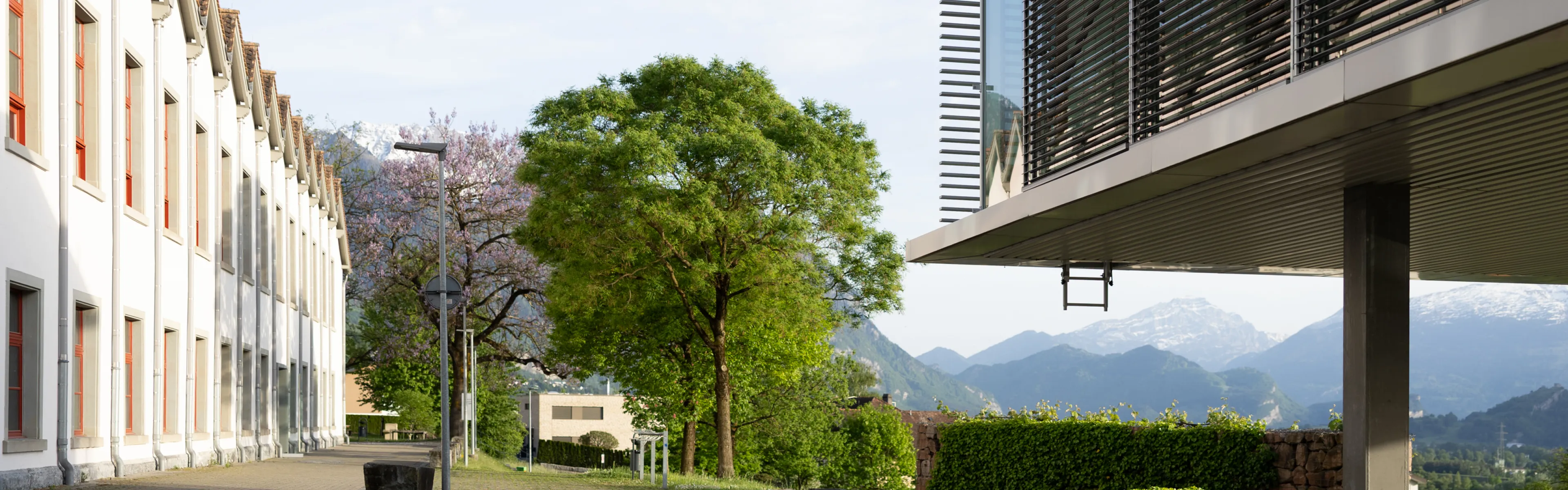
Blick auf den begrünten Innenhof des Campus mit weißem Altbau und modernen Anbauten vor alpiner Bergkulisse.

The University of Liechtenstein

Impulses for a Sustainable Future

The University of Liechtenstein Strengthens Knowledge, Innovation and Responsibility

The University of Liechtenstein is committed to shaping a sustainable and responsible future in the digital age. Through internationally oriented research, innovative teaching and targeted knowledge transfer, we strengthen the region of Liechtenstein and the Alpine Rhine Valley. Our focus areas in business, architecture and law provide impulses for societal change.

About the University

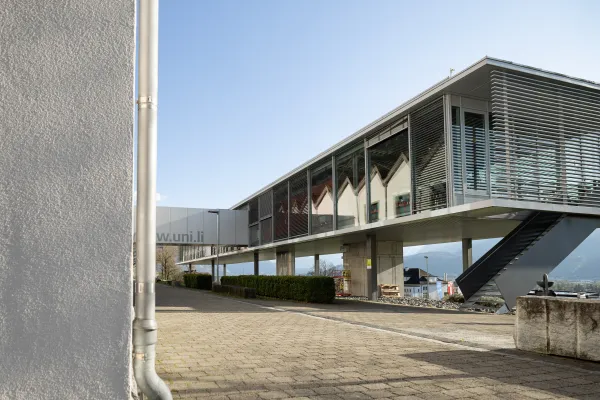
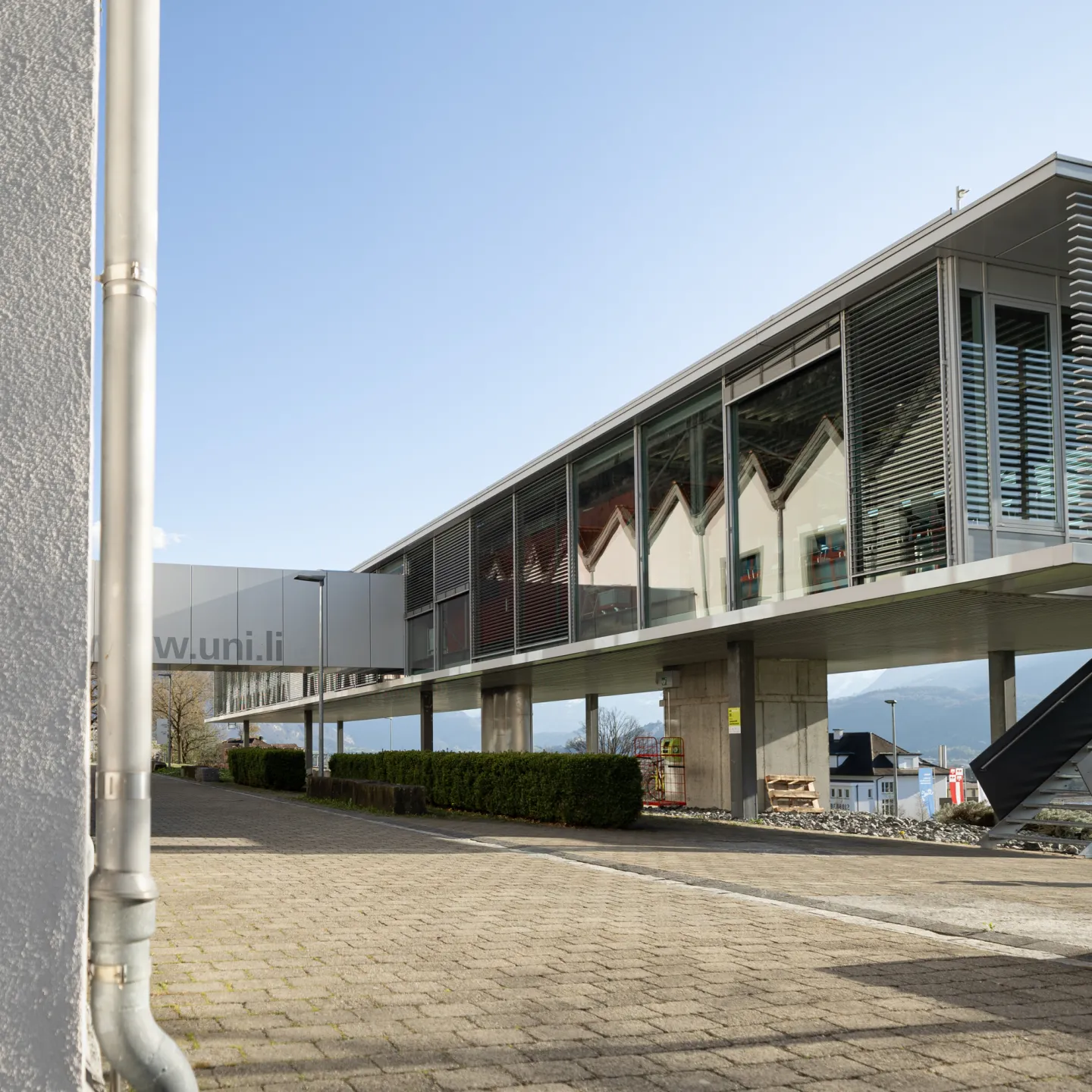
Moderne Architektur mit Glasfassade und Verbindungselementen auf dem Campus der Universität Liechtenstein.

The University of Liechtenstein was founded in 1961 as an evening technical college with the aim of training specialists and executives for the emerging business location of Liechtenstein.

Overview
Moderne Architektur mit Glasfassade und Verbindungselementen auf dem Campus der Universität Liechtenstein.

Organisation

Gruppenarbeit auf moderner Holztribüne an der Universität

Behind the University of Liechtenstein stand clear structures, dedicated people and lived responsibility. With a transparent organisation and participatory committees, we create the foundation for sustainable development in teaching, research and society.

Overview
Gruppenarbeit auf moderner Holztribüne an der Universität

Working at the University

Dozent präsentiert mathematische Funktion an Flipchart, während eine Teilnehmerin aktiv mitschreibt.

The University of Liechtenstein offers an inspiring and supportive working environment characterised by openness, collegiality and a strong commitment to quality.

Learn More
Dozent präsentiert mathematische Funktion an Flipchart, während eine Teilnehmerin aktiv mitschreibt.

Alumni Community

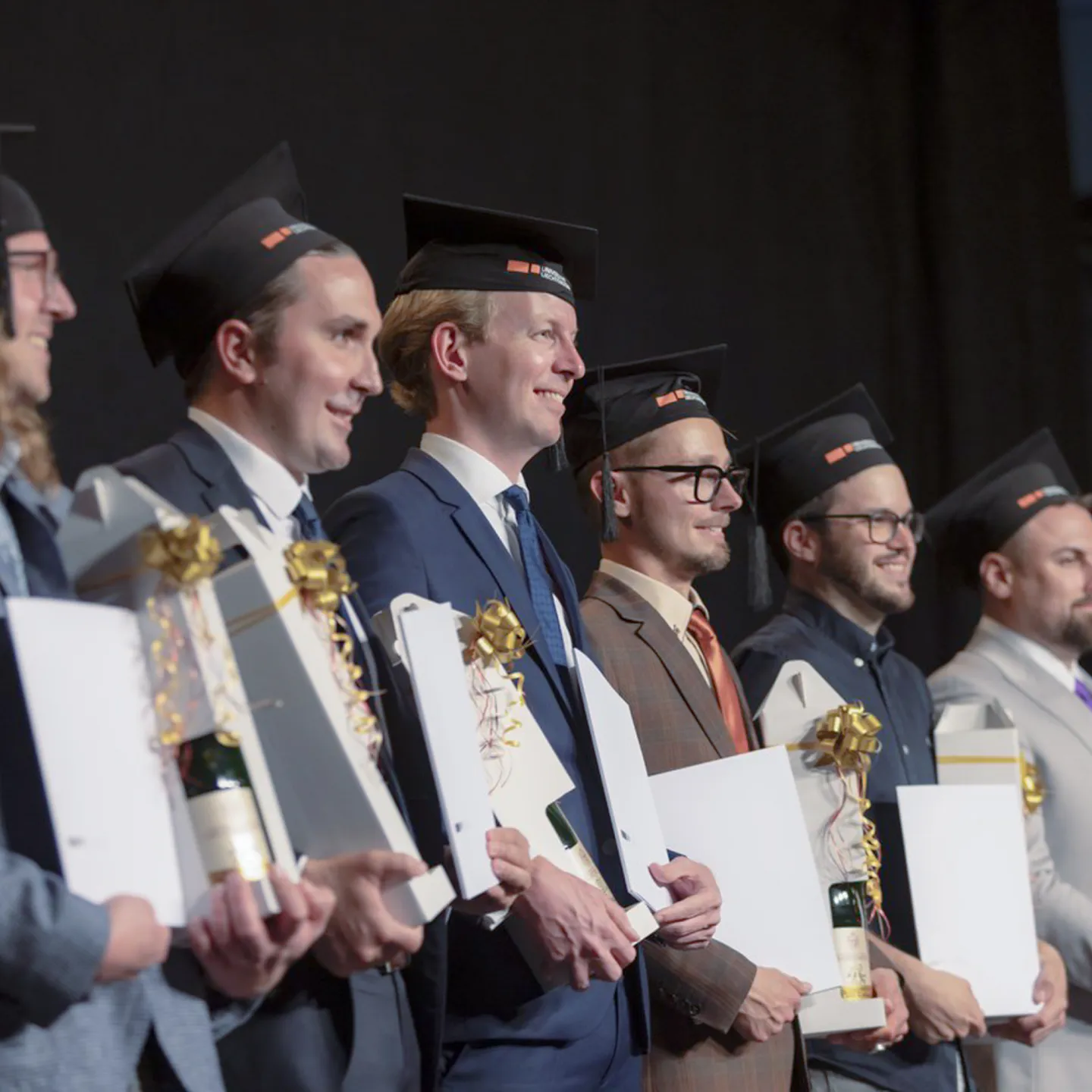
Absolventen mit Urkunden und Graduierungshüten bei der Abschlussfeier der Universität Liechtenstein

Our alumni community offers a vibrant network for lifelong learning, valuable exchange of experiences, and strong connections with fellow graduates. 

Alumni benefit from events, regional chapters, career opportunities, exclusive continuing education offers, and selected partner benefits — and stay connected with their alma mater.

Discover now
Absolventen mit Urkunden und Graduierungshüten bei der Abschlussfeier der Universität Liechtenstein

Location and Directions

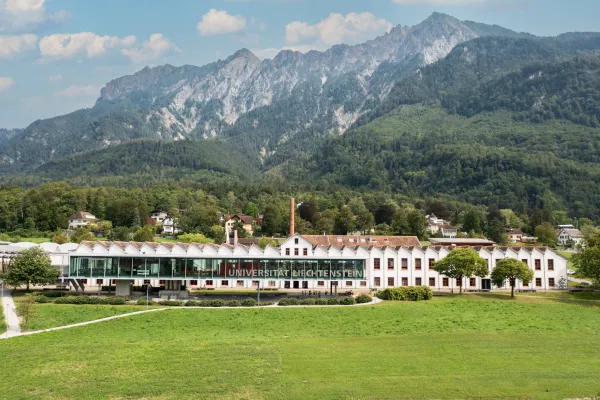
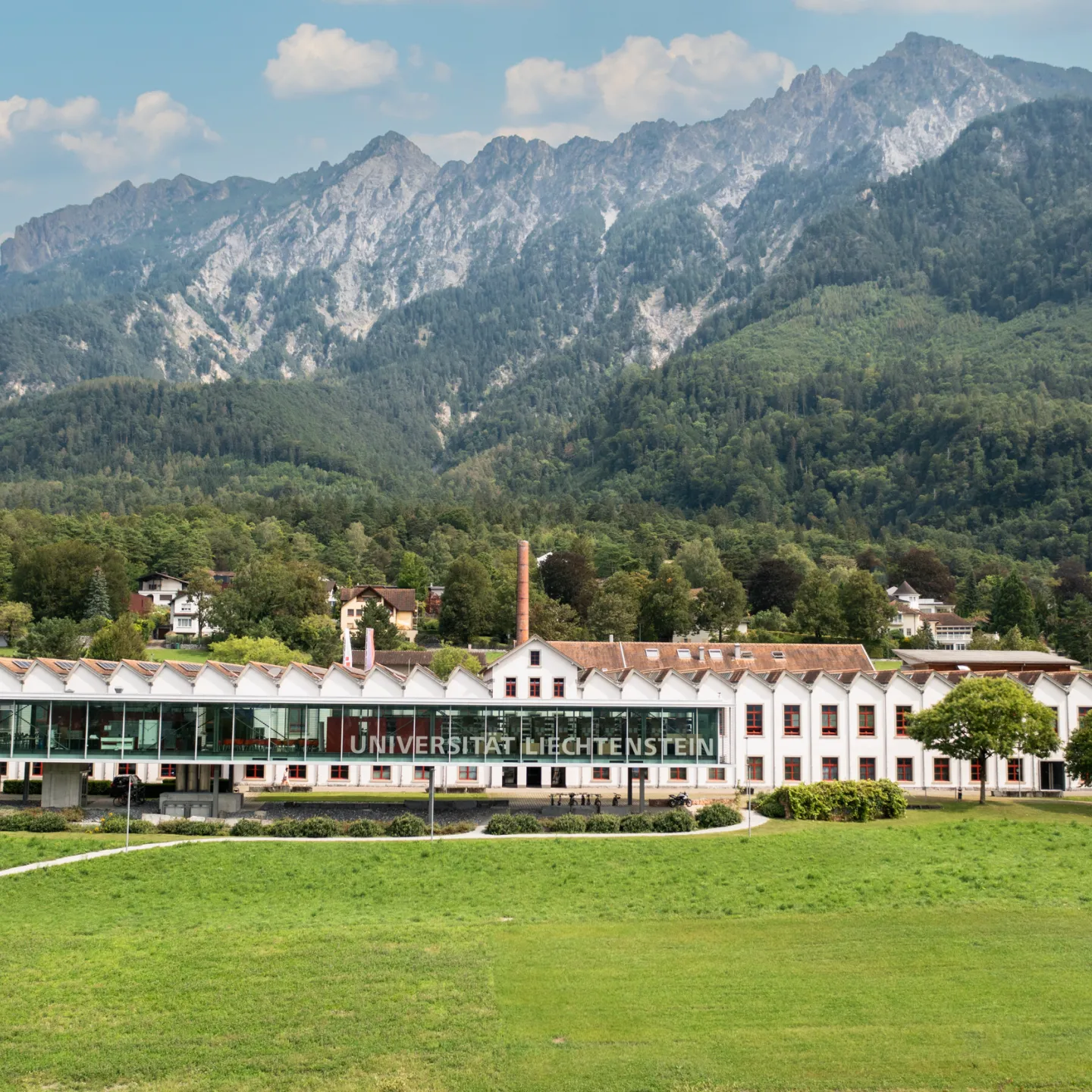
Frontansicht der Universität Liechtenstein mit markanter Glasfassade und grüner Wiese im Vordergrund.

Whether by train, bus, car or plane – the University of Liechtenstein in Vaduz is quick and easy to reach by various means of transport. Discover the best travel options as well as useful maps and directions.

Location and Directions
Frontansicht der Universität Liechtenstein mit markanter Glasfassade und grüner Wiese im Vordergrund.

Eventregistration

Event

Registration

Legal Resources

Legal Resources

The database of legal and regulatory resources of the University of Liechtenstein contains all regulatory documents relevant for the University of Liechtenstein. It is continuously maintained by Legal Affairs. Most of the documents are provided in a German version only, regulations relevant to English-speaking students are provided in an English version.

Certificate Programmes

Advance Your Career with Purpose

Certificate Programmes – Academic Professional Education with Practical Relevance

The certificate programmes at the University of Liechtenstein offer a compact, practice-oriented form of professional education – ideal for working professionals who want to gain targeted, up-to-date expertise. Whether in business, law, finance, or technology: these programmes deliver applied knowledge that can be immediately implemented in your professional environment.

Thanks to their clear structure and high degree of flexibility, the certificate programmes are especially well suited for individuals seeking a quick entry into a new field or wishing to expand their skills in a focused way without the commitment of a long-term degree programme.


Ricarda Mauch
The programme provided me with valuable knowledge in blockchain and FinTech, and it also strengthened my professional role. Today, I feel confident as a competent point of contact for digital finance topics.”
Ricarda Mauch, Absolventin 2024
Learning Together, Growing Individually

Your Advantages

The University of Liechtenstein offers a learning environment that fosters academic and personal growth with short distances and direct access to lecturers. Small group sizes ensure individual support, personal feedback, and intensive academic exchange, ideal for part-time students who value personal interaction and practice-oriented teaching.

Our lecturers combine academically grounded university knowledge with current professional experience. Their practical perspective enriches the academically structured programme design and fosters a hands-on transfer of knowledge, ideally suited for part-time, career-integrated learning.

The certificate programmes at the University of Liechtenstein create spaces for dynamic exchange far beyond the seminar room. Whether in workshops, expert lectures, or informal gatherings such as joint aperitifs after class sessions, interdisciplinary dialogue fosters practice-oriented learning and provides valuable insights into other professional fields.

Participants benefit not only from the expertise of the lecturers, but also from the diverse experiences within the group. This collegial exchange opens up new perspectives and encourages reflection on one’s own professional role. It often sparks ideas for new projects or unexpected career developments.

As members of the alumni community, graduates also remain connected with the university and an active professional network in the long term.

Recognised, Compatible, Future-Oriented

Progress with a System

The certificate and diploma programmes at the University of Liechtenstein are aligned with the Bologna system and carry ECTS credits. Including the Certificate of Advanced Studies (CAS), they comprise between 10 and 30 ECTS credits, with one ECTS point representing approximately 30 hours of workload. Around one third of the programme is delivered through on-campus classroom teaching. Depending on the programme, the duration is between one and two semesters.

These programmes not only provide practice-oriented professional education but also offer a clear pathway to further academic programmes – such as potential credit transfer into a master’s degree.

An example: In the field of fiduciary services, the combination of a certificate and a diploma programme (totalling 60 ECTS credits) can serve as targeted preparation for the Liechtenstein trustee examination. For participants without an academic degree, this qualification is recognised under Art. 7 (b) of the Trustee Act (TrHG) in conjunction with the Trustee Examination Ordinance (TrHPV) as valid proof of education. This creates a clearly regulated path to professional licensing.

In this way, the programmes combine professional relevance with academic progression, a valuable foundation for long-term career development.

The professional education programmes at the University of Liechtenstein are aimed at experienced professionals from diverse educational backgrounds. Depending on the programme, the following requirements apply:

Certificate Programmes

Eligible applicants include individuals with a vocational secondary school diploma (Berufsmatura from Liechtenstein, Austria, or Switzerland) or a general university entrance qualification (Matura, Abitur), along with relevant professional experience.

In justified cases, applicants without a formal qualification may also be admitted, provided they can demonstrate appropriate professional competence and the ability to study at the required academic level.

Please note:
The binding admission requirements for each programme are published directly on the respective programme page.


We Are Happy to Advise You

Team Liechtenstein Executive School

Employee
Subscribe to