Skip to Main Content

Arbeiten an der Universität

Working at the University

Dozent präsentiert mathematische Funktion an Flipchart, während eine Teilnehmerin aktiv mitschreibt.

The University of Liechtenstein offers an inspiring and supportive working environment characterised by openness, collegiality and a strong commitment to quality. As a modern employer, we ensure fair, transparent employment conditions and attractive additional benefits.

Whether it is progressive working time models, comprehensive social benefits or targeted development opportunities, we create conditions that support our staff in their professional and personal development.

Dozent präsentiert mathematische Funktion an Flipchart, während eine Teilnehmerin aktiv mitschreibt.

More Than Just a Job

Working Hours

We work 42 hours per week and use a time and performance recording system. For academic staff and management, there is a system of trust-based working hours.


Leave Days

In addition to public holidays, we grant additional leave days.


Teleworking (Home Office)

Where operational circumstances allow, employees can work up to 40 per cent of their agreed working hours from another location.


Anniversaries

We recognise service anniversaries with gifts and additional days of leave.

Continuing Education

We support the systematic and continuous professional development of our staff.


Lifelong Learning

We generally cover a large share of the costs for training with significant and predominantly professional benefit, count the time as working hours and contribute to expenses.


Career Path

We promote both academic careers and long-term professional development in general.

Part-Time Career

We offer the option of part-time employment.


Maternity

We share your joy about your new arrival and will discuss your options with you in advance. Mothers are entitled to 140 weekdays of maternity leave.


Paternity Leave

Fathers are entitled to five working days of paternity leave within the first year of the child’s life.


Pension Fund

Employees can choose from three different pension plans.

Holidays

Depending on their age, employees are entitled to 23 to 30 days of annual leave.


Flexible Working

Employees work under an annual working time model, with working hours arranged flexibly according to the requirements of the role and in consultation with their supervisor.


Purchase of Additional Leave Days

Employees have the option to purchase up to 20 additional leave days per year.


Unpaid Leave

For important reasons and with the approval of your supervisor, we grant unpaid leave.

Team Events

We organise several team events each year.


Accident and Daily Sickness Allowance Insurance

We offer private supplementary insurance for all employees and provide above-statutory continued salary and daily allowance payments.


Staff Coffee Breaks

We meet for coffee together.


Healthy Eating

Fresh fruit is available free of charge.


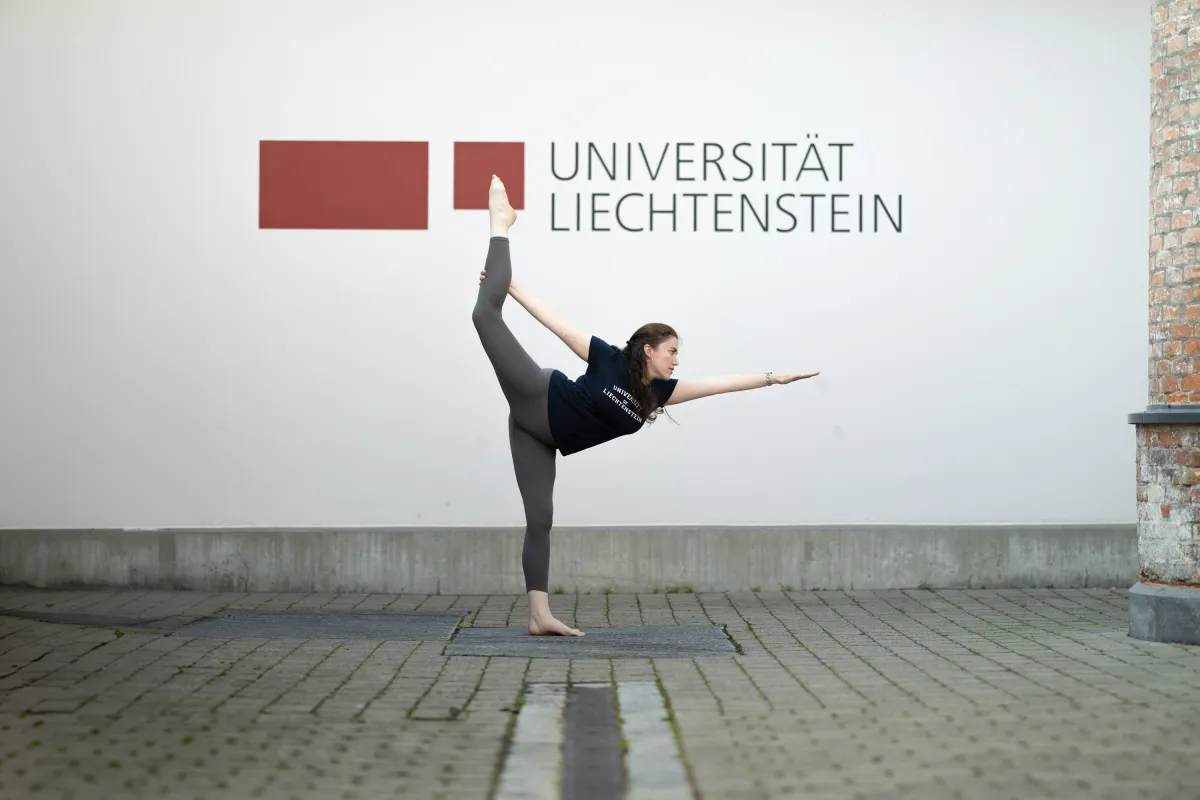
Fitness Training

We offer energising outdoor fitness training focused on core strengthening under professional guidance. In addition, employees receive a discount on an annual membership at the ‘update Fitness’ gym in Vaduz.

Public Transport

We contribute to the cost of public transport subscriptions.


Reading and Discovery

Free borrowing of books from our library and access to various renowned (specialist) journals and relevant newspapers.


Lunch Menu

Employees can enjoy affordable meals and drinks in the campus cafeteria.


Showers

There are ample showers available for use after sport or commuting by bike.


E-Bikes

For environmentally friendly and flexible mobility, we provide e-bikes for business trips.


Discounts

Thanks to various partnerships, our employees benefit from exclusive discounts and attractive offers.

Still Have Questions?

Contact

Martina Haas
HR Specialist - Human Resources
Employee

Universität in Zahlen

Facts and Figures

test

The University of Liechtenstein is a small and specialised university. It currently has around 650 students in consecutive programmes and around 225 students in professional education programmes. Its small size enables the University to provide its students with the best possible support from the teaching staff and the University administration.

Below are some key figures on the University of Liechtenstein. Further facts and figures on the individual areas can be found in the annual reports.

test

Test

Further Figures on Consecutive Teaching

All degree programmes in the area of consecutive teaching are offered as full-time study. However, the programmes are designed in such a way that it is possible to pursue employment alongside the studies. According to the student survey, 72 per cent of students are employed while studying. More information on the compatibility of study and employment can be found here.

Since the winter semester 2024/25, students who perform at an international sporting level have been able to benefit from elite athlete status. At present, the University of Liechtenstein counts five elite athletes.

Despite its small size, the University of Liechtenstein is an international university with students from 40 nations. Thirty-five per cent of the students hold Austrian citizenship. Twenty-seven per cent are German nationals, eleven per cent Swiss and ten per cent Liechtenstein nationals. Nearly 35 per cent of students reside in Liechtenstein.

The University regularly conducts surveys of its students and graduates. To the statement “In my opinion, the University of Liechtenstein offers a good education”, 81.4 per cent of students responded with full or partial agreement. Only ten per cent disagreed somewhat, while the remaining nine per cent were neutral.

Key Figures on Professional Education

test

Number of Students over Time

test

Staff Key Figures

test

Text

test

Revenue Development

test

Kurzer Text

test

Geschichte der Universität Liechtenstein

The Development over the Years

History of the University of Liechtenstein

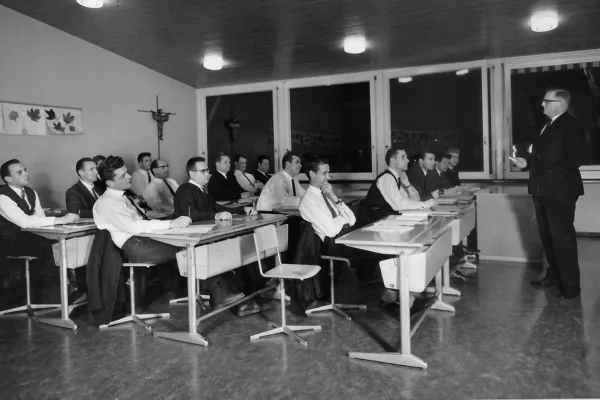
Studierende des Abendtechnikum

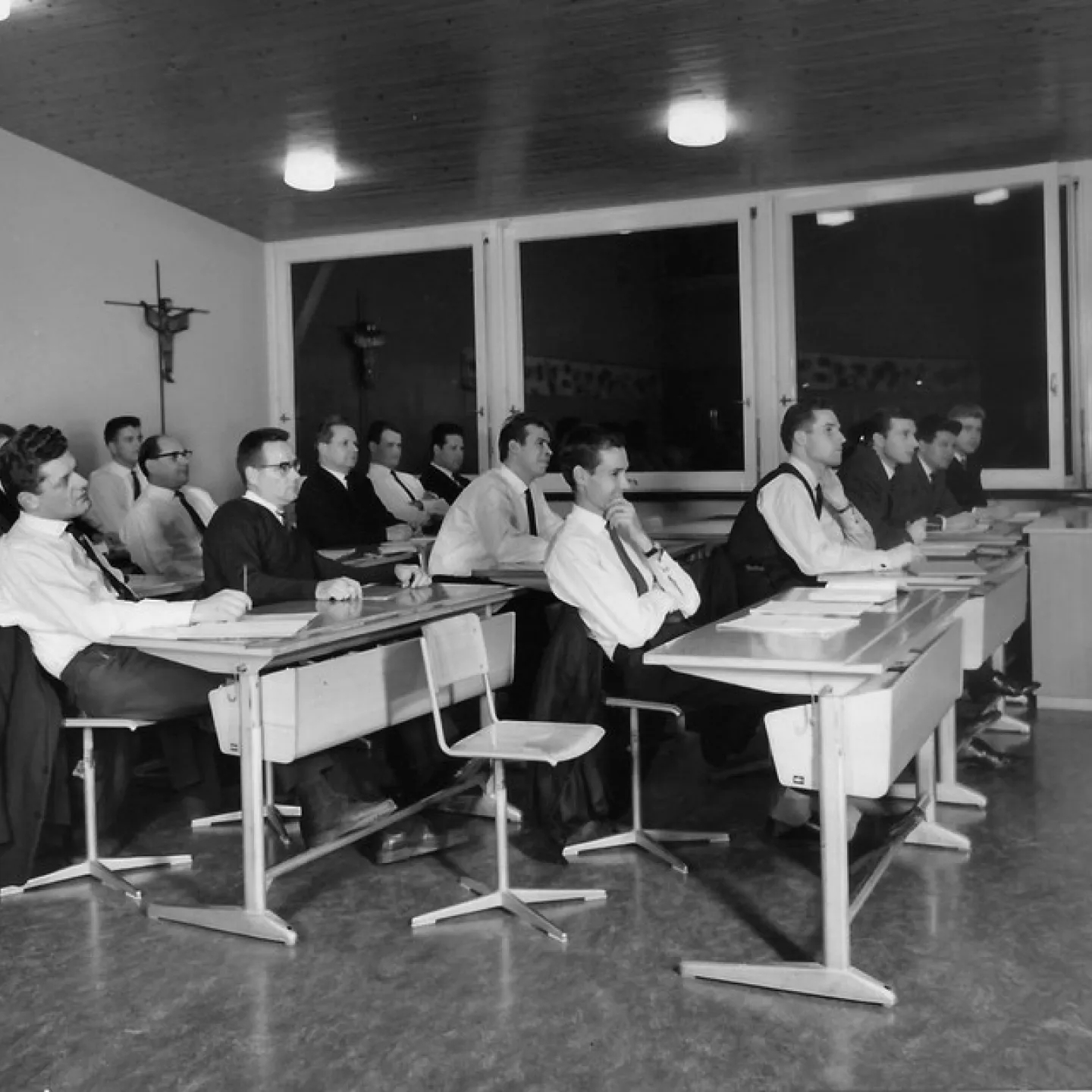
The predecessor institution of the University of Liechtenstein was founded in 1961 as the Evening Technical College Vaduz on the initiative of business and government. It was supported by the state and business organisations. In addition to the Department of Mechanical Engineering, the Departments of Architecture and Civil Engineering were established in 1963.

Studierende des Abendtechnikum

Since 1985, the areas of professional education and technology and knowledge transfer have been continuously expanded, and the Evening Technical College evolved into the Liechtenstein School of Engineering (LIS). In 1992, LIS was recognised by the state as a university of applied sciences and the Department of Information Systems was established. In 1997, LIS was transformed into the University of Applied Sciences Liechtenstein as a foundation under public law. The state and business organisations continued to act as its sponsors.

As part of the strategic reorientation, the technical disciplines of mechanical engineering and civil engineering were closed in 2002. The Department of Information Systems was gradually developed and expanded into the Department of Business with the Institutes of Entrepreneurship, Financial Services and Information Systems. In March 2002, the new university campus was opened in the renovated facilities of the former Spoerry textile factory in Vaduz.

In 2003, the SME Centre began its work as the first affiliated institute, followed in 2004 by the opening of KOFL (the Liechtenstein Institute for Economic Research) as another affiliated institute.


In February 2005, the University of Applied Sciences was transformed into the University of Liechtenstein of Applied Sciences (Act on the University of Liechtenstein of 25 November 2004).


In July 2008, the Government of the Principality of Liechtenstein granted the University of Liechtenstein the right to offer doctoral degree programmes. On 1 September 2009, the Graduate School was opened, bringing together master’s and doctoral education under one institutional roof.


In November 2010, the Parliament adopted the Act on the University of Liechtenstein, which entered into force on 1 February 2011.

Newspapers

Our Offerings

Newspapers

Zeitungen

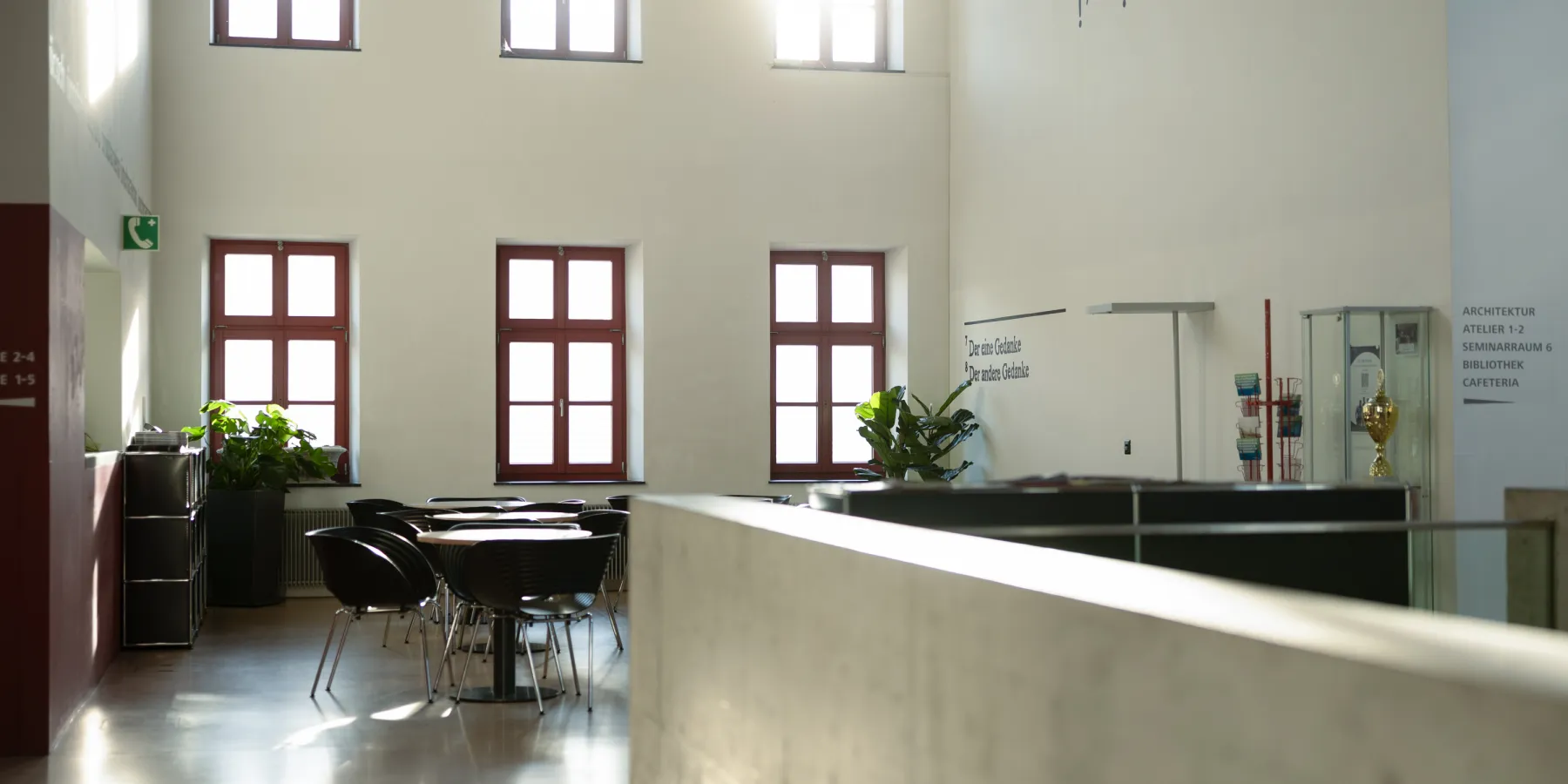
In the cafeteria in front of the library, a selection of print newspapers is available for all interested users.


Members of the university have access to a wide range of Liechtenstein, Swiss and international electronic newspapers.

Zeitungen

Newspaper Portals

Via WISO Presse, you have access to around 90 daily newspapers from Germany, Austria and Switzerland, most of them updated daily.

Selection of Daily Newspapers

• F.A.Z. Wirtschaftswissenschaft
• FOCUS
DER SPIEGEL
• DIE WELT
• Die Weltwoche
DIE ZEIT
• Falter
• Der Standard
Vorarlberger Nachrichten

Swissdox provides up-to-date full-text archives of 280 Swiss newspapers from 1911 onwards, ranging from regional and national daily, weekly and Sunday newspapers to trade journals, magazines, news agencies and online sources, as well as collections of publications that have since ceased.

The subscribed newspapers are available in the cafeteria for reading.


Most are also accessible in digital media databases.


  • FAZ Frankfurter Allgemeine Zeitung, Wirtschaft

Selected articles from 2003

WISO Presse

  • Finanz und Wirtschaft

Since 1999

Swissdox

  • Handelszeitung  

Since 1992

Swissdox und WISO Presse

  • Liechtensteiner Vaterland

Since 1914

Vaterland Digital (via my.uni.li)

  • NZZ Neue Zürcher Zeitung

Since 1780

Swissdox

  • VN Vorarlberger Nachrichten  

Since 2002

WISO Presse

  • Werdenberger & Obertoggenburger

Since 2013

Swissdox

E-paper access to Liechtensteiner Vaterland including the weekly newspapers Wirtschaftregional, LIEWO Sonntagszeitung and magazines KuL, VaterlandmagazinPanorama Alpenmagazin.

E-Media

Online Access and Terms of Use

Access to Licensed E-Resources

Bibliothek-Zugang zu emedien
  • The library provides access to numerous electronic media such as e-books, electronic journals and databases.
  • Use of licensed e-resources is restricted to members of the university (staff and students).
  • Freely accessible information resources can be used by all users regardless of IP range.
Bibliothek-Zugang zu emedien
When using licensed electronic media, please note the following

Members of the University of Liechtenstein can access library-licensed e-resources (e-journals, databases, e-books, etc.) on campus only via the university’s internal network.

Some databases require a user ID and password. Access is provided via a redirect to the secure area (my.uni.li).

Access for external users is only possible at the PC workstation in the library reading room.


Note: Some databases cannot be used on-site at the PC workstation. For options on obtaining the desired document, please contact the library staff on site.

In all cases, prior registration at the circulation desk is required, where you can also obtain further detailed information about access and use.

External users do not have access to licensed e-media outside the library.

Members of the University of Liechtenstein can access the library’s licensed e-resources worldwide via Citrix. Citrix provides the ability to use internal resources outside the university’s network.

By using Citrix, licensed electronic resources can be accessed from home or via an external WiFi. To do so, the following IT setup must be performed and login credentials must be used:

  • Install Citrix Workspace App on personal PC/notebook
  • Download Microsoft Authenticator on mobile phone
  • Username: "firstname.lastname@uni.li" (eg. hanna.example@uni.li; no private email account!)
  • Password: your uni.li password (same as for Moodle or my.uni.li).

Please note that you use multi-factor authentication for this service. You will be automatically asked to approve the login on the mobile phone. Then click on the Google Chrome Browser App provided by Citrix.

Should you need assistance installing Citrix, please contact our IT by email or write your request online.

Some database providers offer Access via your institution. To use this option, you need to have access to the Internet.

  • On the database homepage, select Sign up via Institutional Login.
  • Search for your institution and select it.
  • Log on with your unili account.

The library of the University of Liechtenstein enters into contracts and subscriptions with various providers for licensed e-resources. These agreements define the terms of use, which are based in part on applicable copyright law.

The following general terms of use apply:

  • Full texts may only be printed or downloaded for personal use and within the context of study, research or teaching. Any use for commercial purposes is prohibited.
  • The sharing of data or documents with third parties and their distribution (e.g. on a publicly accessible website) is not permitted. Third parties include external platforms, in particular ChatGPT or other AI platforms where storage and future use by third parties is determined.
  • Artificial Intelligence (AI): The use of licensed content and data for training or working with AI tools is, in many cases, contractually prohibited. If you plan to use licensed resources in this way, please contact us in advance so that the relevant legal framework can be clarified. Further information on the use of licensed full texts in generative AI tools can be found on the following webpage of the ETH Zurich Library.
  • Systematic downloading and duplication (either manually or through robots such as scraping, crawlers, scripts, etc.) of substantial parts of e-journal, e-book or database content is prohibited. Providers of e-resources consider this misuse, which may result in access to the resource being blocked for all members of the university.
  • Passwords and other access credentials are confidential and must not be shared with third parties.
  • In addition, the IT policies of the University of Liechtenstein, the Copyright Act and the licence agreements concluded with providers apply.
Bibliothek Zitat Martin Angerer
Especially in times of digitalisation, the library remains a central place of knowledge for our students. Today, it is where everything comes together, whether e-journals, databases, theses or the good old book. For me, the library’s role as a link between degree programmes and publishers is particularly valuable, for example in acquiring licences for our courses."
Prof. Dr. Martin Angerer, Professor, Liechtenstein Business School

Databases

A to Z List of

Databases

Bibliothek
  • Databases licensed by the University of Liechtenstein Library through the Consortium of Swiss Academic Libraries
  • Databases individually licensed by the library
  • Freely available online databases relevant to the university’s subject areas


Bibliothek

ABI/INFORM Collection provides data in the field of economics (management, finance and banking, accounting, commerce, etc.) as well as in technology, computer science and other areas, with more than one third of the sources available in full text. The university licenses the ABI/INFORM Collection and Business Market Research Collection.


Approximately 4,000 journal titles are indexed, predominantly from the Anglo-American world, but also including German titles. The Financial Times is available in full text from 1996 and the Wall Street Journal from 1984. ABI/INFORM offers Anglo-American economics dissertations in full text, comprehensive company information worldwide, business cases, and academic author profiles.


  • Economics
  • Licensed
  • Full-Text Database

The AIS eLibrary is the central digital archive of the Association for Information Systems and is one of the most comprehensive academic resources in the field of information systems worldwide. With over 60,000 articles, it offers researchers, lecturers and students access to a wide range of journals, conference papers and other scholarly works.


  • Economics
  • Licensed
  • Full-Text Database

Art & Architecture Source is a comprehensive database for fine and applied arts, design and architecture. It includes sources such as Wilson Art Full-Text and Art Index Retrospective, with a total of 750 full-text journals, references and abstracts from other leading international journals (USA, UK, France, Italy, Germany, Spain, the Netherlands), 220 e-books and 63,000 images. It is continuously supplemented with new collections.


EBSCOhost Handout


  • Architecture
  • Licensed
  • Full-Text Database

ArchINFORM is an international online database for architecture with a focus on modern and contemporary architecture.


  • Information on over 100,000 building projects worldwide
  • Short biographies and catalogues of works by architects from different eras
  • Photos, drawings and sketches of buildings
  • Searchable by location, architect, building type, year of construction or keywords
  • Content mainly in German and English


archINFORM is not an official database of an architectural association but is operated as an independent project. It is one of the largest freely available architectural directories on the internet.


  • Architecture
  • Freely Available
  • Reference Database, Image Database
  • Germany

ARTstor Digital Library is a comprehensive digital image database specifically designed for use in research, teaching and study. It offers over 2.5 million high-quality images in the fields of art, architecture, humanities and social sciences. These come from more than 280 renowned collections worldwide, including the Metropolitan Museum of Art, the Museum of Modern Art (MoMA), the Ethnological Collection of Harvard University and The Illustrated Bartsch collection. The database is continuously expanded with new collections.


Since 2024, ARTstor has been fully integrated into the JSTOR platform, allowing users to access scholarly texts and image materials through a single search interface.

Numerous tools are also provided for presenting and managing images.


  • Architecture
  • Licensed
  • Image Database

Avery Index to Architectural Periodical (via EBSCOhost) includes references to international, academic and popular journals, including publications of professional associations, regional and national journals from the USA, as well as significant publications on architecture and design from Europe, Asia, Latin America and Australia.

It is a bibliographic database providing information on current literature in architecture and design, published by the Getty Research Institute.


EBSCOhost Handout


  • Architecture
  • Licensed
  • Reference Database

In the beck-eLibrary, the university has licensed the following journals:


  • Economics
  • Licensed
  • Journal Collection

BECK-ONLINE is a comprehensive legal database from the publishing house Beck. It includes authoritative German commentary literature, handbooks, nearly all Beck journals with archives, extensive case law and legislation from the federal government and states. To use the full range of features (virtual folders, personal notes, etc.) a personal registration on the website is required. The licensed modules are listed under Our Beck-Online.


  • Law
  • Licensed
  • Full-Text Database
  • Germany 

The Bildindex der Kunst und Architektur is a freely accessible online database containing over 3.2 million photographs of approximately 1.9 million works of art and architecture in Germany and Europe. The platform is operated by the German Documentation Centre for Art History – Bildarchiv Foto Marburg at Philipps University of Marburg.


  • Architecture and Art
  • Freely Available
  • Image Database
  • Germany

The Britannica ImageQuest image database includes around 3 million images, graphics and illustrations covering all subject areas from over 50 renowned sources, including Getty Images, National Geographic Society, The Times Picture Archive, Natural History Museum, The Granger Collection, Oxford Scientific (OSF), Royal Geographic Society, Bridgeman Art Library and the National Portrait Gallery of London.


The high-resolution images, complete with extensive metadata, can be conveniently and efficiently searched by subject area, keywords and image source. They can be collected on a virtual lightbox, downloaded, printed or sent by email.


Use is permitted only for personal or non-commercial educational purposes. For any authorised use in the non-commercial educational context, the distributor (EncBrit, “The Source”) and the “Copyright Holder” must be credited. In particular, for content provided by third parties via EncBrit (such as many commercial image agencies, including Getty Images), a © must indicate full rights-holder and source attribution.


  • Interdisciplinary
  • Licensed
  • Image Database

Business Source Premier (EBSCO) regularly indexes over 10,000 full-text publications in economics, including approximately 1,800 peer-reviewed titles. It contains the full text of more than 3,800 journals, including around 2,000 peer-reviewed titles, as well as a limited number of full-text e-books.


Business Source Premier also offers company information on about 10,000 of the world's largest companies. The database includes numerous Country Economic Reports from Economist Intelligence Unit (EIU), DRI-WEFA, ICON Group and Country Watch. The industry standard NAICS (North American Industry Classification System) is integrated into the articles and can be used as a search criterion.


Since 2025, EBSCO has provided the new Business Searching Interface (BSI), a customised view of the standard EBSCOhost platform designed specifically for the needs of students, researchers and lecturers in business and management.


  • Economics
  • Licensed
  • Full-Text Database

The image and reference database DEAIL inspiration contains around 6,200 project documentations starting from Issue 1/1961 of the journal DETAIL. With each new print issue of DETAIL, the database is expanded with the latest projects. Search functions and filter options by main keywords such as building type, material, year of construction or DETAIL issue theme support the search for creative building solutions. Project descriptions with reference photos, drawings and technical information are available as PDF downloads.


  • Architecture
  • Licensed
  • Image and Full-Text Database

Dissertations & Theses Abstracts and Index (ProQuest) covers approximately 99% of American dissertations since 1861 as well as Canadian dissertations. In addition, British dissertations from January 1988 onwards are documented. The database also includes dissertations from over 1,000 universities and colleges worldwide.


Bibliographic records for doctoral dissertations from July 1980 include an abstract of approximately 350 words written by the author. Master's theses from 1988 onwards include an abstract of around 150 words. For dissertations from 1997 onwards, a 24-page preview in PDF format is often available. The database is updated monthly.


  • Interdisciplinary
  • Licensed
  • Reference Database

The Ebook Central Library offers 70,000 e-books from more than 100 publishers. The focus is on architecture & art, economics, computer science, law, psychology and social sciences. Up to 40% of each e-book can be printed and 20% copied. For temporary downloads of 1 to 7 days, an Adobe Digital Editions account is required.

E-books from the Ebook Central Library can be searched via swisscovery.li or through ProQuest.


Ebook Central - Guide


  • Interdisciplinary
  • Licensed
  • Full-Text Database

EconBiz is continuously developed by the German National Library of Economics (ZBW). Its goal is to provide a central entry point for all types of economics-related information and direct access to full texts.


The database consists of various components:

  • Full texts: Indexing and access to freely available electronic full texts, particularly academic working papers that are either freely accessible on the internet or drawn from the world’s most important economics series.
  • Subject guide: Indexing of websites covering all areas of economics. The focus is on
    • German-language sites,
    • pages from European Union bodies, and institutions that play an important role in international economic research.
  • Library catalogues of partner institutions.


  • Economics
  • Licensed
  • Full-Text and Reference Database

EconLit (ProQuest) has indexed economics publications since 1969 and is produced by the American Economic Association. It evaluates around 750 key academic journals, as well as more than 200 collected volumes (from 1984) and dissertations (from 1987). Monographs are also included, most of which feature abstracts. It covers English-language articles and papers or those with an English summary. Full texts of book reviews published in the Journal of Economic Literature are included, along with the "Abstracts of Working Papers in Economics" database from Cambridge University Press. Working papers from the RePEc projects are also covered.


EconLit includes subject areas such as economics, economic geography, economic history, economic policy, and economic theory, and also contains some business-related literature.


Content is indexed using the Journal of Economic Literature (JEL) classification system.


  • Economics
  • Licensed
  • Reference Database

Currently, ELGARonline offers over 450 e-books from the publication years 2017 to 2021, primarily from the Business & Management collections. The e-books can be read online by chapter, downloaded as PDF files or printed.


  • Economics
  • Licensed
  • E-Books Platform

With Emerald Insight, the university currently licenses 140 academic journals from the publisher Emerald with full-text access. The majority of the journals are in the field of economics. The offering is supplemented by additional content such as case studies, interviews and reviews for teaching and research.


  • Economics
  • Licensed
  • Full-Text Database

Encyclopædia Britannica Online (Britannica Academic) provides access to the full text of the continuously updated 32-volume print edition, with over 75,000 articles by 4,900 authors and 10,500 entries from the Britannica Books of the Year series.


Included features:

  • Merriam Webster's Collegiate Dictionary and Internet Dictionary
  • World atlas
  • Interactive timelines
  • 37,000 images and maps
  • 4,200 audio and video clips as well as animations
  • Daily newsletter with news from The New York Times and BBC News
  • Editor-reviewed links to related websites
  • Full-text links to over 700 e-journals from EBSCO and ProQuest


  • Interdisciplinary
  • Licensed
  • Reference Database

E-Periodica is a platform of the ETH Library for digitised Swiss journals.

All journals on the platform are freely accessible. Depending on agreements with individual publishers, there may be an embargo period for newer issues.

The range of subjects extends from natural sciences to architecture, mathematics, history, geography, art and culture, as well as environment and social policy.


  • Interdisciplinary
  • Freely Available
  • Full-Text Database

Full texts of electronic and digitised journals in business administration, management and economics.

The university subscribes to two collections in JSTOR- Journal Storage: Business Collection I and II. Journals are indexed from their first volume up to the so-called "moving wall" (depending on the title, 2 to 5 years before the current volume). The most recent volumes are now partly accessible through JSTOR’s Current Scholarship Program.


  • Economics
  • Licensed
  • Full-Text Database

HEINONLINE provides information for the fields of law and political science, with archives that in some cases go back many decades.

The university subscribes to the following sub-collections:


The licence agreement prohibits systematic downloading of content from HEINONLINE. Only individual sections of a document may be downloaded per session.


  • Law
  • Licensed
  • Full-Text Database
  • USA

JURIS Das Rechtsportal is a leading German online information system for legal specialist information and offers access to a wide range of content across all areas of law.


  • Legislation and regulations: Current and historical versions of federal law as well as state law.
  • Case law: Decisions of all the highest federal courts, many state courts and the European Court of Justice.
  • Specialist literature: Commentaries, handbooks, journal articles and practical reports.
  • Administrative regulations: Guidelines and directives from authorities.

One particular strength of JURIS is the interlinking of content: laws, court decisions and legal literature are cross-referenced, enabling efficient and context-based research.


  • Law
  • Licensed
  • Full-Text Database
  • Germany

The legal database Lex campus (Swisslex) includes all decisions of the Swiss Federal Supreme Court, other federal courts and most final-instance cantonal courts, as well as legal commentaries, monographs and academic journals. Lex campus integrates the well-established content of Swisslex with additional open-access resources.


Included are:

  • Various case law collections
  • 80 legal academic journals
  • Commentaries, monographs, dissertations, commemorative volumes and collected works from various publishers, including Schulthess, Stämpfli, Dike and Orell Füssli, among others

Through links with the repositories of the University of Zurich (ZORA) and the University of Lucerne (LORY), Lex campus also ensures direct access to specific academic works and publications.

Tutorials


Lexis 360® (LexisNexis) is an online legal database from LexisNexis Austria that provides comprehensive access to relevant legal sources, including legislation, court decisions, guidelines, academic journals and commentaries. Through the integration of artificial intelligence and innovative features such as Lexis Briefings® and Lexis SmartSearch technology, Lexis 360® enables efficient and precise research.


Lexis 360® quick guide


Liechtensteiner Rechtportal includes: 

  • All statutes and regulations on Liechtenstein law
  • All legislative materials (reports and proposals, government statements, parliamentary transcripts)
  • All case law published in the Liechtenstein Law Reports (LES)
  • All other decisions of the Liechtenstein courts


Access is available only to members of the university via the internal network my.uni.li and requires a username and password.


LinDa (LINDE Verlag) is a digital research database from the Austrian publisher Linde Verlag, aimed at professionals in tax consulting, auditing and law.

The university subscribes to the following digital libraries and journals:

LinDa Tutorials


  • Law
  • Licensed
  • Full-Text Database
  • Austria

LJZ Digital refers to the online edition of the Liechtensteinische Juristenzeitung (LJZ), a legal academic journal that has been published since 1980 by the Association of Liechtenstein Judges (VLR). LJZ is generally issued quarterly and features academic articles, book reviews and the Liechtenstein Law Reports (LES), which include important decisions of Liechtenstein courts and administrative authorities.


  • Law
  • Licensed
  • Full-Text Database
  • Liechtenstein

OnArchitecture's Audiovisual Archive for Institutions (via EBSCO) 

is a collection of original videos for the study of architecture and design.

The videos feature:

  • Interviews with prominent contemporary architects about their work and the role of architects and architecture in society
  • Footage of key projects by the interviewees

In addition, the videos include technical specifications, project descriptions, company profiles and up-to-date biographies of the architects and designers.


Copyright and usage terms


  • Architecture
  • Licensed
  • Audiovisual Database

The university provides online reading access to ÖNORM for the subject area of technical drawing and graphic symbols.


  • Architecture
  • Licensed
  • Full-Text Database
  • Austria

RDB Rechtsdatenbank (MANZ) is Austria’s leading online legal platform, operated by MANZ’sche Verlags- und Universitätsbuchhandlung GmbH. It offers comprehensive access to a wide range of legal content and is aimed at students as well as other professionals in the legal field.


University members can find the available titles under Search and Browse in the drop-down menu for subscribed works.


The SAGE Journals collektion includes New Style Management & Organisation Studies with 20 full-text journals in the field of business management, available from 1999.


In SNV Connect, the standards portal of the Swiss Association for Standardization (SNV), you will find the full texts of the following standards collections:

  • SIA
  • ISO
  • SWISSMEM (formerly VSM)
  • Electrosuisse
  • INB Interdisciplinary Standards Area (SNV)


Access is provided via the Swiss SWITCH edu-ID (registration required).


ScienceDirect (Elsevier) is one of the largest full-text databases, covering over 16 million publications from more than 2,500 journals published by Elsevier across 24 subject areas.

Comprehensive access to all journal titles on ScienceDirect results from the agreement negotiated by swissuniversities and the Consortium of Swiss Academic Libraries with Elsevier.

For university members, journals in the fields of economics and architecture are particularly relevant.


Springer Nature Link is an interdisciplinary publishing portal that offers a wide range of heterogeneous primary sources through a single search interface: electronic journals, books and book series, as well as reference works from Springer publishers (Birkhäuser, Gabler, Spektrum, Springer, Vieweg, VS).


The university licenses the following e-collections:

  • E-Books in Economics (German) 2013-2026
  • E-Books in Business & Management (English) 2024-2026
  • E-Books in Artificial Intelligence 2025
  • E-Journals in all academic subject areas (Read & Publish Agreement with swissuniversities)


Statista (Statista GmbH) is a portal that compiles statistical data from various institutes and sources. Statista offers international data from over 150 countries and around 170 industries.

The database includes:

  • Over 1 million statistics on more than 80,000 topics from more than 18,000 different sources
  • Industry information covering sectors from agriculture to public administration and social services
  • Company information with key figures on over 1,000 companies
  • Infographics on current topics
  • Dossiers that bundle all relevant statistics on a specific topic

Access is provided via AAI login using your university email address and password (Shibboleth).

  • Interdisciplinary
  • Licensed
  • Full-Text Database

Wiley online library includes around 1,400 full-text journals covering all subject areas.


WISO (Genios) offers one of the largest German-language collections of bibliographic references and full texts in the fields of economics and social sciences, as well as related disciplines such as psychology, law and technology.


You will find references from various specialist databases, numerous articles from around 1,000 academic journals, press articles from daily and weekly newspapers, around 120 million company records, data on markets and industries, as well as many electronic books and instructional videos across different subject areas.


The university licenses the WISO modules for economics, social sciences and psychology.


  • Economics
  • Licensed
  • Full-Text Database

Bibliothek-Über swisscovery.li

Library Search Portal

About swisscovery.li

A unified search entry point for the media collection of the University of Liechtenstein Library and for academic resources from 500 libraries that are part of the Swiss national library network SLSP.


You can use swisscovery.li anywhere and at any time. For access to the library’s licensed e-resources from outside the campus, university members need a VPN or CITRIX connection.

FAQ

swisscovery is operated by SLSP (Swiss Library Service Platform) and is a national search platform that brings together academic resources from around 500 libraries in Switzerland.


Further information about SLSP can be found in the factsheet.

Our users must have a SWITCH edu-ID Account. You need a SWITCH edu-ID to register with SLSP/swisscovery.

Register here: registration.slsp.ch 


Important Information for Members of the University of Liechtenstein
When setting up your SWITCH edu-ID, you must link it to your SWITCH-unili account at the end of the registration process. This is the only way to ensure free online access to our licensed e-resources within the university network or externally via CITRIX.

If the linking process fails, please report the issue immediately to aai@uni.li and include a description of the problem along with screenshots.

If you forget your SWITCH edu-ID password, do not create a second edu-ID. Please follow the instructions provided.

After successfully registering with SLSP, you can use your SWITCH edu-ID account for all SLSP-libraries. You do not need to show identification at the circulation desk of your library. Your mobile phone number will be verified during registration.


Library Card
The University of Liechtenstein staff and student ID card also serves as your library card. Linking your personal SWITCH edu-ID to your SWITCH-unili account automatically connects your library card.

External users must enter the barcode number of their library card at the end of the SLSP registration process. All BibliOpass library cards are accepted.

New library cards are available free of charge at the circulation desks of SLSP libraries.

More help on registration and further FAQs about swisscovery can be found here: registration.slsp.ch/help.


Updating Contact Information
Your contact details are taken directly from your SWITCH edu-ID and must be updated there.
Login SWITCH edu-ID


Viewing Loans in swisscovery
ou can view your current and past loans in your swisscovery account. Log in by clicking the “Sign in” button at the top right of the swisscovery homepage.

Once signed in, your name will appear in the upper right corner. Click on it to open your user account. Here, you can view active and completed loans, reservations, and any applicable fees or restrictions.


Can Companies or Institutions Register?
Companies, institutions, and libraries cannot create a SWITCH edu-ID account. Please contact SLSP directly via swisscovery@slsp.ch.


Can Users Outside Switzerland Register?
Yes. Users without a Swiss postal address can also create a SWITCH edu-ID account. However, please note that SLSP libraries may offer only limited services depending on your place of residence.


In swisscovery.li you can search using three search profiles: UNILI Library, the standard swisscovery search, and swisscovery plus.


Note: Always start your search with the local UNILI Library profile.


UNILI Library
• Our physical media (books, journals, audiovisual materials)
• Our licensed e-resources (databases, e-journals and e-books)
• Additional electronic content available as open access


swisscovery
• Physical media holdings from around 500 libraries in the network
• Free content provided by other libraries in the network (institutional repositories, open e-collections and archives)


swisscovery plus
• Additionally, the physical media holdings of the Renouvaud library network (e.g. BCU Lausanne)
• Bibliographic information for electronic documents to which we do not have access


Tutorial
Discover and Order Resources Purposefully

You have several options for ordering items in swisscovery.li.


  • Collection on site in our library
  • Courier and postal delivery
  • Delivery of digital copies


Read the instructions for reserving and ordering items or ask the library staff at the circulation desk for assistance.


Tutorial
SLSP Courier – Ordering Options


Note
If you cannot order a book yourself because it is not available for SLSP Courier in swisscovery, we will be happy to process your request as an interlibrary loan.
Please use the respective online order form in the Courier & Interlibrary Loan section.
 

Order via Courier
Items ordered via courier can be returned to any library that is part of the SLSP Courier network.


On-Site Borrowing or Postal Delivery
Items borrowed in person from a library’s collection must also be returned in person or sent back by post.

Reminders
All reminders are sent by email. Reminder fees accumulate progressively.

Recall: on the 1st day after the loan period expires
free of charge

1st Reminder: on the 7th day after the loan period expires
CHF 5.00 per item

2nd Reminder: on the 14th day after the loan period expires
CHF 5.00 per item (total CHF 10.00)

3rd Reminder: on the 21st day after the loan period expires
CHF 10.00 per item (total CHF 20.00)


Order via Courier
CHF 8.00 is charged per ordered item. The fee is also due if the item is not collected.

Members of the University of Liechtenstein are exempt from SLSP Courier fees if the items are ordered to the UNILI Library. If university members do not collect the items, the fees will be transferred to their user account and must be paid on site.


Order via Postal Delivery
The fee for postal delivery to a private address is CHF 12.00 per item.
This also applies to members of the University of Liechtenstein.


Invoicing
The respective fees will be charged to your user account. You will receive an invoice from SLSP, the operating organisation of swisscovery.
These fees cannot be paid in the library and must be transferred to SLSP by bank payment.

SLSP Rates

SLSP imports your personal data (names, addresses, telephone numbers etc.; see the SLSP Privacy Policy) from your SWITCH edu-ID account into the swisscovery search portal when you register.


You can update your personal data at any time in your SWITCH edu-ID account. Changes are automatically transmitted to swisscovery. Library-specific data such as loans, orders and fees are recorded directly in swisscovery.


Your user account can be deleted as long as there are no outstanding transactions (loans or fees). To request this, please contact SLSP at swisscovery@slsp.ch.


Transaction data are anonymised, and accounts in swisscovery are deleted after 10 years of inactivity.

The Swisscovery Help Page offers useful information on how to use swisscovery, or you can contact the library.
The library team is happy to assist you.

Bibliothek Zitate Urs Baldegger
The library aligns itself with the strategic focus areas of the University of Liechtenstein. Entrepreneurship and leadership are two examples of this focus. Despite this emphasis, breadth and depth are not lost. Through its integration with swisscovery, a comprehensive and diverse overall offering of relevant knowledge is created."
Prof. em. Dr. Urs Baldegger, Professor, Liechtenstein Business School

CAS and Diploma Programmes

In-Depth Academic Professional Education with Practical Relevance

Certificate of Advanced Studies (CAS) and Diploma Programmes

The CAS and diploma programmes at the University of Liechtenstein are designed for experienced specialists and executives who wish to deepen their knowledge and take it to the next level. These programmes offer academically grounded, yet practice-oriented professional education in key areas such as blockchain and FinTech, as well as fiduciary services.

With their strong focus on content depth and critical reflection, the programmes enable participants to sustainably enhance their professional and strategic competencies. Thanks to their modular structure, they can be flexibly integrated into day-to-day work – ideal for those who want to consciously shape the next step in their careers.

Volkmar Ritter
Whether in FinTech business models, with established financial service providers, or through new blockchain applications – digital innovations are fundamentally transforming the financial sector. Those who understand these developments and help shape them will have a clear advantage in the future.”
Volkmar Ritter, Lecturer
Learning Together, Growing Individually

Your Advantages

The University of Liechtenstein offers a learning environment designed to foster academic and personal development with short distances and direct access to lecturers. Small class sizes enable personalised support, individual feedback, and intensive subject-specific exchange. This makes it an ideal setting for working professionals who value personal interaction and practice-oriented teaching.

Our lecturers combine academically grounded university knowledge with up-to-date professional experience. Their practical perspective enhances the academically structured programme design and promotes a hands-on transfer of knowledge – perfectly suited to part-time, career-integrated learning.
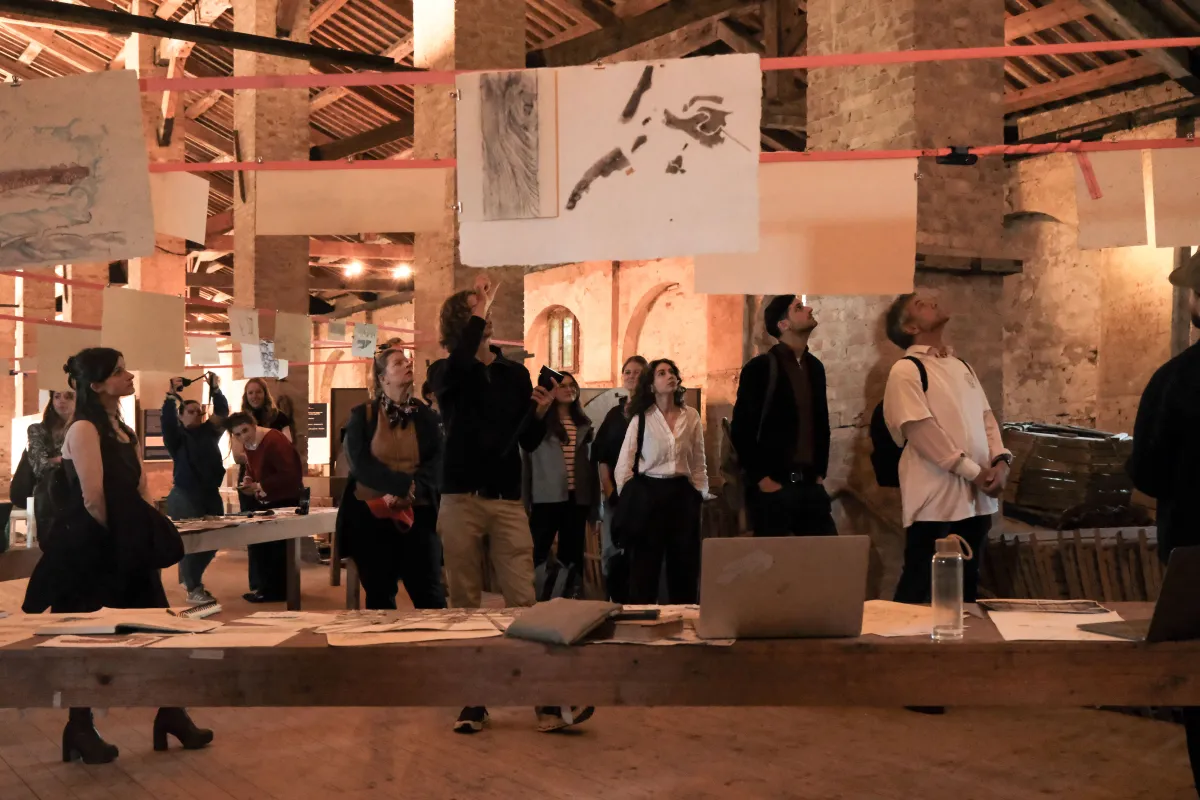
The CAS and diploma programmes at the University of Liechtenstein create spaces for meaningful exchange far beyond the seminar room. Whether in workshops, expert lectures, or informal settings such as shared aperitifs after class sessions: interdisciplinary dialogue fosters practice-oriented learning and offers valuable insights into other professional fields.

Participants benefit not only from the expertise of the lecturers, but also from the diverse experience within the group. This peer-to-peer exchange opens up new perspectives and encourages reflection on one's own professional role. It often sparks inspiration for new projects or unexpected career steps.

As part of the alumni community, graduates remain connected to the university and an active professional network over the long term.

Progress with a Purpose

Academically Grounded, Professionally Relevant

The certificate and diploma programmes at the University of Liechtenstein are aligned with the Bologna system and awarded with ECTS credits. This includes the Certificate of Advanced Studies (CAS). The programmes comprise between 10 and 30 ECTS credits, with one ECTS point corresponding to approximately 30 hours of workload. About one third of the programme is delivered through in-person instruction on campus. Depending on the programme, the duration ranges from one to two semesters.

These programmes provide not only practice-oriented professional education but also a clear pathway to further university-level studies – including potential credit transfer into a Master's programme.

An example: In the field of fiduciary services, a combination of a certificate and diploma programme (totalling 60 ECTS credits) can serve as targeted preparation for the Liechtenstein fiduciary licensing examination. For participants without an academic degree, this qualification is officially recognised as a valid training credential under Article 7 (b) of the Trustee Act (TrHG) in conjunction with the Trustee Examination Ordinance (TrHPV). This offers a clearly regulated path to professional accreditation.

In this way, the programmes combine professional relevance with academic progression – a valuable combination for long-term development and career advancement.

The professional education programmes at the University of Liechtenstein are designed for experienced professionals from a variety of educational backgrounds. Depending on the programme, the following requirements apply:

Certificate of Advanced Studies (CAS)

Applicants are generally expected to hold a tertiary qualification (e.g. a university degree or higher vocational education) along with relevant professional experience. Practice-oriented candidates without a formal university degree may also be admitted if they can demonstrate the ability to study at the required academic level.

Diploma Programmes

These programmes are aimed at individuals with a university degree in a related field, or experienced professionals with a strong practical background. Graduates of corresponding certificate programmes may also be eligible, provided the admission criteria are met.

Please note:
The binding admission requirements for each programme can be found directly on the respective programme page.

Plan Your Next Step Together

Let’s talk about your professional education journey.

lic. iur. Frédérique Lambrecht LL.M.
Programme Manager - Company, Foundation and Trust Law
Employee
Plan Your Next Step Together

Let’s talk about your professional education journey.

Alexander Walch MSc
Research Assistant / PhD Student - Innovative and Digital Finance Programme Manager - Innovative and Digital Finance
Employee

Professur für Gesellschafts-, Stiftungs- und Trustrecht

Prof. Dr. iur. Alexandra Butterstein

Professorship for Company, Foundation and Trust Law

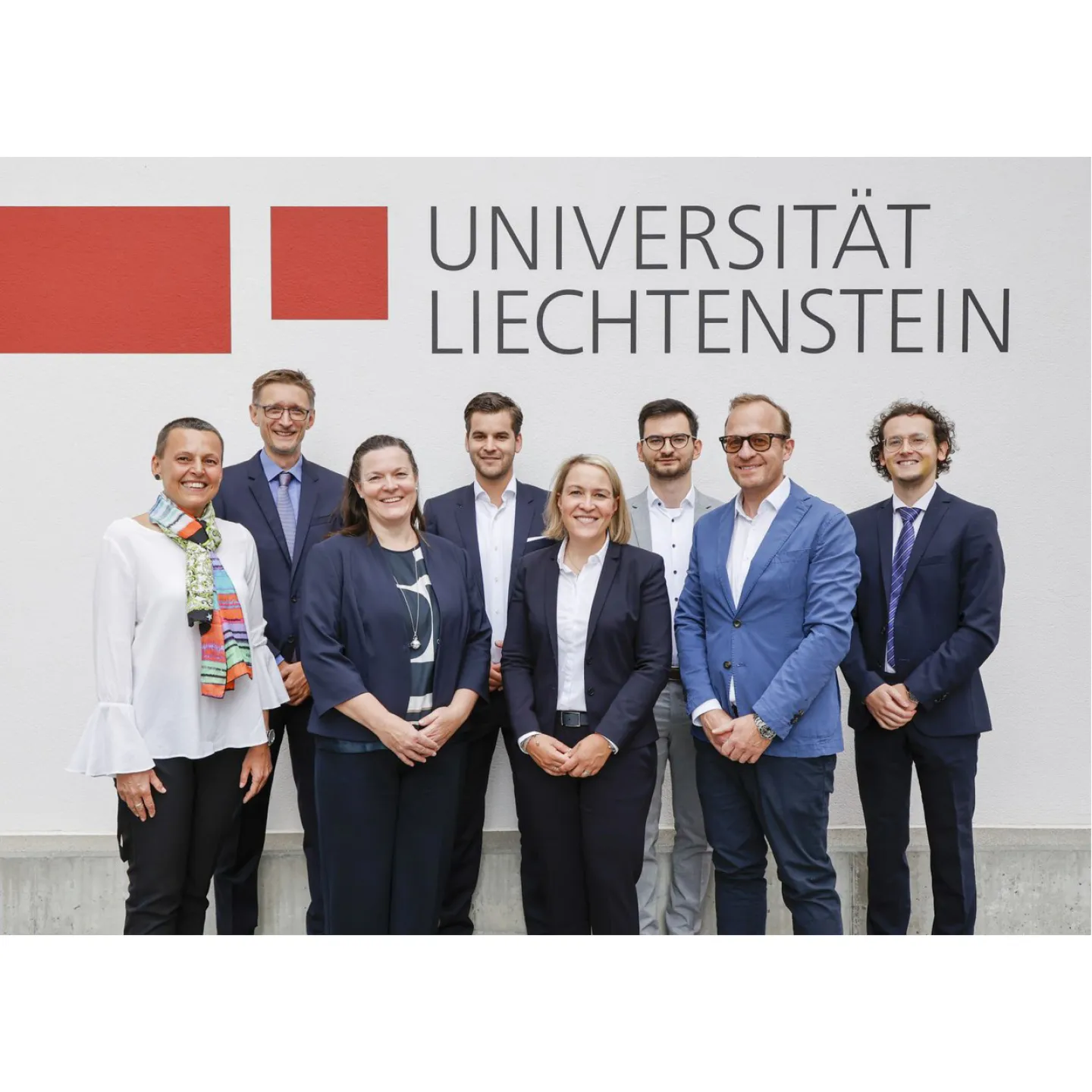
Team der Professur Gesellschafts- Stiftungs- und Trustrecht

The field of activity of the chair held by Prof. Dr. iur. Alexandra Butterstein, LL.M., covers Liechtenstein, European and international company, foundation and trust law. In addition, the research focus of the chair extends to comparative law, private international law and private law cross-cutting areas such as contract or inheritance law, as well as issues in the context of digitalisation.

Within the framework of a comparative law research approach, innovative solutions from the legal systems of neighbouring states as well as from the Anglo-American legal sphere are scientifically elaborated and placed in a concrete practical context.

Team der Professur Gesellschafts- Stiftungs- und Trustrecht

The chair maintains close exchange with leading universities and distinguished practitioners worldwide and seeks to contribute to preparing the Principality of Liechtenstein in a sustainable way for the challenges of international competition among legal systems.

Research Focus Areas

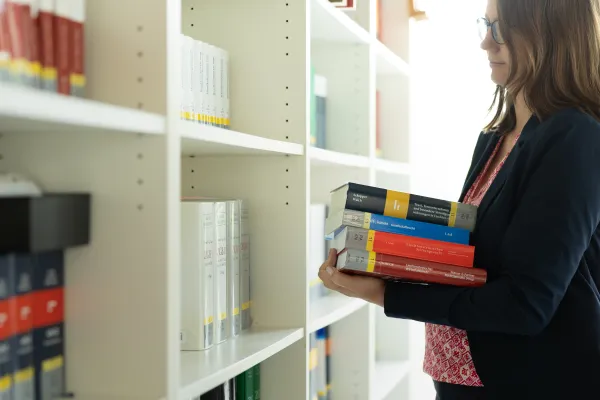
Frau stellt juristische Fachbücher ins Regal der Bibliothek der Universität Liechtenstein.
  • Current legal issues in Liechtenstein, European and international company, foundation and trust law
  • Private law cross-cutting areas, e.g. business law, intellectual property law or international company law
  • Comparative law and private international law
  • Legal issues of digitalisation and new technologies
Insights into Research on Business Law
Frau stellt juristische Fachbücher ins Regal der Bibliothek der Universität Liechtenstein.

Research Projects

Zu diesem Thema gibt es keine Projekte.

Publications

Search and Access

Our Offerings and Services

Search and Access

  • We keep our collection of print and electronic media up to date.
  • We ensure that our media can be easily found.
  • What we do not have in our collection, we obtain from other libraries.
  • If you are unsure how to proceed, we are happy to assist you with advice and support so that you can reach your goal quickly.
Bibliothek Zitat Tanja Kirn
As an assistant professor, I see it as a place of inspiration and knowledge. Here, students find not only books, but also a quiet environment for studying and research. I always enjoyed learning in the library during my own studies, because I valued the exchange with fellow students – and, of course, the food in the cafeteria!"
Dr. Tanja Kirn, Assistant Professor, Liechtenstein Business School
Subscribe to