Skip to Main Content

A Cool School: The Bahuarwa Primary School

A Cool School: The Bahuarwa Primary School
Shortly after completing their architecture degrees, Isha and Daniel Haselsberger founded the non-profit organisation Arch Aid to bridge their cultural backgrounds – Switzerland and India – and apply their knowledge to the creation of sustainable buildings for disadvantaged communities in India.


The Bahuarwa Primary School is located in the village of the same name in the Indian state of Bihar. In India’s poorest state, many children lack access to a functioning school system, as public schools are often non-operational. Private schools, on the other hand, remain unaffordable for underprivileged families. In collaboration with the local NGO Bahuarwa Foundation, the two architects initiated and oversaw the construction of a school for disadvantaged children and young people in the area. The school is now operated by the Bahuarwa Foundation, based in the village.
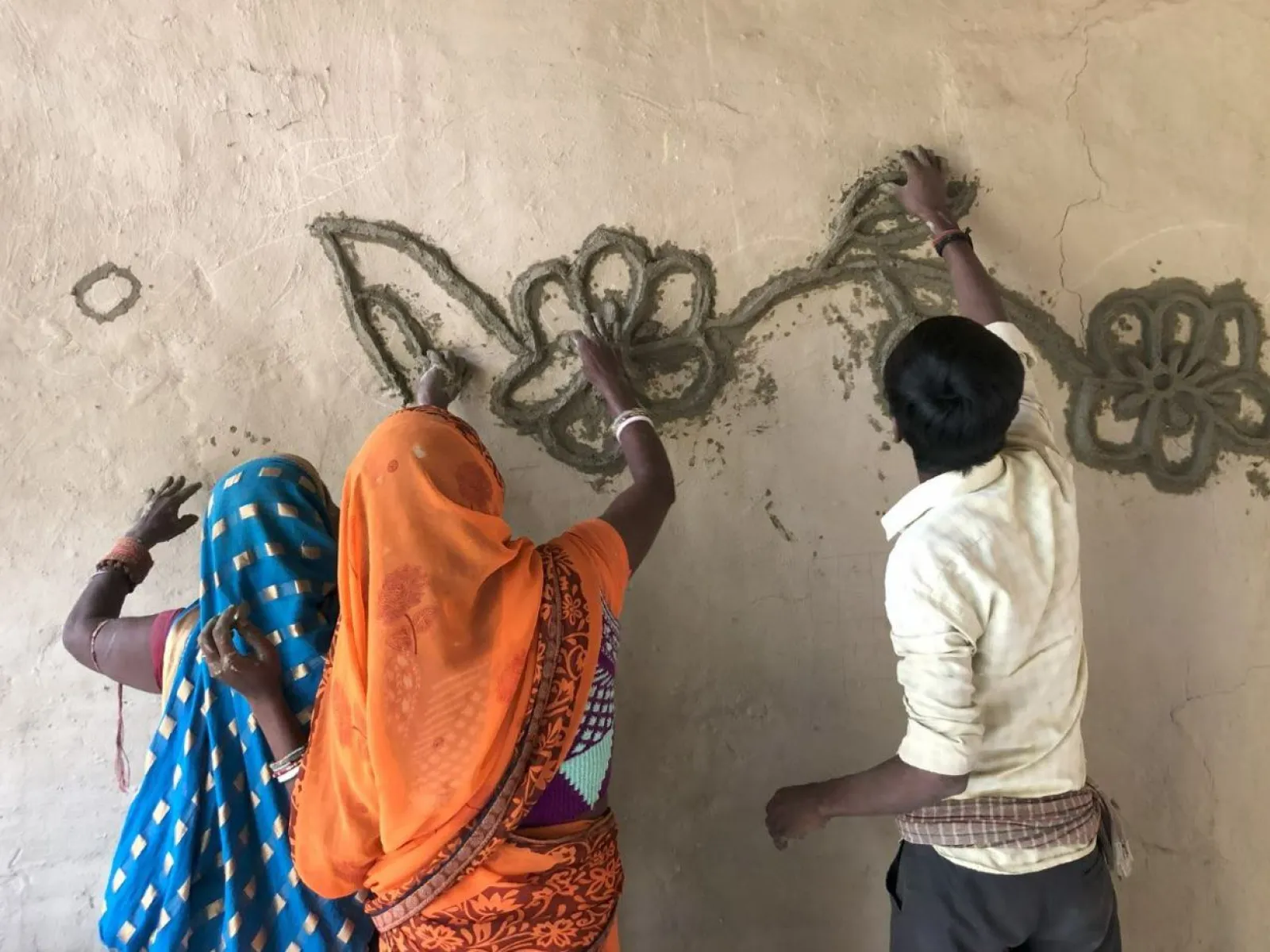
 

Building through Dialogue


Following the project’s launch in spring 2022, Isha and Daniel Haselsberger studied the local building culture, visited numerous households, conducted interviews and examined local workshops to better understand the factors influencing changing construction practices. Whereas traditional methods in Bahuarwa still made occasional use of regenerative materials, they are increasingly being replaced by cement, steel and fired bricks. Early on, the architects and the NGO agreed that the school’s development should not be about choosing between extremes, but about finding a meaningful combination of regenerative and more emission-intensive materials, as well as traditional and modern techniques. Their goal was to use natural materials in a way that would be accepted by the local community.


This required a building that is durable, low-maintenance, thermally comfortable and affordable, while also aligning with local ideas of contemporary architectural expression.


In contrast to conventional practice, the architects did not design every detail before construction began. Only the foundations, the supporting structure, the roof, and a rough layout of openings were pre-defined. This flexible approach allowed them to develop construction details and material choices directly on site and in collaboration with the target groups, rather than relying on abstract plans alone. The building process thus became a key tool for communication and mutual learning.


Material selection with added value


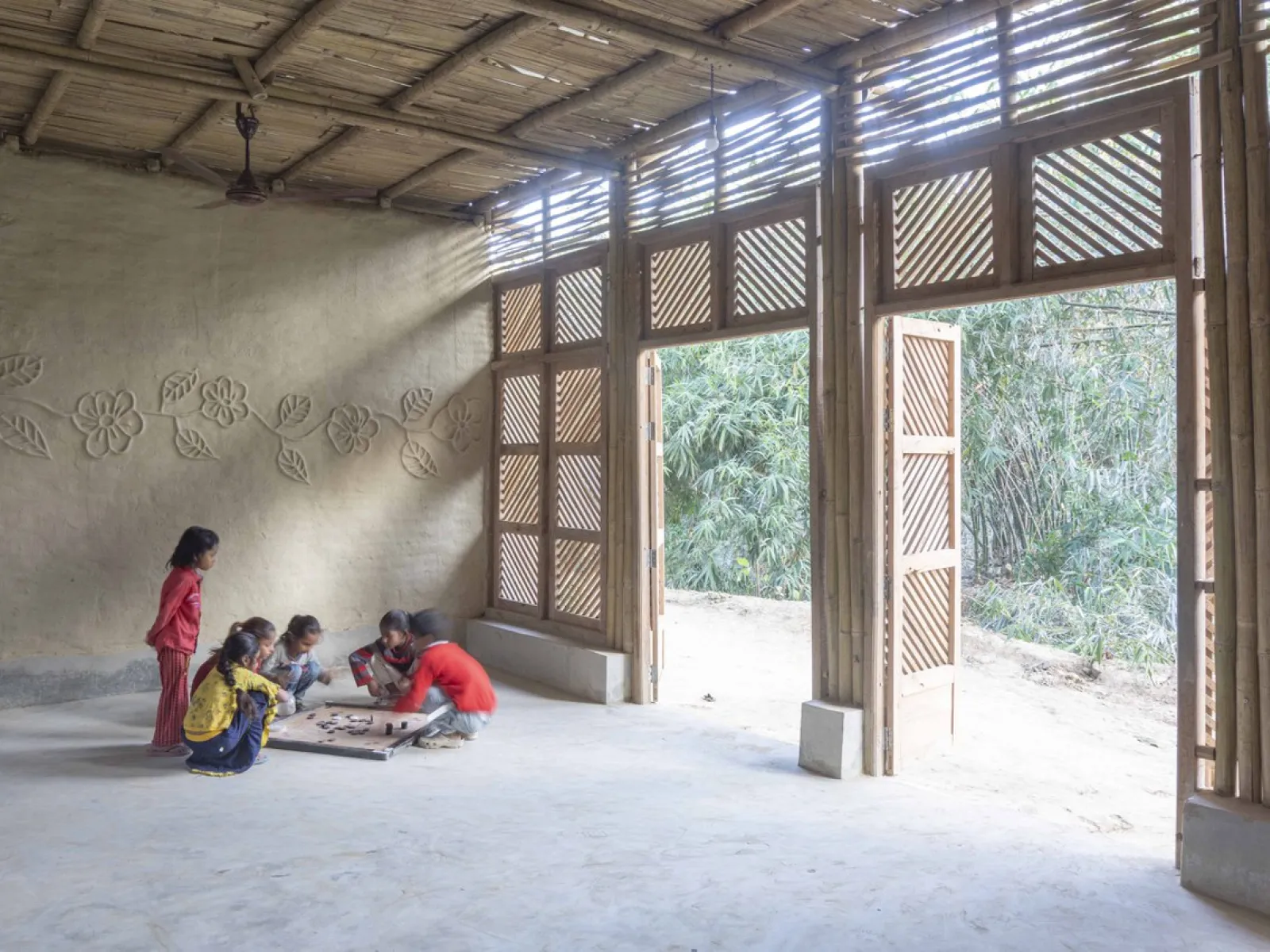
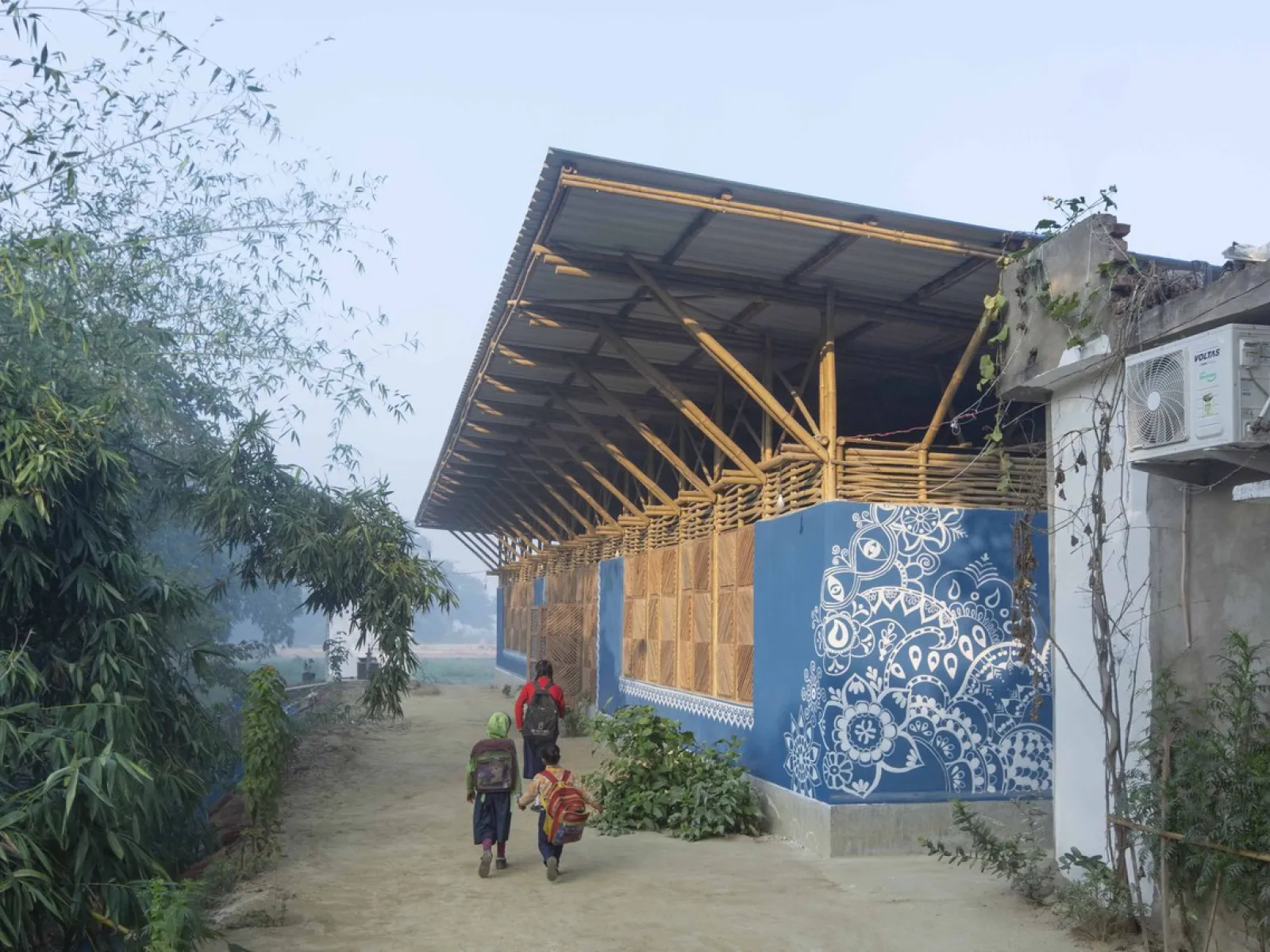
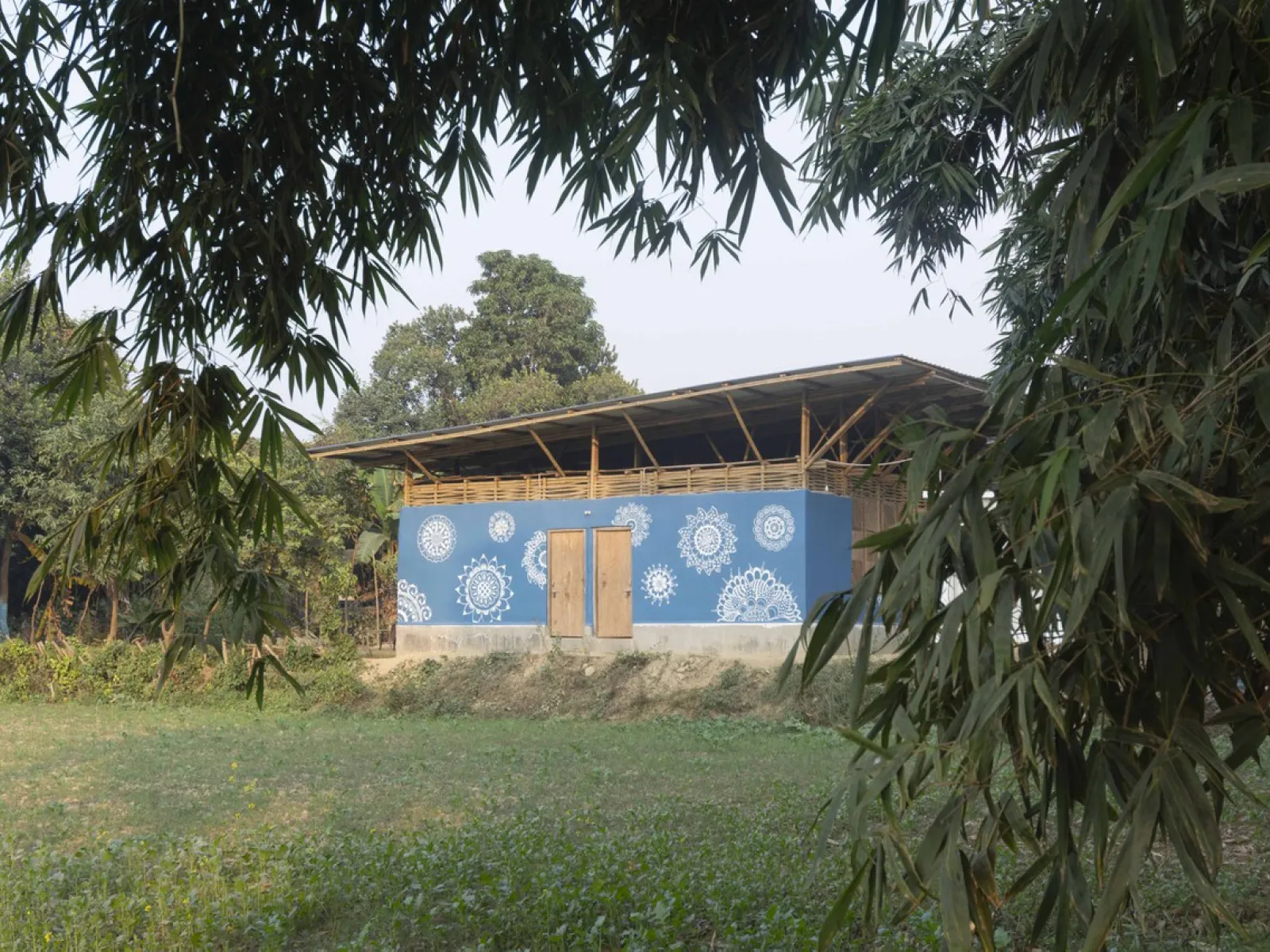
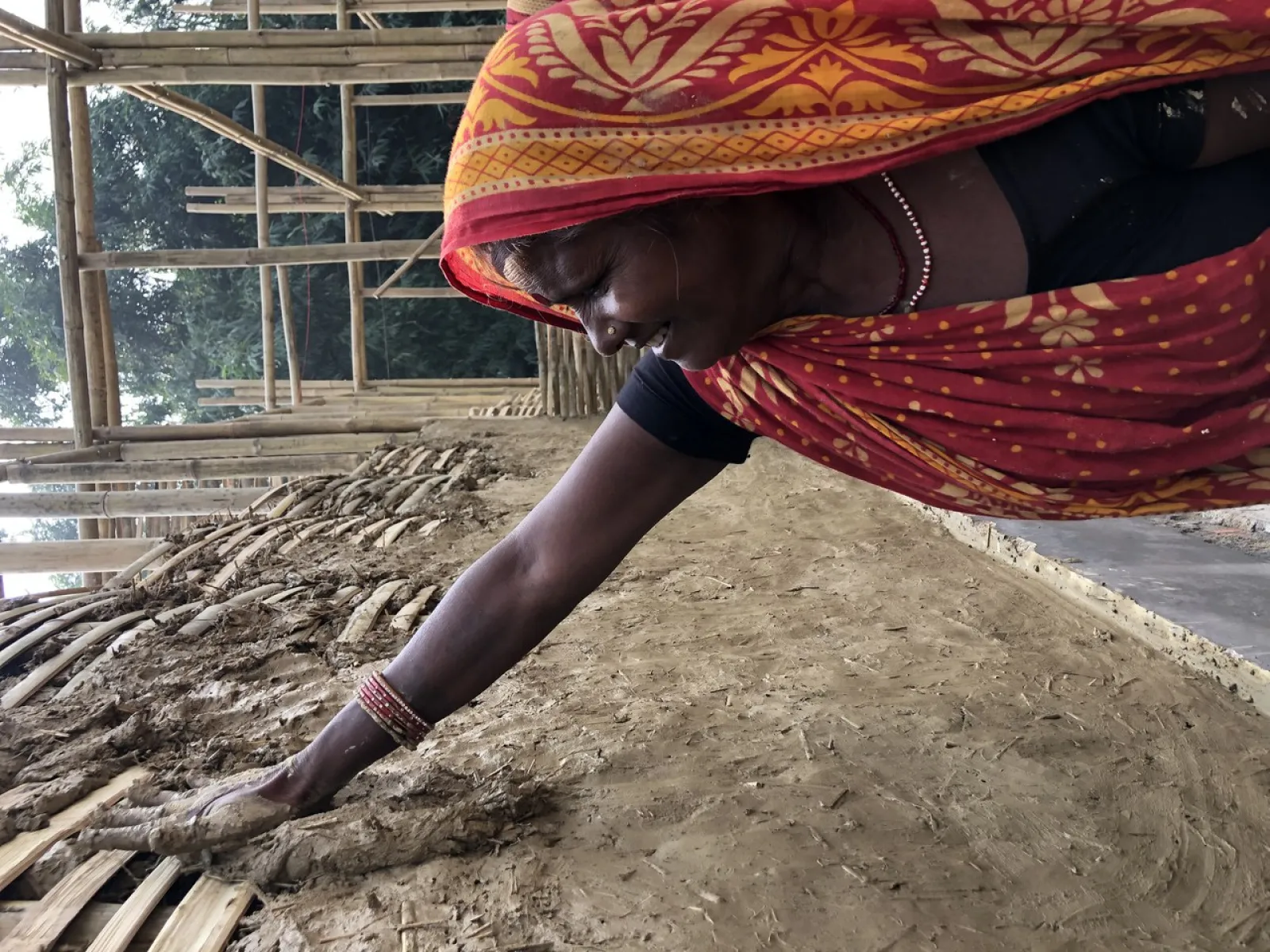
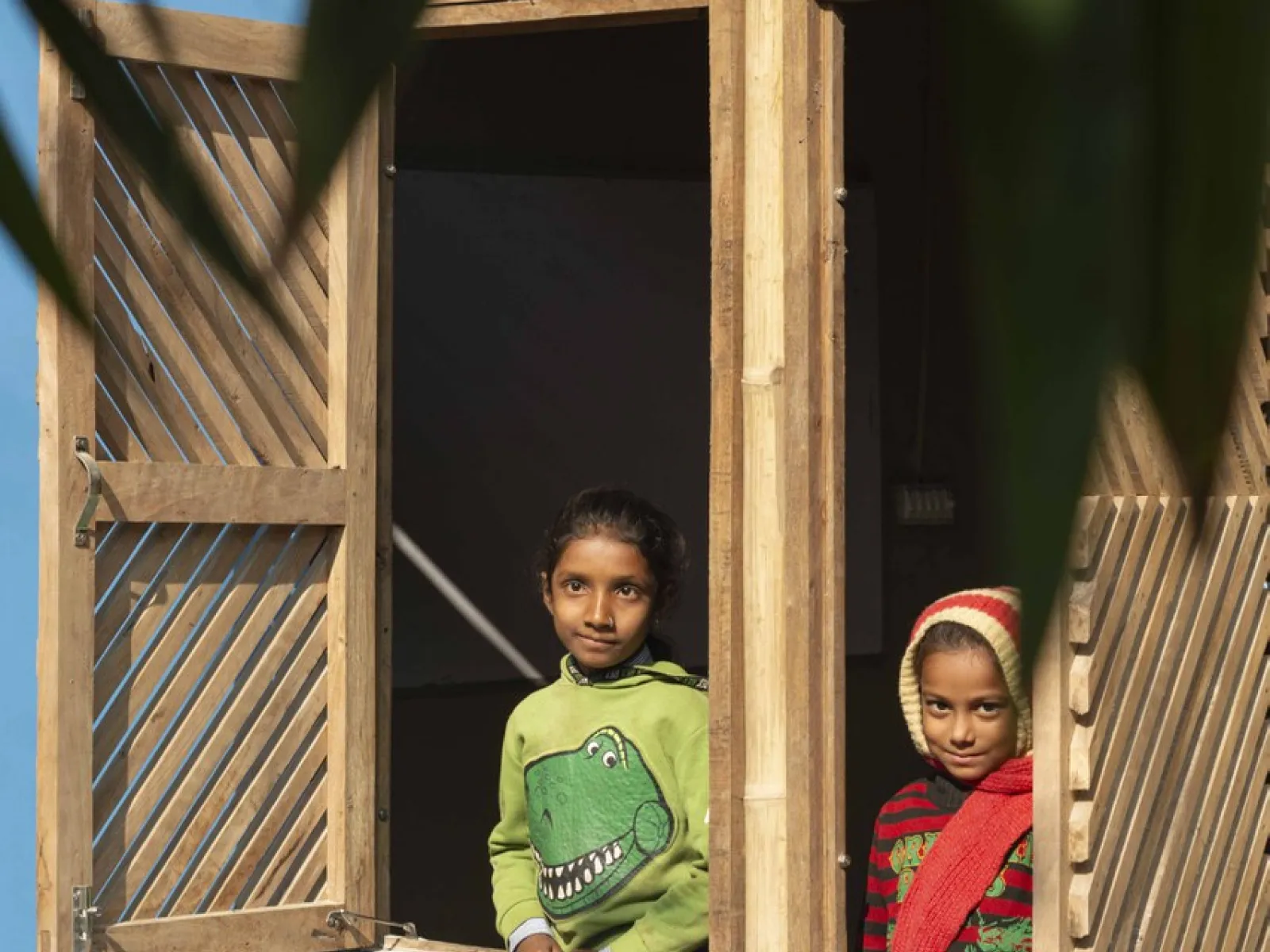
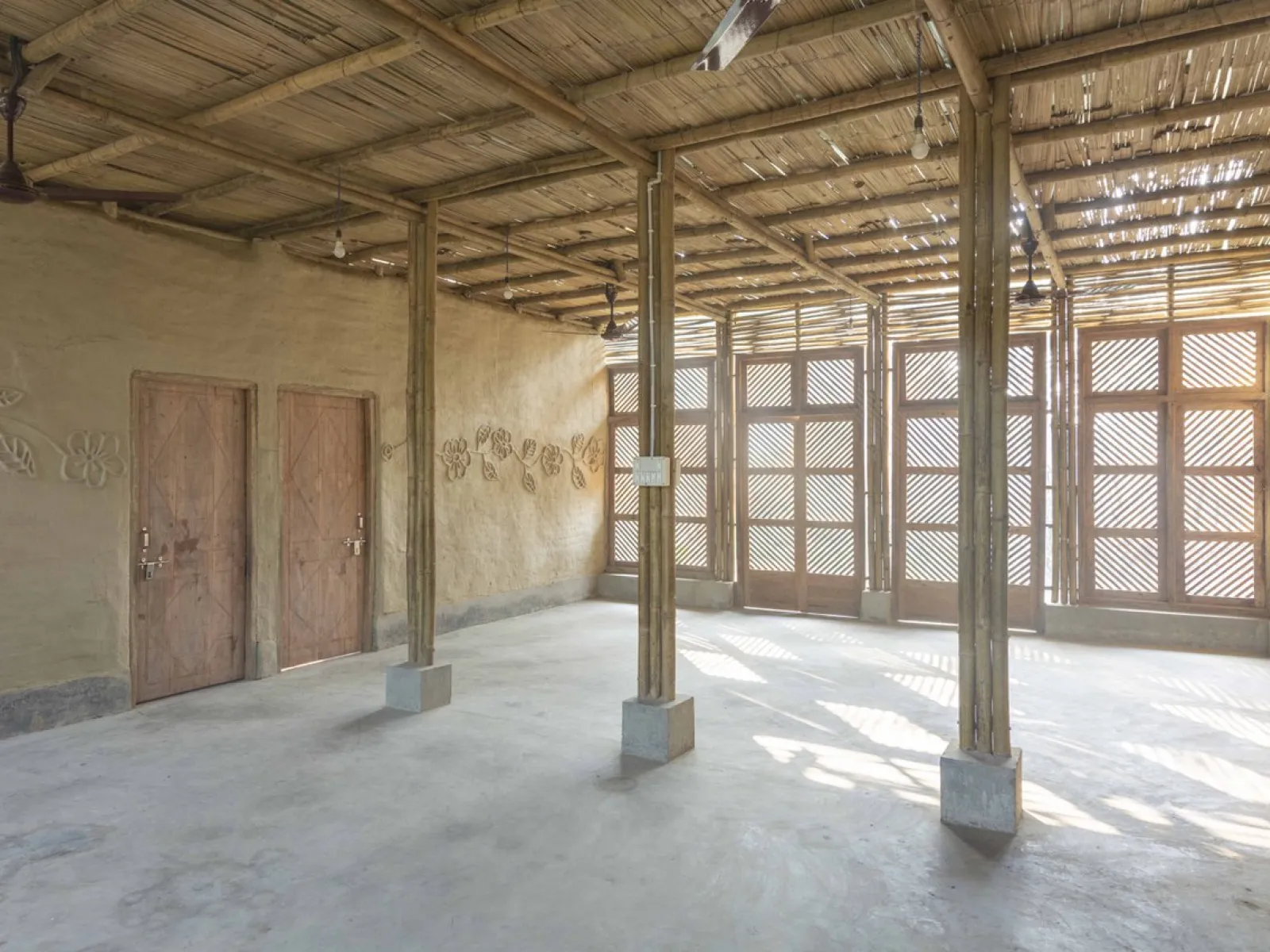
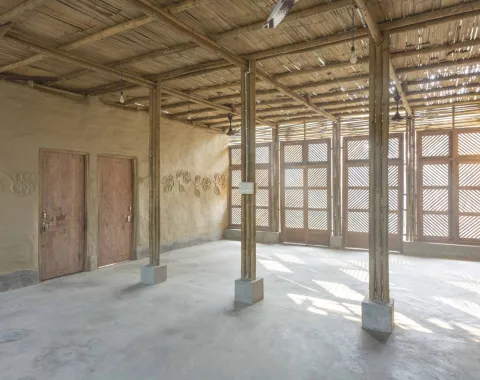
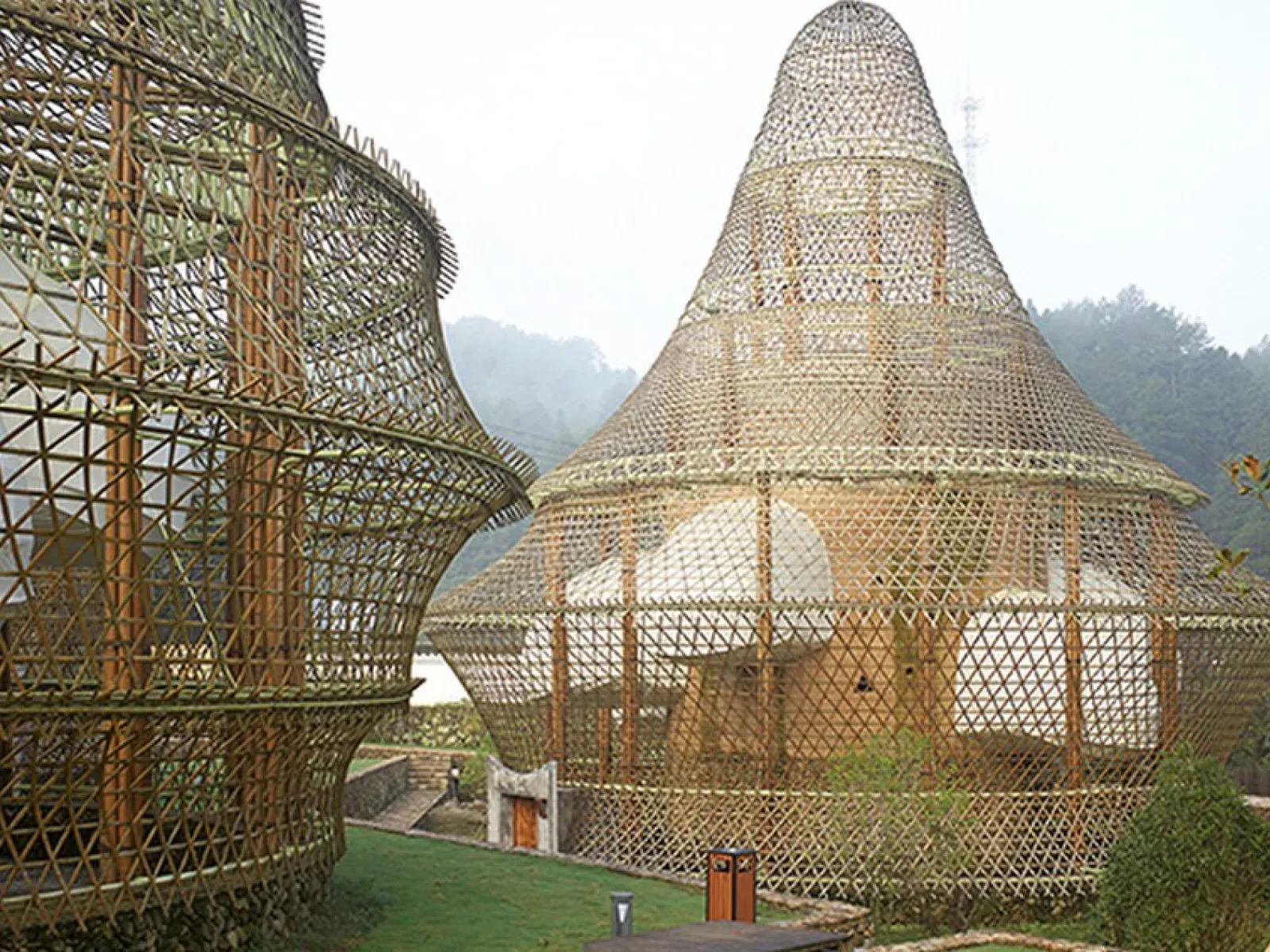
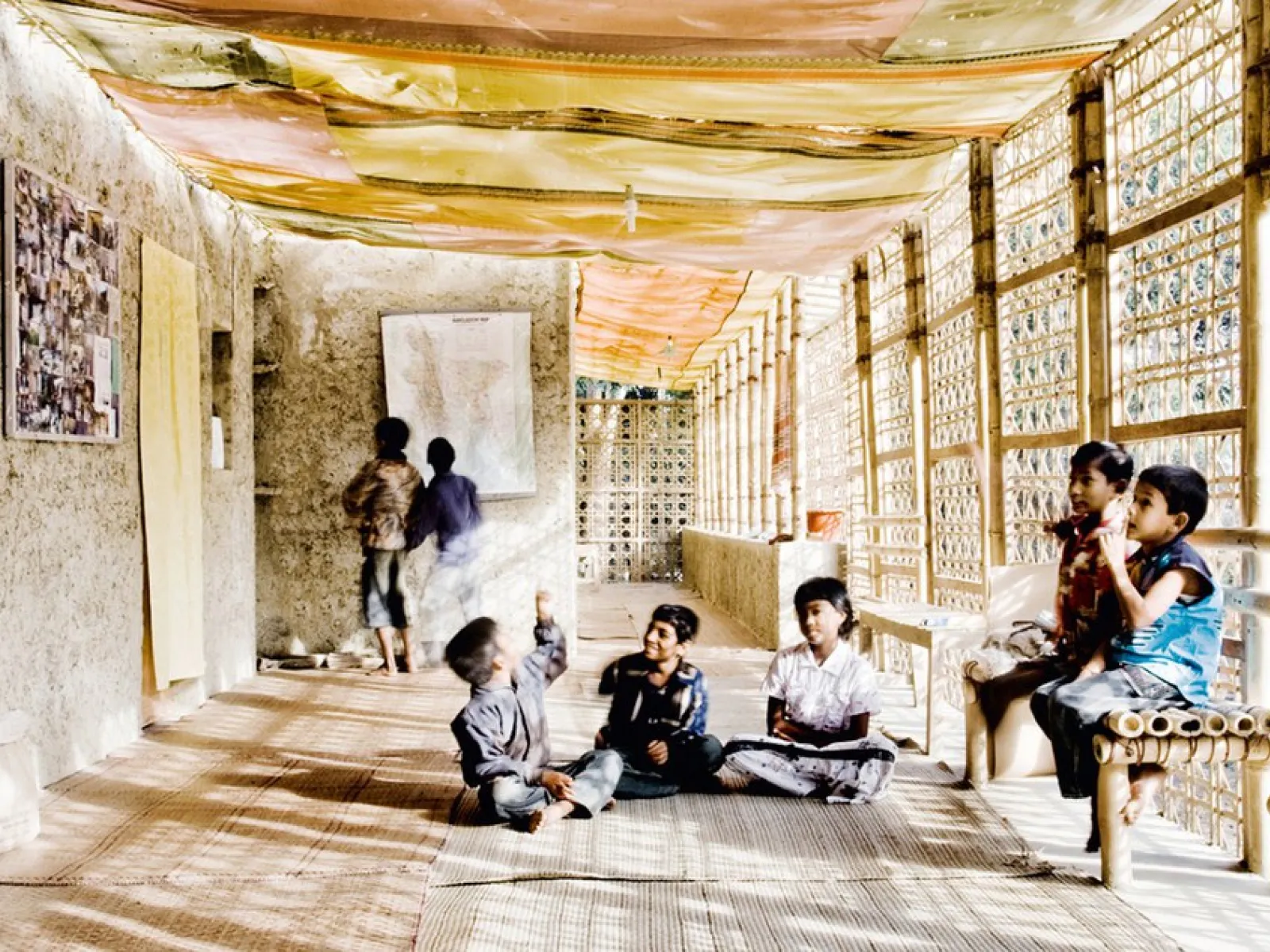
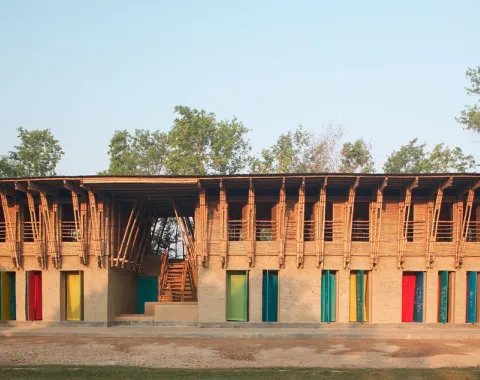
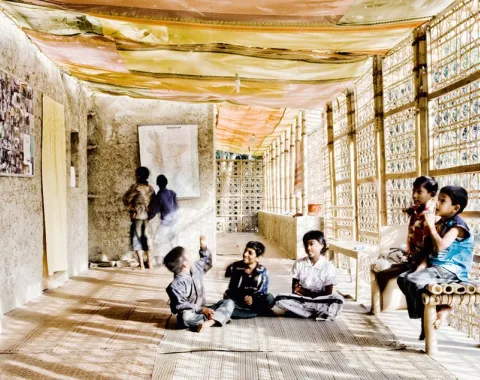
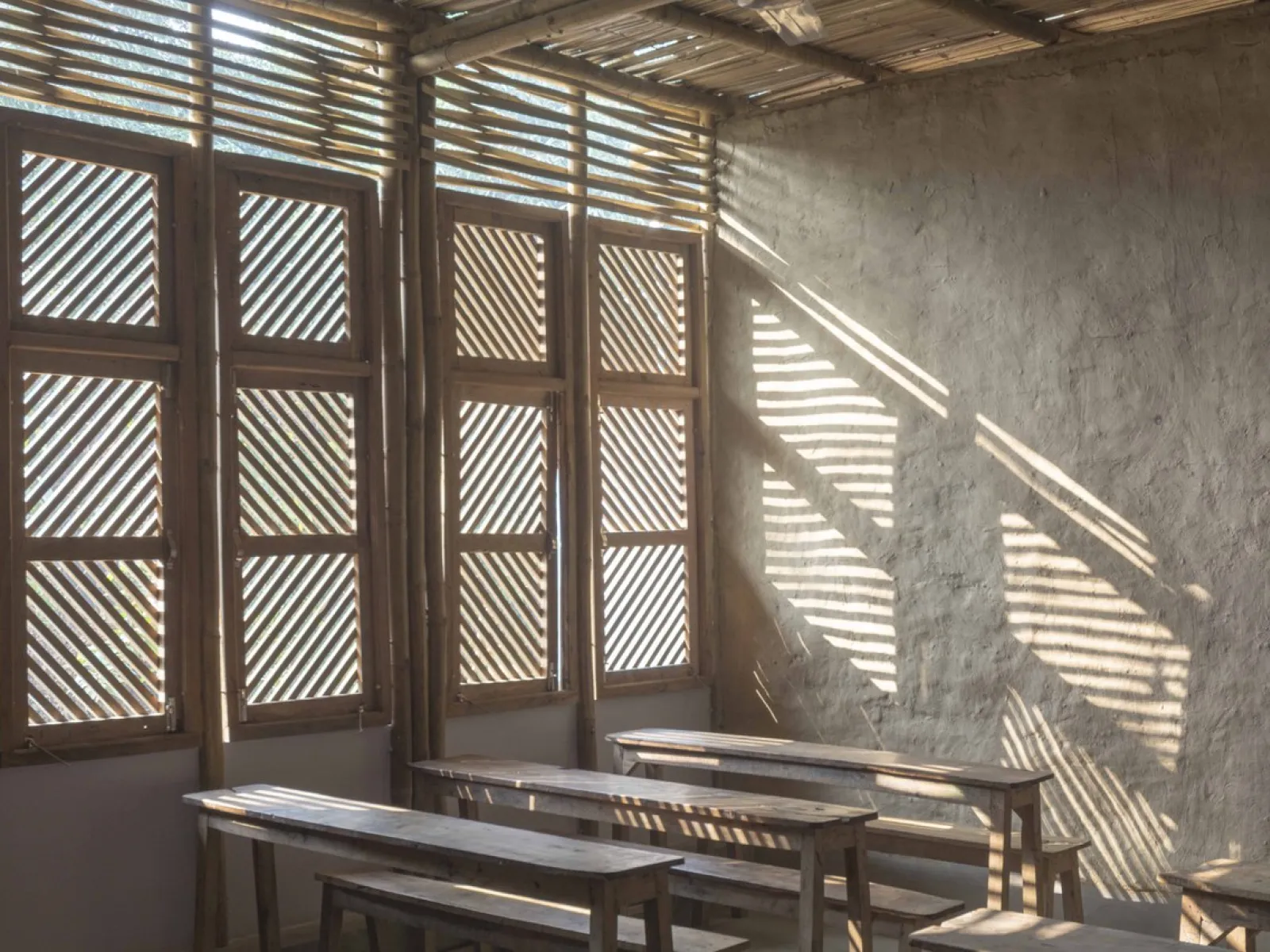
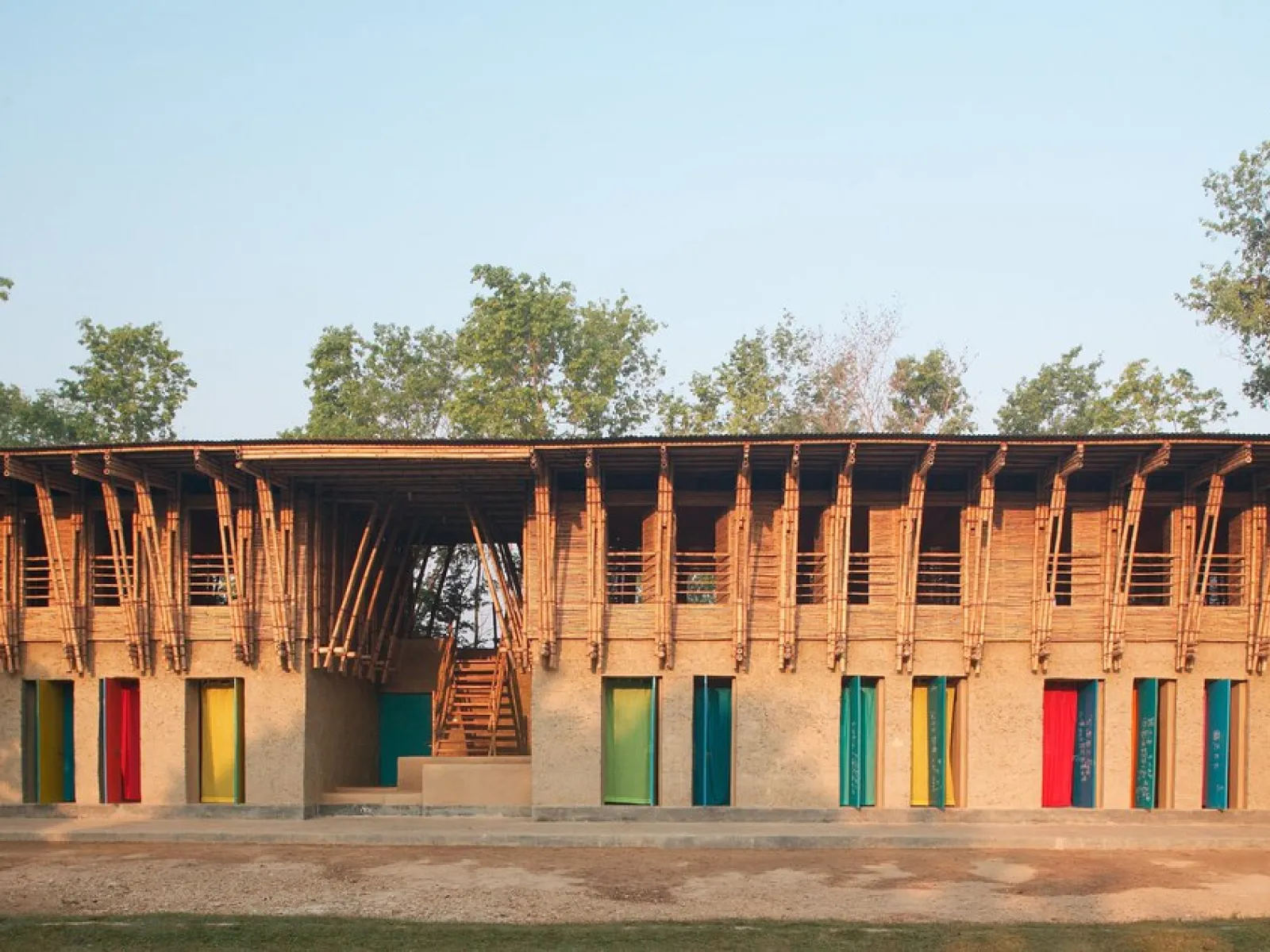
The building rests on an elevated base made from locally produced bricks and reinforced concrete to protect the interiors from regular flooding. The structural elements of walls, ceiling and roof are built from bamboo, and both ceilings and wall panels are crafted from bamboo strips. The sheltered interior walls are filled with a clay and straw mixture, while the exterior walls are rendered with cement and painted. This creates cool interior surfaces, and durable, visually contemporary exterior walls.


A large overhanging corrugated metal roof protects the walls from the intense monsoon rains. A ventilated cavity between the bamboo ceiling and the metal roof reduces heat radiation and, in combination with the clay walls, ensures a naturally pleasant indoor climate. As a result, the building requires no air conditioning, and ceiling fans are only needed on particularly hot days.


“We have a cool school!” the children proudly exclaim as they pass overheated peers returning from expensive private schools built of concrete and brick.


The lightweight roof and bamboo structure also provide earthquake safety – a critical factor in this high-risk seismic zone.


Designing together


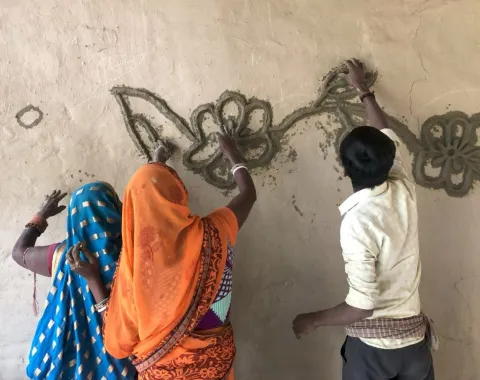
Using bamboo and clay not only reduced costs and environmental impact, but also enhanced regional value creation and enabled an inclusive construction process involving women and men, young and old. Except for three bamboo experts, all workers came from Bahuarwa and surrounding villages – many of them parents or grandparents of the pupils now attending the school.


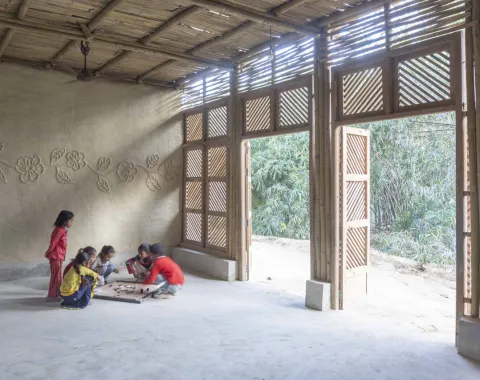
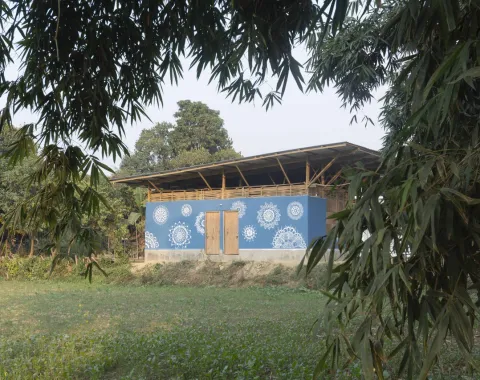
Children and young people also contributed to the design by creating ornamentation for the façades and classrooms. In the case of the classrooms, these were later translated into reliefs by local clay experts; for the façades, the designs were painted in white on bright blue walls. The colour scheme also reflects the wishes of the future users: while the unplastered clay walls help keep the school cool inside, the blue-painted exterior ensures it looks “cool” on the outside too.


Photo Credits: Daniel Haselsberger, Isha Haselsberger
Focus on the Future of Media: Campus Radio at the University of Liechtenstein Embraces Dialogue

Focus on the Future of Media: Campus Radio at the University of Liechtenstein Embraces Dialogue

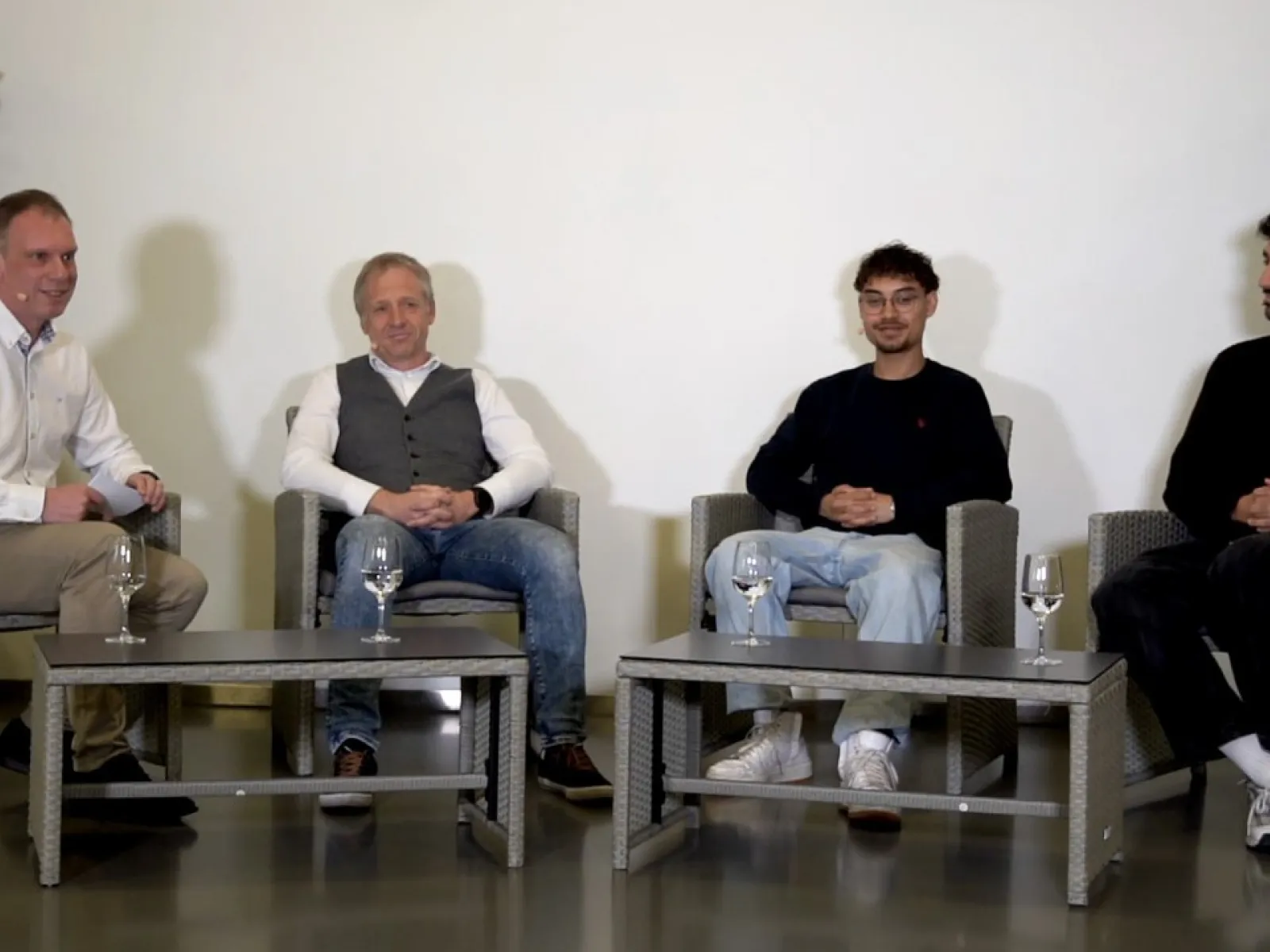
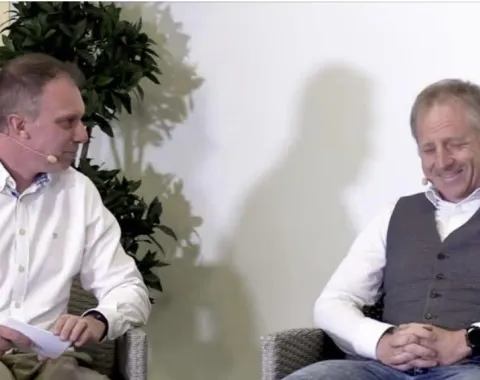
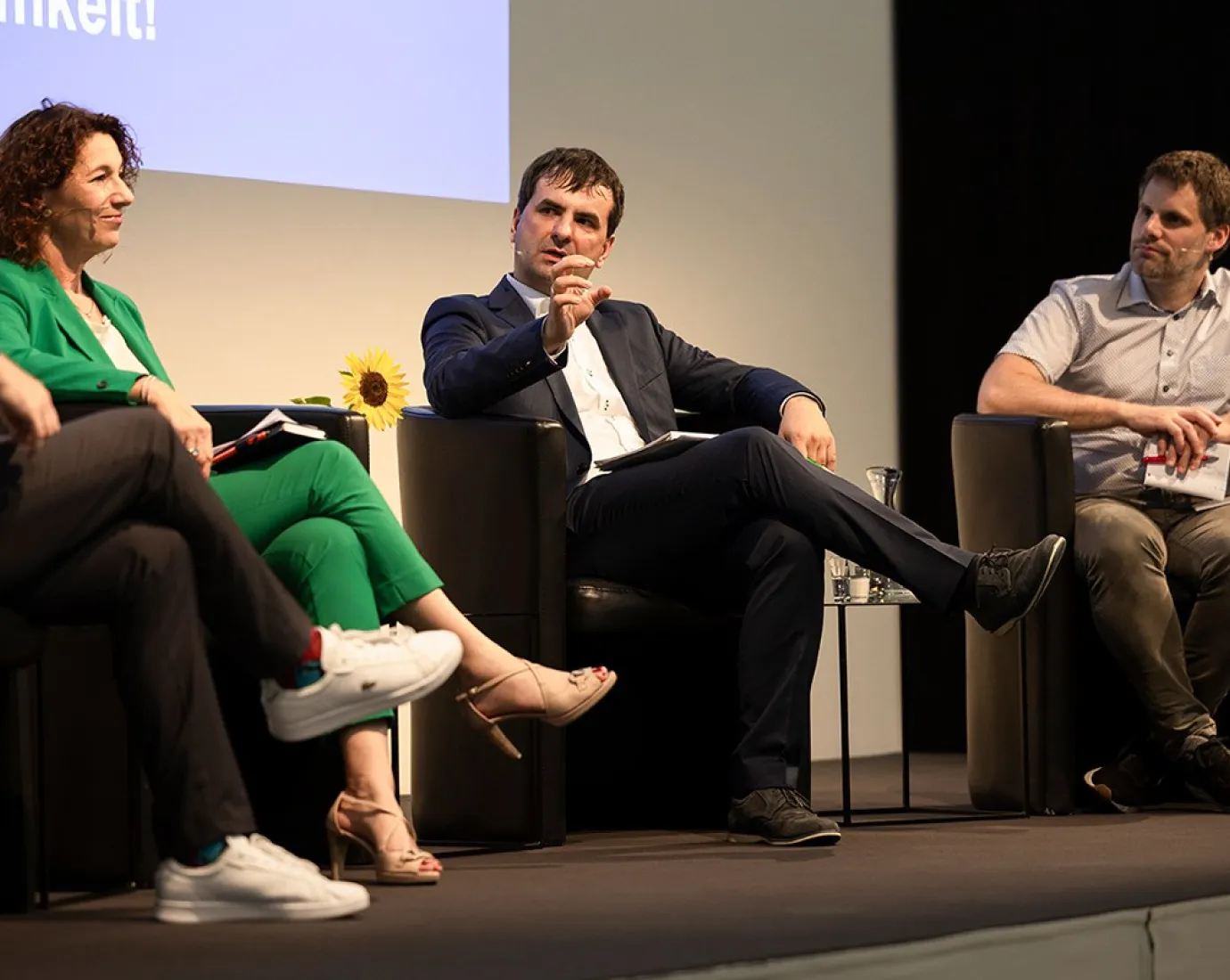
Podiumsdiskussion an der Universität Liechtenstein: Fünf Personen sitzen in einem Studio mit gelbem Vorhang und Pflanzen im Hintergrund. Sie diskutieren über Medienvielfalt und künstliche Intelligenz.

In a new episode of its video podcast on the future of media, Campus Radio at the University of Liechtenstein engages in dialogue with leading experts to discuss the current challenges facing the media landscape. Key topics include media diversity, the use of artificial intelligence, and the role of journalism in an increasingly digital society.


Jnes Rampone-Wanger, President of the Liechtenstein Media Commission, highlighted the importance of regional reporting: “There are many stories in this country that can only be told here. Local journalism strengthens a sense of identity and fosters mutual understanding within the population.”

Christian Frommelt, Rector of the University of Liechtenstein, pointed to the specific dynamics of small states: “Political communication works differently here. Visibility can have great impact with relatively few resources—but it requires precise timing and compelling personalities.”

Carmen Dahl, President of the International Liechtenstein Press Club, expressed concern over the growing use of AI-generated voices in everyday media: “Technology cannot replace the human element. Especially in journalism, the interpersonal dimension must not be underestimated—it’s about trust and presence.”


“At a time when media diversity is under pressure in our country, this open exchange was particularly important. I thank all participants for their constructive and honest contributions—as well as the University of Liechtenstein for its ongoing support. This episode also serves as thematic preparation for the International Radio Days in St. Pölten,” said Andreas Krättli.
 

The production was created in collaboration between AK Digital Media and Campus Radio at the University of Liechtenstein. The episode is available on campusradio.li, podcasthus.li, SoundCloud, and via live stream at campusradioli.airtime.pro.

Podiumsdiskussion an der Universität Liechtenstein: Fünf Personen sitzen in einem Studio mit gelbem Vorhang und Pflanzen im Hintergrund. Sie diskutieren über Medienvielfalt und künstliche Intelligenz.

Intensive Course “The Development of Money Laundering in the 20th and 21st Century”

Intensive Course “The Development of Money Laundering in the 20th and 21st Century”

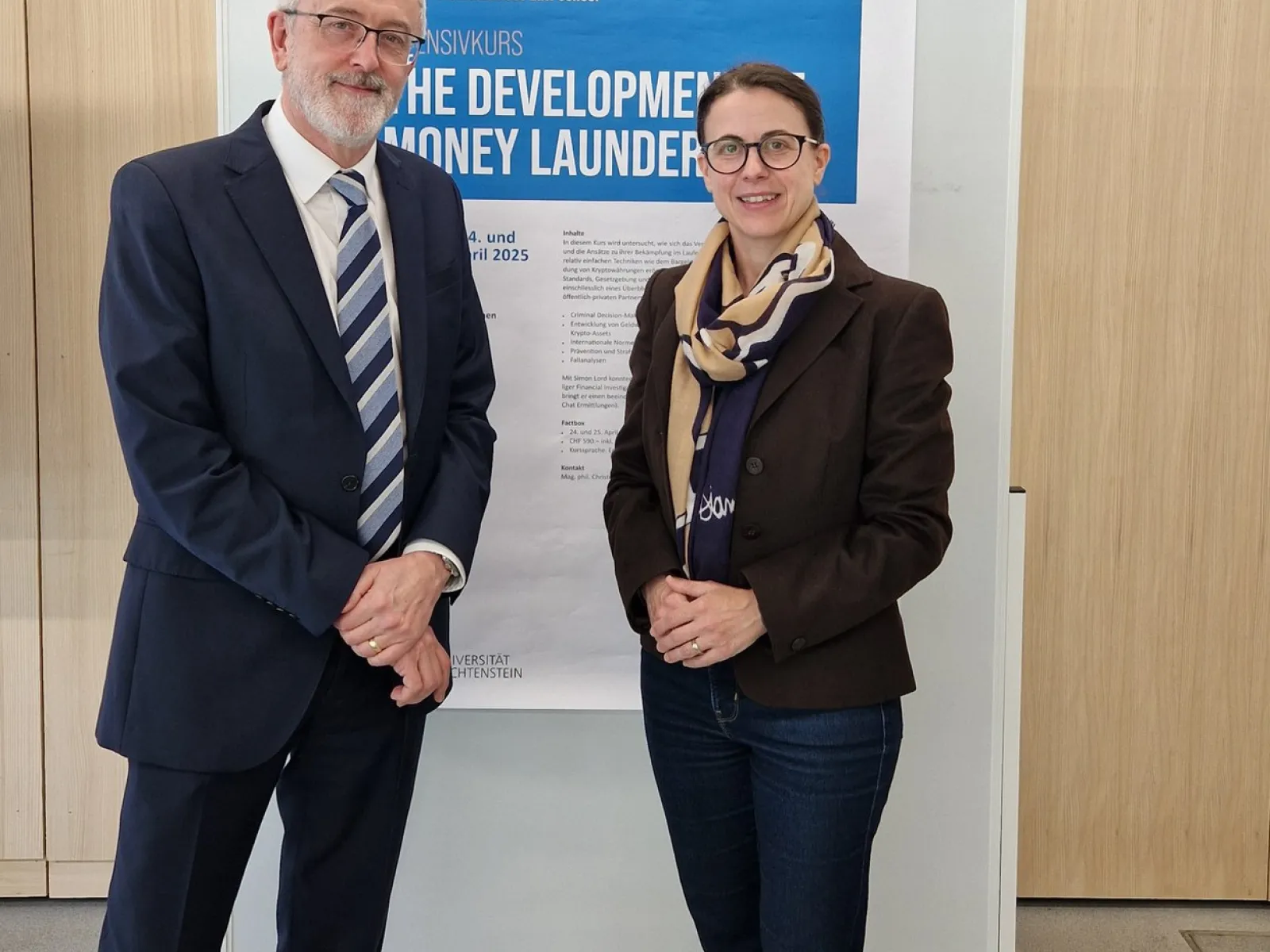
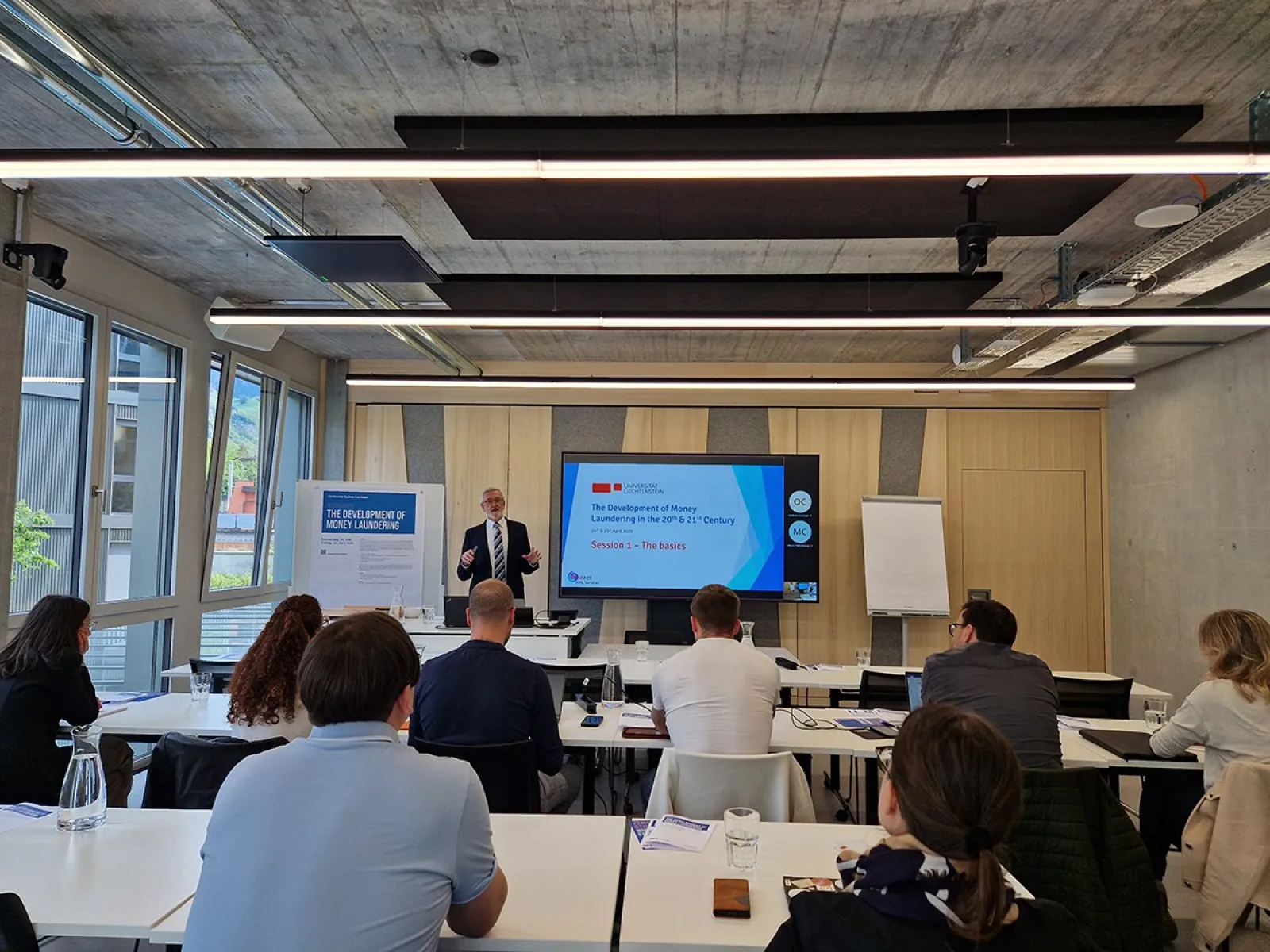
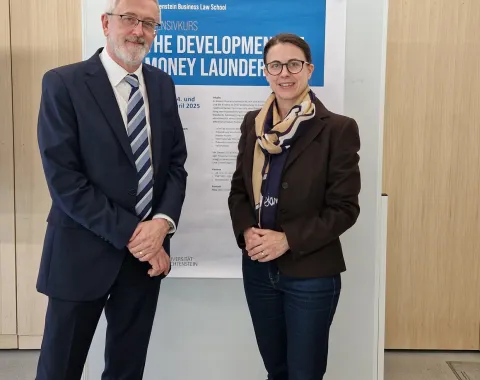
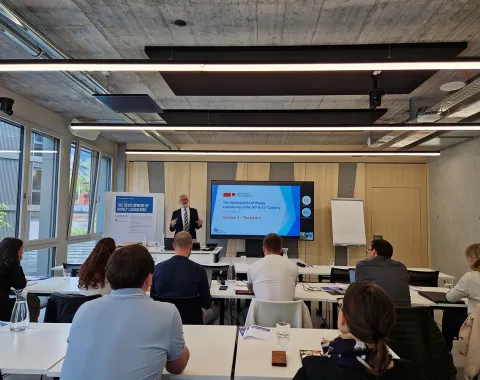
On 24 and 25 April 2025, the Professorship for Economic Criminal Law, Compliance and Digitalisation held the intensive course “The Development of Money Laundering in the 20th and 21st Century.”


The course featured a distinguished expert from the United Kingdom: Simon Lord, founder and director of protect AML Services (UK) and Senior Advisor at Financial Transparency Advisors in Vienna. He served for many years as a Financial Investigator and Strategic Intelligence Analyst with the UK’s National Crime Agency (NCA), gaining extensive experience in financial investigations.


In this intensive course, Simon Lord explained how the understanding of money laundering and the strategies to combat it have evolved over time. He traced the development from relatively simple techniques such as cash smuggling to more sophisticated modern methods involving cryptocurrencies. In particular, he provided detailed insights into techniques and mechanisms used in Informal Value Transfer Services and Trade-Based Money Laundering.


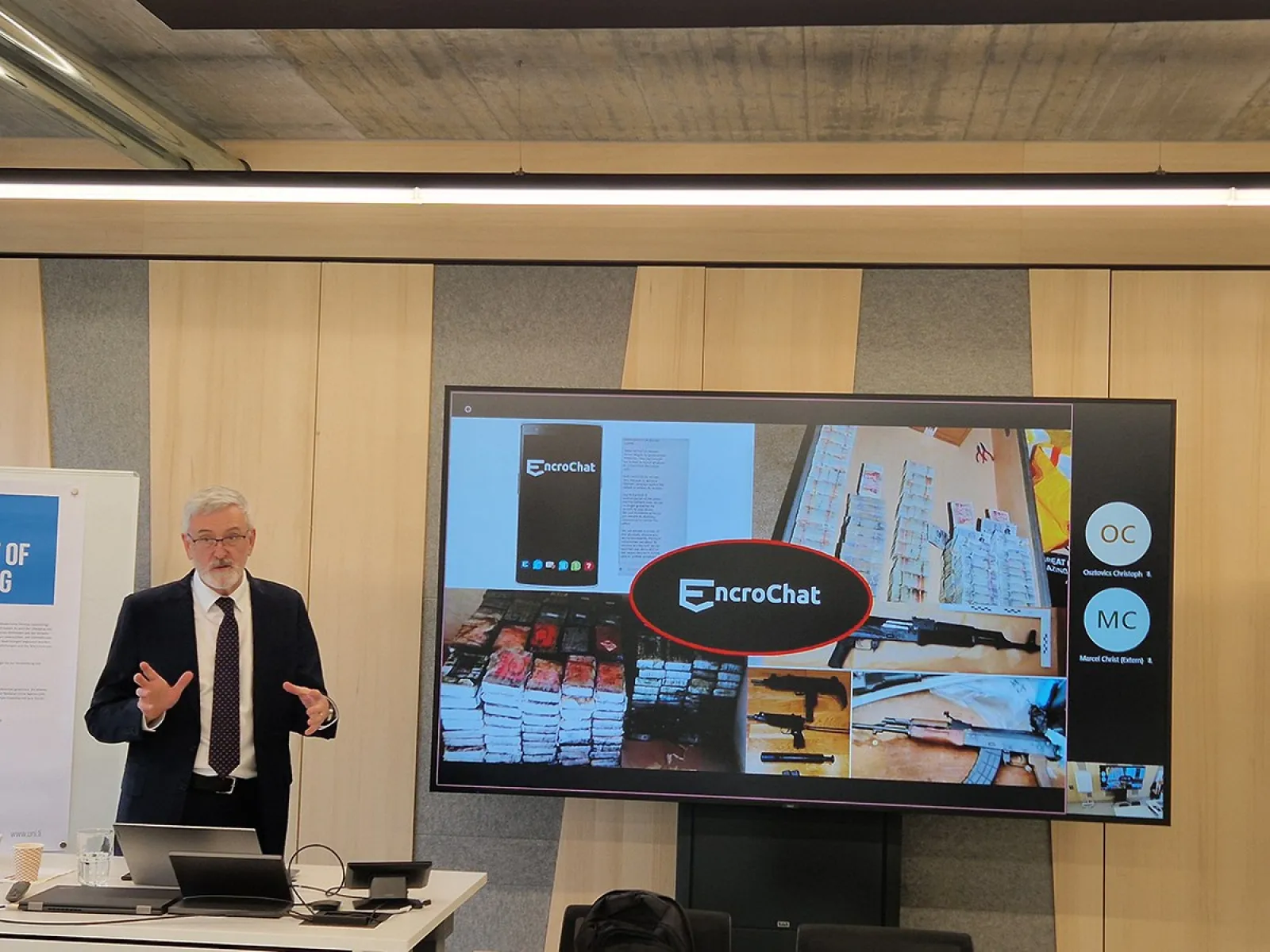
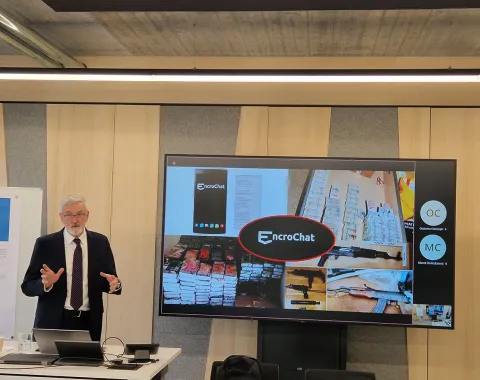
In addition, he outlined how international standards, legislation, and law enforcement practices have adapted to these threats—highlighting key UN conventions, FATF recommendations, and the rise of public-private partnerships. The course concluded with a case study and personal reflections on investigative experience related to EncroChat.


The course was conducted in English.

“Focus on Building” – Triesenberg in the Spotlight of the New Video Podcast

“Focus on Building” – Triesenberg in the Spotlight of the New Video Podcast

With the first episode of the new video podcast “Focus on Building”, Campus Radio at the University of Liechtenstein launches an exciting conversation series about building in alpine regions. The premiere focuses on the municipality of Triesenberg, its current projects, and visions for the future.


Guest speaker Christoph Beck, Mayor of Triesenberg, joined architecture students Thannavat Dill and Ömer Corbaci to discuss the balance between preservation and development. The episode was hosted by lecturer Andreas Krättli.


A special topic of discussion was the historic Madleni Hus, which is to be revitalised in the near future. The vacant mountain inn Sücka also sparked creative ideas—developed by the students as part of their coursework. “I really enjoyed exchanging ideas with the students—and I always love talking about my favourite place, Triesenberg,” said Christoph Beck.


The conversation took a personal turn when discussing the new fire station, photovoltaic systems, and infrastructure projects. Beck highlighted his commitment to sustainability and alpine identity in architecture. “Triesenberg shows how history, sustainability, and innovation can be meaningfully combined,” said Thannavat Dill. “The level of care applied to construction here is truly instructive for us,” added Ömer Corbaci.


The episode “What’s Happening in Triesenberg?” is now available on YouTube, SoundCloud, Spotify, Apple Podcasts, and via web radio at www.campusradio.li.

Earth, Timber, and the Future: The earth HUB at the Forum Bois Construction in Paris

Earth, Timber, and the Future: The earth HUB at the Forum Bois Construction in Paris

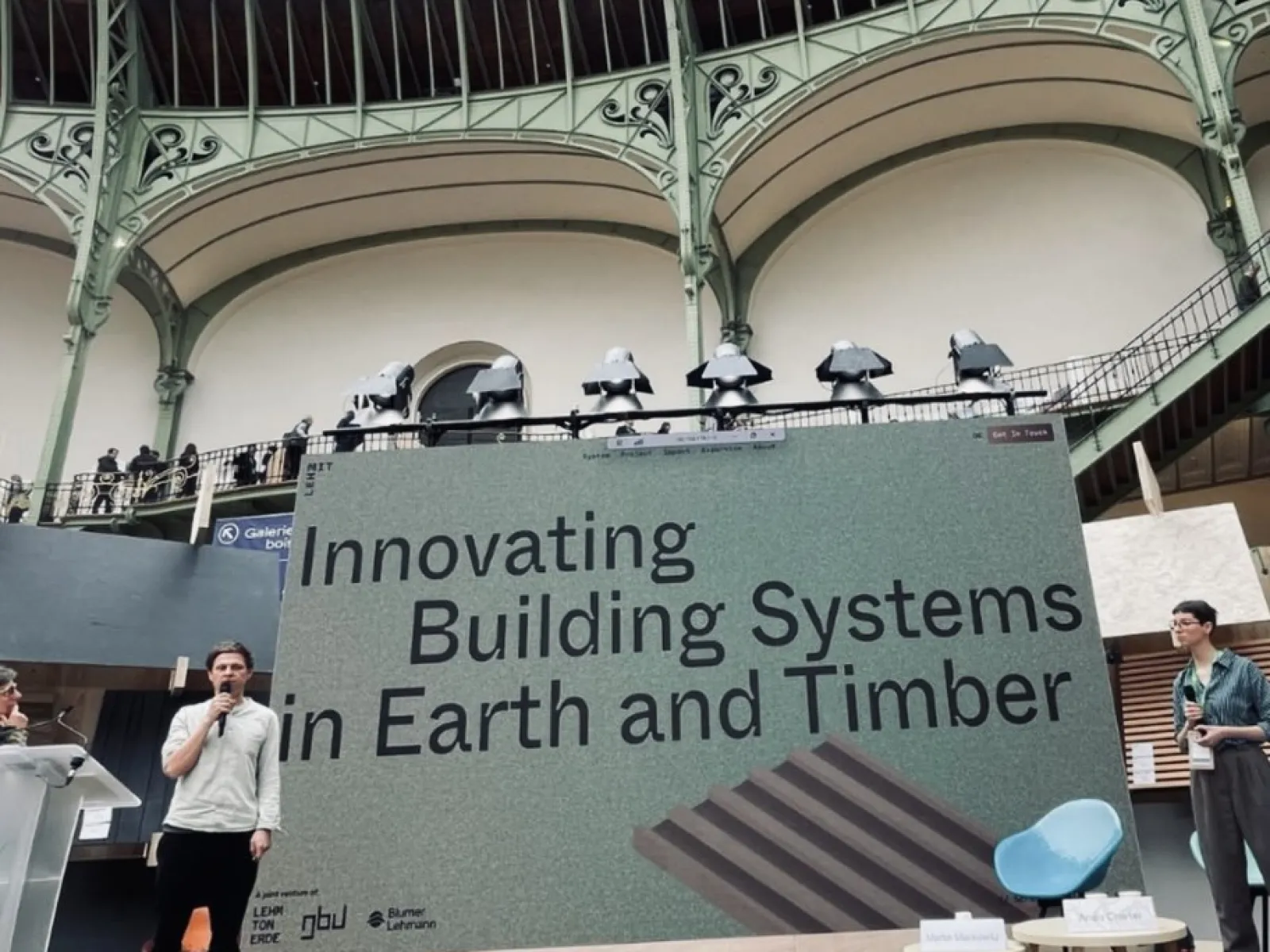
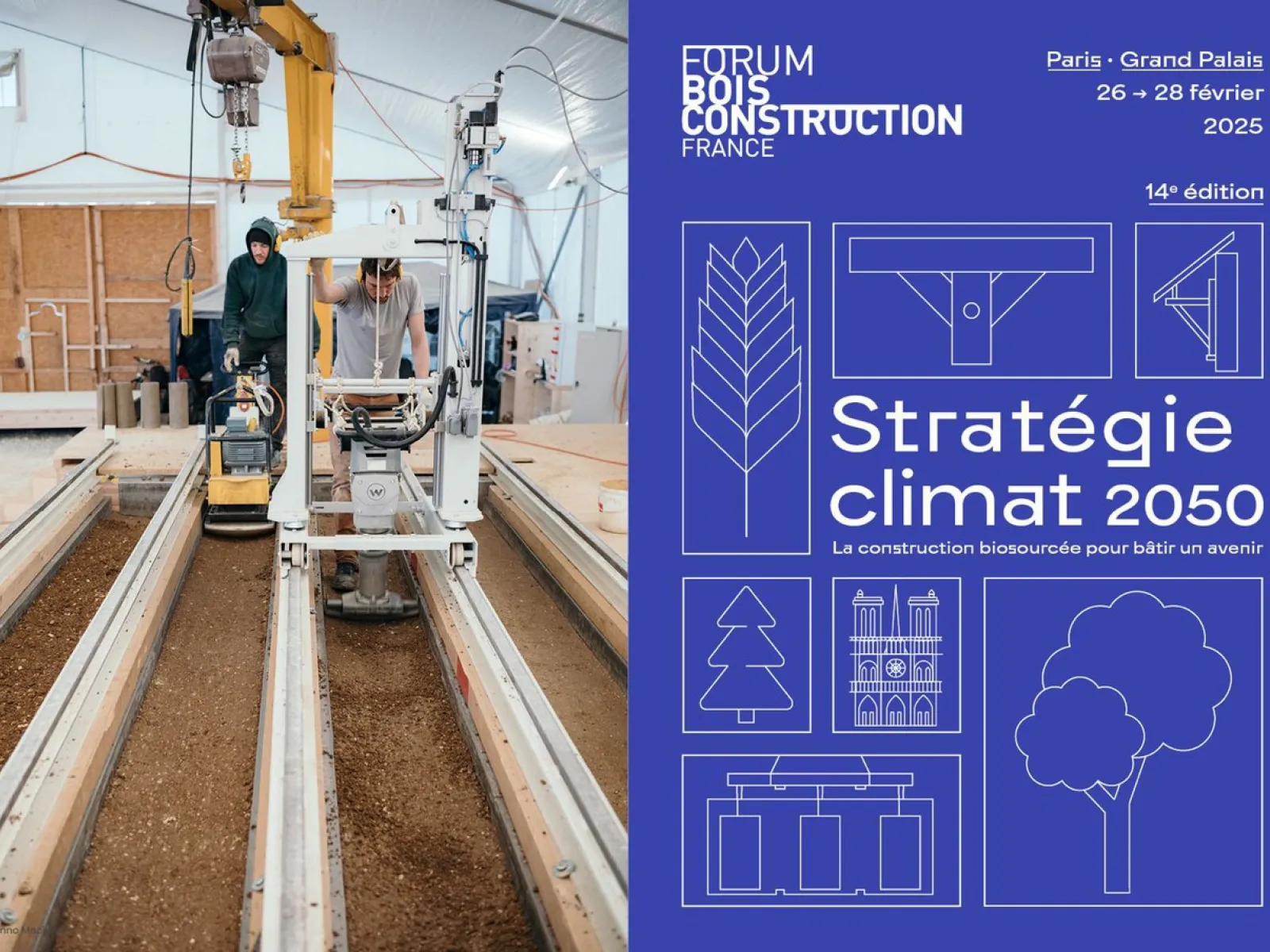
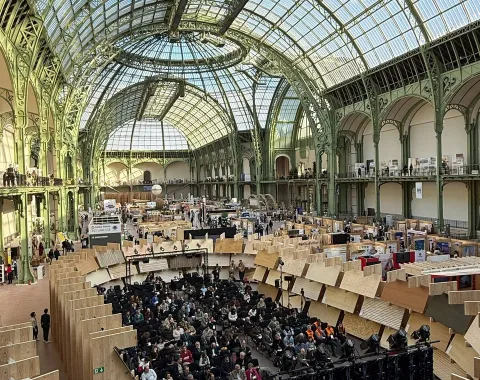
At Europe’s leading timber construction forum, the University of Liechtenstein showcased innovative approaches to climate-conscious building—aligned with the “Stratégie Climat 2050.”


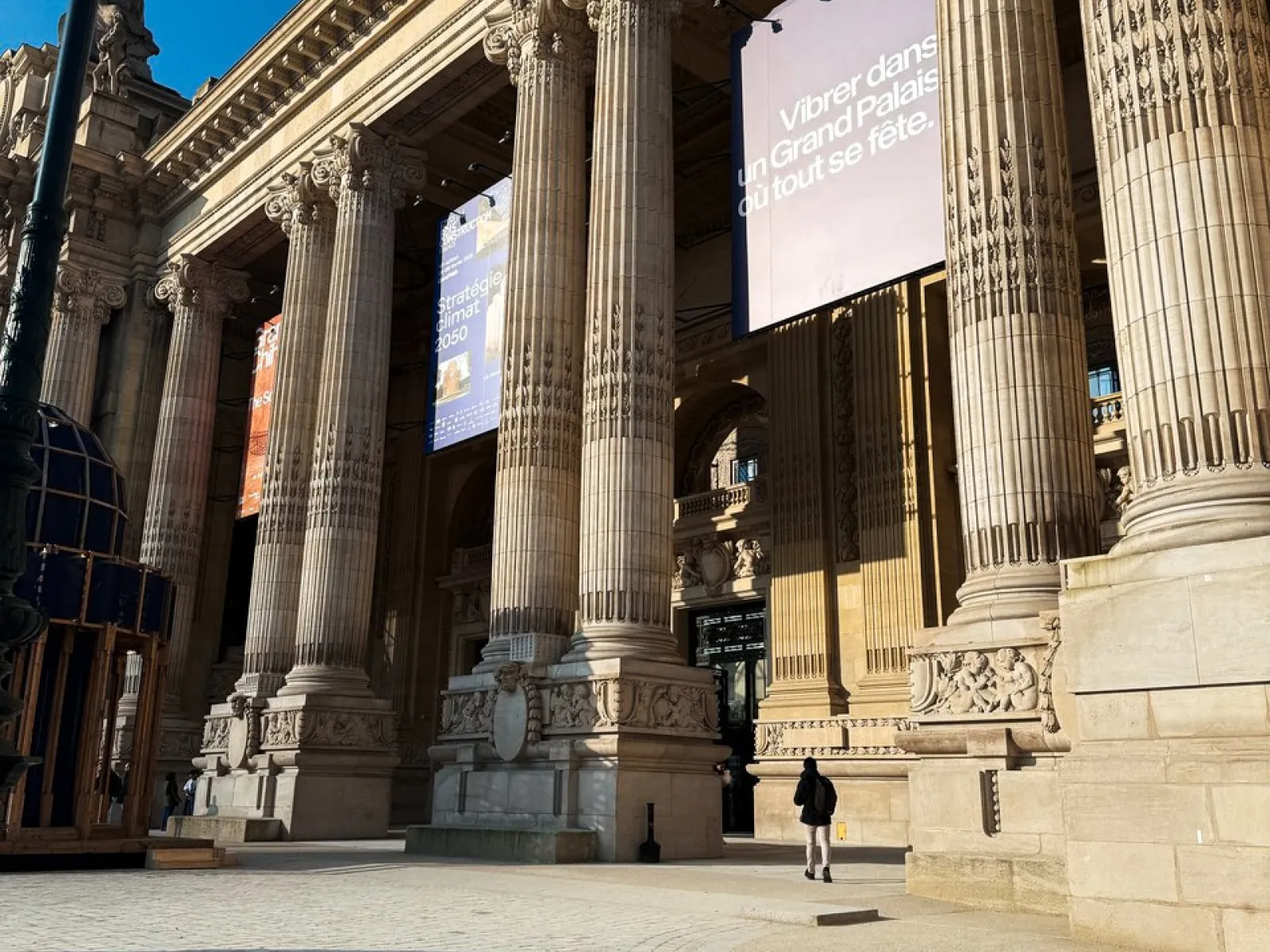
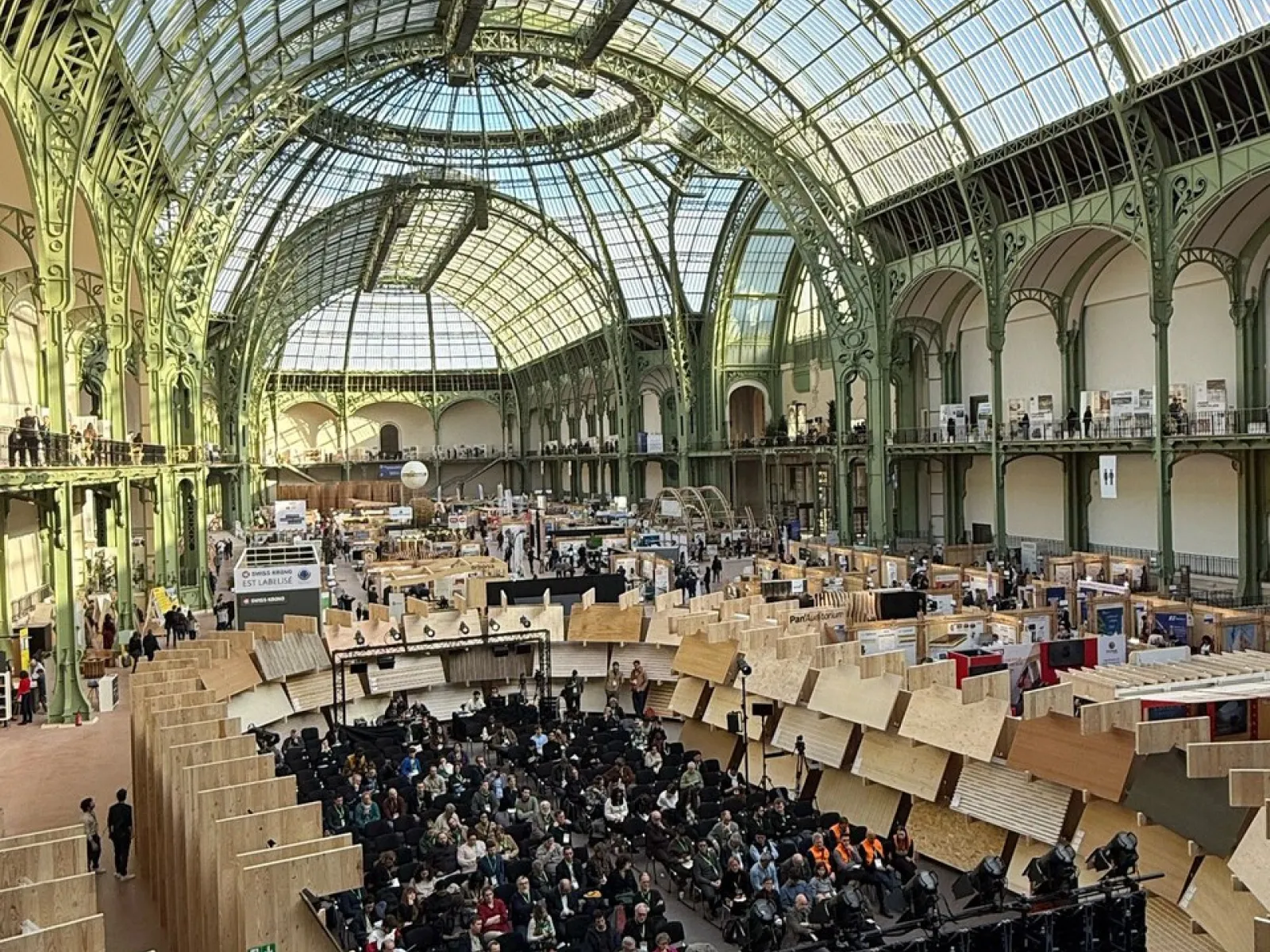
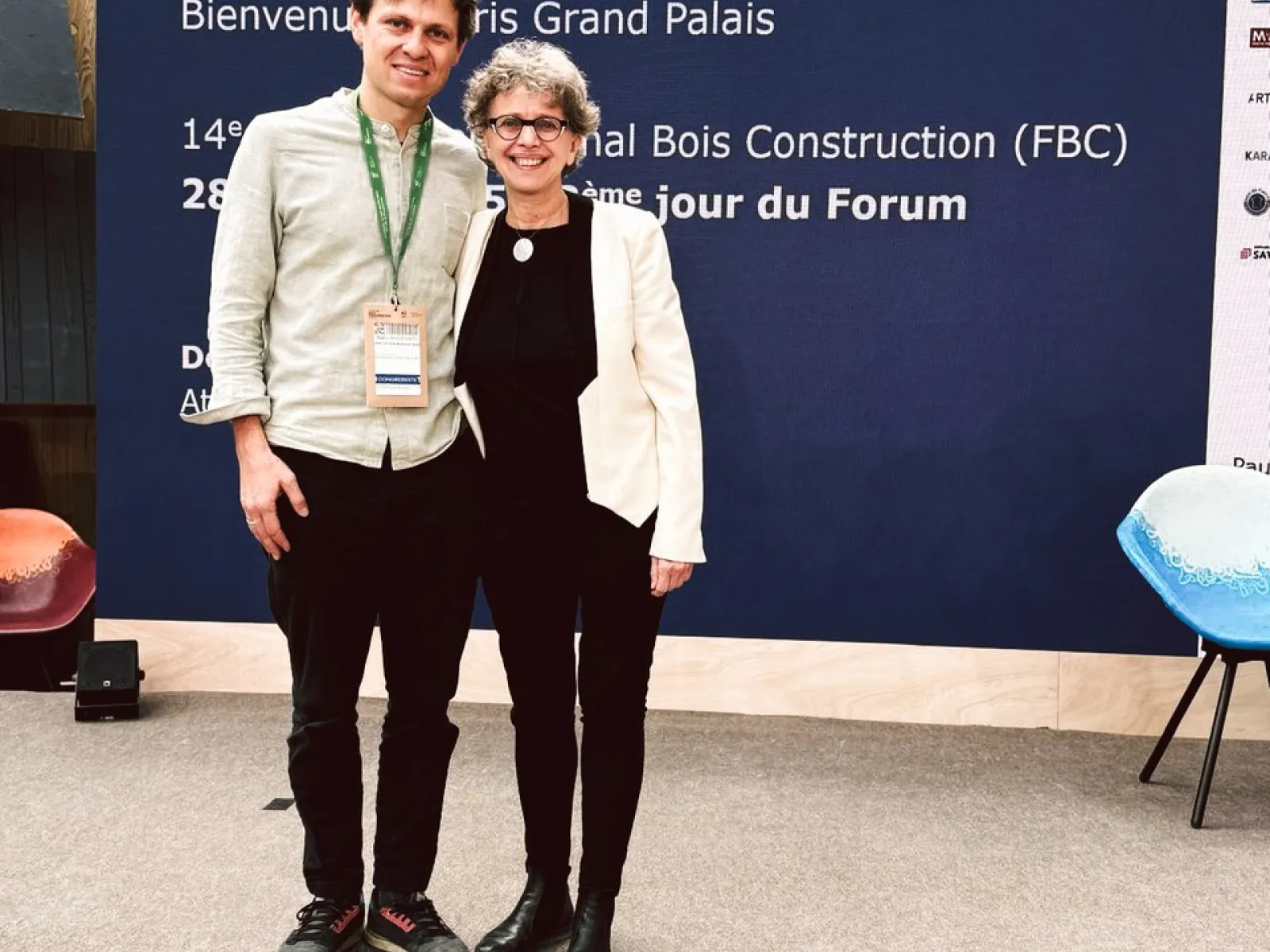
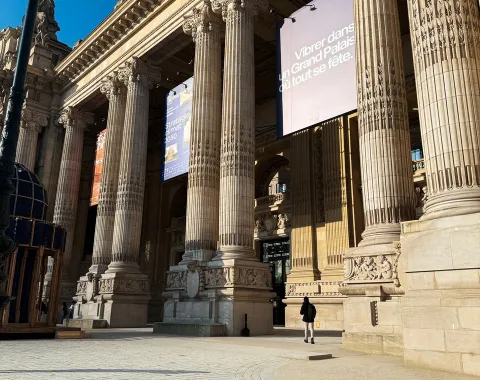
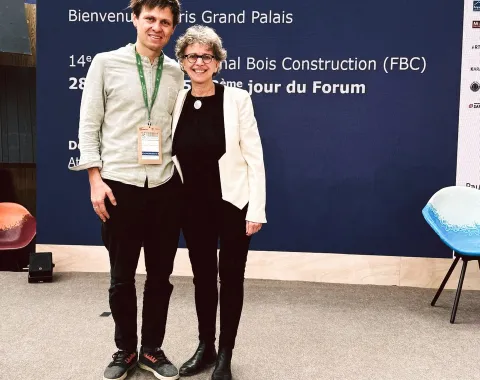
 The Forum Bois Construction 2025 took place from 26 to 28 February 2025 at the newly inaugurated Grand Palais in Paris. The 14th edition of the conference focused on the theme “Stratégie Climat 2050” and highlighted forward-looking solutions for timber construction and sustainable building.


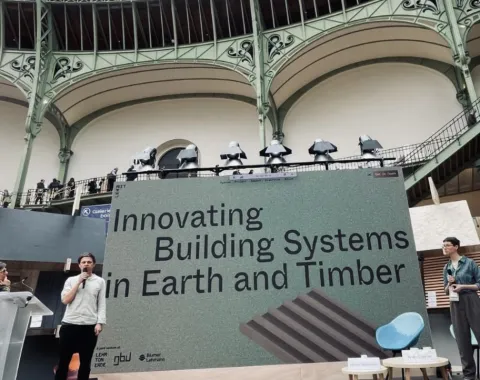
As part of the forum, university lecturer Martin Mackowitz presented the earth HUB of the University of Liechtenstein. The initiative promotes resource-efficient, future-oriented construction with natural materials and reflects the growing relevance of clay and timber in the context of climate strategy.

The forum served as a platform for dialogue among architects, engineers, researchers, and representatives of the timber and construction industries—emphasising the vital role of bio-based materials in the building transition.

Strong Interest in the Fifth Intensive Course on "International Sanctions Law"

Strong Interest in the Fifth Intensive Course on "International Sanctions Law"

Strong Interest in the Fifth Intensive Course on "International Sanctions Law"

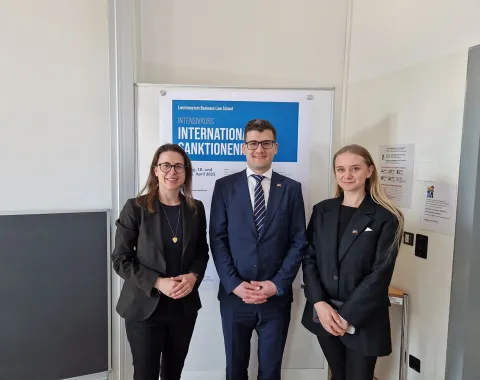
On 10 and 11 April 2025, the Professorship for Economic Criminal Law, Compliance and Digitalisation held the intensive course on "International Sanctions Law" for the fifth time.

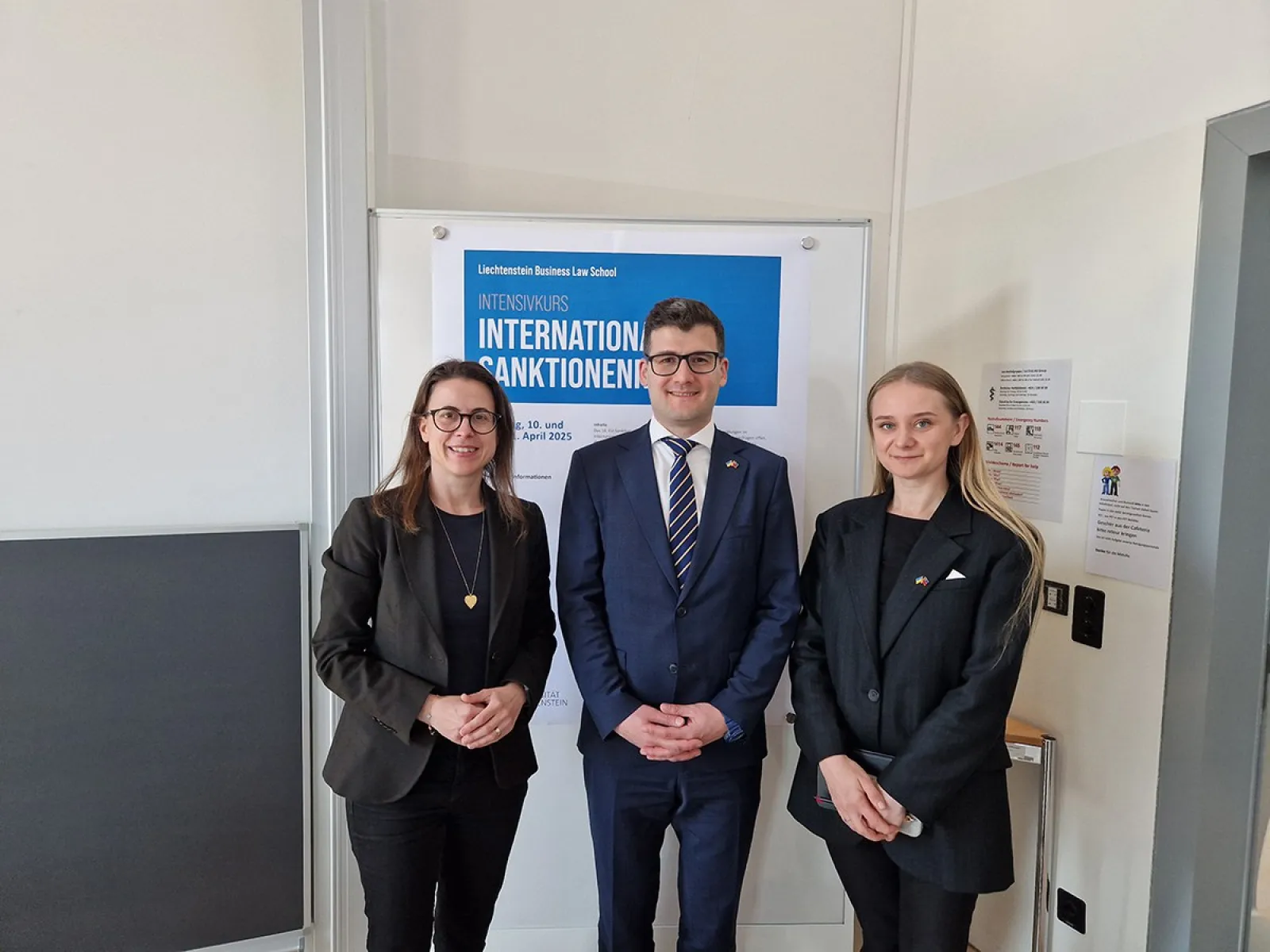
After welcoming the speakers and participants, Prof. Dr. Konstantina Papathanasiou, LL.M., introduced seven lectures that addressed various aspects of international sanctions law.

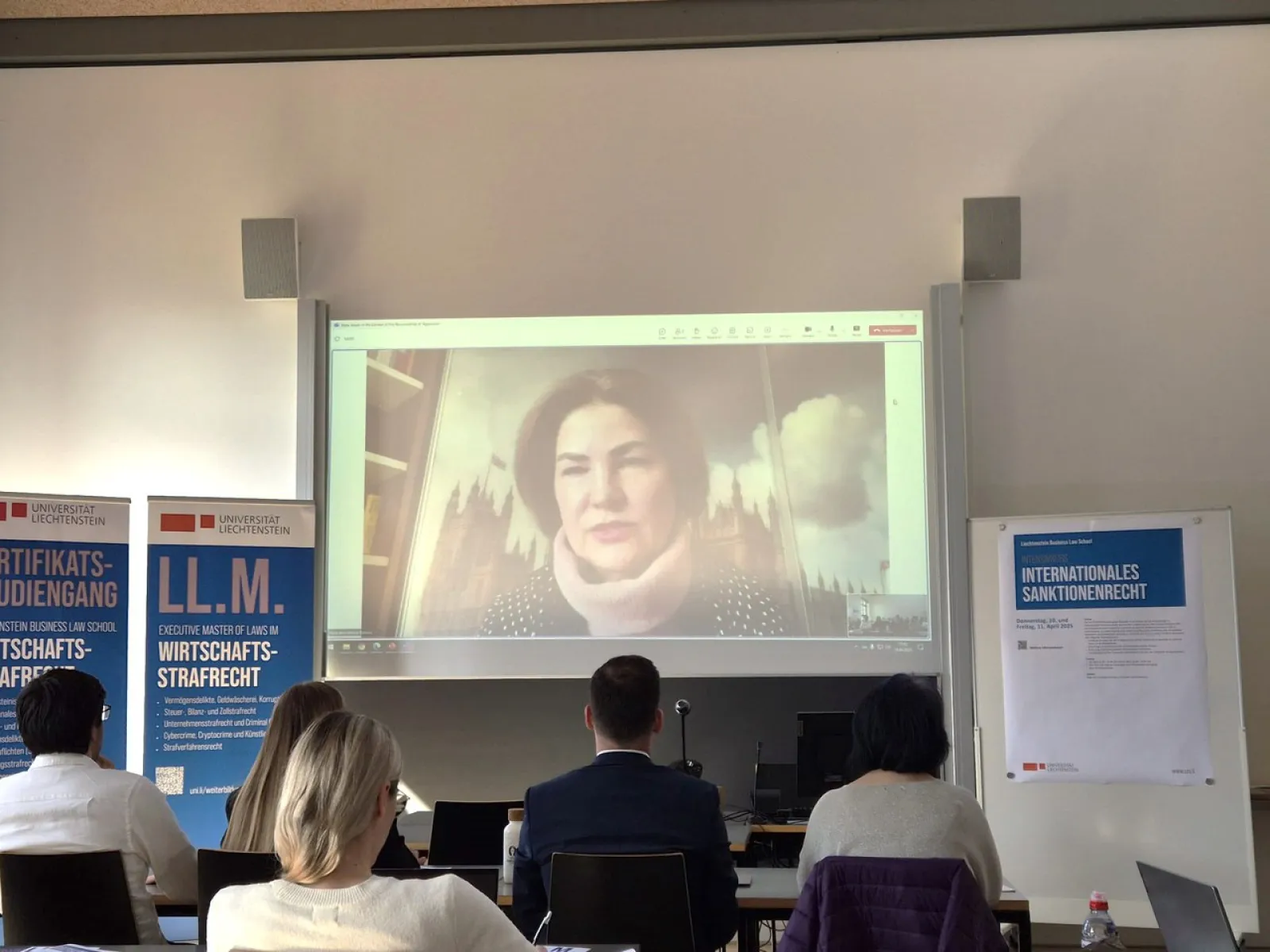
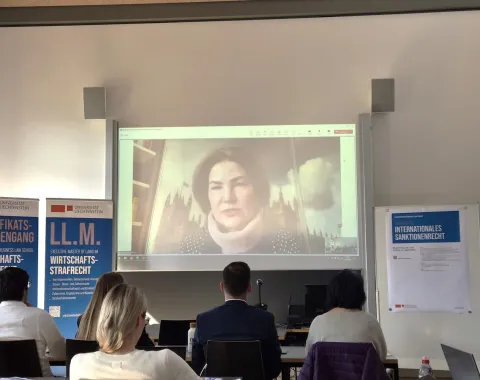
The course began with a keynote by Prof. Dr. Iryna Venediktova, Extraordinary and Plenipotentiary Ambassador of Ukraine to the Swiss Confederation and the Principality of Liechtenstein, who joined live from Ukraine. Her lecture titled "States’ Assets in the Context of Responsibility for Aggression: Legal Limits of Immunity and Prospects for Its Reconsideration" was also attended by representatives from the Ukrainian Embassy in Bern.


Den Abschluss bildeten Sandra Willers und Martin Griesmyar (Financial Crime Prevention, LGT Vaduz), die über die Bedeutung und den Geltungsbereich internationaler Sanktionen referierten – mit besonderem Blick auf die Beziehungen zwischen der EU und den USA sowie deren Auswirkungen auf liechtensteinische Banken.


Das grosse Interesse der zahlreichen Teilnehmenden bestätigte erneut die Relevanz und Aktualität dieses komplexen Themenfelds sowie den Bedarf nach regelmässigem fachlichem Austausch. Der nächste Intensivkurs findet am 6. und 7. November 2025 statt.

Anna Heringer Awarded the Max Beckmann Prize of the City of Frankfurt
Anna Heringer Awarded the Max Beckmann Prize of the City of Frankfurt
Honouring visionary architecture with natural materials


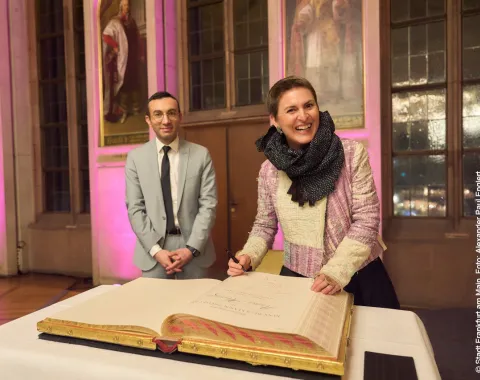
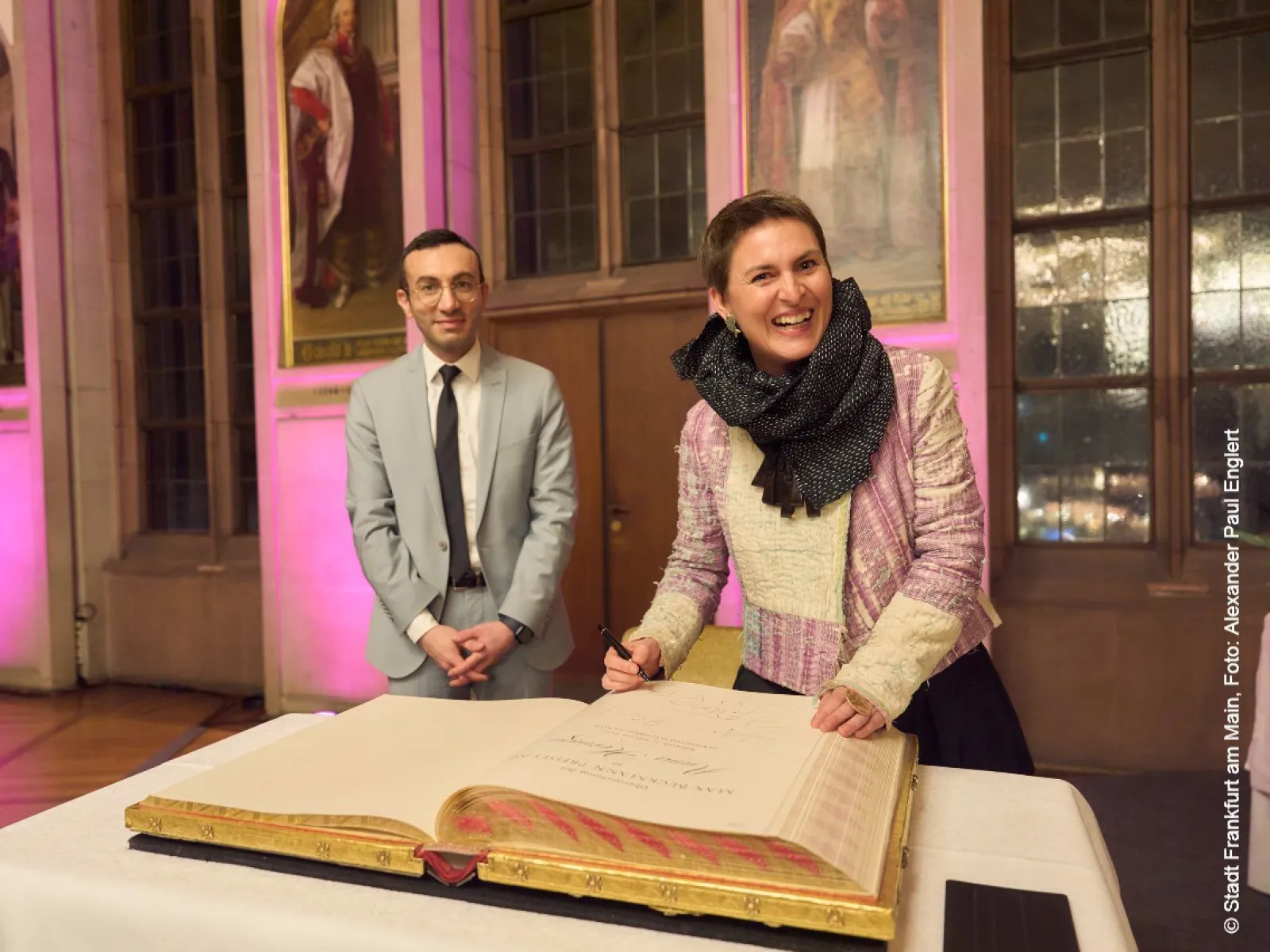
The Liechtenstein School of Architecture is pleased to announce that Practice Professor Anna Heringer has been awarded the prestigious Max Beckmann Prize by the City of Frankfurt am Main. The city honours her outstanding commitment to socially just, culturally rooted, and ecologically sustainable architecture. The prize is endowed with EUR 50,000.
 

Anna Heringer is internationally renowned for her projects using natural building materials such as earth and bamboo. Her work bridges traditional construction techniques with contemporary design, powerfully demonstrating how architecture can contribute to positive social and environmental transformation.


As a Practice Professor at the University of Liechtenstein, Anna Heringer brings this philosophy directly into her teaching—encouraging and inspiring students to take responsibility within a global building context.


We extend our warmest congratulations on this well-deserved recognition!

Exchange on the Latest Practice-Relevant Developments in the Field of Compliance

Exchange on the Latest Practice-Relevant Developments in the Field of Compliance

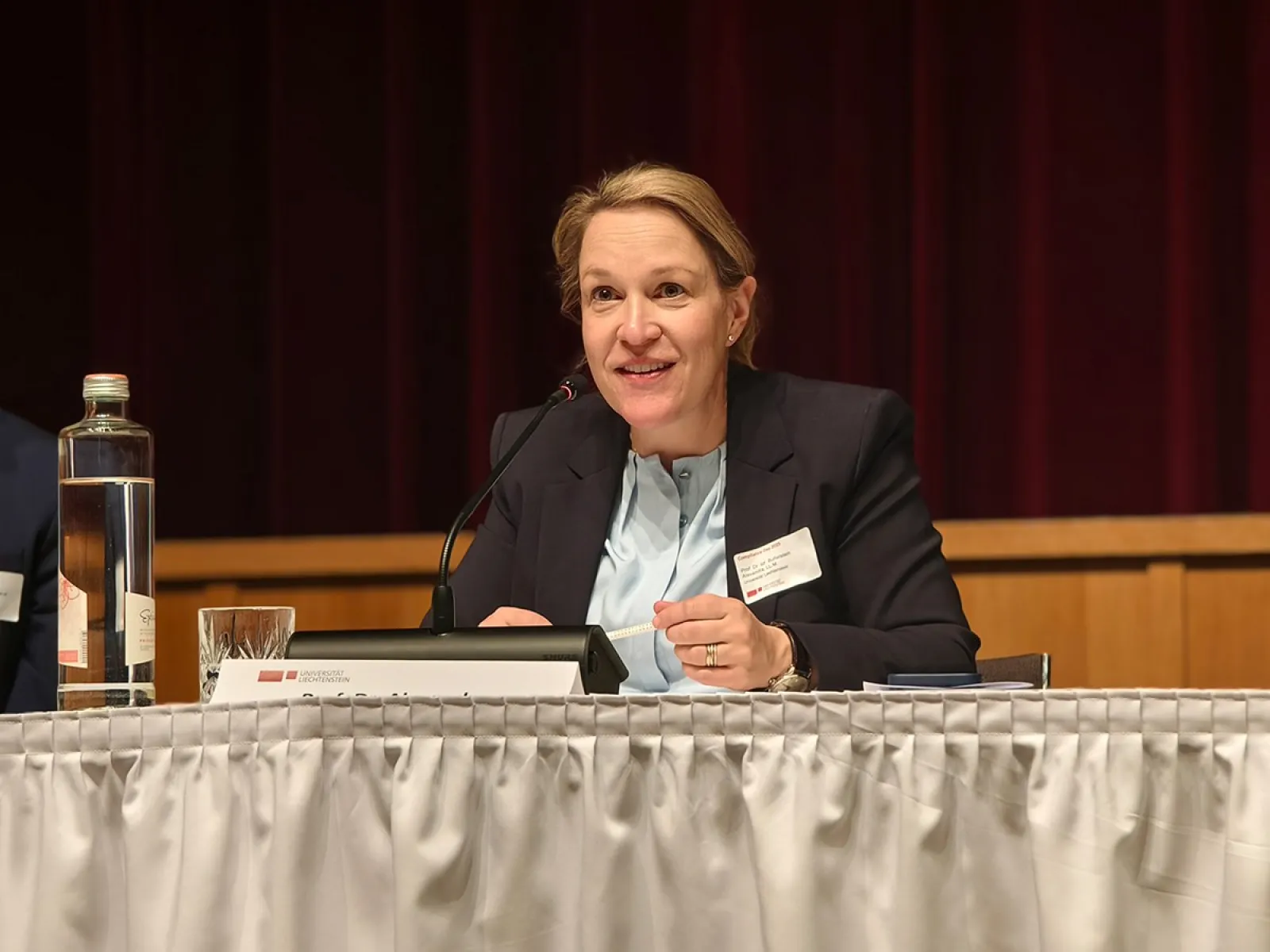
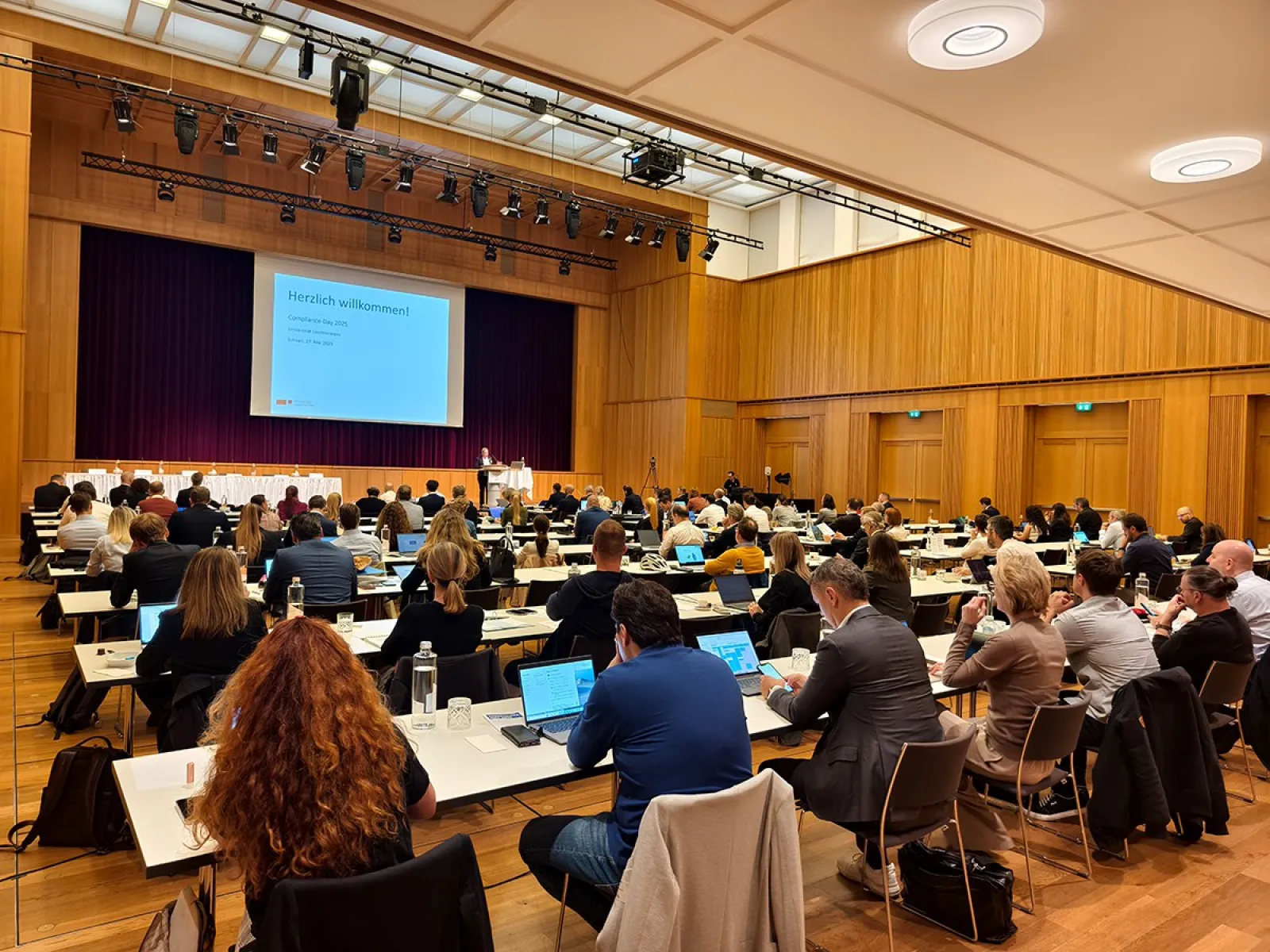
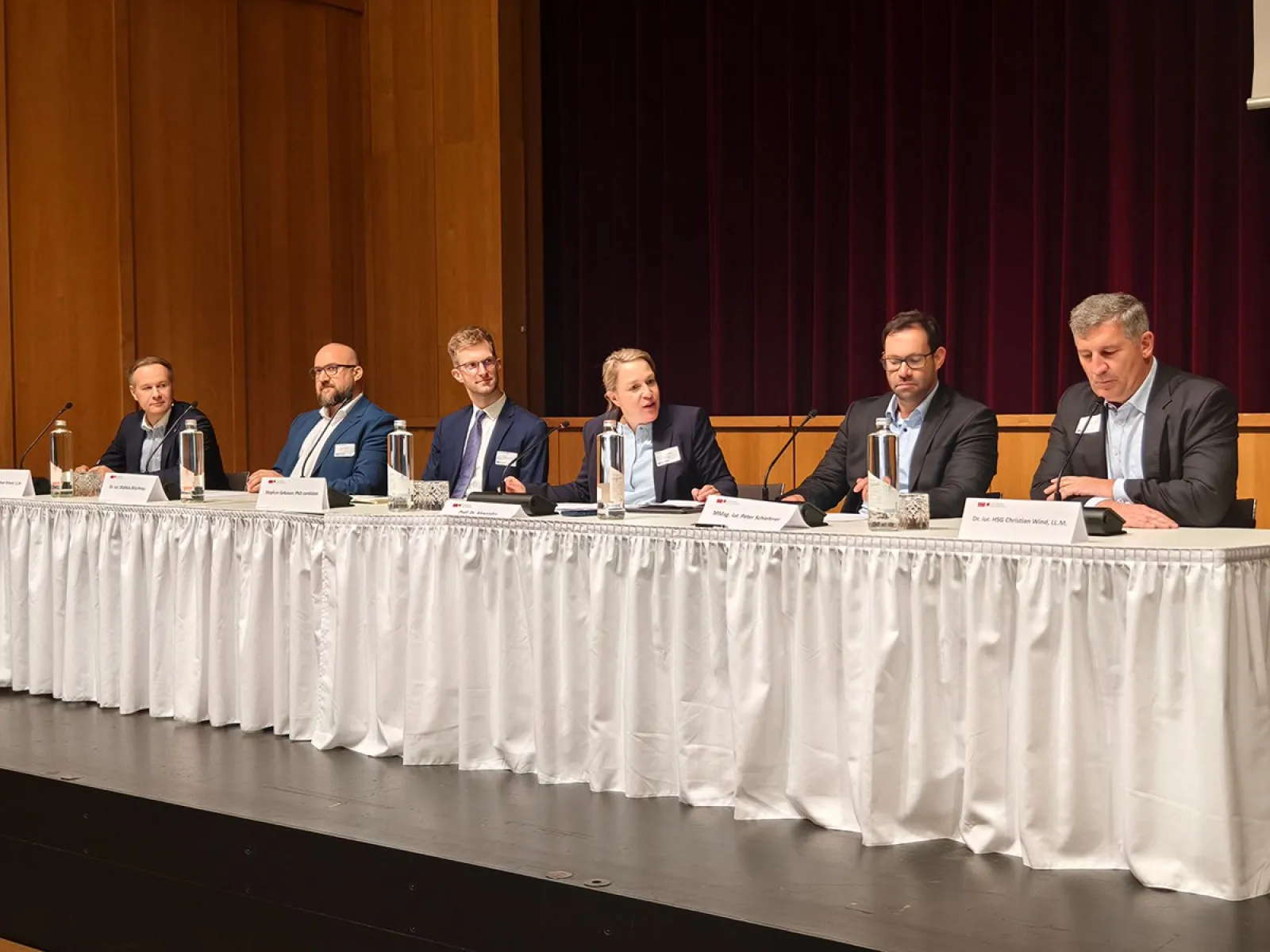
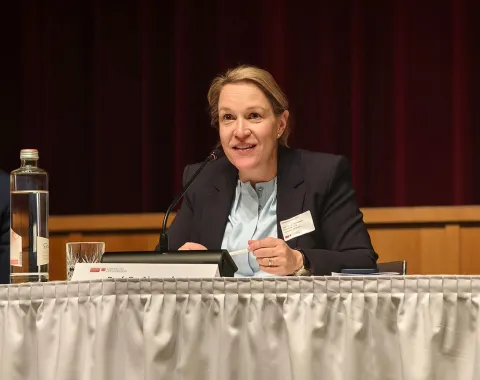
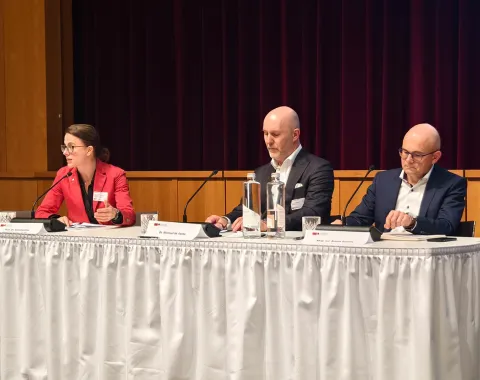
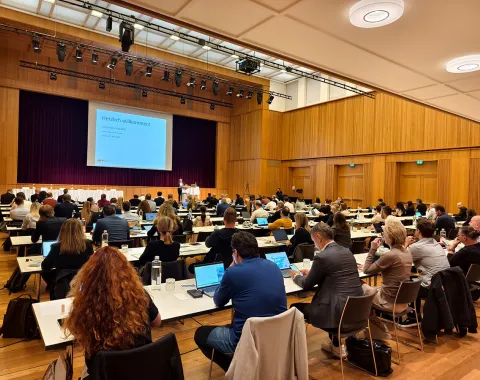
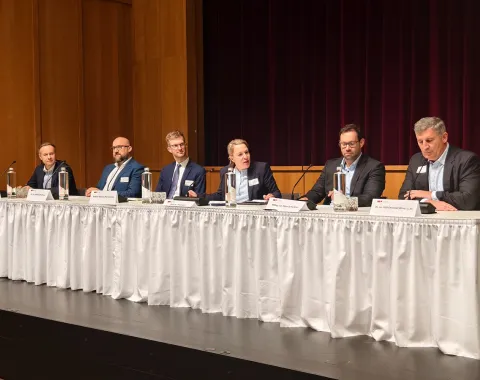
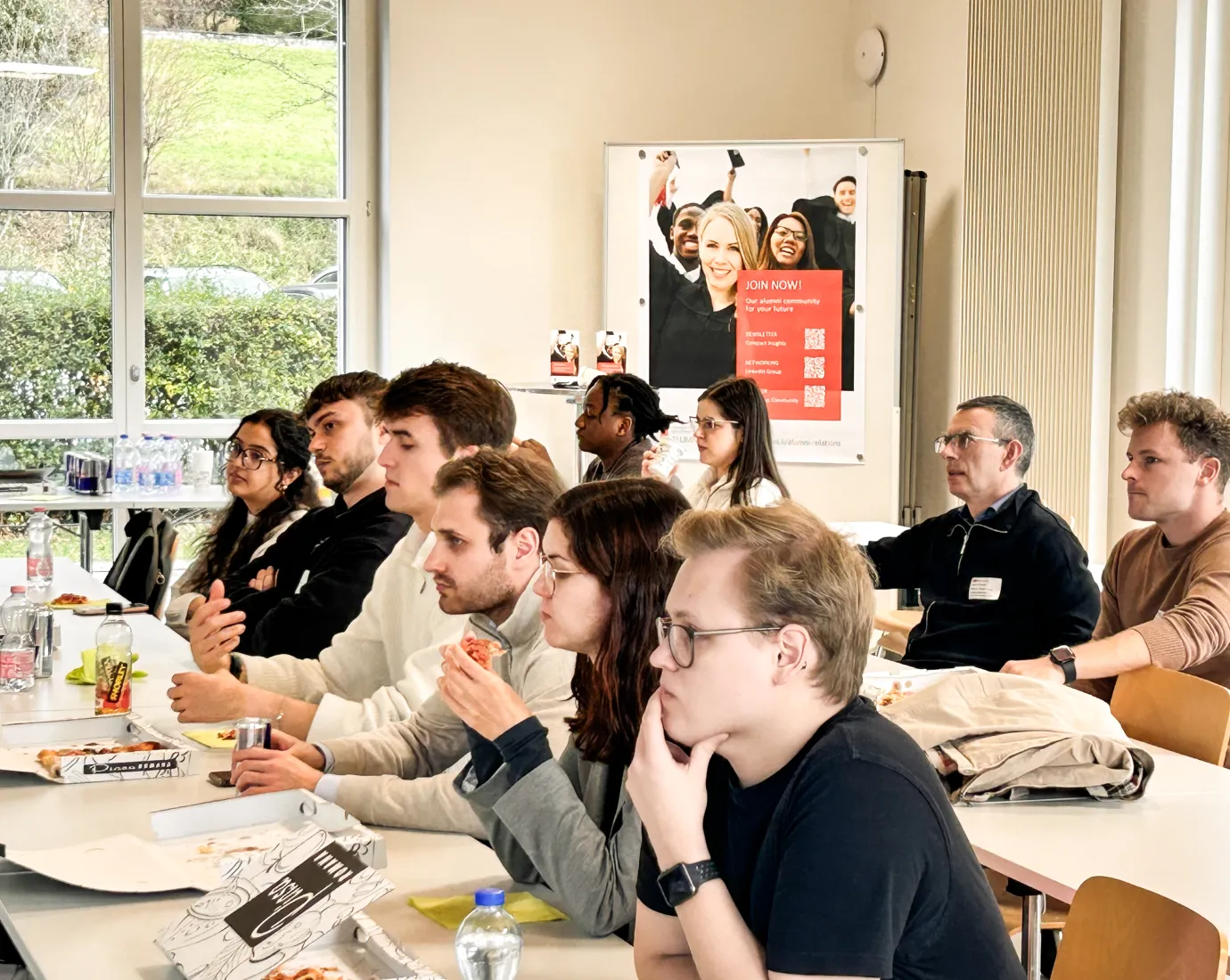
On 27 May 2025, the Professorships for Company, Foundation and Trust Law; Banking and Financial Market Law; and Economic Criminal Law, Compliance and Digitalisation hosted the Compliance Day 2025. Around one hundred professionals from the legal, business, and industrial sectors filled the SAL (Saal am Lindaplatz) to exchange insights on the latest practice-relevant developments in compliance.


In her welcome address, Prof. Dr. Alexandra Butterstein, LL.M., Dean of the Liechtenstein Business Law School and Chair of the Professorship for Company, Foundation and Trust Law, emphasised the growing demands placed on compliance officers. With ever-increasing regulatory requirements, continuing education formats such as Compliance Day, the Certificate Programme for Compliance Officers, and the Intensive Course on Criminal Law and Corporations are becoming ever more relevant. She expressed her gratitude to the speakers, as well as the Liechtenstein Institute of Professional Trustees and the Financial Market Authority (FMA) Liechtenstein for their contributions to specific thematic blocks.


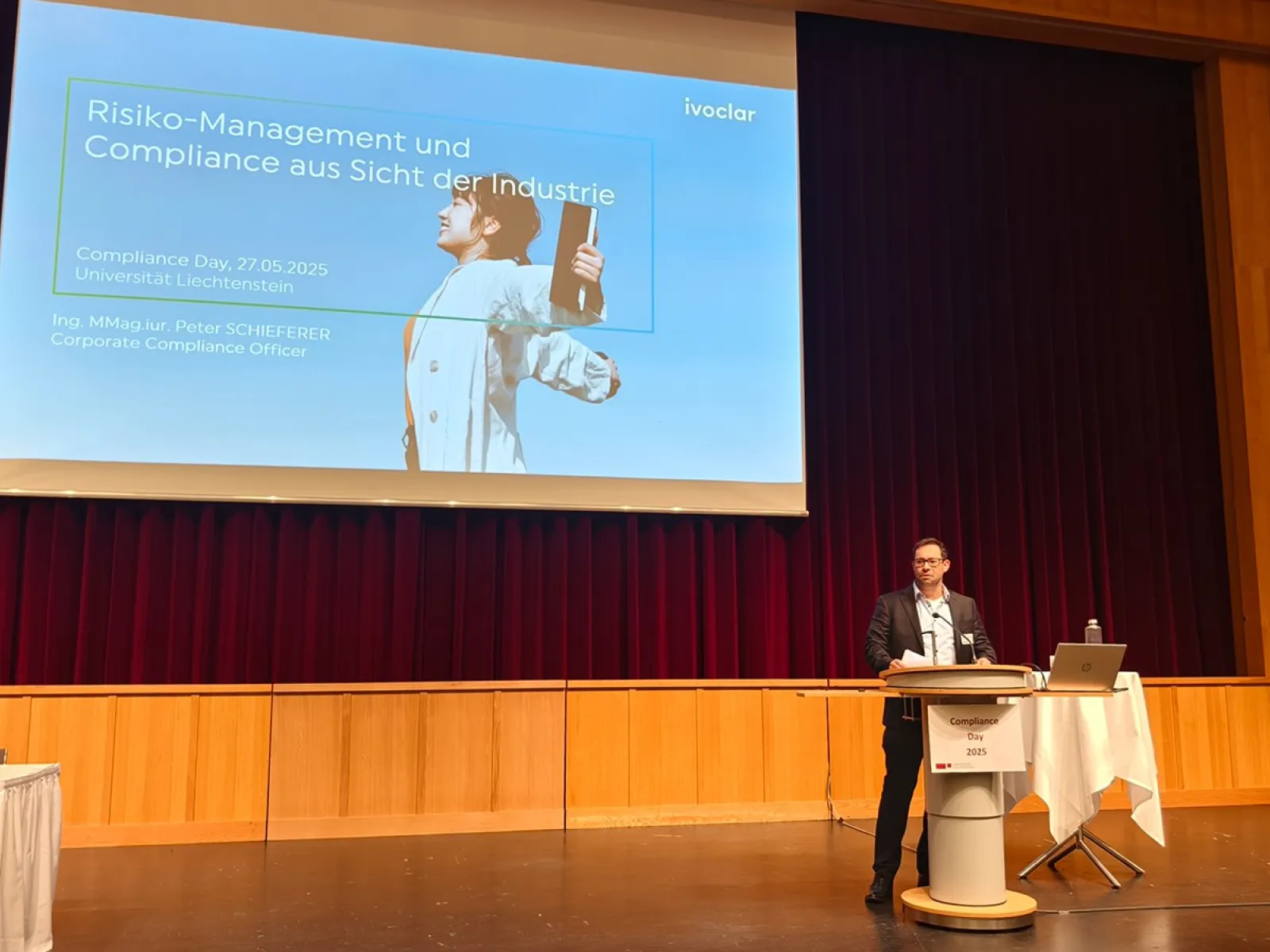
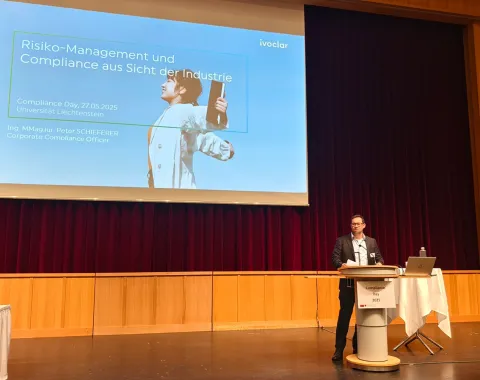
The morning session, moderated by Prof. Butterstein, focused on embedding compliance into operational processes. Dr. Christian Wind illustrated how risk controls can be integrated into value creation without sacrificing efficiency. MMag. Peter Schieferer followed with practical case studies on how industrial companies deal with classic compliance risks, such as inadequate IT security. Stephan Gebauer argued that rules alone are insufficient to ensure ethical behaviour—personal commitment and acceptance of constraints are equally essential.

The session concluded with a focus on compliance and risk prevention: Dr. Mathias Bitschnau explained reporting requirements under Article 17 of the Liechtenstein Due Diligence Act (SPG), and Dr. Stephan Ochsner addressed the growing complexity of international sanctions and their legal implementation. A panel discussion offered space to revisit and deepen the key topics addressed in the morning.


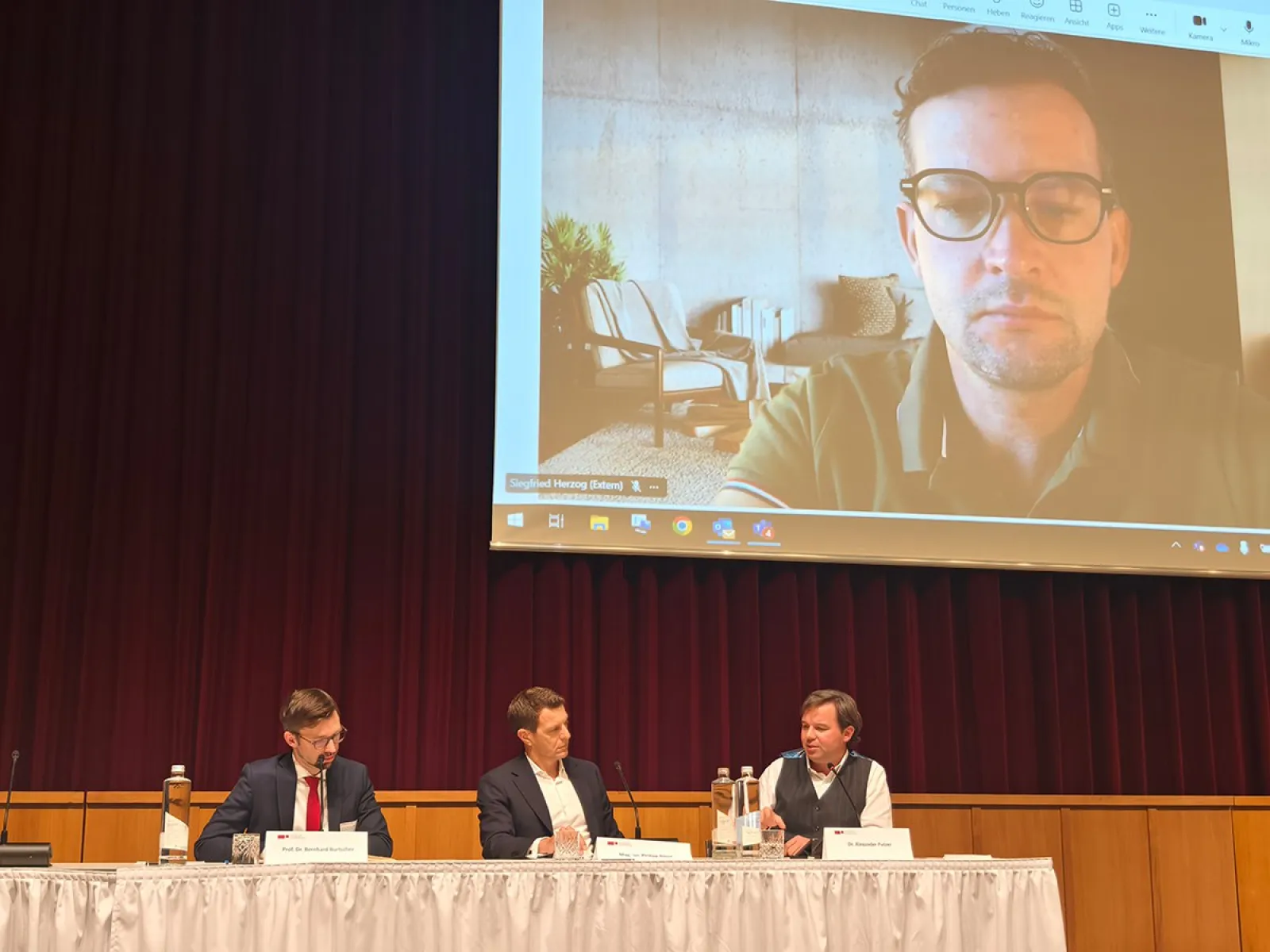
After the networking lunch, Prof. Dr. Bernhard Burtscher, Chair of the Professorship for Banking and Financial Market Law, moderated the afternoon block on financial markets. Under his lead, Dr. Alexander Putzer outlined the reform of Liechtenstein’s Banking Act, focusing on the role of compliance, the compatibility of advisory and supervisory duties, and challenges of adopting foreign regulations.

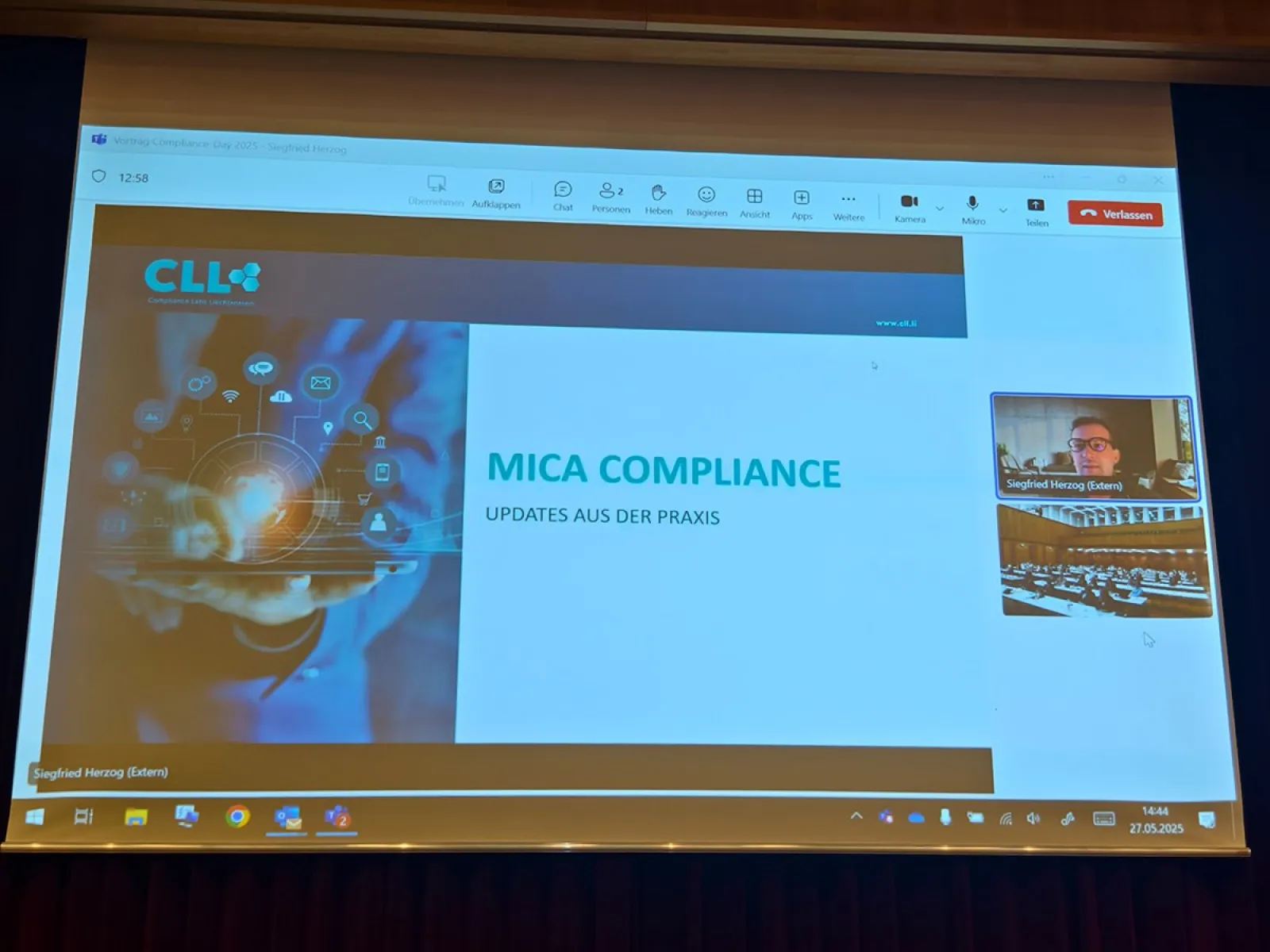
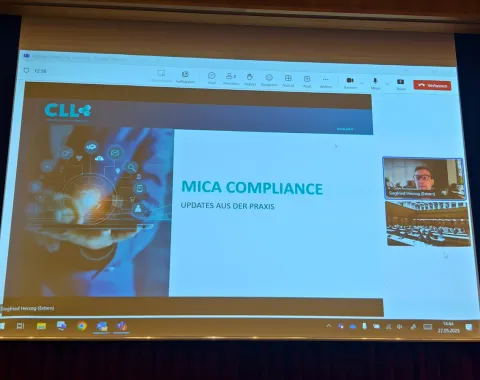
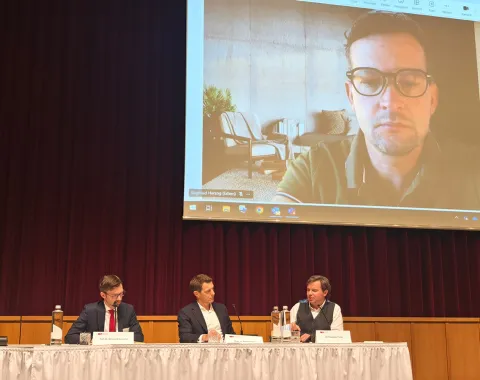
Mag. Philipp Röser presented the upcoming AML Regulation, including new reporting obligations, the protection of money laundering officers, and difficulties in identifying beneficial owners. Dr. Siegfried Herzog provided insights into the implementation of MiCAR, the relevance of the Transfer of Funds Regulation (TFR), transparency requirements, and handling of stablecoins. The subsequent discussion centred on one key question: How can institutions manage regulatory complexity?


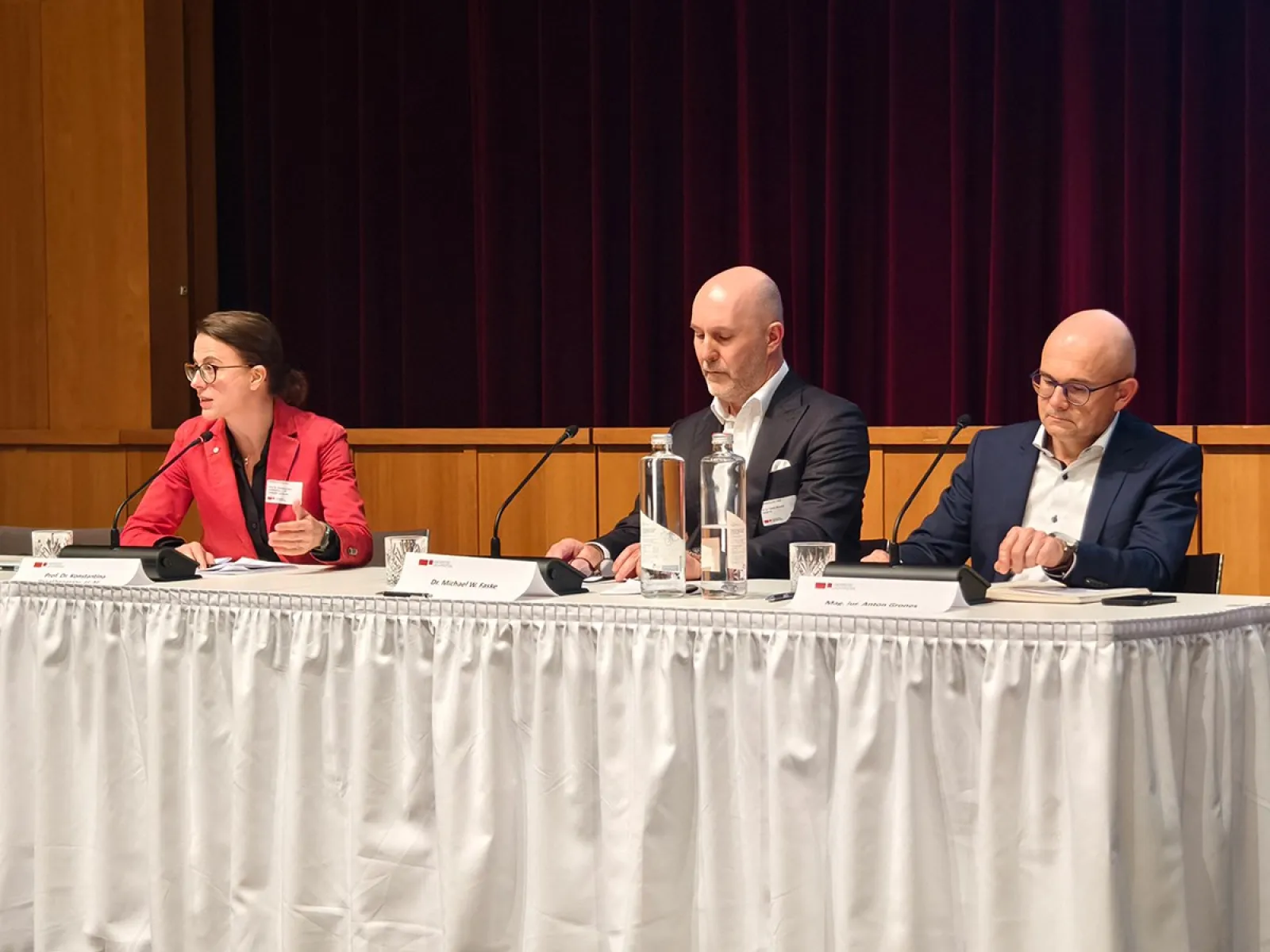
The final thematic block, moderated by Prof. Dr. Konstantina Papathanasiou, Chair of the Professorship for Economic Criminal Law, Compliance and Digitalisation and Chair of the Senate at the University of Liechtenstein, addressed the digitalisation of compliance frameworks. She highlighted recent legislative developments in the EU and Liechtenstein, including DORA, NIS II, and the Cybersecurity Act.

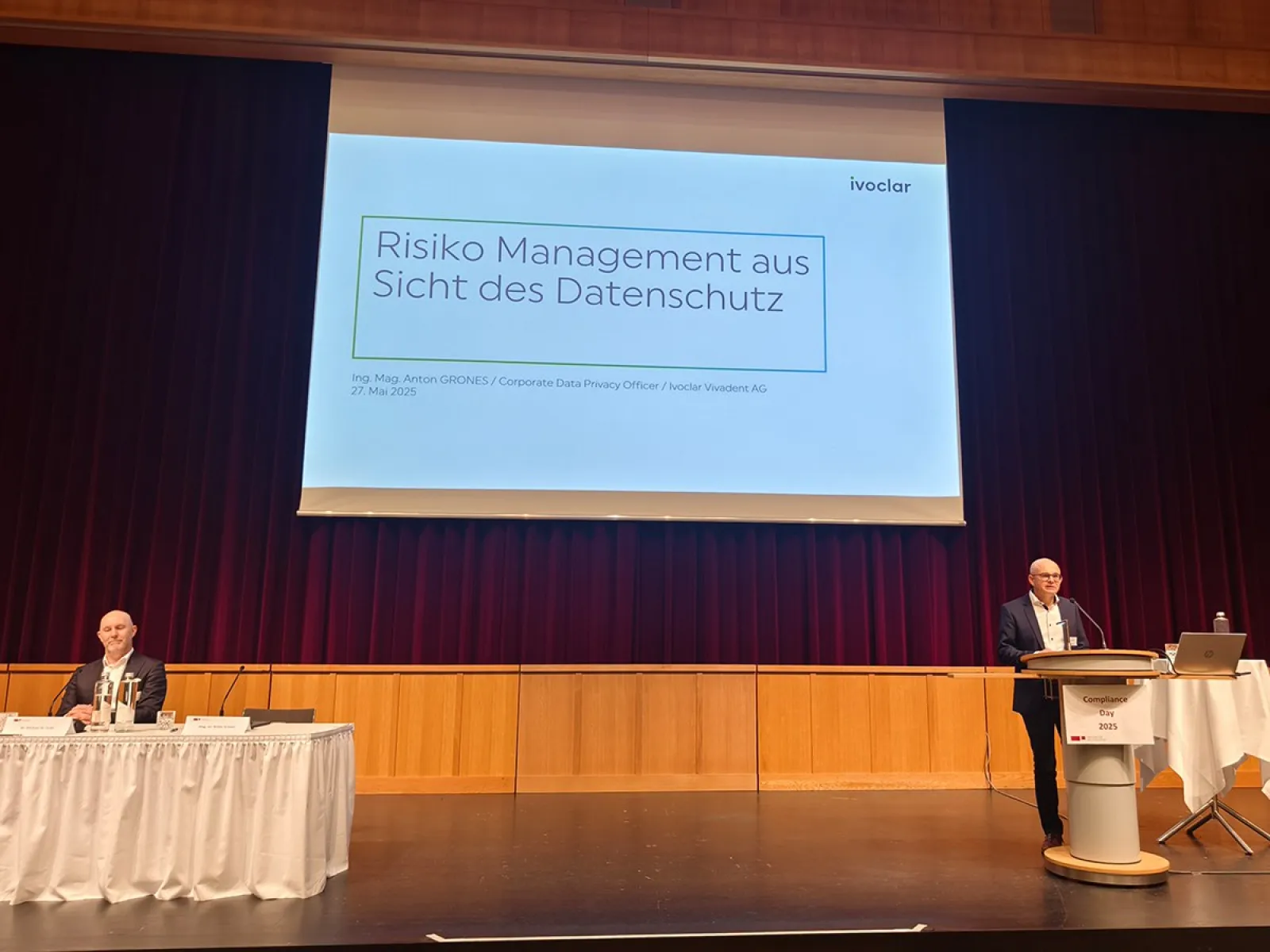
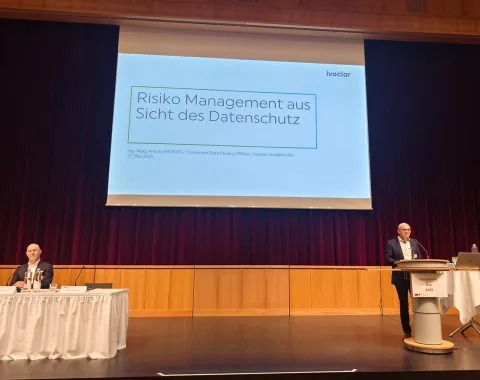
Mag. Anton Grones, a lawyer and technology expert, explored the role of data protection within globally integrated risk management systems, including references to the AI Act. In the final presentation, Dr. Michael Faske addressed the specific challenges of internal investigations in the digital era, with a focus on generative AI tools such as ChatGPT. Participants engaged actively in the final Q&A session to explore the afternoon’s topics in greater depth.


In her closing remarks, Prof. Papathanasiou thanked all speakers and attendees on behalf of the organising chairs. She warmly invited participants to future events at the University of Liechtenstein. The day ended with an informal networking reception, where discussions continued in a relaxed setting, new contacts were made, and future collaborations were initiated.

The unanimous conclusion: Compliance Day once again confirmed its role as a key dialogue platform in the DACHLI region. The next edition is scheduled for spring 2026 and will once more offer hands-on insights for sustainable compliance management.

Visiting Professor at the University of Liechtenstein becomes President of the World Association for Information Systems

Visiting Professor at the University of Liechtenstein becomes President of the World Association for Information Systems

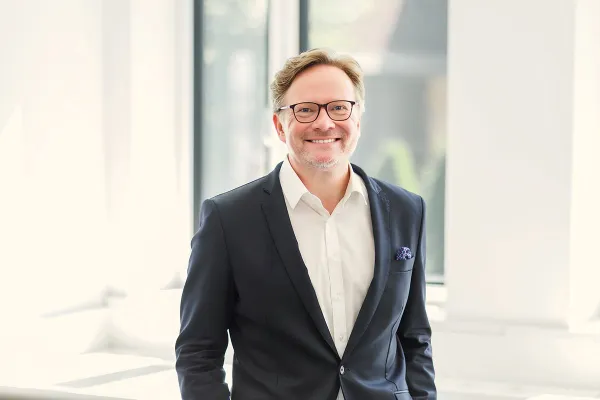
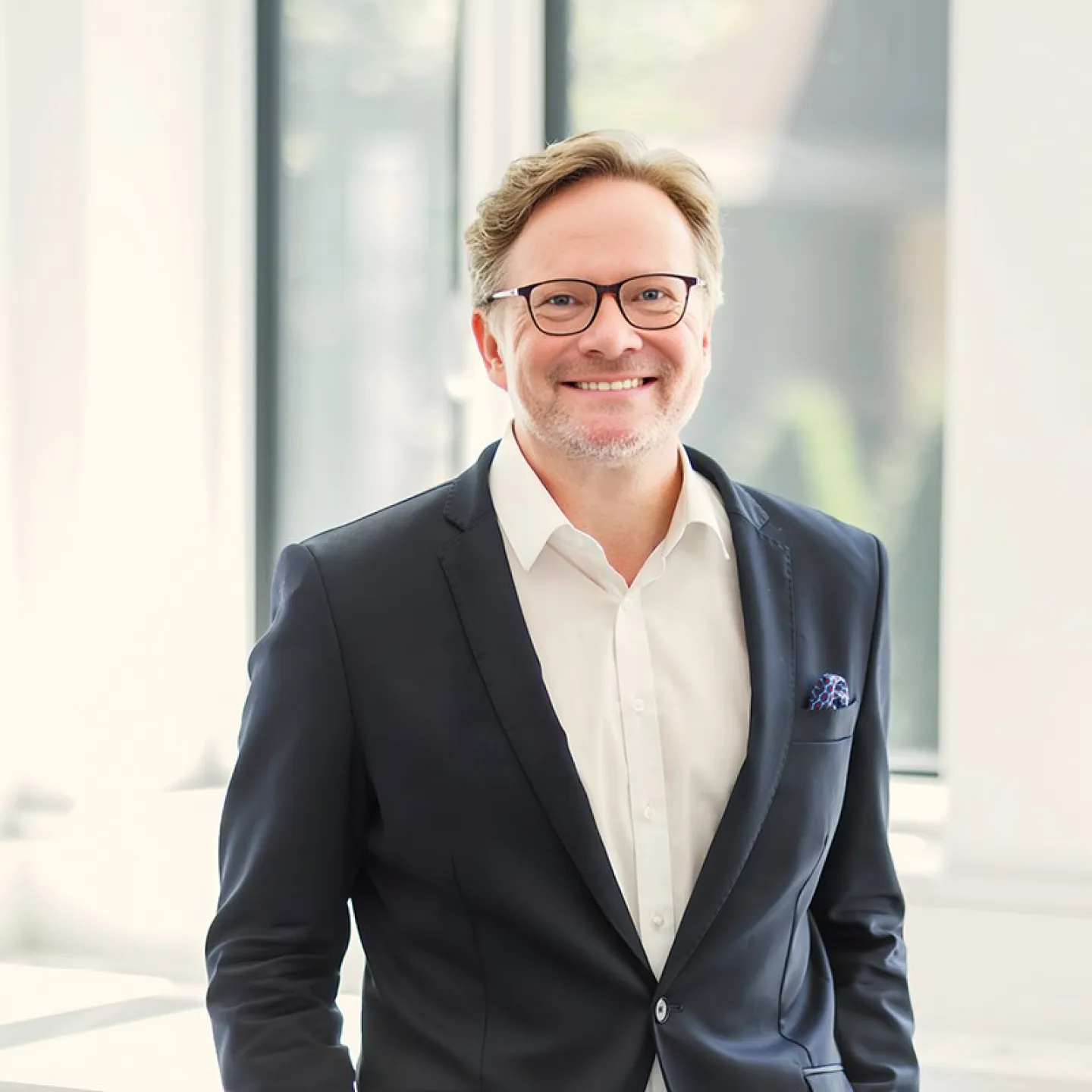
Ein lächelnder Mann in einem Anzug steht vor einem hellen Fenster.

Prof. Dr. Jan vom Brocke, Visiting Professor at the Liechtenstein Business School of the University of Liechtenstein, has been elected as the next President of the international Association for Information Systems (AIS), the world association for research and teaching in information systems.


Founded in 1994, the non-profit Association for Information has members in over 100 countries with locations in North and South America, Europe, the Middle East and Africa as well as the Asia-Pacific region. The association publishes prestigious journals, organizes conferences and promotes exchange between individuals and organizations that are world leaders in the research, teaching, practice and study of information systems.
Jan vom Brocke will lead the international association as its 32nd president for three years from July 1, 2025. He is only the third president from the DACHLI region, after Claudia Loebecke (University of Cologne, 11th AIS President) and Helmut Krcmar (Technical University of Munich, 20th AIS President).
“I am delighted about the trust placed in me and the opportunity to help shape the Association. As President, I would particularly like to work towards further increasing the contribution of business informatics to socially and economically relevant challenges,” says Jan vom Brocke.
Jan vom Brocke held the Hilti Chair of Information Systems from 2007 to 2023, was Head of the Institute of Information Systems from 2018 to 2022 and was Vice Rector of the University of Liechtenstein between 2012 and 2018. He is co-founder of the discipline “Process Science”, which uses digital traces and AI methods to analyze and design processes in business and society.

Ein lächelnder Mann in einem Anzug steht vor einem hellen Fenster.

Prof. Dr. Konstantina Papathanasiou Delivers Welcome Address at the 50th Anniversary Celebration of the Onassis Foundation

Prof. Dr. Konstantina Papathanasiou Delivers Welcome Address at the 50th Anniversary Celebration of the Onassis Foundation

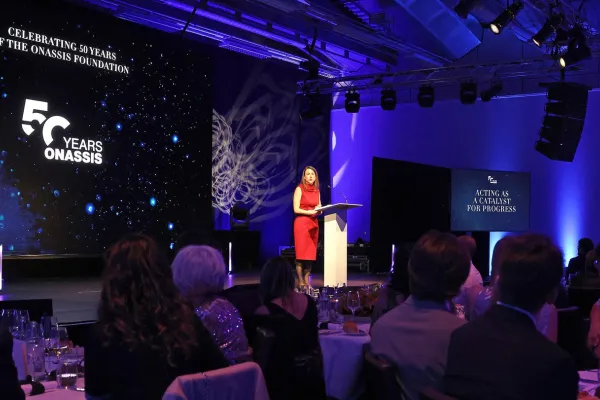
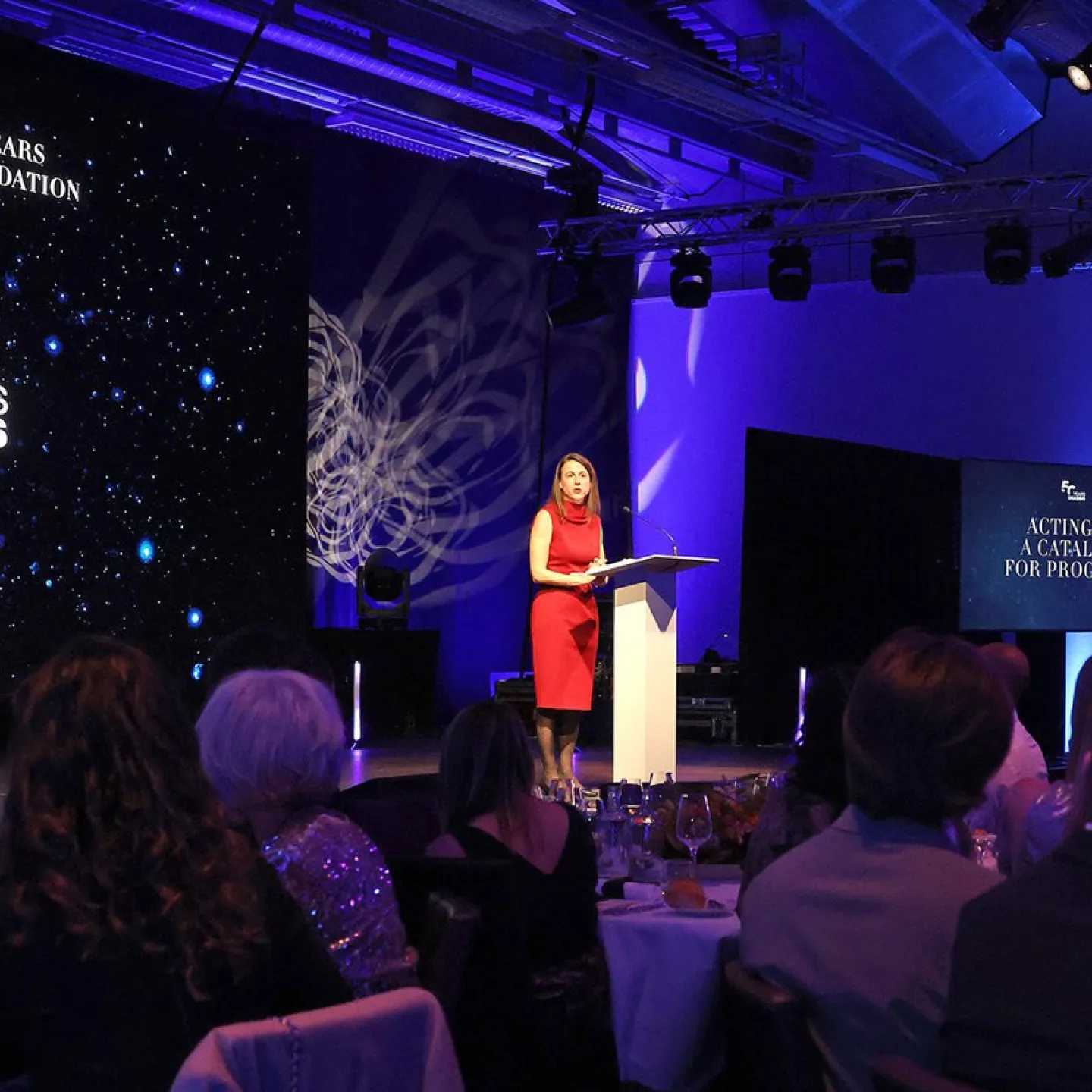
Eine Rednerin in rotem Kleid steht an einem Podium auf einer Bühne, umgeben von Publikum. Im Hintergrund ist eine Leinwand mit der Aufschrift "Celebrating 50 Years of the Onassis Foundation" zu sehen. Die Veranstaltung findet in einem festlich beleuchteten Raum statt.

On the evening of Friday, 16 May 2025, Prof. Dr. Konstantina Papathanasiou, LL.M., had the honour of delivering a welcome address as part of the 50th anniversary celebrations of the Onassis Foundation.


In her speech, she emphasised the profound influence the foundation has had on both her personal and academic journey.


Thanks to a doctoral scholarship awarded by the Onassis Foundation, she was able to pursue her decision to begin a PhD at Heidelberg University (Ruprecht-Karls-Universität) in 2008/2009—an important milestone in her path toward personal fulfilment and academic growth.

Eine Rednerin in rotem Kleid steht an einem Podium auf einer Bühne, umgeben von Publikum. Im Hintergrund ist eine Leinwand mit der Aufschrift "Celebrating 50 Years of the Onassis Foundation" zu sehen. Die Veranstaltung findet in einem festlich beleuchteten Raum statt.
Subscribe to