Skip to Main Content

International Office - Incoming Students - Guide

Application Incoming Students

Guide

Studierende beim Skifahren mit Skilehrer

To ensure a smooth application process for a visiting semester at the University of Liechtenstein, we have created a guide for you. Make sure you meet all the requirements for a semester abroad and that you can comply with the deadlines before starting the application process.

If you are applying for a full-time degree programme (including as an international student), you must follow the regular application process.

Studierende beim Skifahren mit Skilehrer

Topics

  • There is a bilateral agreement between the two universities (the University of Liechtenstein and the partner university).
  • Students who wish to study at the University of Liechtenstein without a bilateral agreement ("freemovers") must apply through the International Office. The regular tuition fees apply.
  • Proof of proficiency in English (upper-intermediate level, B2)
  • Sufficient financial means for the duration of the stay
We Are Happy to Advise You

Still Have Questions?

Mirjana Schädler
Head - International Office
Employee

Privat Room Exchange

Private Room Exchange

Find or Offer a Room

Offenes Laptop mit Suche in Immobilienanzeigen

On this page, you’ll find regularly updated listings from the private housing market or you can create your own listing.

 

All entries are published within one to two working days, sorted by date, and remain online for two months.
If your room is rented out earlier, please let us know.
Offenes Laptop mit Suche in Immobilienanzeigen

Create a Listing


  • Step 1: Click the “New Listing” button.
    Enter your offer using the form: include a clear title (starting with the country and municipality), a brief description (ideally in both German and English), your contact details, and up to three images.
  • Step 2: Activation
    Your listing will be published within three working days.
  • Step 3: Listing Duration
    The offer remains online for two months.
  • Step 4: Notification
    Please notify Gabriela Cortés once the room has been rented.

Tips for a Successful Listing


  • Detailed descriptions
    Provide clear information about the location, size, furnishings, and rental terms.
  • High-quality photos
    Use well-lit images to give a realistic impression of the room.
  • Transparent communication
    Be open to questions and provide clear, honest answers.
  • Written contracts
    If you need assistance with this, feel free to contact us.

  • Get in Touch
    Contact the landlord directly using the contact details provided in the listing.
  • Important Information
    Pay attention to details such as location, rent, furnishings, and any house rules.
  • Students from non-EU countries
    Please note that students from outside Europe require a Schengen visa. If your visa was issued based on your student status in Liechtenstein, you are only permitted to reside in Liechtenstein – not in Switzerland, Austria, or Germany.

Private Room Exchange


Still Questions?

I’m happy to help

Lic. cc Gabriela Cortés
Head - Student Housing
Employee

Professur für Wirtschaftsstrafrecht, Compliance und Digitalisierung

Economic Criminal Law, Compliance and Digitalisation

Economic Criminal Law, Compliance and Digitalisation

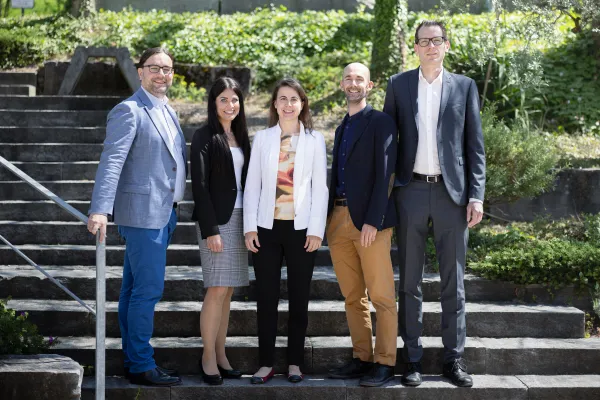
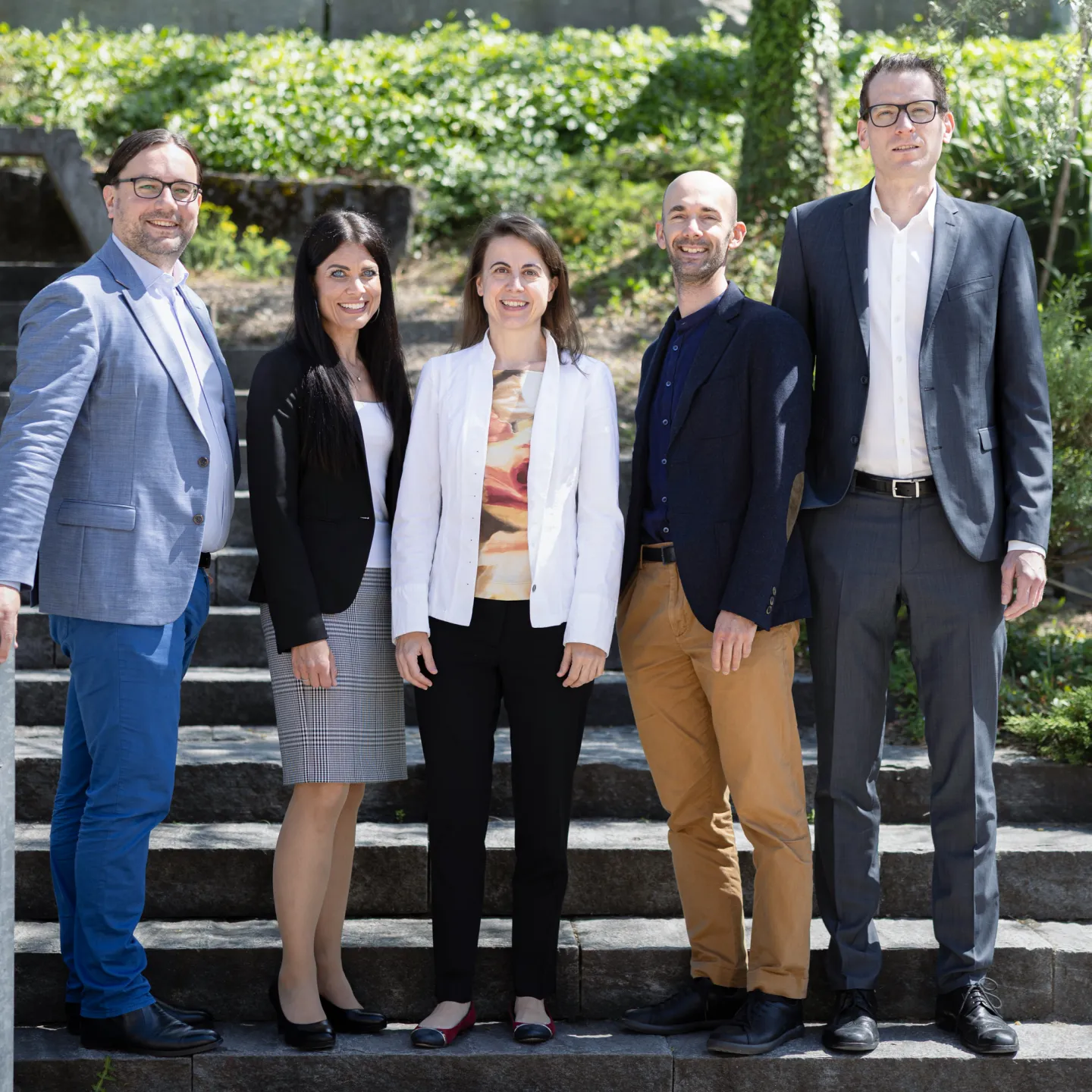
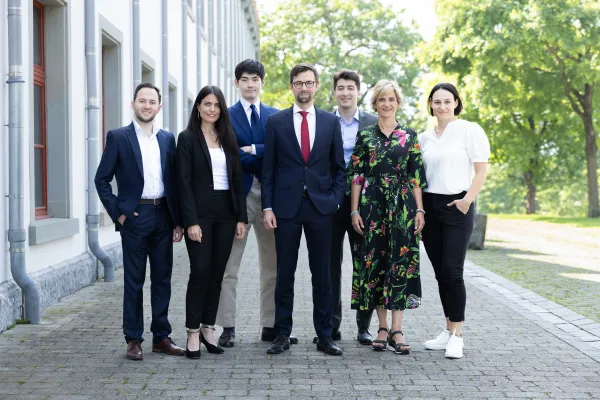
Dozierende und Mitarbeitende der Business School der Universität Liechtenstein posieren gemeinsam für ein Gruppenfoto im Freien.

The research and teaching programme of the Professorship in Economic Criminal Law, Compliance and Digitalisation, led by Prof. Dr. Konstantina Papathanasiou, LL.M., covers all issues of national, European and international economic criminal law, including aspects of criminal procedure law. The study of criminal liability in business-related activities also extends to company-specific compliance requirements as well as developments in the digital sphere. A particular focus is placed on cybercrime (including criminal law issues relating to the token economy, blockchain and AI) and on the economic criminal law aspects of cybersecurity and resilience.

Dozierende und Mitarbeitende der Business School der Universität Liechtenstein posieren gemeinsam für ein Gruppenfoto im Freien.

Research Focus Areas

Frau stellt gelbes Fachbuch ins Regal und hält weitere juristische Bücher in der Bibliothek der Universität Liechtenstein.

Our research focuses on key issues and current challenges in

  • Foundations of Criminal Law
  • Economic Criminal Law
  • International Criminal Law
  • Criminal Compliance
  • Corporate Criminal Liability
  • Capital Market Criminal Law
  • Cyber, IT and Data Protection Criminal Law
  • Tax and Accounting Criminal Law
  • Environmental Criminal Law
  • Criminal Procedure Law and Protection of Fundamental Rights
  • Legal Philosophy and Ethics
Insights into Research on Business Law
Frau stellt gelbes Fachbuch ins Regal und hält weitere juristische Bücher in der Bibliothek der Universität Liechtenstein.

Research Projects

Zu diesem Thema gibt es keine Projekte.

Publications

Contact Us

Contact

Professorship in Economic Criminal Law, Compliance and Digitalization
Employee

Professorship for Banking and Financial Market Law

Banking and Financial Market Law

Professorship for Banking and Financial Market Law

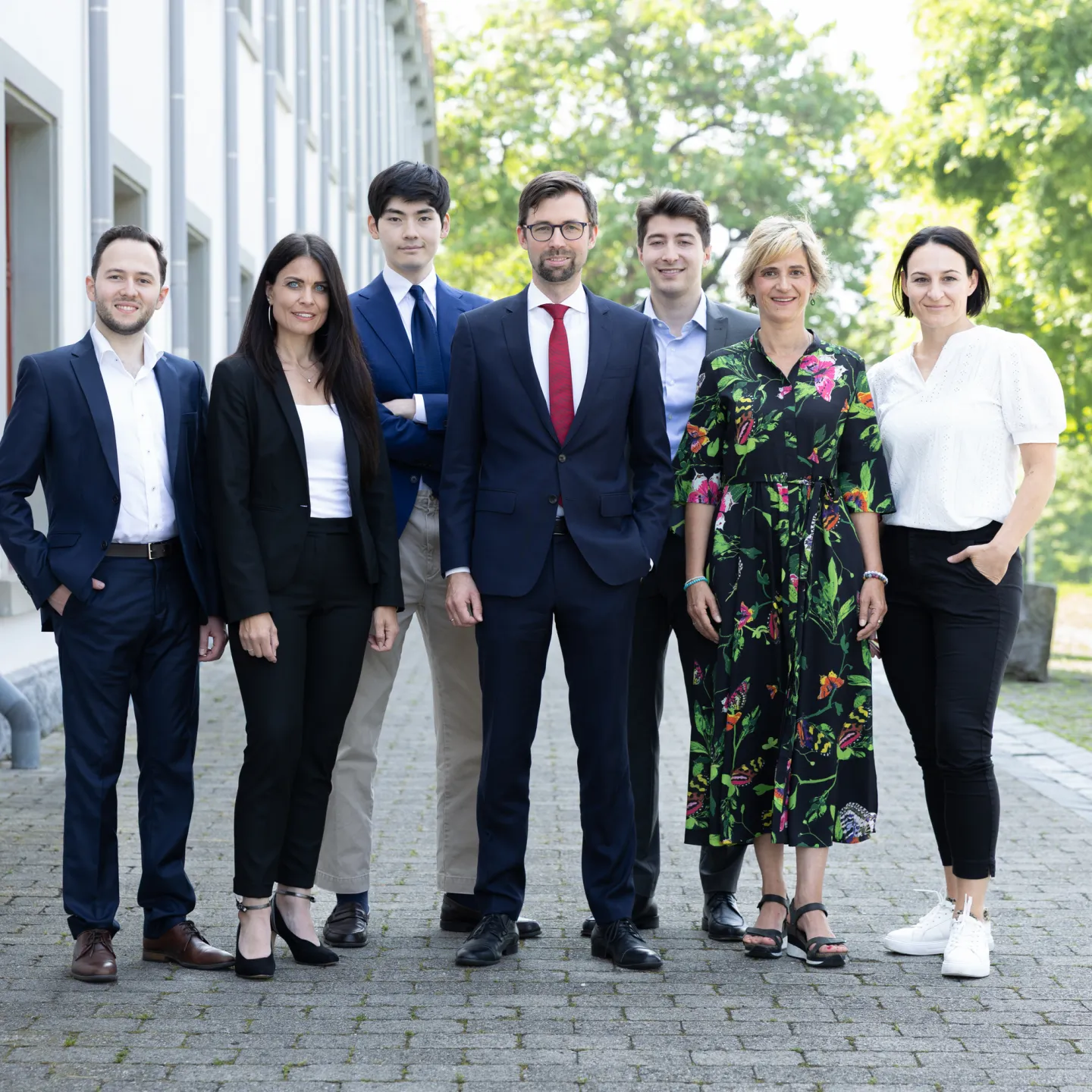
Gruppe von sieben Personen in Businesskleidung vor dem Gebäude der Universität Liechtenstein.

The chair, led by Prof. Dr. Bernhard Burtscher, positions itself as a leading research institution in financial market law in the region. It is dedicated to banking and financial market law in its entirety, from private banking to commercial banking and from banking law to capital market law to insurance law. Both regulatory and private law issues and their intersections are addressed. The research focuses on the financial centre of Liechtenstein and the national as well as European (EEA law) framework conditions for domestic financial market actors.


Gruppe von sieben Personen in Businesskleidung vor dem Gebäude der Universität Liechtenstein.

Research Focus Areas

Detailansicht der hölzernen Dachkonstruktion des Campuspavillons mit Ausblick ins Rheintal.

Our research focuses on key issues and current challenges in

  • Banking Law
  • Capital Market Law
  • Insurance Law
  • Civil Law
Insights into Research on Business Law
Detailansicht der hölzernen Dachkonstruktion des Campuspavillons mit Ausblick ins Rheintal.

Research Projects

Zu diesem Thema gibt es keine Projekte.

Publications

Contact Us

Contact

Professorship for Banking and Financial Market Law
Employee

Professur für Finance

Prof. Dr. Michael Hanke

Finance

Finanzdiagramm mit blauer und orangefarbener Linie auf Bildschirm.

The teaching and research programme of the Professorship for Finance, represented by Prof. Dr. Michael Hanke, covers various areas of quantitative finance. Application fields include derivatives, portfolio and risk management, exchange rates, retirement provision and pension financing, as well as financial crises and empirical finance (including political finance). Methodological focuses are on AI in finance, simulation, financial mathematics and optimisation.


We are also happy to serve as contact persons for transfer projects with practice in these areas.

Finanzdiagramm mit blauer und orangefarbener Linie auf Bildschirm.

The Professorship for Finance is involved in teaching in the Bachelor’s degree programme in Business Administration, the Master’s degree programme in Innovative Finance, as well as the doctoral programme in Business Administration. Additionally, we teach in various professional education programmes at the Liechtenstein Business School and the Liechtenstein Business Law School.

Exemplary of our research focus areas are some recent questions we have addressed:

  • What characteristics do financial markets exhibit before significant events such as elections or central bank announcements?
  • How high are risk premiums in financial markets for political events?
  • Can financial crises be predicted better with AI methods than with traditional approaches?
  • What changes are necessary for a sustainable orientation of the second pillar of the pension system in Liechtenstein?
  • Which factors influence the EUR/CHF exchange rate, and how do these influences change over time?
  • In which currency do crypto investors think?

Examples of Transfer Projects from Recent Years:

  • Currently: ErasmusPlus project “Financial Literacy for the Young” (development of an app to teach financial knowledge to young people)
  • ErasmusPlus projects in the area of saving and retirement provision, from which e-learning courses for students and the general public have emerged
  • Scientific support for projects of the government or ministries

The professorship is strongly engaged in research, which is an essential prerequisite for developing young academics. Our research findings are regularly published in renowned international journals, including the Journal of Financial and Quantitative Analysis, Journal of Banking and Finance, Journal of Financial Markets, Journal of Economic Dynamics and Control, European Journal of Operational Research, Quantitative Finance, Journal of Futures Markets and Journal of Derivatives. In addition to numerous dissertations, two habilitations (the highest academic qualification certifying eligibility for a professorship) have also emerged in recent years.

Research Projects

Zu diesem Thema gibt es keine Projekte.

Publications

Contact Us

Questions about the Professorship?

Prof. Dr. Michael Hanke
Dean - Liechtenstein Business School Professor - Finance
Employee

Professur für Technologie und Innovation

Prof. Dr. Leo Brecht

Technology and Innovation

Person hält digitale Weltkugel mit globalen Wirtschaftssymbolen vor Laptop.

We provide pioneering insights and practice-oriented solutions that equip students with the necessary knowledge and skills, while supporting companies in enhancing their innovative capacity and effectively harnessing technological advances. Our goal is to bridge academic excellence and industrial application to jointly shape a sustainable and successful future.

Person hält digitale Weltkugel mit globalen Wirtschaftssymbolen vor Laptop.

The team led by Prof. Dr. Leo Brecht combines academic expertise with entrepreneurial spirit. Covering key focus areas of the Liechtenstein Business School, the Professorship for Technology and Innovation engages in current research projects ranging from data-driven technology foresight, the study of process and resource efficiency in relation to business performance, and the quantification of entrepreneurial resilience, to personal (co-)founding experience in the Lake Constance and Rhine Valley region. Not only in teaching but also through daily exchanges with students, research partners and practitioners, we are committed to discussing and proactively advancing technology and innovation topics of today, tomorrow and beyond.                                

TEXT

  • Data-Driven Foresight: How can technology forecasts be made using alternative data sources?
  • Emerging Technologies: How can big data algorithms be used to identify emerging technologies?
  • Innovative Capability and Business Performance: How can innovative capability be enhanced, what practices do innovative companies implement, and what is the relationship to growth and profitability?
  • Innovation and Sustainability: How can sustainability be implemented through innovation?
  • Innovation and Productivity: How can productivity be measured in the areas of assets, processes, resources and resilience, and what effect do productivity leaps have on the performance of companies?

  • Data-Driven Foresight: in collaboration with a leading company in the automotive industry
  • Data Mining in Innovation Management: a practical guide commissioned by the Swiss Association of Plant Engineering
  • Quantitative Identification of Innovation Leaders: a model for stock selection for a Swiss asset manager
  • Technological Due Diligence: for a major Swiss private equity firm
  • Innovation Field Analysis in Energy Solutions: for an internationally operating company from Liechtenstein
  • Supervision of numerous practice-oriented MBA theses in innovation, technology and product management, representing the local industry

Professional Education

Ein Mann und eine Frau betrachten gemeinsam eine große Glaswand, die mit Notizen und Diagrammen beschrieben ist. Beide wirken nachdenklich und konzentriert, während sie an einer komplexen Aufgabe arbeiten.

For more than seven years, we have successfully conducted the MBA in Technology and Innovation. The MBA in Technology and Innovation focuses on the creative development and entrepreneurial implementation of innovations to ensure the sustainable competitiveness of technology-oriented companies in the region.

MBA in Technology and Innovation
Ein Mann und eine Frau betrachten gemeinsam eine große Glaswand, die mit Notizen und Diagrammen beschrieben ist. Beide wirken nachdenklich und konzentriert, während sie an einer komplexen Aufgabe arbeiten.

Degree Programmes

In teaching, the professorship offers a broad portfolio covering current topics in innovation, technology and product management. We align our content with the lifecycle stages of a company, from idea to start-up, and from growth to established enterprise. Our instruction is theory-based, practice-oriented and enriched with numerous real-world examples and case studies. Opportunities for theses, primarily motivated by practical relevance, complete the teaching profile.

Success in Research and Professional Education

  • Since July 2024, the professorship has been conducting a joint research project with the Fraunhofer Institute for Scientific-Technical Trend Analysis on the topic of data-driven foresight.
  • Together with a Liechtenstein asset management firm, we are carrying out an Innosuisse project until mid-2028 entitled “Process Innovation as an Alternative Model to Factor Investing.” This project not only bridges innovation and finance but also implements the findings with our practice partner in new investment products and portfolio optimisations.

Publications

Research Projects

Zu diesem Thema gibt es keine Projekte.

Partners

Team Technology and Innovation

Contact Us

Questions about the Professorship?

Prof. Dr. Leo Brecht
Professor - Technology and Innovation Academic Director MBA in Technology & Innovation - Technology and Innovation
Employee

Early Career Support

Shaping the Future

Researcher Development

Studentin steigt eine moderne Holztreppe in der Universität Liechtenstein hinauf und schaut auf ihr Smartphone.

At the University of Liechtenstein, researcher development is focused on creating transparent career paths and optimal conditions for early-career researchers. Guided by internationally recognised standards and a clear strategic orientation, the university fosters an inspiring environment for excellent research and innovation.

Studentin steigt eine moderne Holztreppe in der Universität Liechtenstein hinauf und schaut auf ihr Smartphone.

Supporting Early-Career Researchers as an Investment in the Future

Targeted support for early-career researchers plays a vital role in advancing both science and society. Especially in a knowledge-based world, well-educated professionals are essential for progress and competitiveness. The University of Liechtenstein strengthens its position as a research hub by promoting young researchers through a range of dedicated programmes and support systems.

The Young Talents Programme offers early-career researchers the opportunity to advance their own research projects. Through the university’s Research Promotion Fund, doctoral candidates can apply for funding to realise innovative initiatives and strengthen their academic profile.

The Research Prize of the Principality of Liechtenstein is awarded annually and recognises outstanding academic work with prize money of CHF 10,000. It is aimed at early-career researchers at the University of Liechtenstein and enhances the visibility of exceptional research achievements.

As part of the global academic community, the University of Liechtenstein regularly participates in the renowned Lindau Nobel Laureate Meetings. Early-career researchers are given a unique opportunity to engage in dialogue with leading scientists.

Academic Career Paths at the University of Liechtenstein

The University of Liechtenstein offers structured academic career paths in the fields of business administration, business law, and architecture. In addition to doctoral programmes and the option to pursue a habilitation, various academic positions are available, specifically tailored to different qualification levels. These roles enable both early-career and experienced researchers to deepen their expertise, further develop their research profiles, and actively contribute to teaching, research, and university life.

The following overview presents the academic positions along the career track, from doctoral positions to assistant professorships with or without tenure track, as well as senior scientist roles.

Prospective early-career researchers have the opportunity to enrol in the following doctoral programmes:

Venia Docendi

At the University of Liechtenstein, the term habilitation refers to the academic qualification known as venia docendi (teaching qualification). It certifies that the candidate possesses outstanding scientific and pedagogical aptitude for conducting independent research and teaching in a specific academic field or combination of disciplines. The habilitation represents the highest level of academic qualification for university teaching.

Venia Legendi

As part of the habilitation process, candidates may also apply for venia legendi (teaching authorisation). This entitles them to exercise academic teaching freely using the resources of the University of Liechtenstein, and to supervise and assess academic work. The granting of venia legendi requires the prior attainment of venia docendi and documented teaching experience at the University of Liechtenstein.

The Procedure

The habilitation process at the University of Liechtenstein is conducted by the Habilitation Committee. It begins with a formal application to initiate the procedure. The application must include all required documentation and evidence and is assessed in accordance with the applicable Habilitation Regulations and the subject-specific implementation guidelines.

The Habilitation Thesis

The core element of the habilitation is the habilitation thesis. It is an independent scholarly work of high academic relevance. Accepted formats include monographs, cumulative works, or equivalent academic or artistic publications. The specific requirements are defined by the subject-specific implementation guidelines of the respective disciplines.

The position of Research Assistant offers university graduates the opportunity to pursue academic qualification after completing a master's degree. The primary goal is to acquire the skills required for independent academic work.

The position is limited to a maximum of three years and requires an employment level of at least 50%. Research Assistants support teaching activities, supervise students during thesis work, and actively contribute to research and knowledge transfer projects. The specific tasks are defined in an individual qualification agreement.

Applicants are expected to hold an above-average master’s degree in a relevant field of study and demonstrate particular aptitude for academic work. As a rule, Research Assistants are concurrently enrolled in the doctoral programme at the University of Liechtenstein.

The position of Research Assistant (Wissenschaftliche:r Mitarbeiter:in) is aimed at qualified university graduates who wish to further develop their academic competencies after completing a master's degree. The goal is advanced qualification in the relevant discipline and the acquisition of teaching, research, and knowledge transfer experience.

Research Associates are employed on a fixed-term basis for up to five years, with a minimum employment level of 50%. They carry out tasks independently in teaching, research, or knowledge transfer, always in close coordination with their supervisor. Responsibilities typically include conducting courses, supervising theses, contributing to research projects, and actively participating in academic self-governance.

Applicants are expected to hold an above-average master's degree, demonstrate academic aptitude, and possess pedagogical and didactic skills for independent teaching. This is generally the case after successful completion of the preparatory phase of the doctoral programme at the University of Liechtenstein. Specific duties and qualification objectives are defined in an individual qualification agreement.

The position of Postdoctoral Researcher serves to support academic qualification after the completion of a doctoral degree. It is aimed at early-career researchers with high potential who wish to advance their academic careers and take on independent responsibilities in teaching, research, and knowledge transfer.

Postdoctoral Researchers are initially employed for three years with a minimum employment level of 50%. Upon positive evaluation, an extension of up to two additional years is possible. The position offers the opportunity to further develop independent research projects while assuming substantial responsibilities in university teaching and research.

Responsibilities include independently conducting courses, supervising students, coordinating modules, and actively contributing to research and knowledge transfer projects. Postdoctoral Researchers also engage in academic self-governance. A defined portion of their working time is reserved for their own scientific qualification.

Applicants must hold a completed doctoral degree, an excellent academic record, pedagogical and didactic competencies, and a strong academic profile with development potential. Specific tasks and objectives are outlined in an individual qualification agreement.

Senior Scientists are experienced researchers who play a key role in advancing research at the University of Liechtenstein through their subject-matter expertise. They take on demanding responsibilities in research, teaching, and academic knowledge transfer, and actively contribute to the support and mentoring of early-career researchers.

Senior Scientists may be employed on a permanent basis and typically work with a minimum employment level of 50%. The specific focus of their duties is defined individually and depends on their teaching and research engagement. Their responsibilities include independently conducting research and transfer projects, acquiring third-party funding, supervising student work, and contributing to academic self-governance.

In addition to outstanding subject-specific qualifications, candidates are expected to hold a completed doctoral degree and demonstrate proven experience in academic research. Senior Scientists also serve as mentors and actively support the development of the next generation of researchers.

The Assistant Professorship (non-tenure track) offers postdoctoral researchers the opportunity to further develop their academic qualifications and prepare specifically for a professorship at another university. The position is fixed-term and may be extended under certain conditions — however, a transition to a permanent appointment is not intended.

Assistant Professors (non-tenure track) are actively involved in research, teaching, and knowledge transfer. Their responsibilities include delivering courses, supervising student theses, contributing to research projects, and participating in academic self-governance. They also dedicate an appropriate portion of their working time to their own academic qualification.

Applicants must hold an excellent university degree, a completed doctorate (or equivalent artistic achievement), and demonstrate outstanding research potential. The position requires a minimum employment level of 50% and is accompanied by a structured qualification process.

The Assistant Professorship (tenure track) is an academic qualification position that offers a clear pathway to a permanent appointment as Associate Professor. It is designed to give promising researchers the opportunity to qualify for a professorship through outstanding achievements in research, teaching, and academic service.

The appointment is made by the University Council based on a structured selection process in accordance with the university’s appointment regulations. The position is generally fixed-term for five years with a minimum employment level of 50%. A defined portion of working time is reserved for the candidate’s own research. Advancement to an Associate Professorship is contingent upon successful completion of a habilitation or proof of equivalent academic achievement.

During their appointment, Assistant Professors (tenure track) assume a wide range of academic responsibilities. They design and deliver courses, supervise theses at all levels, lead study programmes and modules, engage in research and knowledge transfer projects, acquire third-party funding, and actively participate in academic self-governance. In addition, they act as mentors and support the development of early-career researchers.

Applicants must hold an excellent university degree, a completed doctoral degree (or equivalent artistic qualification), and demonstrate exceptional research potential indicative of a successful habilitation. Performance is formally evaluated after a maximum of three years within a structured review process.

International Collaboration as a Key to Excellence

The University of Liechtenstein regards internationalisation as an integral part of its research strategy. By strategically building global partnerships and promoting international mobility, it creates a dynamic environment for academic exchange and innovation.

Participation in international academic conferences is a key element of an academic career. Researchers at the University of Liechtenstein regularly have the opportunity to present their findings on global platforms, engage in discussions with leading experts, and gain inspiration for future projects.

To further strengthen international exchange, the University of Liechtenstein supports Erasmus+ mobility opportunities for doctoral candidates and academic staff. Research stays at renowned institutions allow early-career researchers to expand their networks, gain new perspectives, and further develop their research in an international context.

As part of Erasmus+ projects, the University of Liechtenstein collaborates with leading universities and research institutions across Europe. These partnerships not only facilitate knowledge transfer but also strengthen interdisciplinary collaboration across national borders.

Certificate Programme Tax Law

Next Start: September 2027

Certificate Programme in National and International Tax Law

Studierende beim gemeinsamen Lernen in der Bibliothek der Universität Liechtenstein, Fokus auf Gruppenarbeit und Austausch.

The part-time Certificate Programme in National and International Tax Law provides essential foundational knowledge of national, international, and European tax law, international tax treaties, and international tax planning relating to private individuals (UHNWIs), asset structures, family offices, companies, life insurance policies, and financial instruments – practical and introductory in nature. In line with the four-country approach, the programme covers the tax laws of the four German-speaking countries (LI, AT, CH, DE), the EU and the EEA, as well as existing double taxation, information exchange, and other tax agreements between these states.

Studierende beim gemeinsamen Lernen in der Bibliothek der Universität Liechtenstein, Fokus auf Gruppenarbeit und Austausch.

Through numerous practical examples and case studies, various topics in national and international tax law, the application of international tax treaties, and international tax planning are illustrated and explored in greater depth.

Apply Now
Degree
Certificate in National and International Tax Law
Programme Start
September 2027
Programme Length
2 Semester
Programme Credits
10 ETCS
Students
max 30
Tuition Fee
CHF 9'900.–
Programme Type
Part-time
Programme Language
mostly German
Dajana Ehm
The Certificate Programme provides sound and up-to-date knowledge in national and international tax matters and, through excellent lecturers, offers broad tax expertise to assess regulatory requirements."
Dajana Ehm, Tax Compliance Officer, LGT Bank AG, Graduate 2022

Module Overview

As part of the four-country approach, the Certificate Programme in National and International Tax Law provides key knowledge of the tax laws of Liechtenstein, Germany, Austria, and Switzerland. Topics covered include international agreements, the exchange of information, and tax planning for companies, high-net-worth individuals, family offices, and other structures in the European and global context.

Module 1 – Taxation of Natural Persons: LI, AT, CH, DE

This module provides in-depth knowledge of the taxation of natural persons in the four German-speaking countries of Liechtenstein, Austria, Switzerland, and Germany. The focus is on the systematic comparison of national tax laws and the analysis of cross-border tax issues. In addition to the income and wealth taxation of natural persons, the specific features of the taxation of partnerships are also addressed.

Participants will engage with current tax law developments, including planned reforms, new administrative practices, and relevant court decisions. Practical case studies are used to directly apply the theoretical foundations. A particular focus is placed on tax compliance and resolving cross-border double taxation issues through bilateral and unilateral measures.

In addition, participants will learn how to delineate national taxation rights and correctly allocate personal income and assets. The module fosters a deeper understanding of tax systems in an international context and prepares participants for complex professional challenges in tax law.

Programme Overview: Information, Structure, and FAQ

Structure

The Certificate Programme in National and International Tax Law offers comprehensive training in national, international, and European tax law. The programme is modular in design and runs over nine months.


Content and Structure:


  • The programme comprises four modules focusing on taxation in Germany, Austria, Switzerland, and Liechtenstein.
  • It also covers double taxation agreements, other tax treaties, and international tax planning.
  • Each module consists of four intensive on-site days with lectures and a subsequent Q&A session. After Modules 1 and 2 as well as after Modules 3 and 4, there is a dedicated case study day.


Dates:

  • Module 1: 4 days, September 10–11, 2025 and October 21–22, 2025
    Q&A Session: November 5, 2025, 6:00 PM (via Microsoft Teams)
  • Module 2: 4 days, November 11–12, 2025 and December 2–3, 2025
    Q&A Session: December 4, 2025, 6:00 PM (via Microsoft Teams)
  • Module 3: 4 days, January 20–21, 2026 and February 10–11, 2026
    Q&A Session: March 10, 2026, 6:00 PM (via Microsoft Teams)
  • Module 4: 4 days, March 17–18, 2026 and April 21–22, 2026
    Q&A Session: May 5, 2026, 6:00 PM (via Microsoft Teams)

Case Studies for Modules 1 and 2: January 14, 2026, 9:00 AM–6:15 PM
Case Studies for Modules 3 and 4: May 6, 2026, 9:00 AM–6:15 PM


Course Delivery

The programme is delivered through interactive lectures, discussions, and practice-oriented case studies. All modules are designed to provide practical knowledge that can be directly applied in tax advisory work or international tax law.


Study Plan and Timeline:

  • Classes take place on two full days per week (Tuesday, Wednesday, or Thursday) from 09:00 to 18:15.
  • Additional Q&A sessions are held from 17:15 to 20:30.
    Self-study accounts for approximately 220 lessons (165 hours).


Examinations

The content of Modules 1 and 2 is assessed through a written exam, and that of Modules 3 and 4 through a second written exam.


Graduation

Upon successful completion of the programme, participants are awarded the Certificate in National and International Tax Law. To earn the certificate, participants must attend at least 75% of the sessions held either on-site or online and pass all module examinations.


Certificate and ECTS Credits:

  • Graduates of the programme receive 10 ECTS credits.
  • These credits can be applied towards a higher-level programme, such as the Executive Master of Laws (LL.M.) in International Taxation.

  • Unique and comprehensive professional education on the tax systems and tax laws of Liechtenstein, Germany, Austria, and Switzerland
  • Comprehensive professional education on international tax cooperation (DTAs, TIEAs, and other tax agreements) of Liechtenstein, Germany, Austria, and Switzerland, on the development of global tax law standards (G20, G7, OECD, Global Forum, FATF, EU)
  • Consistent focus on cross-border issues and problem-solving
  • Practice-oriented tax knowledge for the implementation of international tax planning
  • Optimal integration into professional life through a flexible structure in terms of time and content
  • Knowledge transfer by experienced and renowned lecturers from academia, practice, administration, and politics
  • Ideal preparation for work in the field of national and international tax law as well as international tax planning
  • Building and expanding your own network beyond the programme itself through evening events, specialist excursions, and other professional education offerings – bridging the gap between theory and practice

Lic. iur. Thomas Brotzer, HSG
Global Head of Insurance Tax, Financial Services Tax Lead for Switzerland, Member of the Board of Directors KPMG Holding AG, Zurich

Prof. Dr. Friedrich Fraberger, LL.M., TEP
Tax Advisor, Tax Partner of the KPMG Austria Group, Vienna

Dr. Philipp Lennert
Attorney-at-law, Specialist Attorney for Tax Law, European Lawyer in Liechtenstein, Public Notary in Liechtenstein, Attorneys-at-law Lennert Partners AG, Triesen

Dietmar Arzner, LL.M., TEP
Managing Director, Co-Head of Wealth Planning & Strategic Solutions, LGT Bank AG, Vaduz

Dr. Florian Kloster, LL.M.
Tax Advisor, CONFIDA Holding, Trust, Corporate and Tax Consultancy, Vaduz

Dipl.-Oec. Caroline Müller, StB
Tax Advisor, Banque Pictet & Cie SA, Geneva

Stefan Oesterhelt, LL.M.
Certified Tax Expert, Attorney-at-law, Partner Homburger AG, Zurich

Mag. Tatjana Polivanova-Rosenauer
Tax Advisor, Partner, LeitnerLeitner GmbH, Vienna

Dr. Natalie Peter, LL.M., TEP
Attorney-at-law, Partner, Blum & Grob Attorneys-at-law, Zurich

Dr. Matthias Feurstein, LL.M.
Tax Advisor, Partner, RTG Dr. Rümmele Tax Consulting and Auditing GmbH & Co KG, Dornbirn

Julian Kläser, Ph.D.
Associate Partner, Blum & Grob Attorneys-at-law, Zurich

Prof. Dr. Martin Wenz
Holder of the Professorship for Business Taxation, International and Liechtenstein Tax Law, Liechtenstein Business Law School, Academic Head Liechtenstein Executive School

Target Group

The certificate programme is aimed at employees from financial services, banking, tax consulting, fiduciary services, fund management, asset management, insurance, consulting, and public administration. It is designed for professionals seeking to acquire practical additional knowledge in national and international tax law. In addition, the programme offers in-depth expertise in international tax cooperation and international tax planning.

Admission

Admission to the Certificate Programme in National and International Tax Law requires successful completion of a vocational baccalaureate (FL, AT, CH) or a general university entrance qualification (Matura, Abitur). Applicants without a formal higher education entrance qualification who have relevant professional experience may also be admitted, provided they can demonstrate their individual ability to study in another way.

Tuition Fees

The tuition fee for the entire certificate programme is CHF 9,900.–. This fee covers participation, all digital materials, presentations, legal texts, and examination fees. Payment is due at the start of the programme.

Students who have attended at least 75% of the on-site or online sessions and successfully passed all module examinations will be awarded the “Certificate in National and International Tax Law.”

Tax Knowledge Without Borders

Apply by 31 July 2027

Person nimmt mit Laptop an den Welcome der Universität Liechtenstein teil.

Enhance your tax expertise with the Certificate Programme in National and International Tax Law and prepare yourself for challenging roles in tax consulting, financial administration, or corporate management. Take this opportunity to elevate your career in tax law to a new level – practice-oriented, flexible, and thorough!

Apply Now
Person nimmt mit Laptop an den Welcome der Universität Liechtenstein teil.

Highlights

Downloads and Links

Legal Basis and Regulations

The General Terms and Conditions (GTC), regulations, and other guidelines for professional education degree programmes are available for download in the “Guidelines and Downloads” section of the university website.

Let Us Talk About Your Professional Education

Contact us

B.A. Sylvia Gründig-Zacharias
Programme Manager - Business Management Taxation and Tax Law
Employee

Integrity

Research Integrity

Good Scientific Practice at the University of Liechtenstein

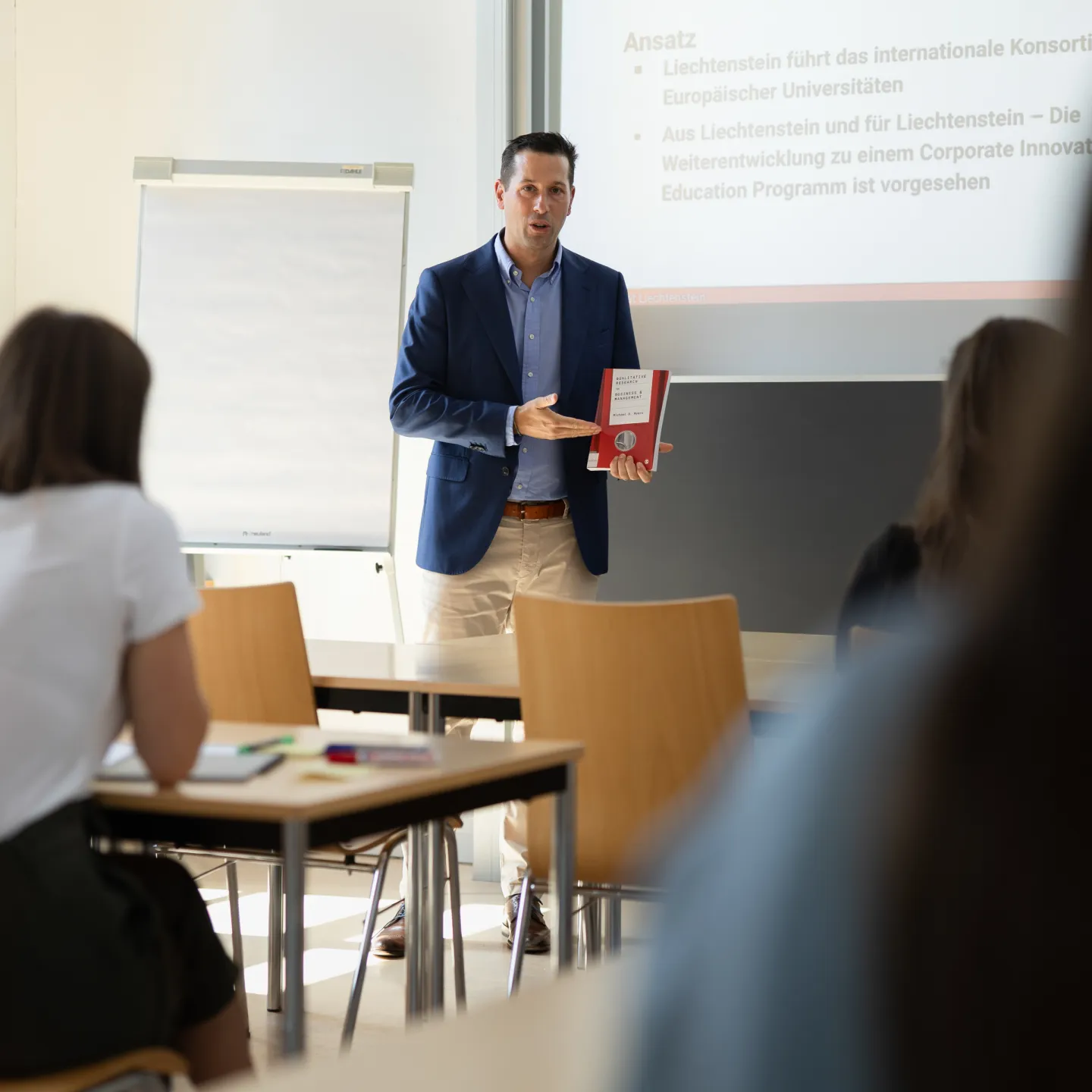
Dozent der Universität Liechtenstein präsentiert ein Fachbuch zum Thema Innovation vor Studierenden im Seminarraum.

The University of Liechtenstein is committed to upholding the highest standards of scientific integrity. Responsible and transparent research practices form the foundation for high-quality research, societal trust, and sustainable scientific progress. The principles of the Better Science Policy serve as the foundation of our research activities.

Dozent der Universität Liechtenstein präsentiert ein Fachbuch zum Thema Innovation vor Studierenden im Seminarraum.

Principles of Good Scientific Practice

The University of Liechtenstein adheres to established ethical and academic standards:

  • Honesty and Transparency: Full disclosure of methods and results.
  • Verifiability and Reproducibility: Research findings must be subject to review and reproducible.
  • Originality and Authorship: Respect for intellectual property and the avoidance of plagiarism.
  • Adherence to Ethical Principles: Compliance with ethical guidelines in both research and publication.

The Better Science Policy

Person hält ausgedruckte Dokumente mit wissenschaftlichem Text.

Our Better Science Policy defines the standards for all research activities. It ensures:

  • The consistent application of ethical principles.
  • Clear responsibilities for researchers and academic staff.
  • Procedures to safeguard scientific integrity.
The Better Science Policy
Person hält ausgedruckte Dokumente mit wissenschaftlichem Text.

Advisory Services and Ombudsperson

Researchers and students can contact the Research Support Office with questions about good scientific practice or in cases of suspected scientific misconduct. An independent ombudsperson is also available for (anonymous) reporting.


Procedure in Case of Suspected Misconduct:


  1. Optional consultation with the Research Support Office
  2. Submission of a report to the ombudsperson
  3. Initial assessment of the case
  4. Investigation and hearing of the parties involved
  5. Decision on appropriate consequences

FAQ - Frequently Asked Questions

Plagiarism, data manipulation, inappropriate authorship, and violations of ethical standards.

Reports can be submitted confidentially to the ombudsperson or the Research Support Office.

Yes, all members of the university, including students engaged in research, are required to uphold the principles of scientific integrity.


Research Strategy

Excellence in Research for Sustainable Innovation

Research Strategy

Hand hält antiken Kompass im Außenbereich der Universität Liechtenstein.

The University of Liechtenstein pursues a research strategy that combines academic excellence with social responsibility. Research is not only a means of generating knowledge, but also a driver of innovation, sustainability, digitalisation, and responsibility.

Hand hält antiken Kompass im Außenbereich der Universität Liechtenstein.

Topics in Focus

Zwei Studierende entwickeln ein Forschungsthema auf einer beschrifteten grünen Tafel mit Kreide und Farben.

The University of Liechtenstein focuses on four central thematic areas:


  • Innovation
  • Digitalisation
  • Sustainability
  • Responsibility


These topics shape the strategic direction of the university.

Zwei Studierende entwickeln ein Forschungsthema auf einer beschrifteten grünen Tafel mit Kreide und Farben.

Better Science: Scientific Integrity as a Guiding Principle

Dozent der Universität Liechtenstein präsentiert ein Fachbuch zum Thema Innovation vor Studierenden im Seminarraum.

The University of Liechtenstein is committed to a transparent, respectful, and equitable research culture. Promoting individual freedom in research and upholding strict quality standards are key to ensuring scientific excellence.

More Information
Dozent der Universität Liechtenstein präsentiert ein Fachbuch zum Thema Innovation vor Studierenden im Seminarraum.

International Collaboration and Research Funding

Frau steckt roten Pin in Weltkarte mit Aufschrift „Let’s Travel the World“.

As part of the global academic network, the University of Liechtenstein collaborates with international partners and academic consortia. Funding programmes such as Erasmus+, Innosuisse, and other grants ensure the high quality of research and the effective transfer of knowledge.

Frau steckt roten Pin in Weltkarte mit Aufschrift „Let’s Travel the World“.

Sustainable Research for a Future-Oriented Society

Vier Studierende arbeiten im Team an einem Projekttisch, mit Whiteboard und Flipchart im Hintergrund

Through interdisciplinary collaboration, high-quality publications, and international projects, the University of Liechtenstein makes a significant contribution to regional innovation and economic development, as well as to addressing global challenges such as climate change, mobility, and digitalisation.

Vier Studierende arbeiten im Team an einem Projekttisch, mit Whiteboard und Flipchart im Hintergrund
Questions About Our Strategy?

Research Delegate

Prof. Dr. Michael Hanke
Dean - Liechtenstein Business School Professor - Finance
Employee
Subscribe to